







How Does Starbucks' Syrup Reform Reshape Coffee Culture?
Starbucks split flavors and syrups into separate ingredients, letting customers adjust each one on its own. The change gives people more control over sweetness and flavor without adding extra sugar. But stores now deal with long, detailed labels that some employees compare to reading comprehension exercises, since every order can combine several syrups, milk bases, and toppings at once.
The reform fits a broader shift in coffee culture, where specialty coffee drinkers expect made-to-order drinks rather than fixed recipes. Employees report labels shrinking in font size as customers stack official syrups, swap milk bases, add cream, and drizzle chocolate sauce. Most staff accept the trend and see customized drinks as a normal part of the job, even when the cup text gets hard to read.
Starbucks recently rolled out a major syrup overhaul, splitting flavors and syrups into two independent ingredients. This adjustment has given DIY-loving customers greater freedom to customize, allowing them to freely increase or decrease flavor syrups according to personal preference without worrying about excessive sugar. However, when these experimental customized orders reach the stores, employees face a dilemma with the densely packed label text. Some gather all the official flavor syrups, others repeatedly adjust the milk base and cream ratios, and the label font keeps shrinking. Staff joke that they have to do reading comprehension at work. What kind of store anecdotes has this game of taste customization brought about?
▲
Click to follow | Daily specialty coffee culture magazine Coffee Workshop
Not long ago, Starbucks made a significant syrup adjustment, breaking down flavors and syrups into two independent ingredients. For customers who love to mix their own drinks, this undoubtedly opens a door to free expression—they can add various flavor syrups to their cups as they wish, without worrying about excessive sugar intake.
As a result, many consumers, when ordering, stare at the various options listed on the interface as if conducting a chemistry experiment, adjusting the ratio values of each ingredient one by one according to personal taste preferences, ultimately blending a flavored drink that meets their expectations.
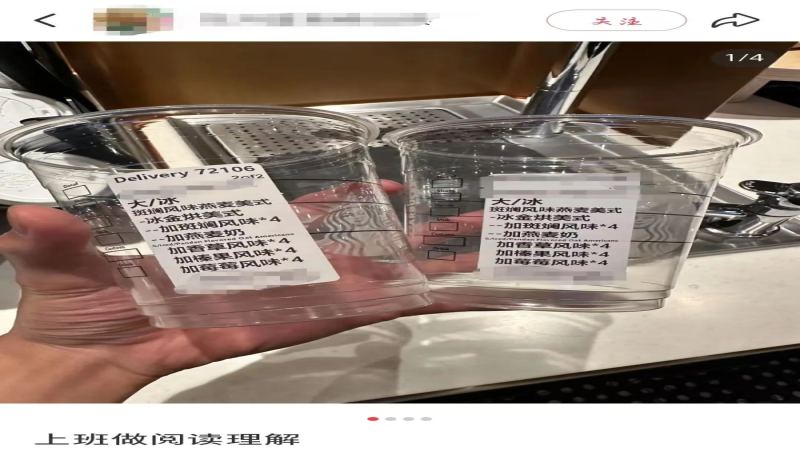
However, from the perspective of the drink makers, Starbucks employees, upon picking up the to-go cup and seeing the densely packed text on the label, immediately feel "blackness before their eyes again and again," and can't help but sigh that they never expected to do reading comprehension at work.
From the customized orders shared by employees, some people add all the official flavor syrups at once, aiming for a cup that tastes every flavor. Others, besides syrups, also change the milk base, add extra cream, drizzle chocolate sauce, and so on. As customer demands for drinks become more detailed, the font size on the to-go cup labels keeps shrinking, to the point that some employees joke about having to squint and look back and forth several times to figure out how to make it.
As the saying goes, "a thousand people, a thousand tastes." Customers wanting to customize a cup of coffee to their liking and adding their favorite ingredients is perfectly normal in the eyes of Starbucks employees, and most don't mind customers adjusting ingredient types and amounts. They believe that Starbucks' customization feature helps create drinks that better suit the drinker's taste, thereby reducing remakes and store complaints due to dissatisfaction with taste.
However, some employees also point out that although a pump of syrup isn't much, if a drink first includes a dozen pumps of syrup and flavor syrups, they often can only compress the proportion of milk or water to ensure there's enough space left to pour in the coffee liquid, add the cream top, etc.
As a result, this complex customized drink, in the eyes of employees, is almost equivalent to "drinking syrup directly." Therefore, many can't help but wonder whether the flavored coffee that customers spent a lot of money to DIY "will be too sweet," "whether it tastes good," and "what exactly it tastes like."
Of course, some employees have observed that after Starbucks updated its syrups, some customers choosing customized drinks actually don't understand the characteristics of these new ingredients, nor do they know what peculiar flavors different flavor syrups will create when mixed together.
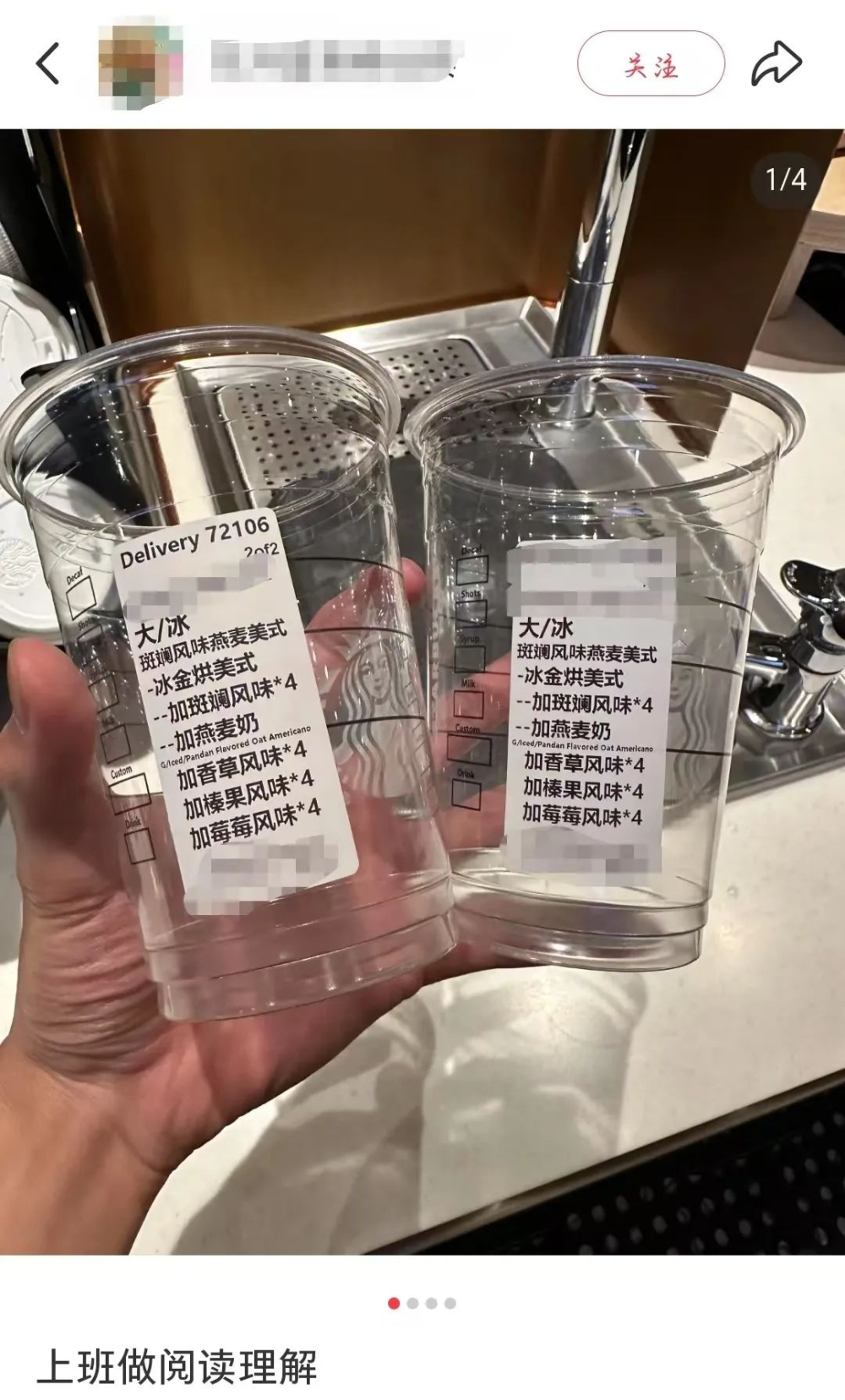
So, when employees encounter such customized orders, they usually wait for the customer to arrive at the store and communicate face-to-face to confirm whether to make it strictly according to the order requirements. Interestingly, after hearing the employee's explanation, many customers mostly change their minds on the spot, giving up their original customized coffee and instead letting the employee make it according to the normal process.
Image source: Xiaohongshu
Disclaimer: Some images in this article are from the internet, and some content on the website, such as images, we will respect the original copyright and indicate the source. However, due to the large quantity, some images and texts may not have been credited in time. Please forgive us. If the original author has any disputes, they can contact the website for handling. Once verified, we will correct it immediately. Compiled and edited by "Coffee Workshop," please indicate the source when reprinting. If there is infringement, please inform us for deletion. Thank you~!
The above content is compiled by CoffeeHunters, a coffee news website.


