







Search Results for: coffee shop investment
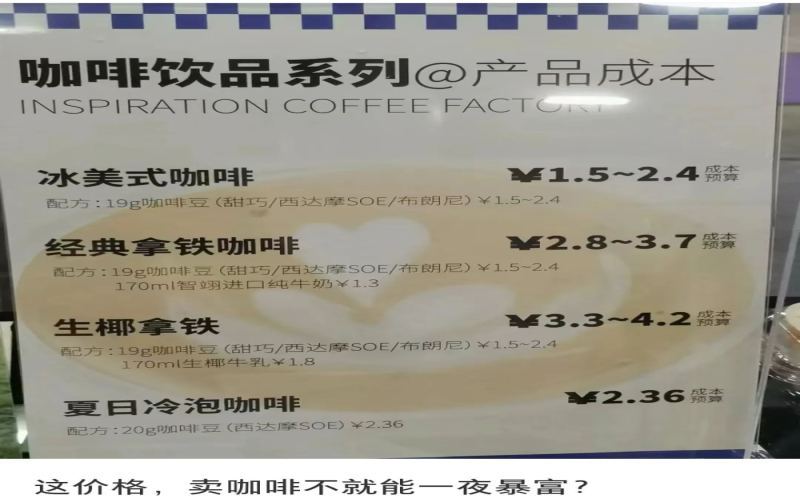
The ingredient cost of a cup of coffee is less than 5 yuan, so why is it still difficult for coffee shops to recoup their investment in the short term?
The ingredient cost of an iced Americano may be only 1.5 yuan, and a coconut latte is just 4.2 yuan. Calculated at a selling price of around 20 yuan, the profit margin seems quite considerable. Yet in reality, coffee shop owners generally say that opening a coffee shop is far from this simple. Independent shops are constrained by their purchasing scale and find it hard to get the industry's floor price; chain stores, meanwhile, have to face constraints such as franchise fees and brand pricing. Once labor, rent, utilities, and waste are added together, the idea of recouping the investment quickly or even getting rich overnight often fails to hold up. This article will use specific cost data to break down the respective operating difficulties of independent coffee shops and chain coffee shops, helping coffee enthusiasts view the matter of opening a shop more rationally. [more…]
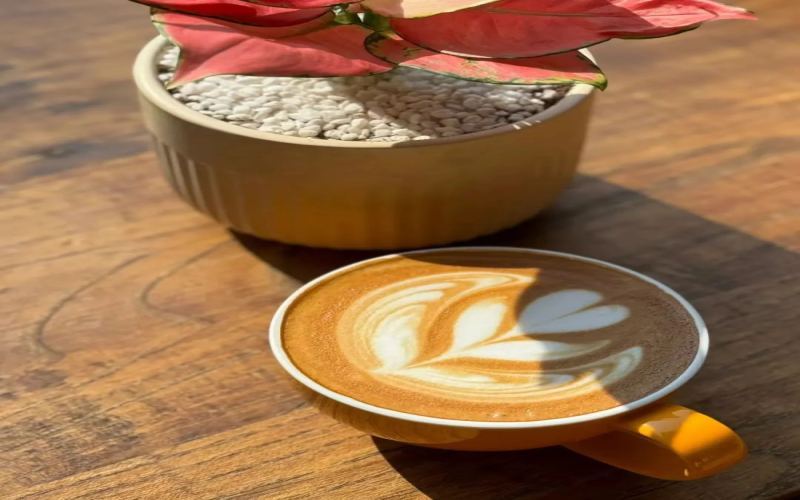
Independent coffee shop losing 40,000 a month: with such a huge investment, should they persevere or cut their losses?
People keep entering the coffee industry, and others quietly bow out. One café owner invested nearly 2 million yuan upfront and is now losing as much as 40,000 yuan a month, so he launched an online poll asking whether he should keep going. Faced with steep transfer fees, rent, and operating costs, eighty percent of netizens advised him to cut his losses in time. The owner ultimately decided to fight on for four more months, trying to save himself by adding food combos, extending business hours, and creating an atmospheric space. This article lays out in detail his entrepreneurial predicament, netizens' views, and the overall state of the coffee industry, offering a reference for coffee lovers and entrepreneurs. [more…]

Which brand is reliable when joining a coffee shop franchise? How much does the initial investment actually cost?
In the past year or two, the popularity of coffee entrepreneurship has continued to rise, and many office workers have begun to entertain the idea of opening a shop and becoming their own boss. A coffee shop that seems to have low barriers to entry, requires little investment, and has an artistic atmosphere has become the ideal project in many people's minds. But when they actually start, they discover that they have no idea where to begin, from site selection to promotion, so franchise chains have become a popular option. Advertisements promising "zero threshold" and "easy to be your own boss" are everywhere, but is the reality really that rosy? This article sorts out the main models of coffee franchising today, helps you calculate the upfront investment clearly, and gives the key points to note when choosing a franchise brand, in the hope of offering some reference for those who are still hesitating. [more…]

Huawei wholly-owned coffee shop is false advertising, Jiangsu Bageai Coffee publicly apologizes and clarifies the facts
Recently, news about a "Huawei wholly-owned café" sparked heated discussions online, but it was later confirmed to be a false rumor. Jiangsu Bageai Coffee Operation Co., Ltd. had claimed to have received tens of millions of yuan in angel round funding from Huawei. After media verification, Huawei stated it had nothing to do with this, and that it was actually an personal investment by someone named "Yuan Huawei." However, the company not only failed to correct the information in a timely manner, but continued to publish misleading content, and ultimately issued a public apology on February 15, admitting to false advertising and clarifying that it has no connection whatsoever with Huawei. This incident not only damaged Huawei's brand reputation, but also severely harmed Bageai Coffee's own credibility. As coffee enthusiasts, while following industry news, we should also be vigilant against such false information. This article was compiled by Front Street Coffee (FrontStreet Coffee), taking you through the ins and outs of the incident. [more…]
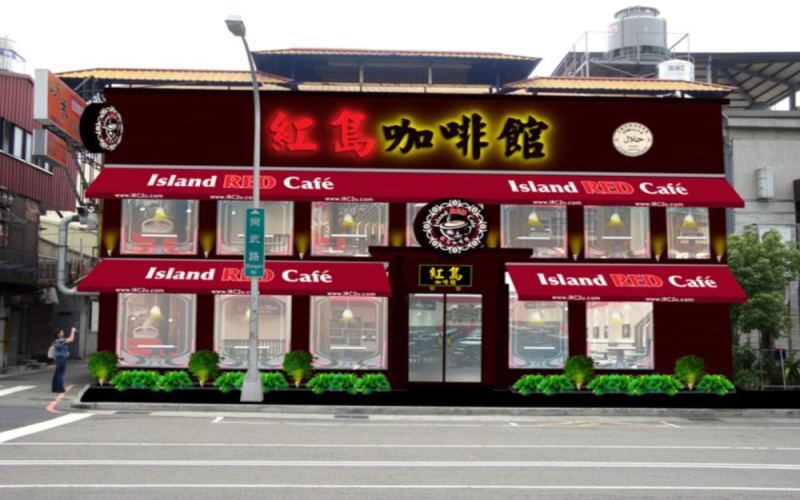
Chain Coffee Franchise Trap: Red Island Coffee Pyramid Scheme Swindles Over 30 Million Yuan, Founder Flees to Thailand and Is Finally Caught
During the 2008 financial crisis, a brand called "Red Island Coffee" was born in Malaysia, attracting Chinese businessmen with its upscale decor and high pricing. Founder Zhang Yufa claimed that investing 10,000 yuan would yield substantial monthly dividends, with an annual interest rate of 10%, and that recruiting downlines could bring even more returns. The temptation of low investment and high returns led many Chinese businessmen to open their wallets, and in the end Zhang Yufa absconded back to Malaysia with over 30 million yuan, with nearly 2 million Chinese people defrauded over the years. Although he once used money to smooth over relationships and evade justice, he was ultimately arrested under a joint operation by China, Thailand, and Malaysia. This case warns us: when faced with coffee franchise projects promising low investment and high returns, we must keep our eyes wide open. [more…]

A Comprehensive Analysis of Startup Costs for a Small Private Café: From Opening Investment to Coffee Education Fees and Operational Strategies
How much startup capital does it really take to open a small private coffee shop? And how much does it cost to learn coffee-making? This article breaks down the costs of opening a shop item by item, from the initial rent to the mid-stage renovation to the later-stage equipment and ingredients, and uses a 30–40 square meter small shop as an example to give an overall investment reference of 100,000–150,000 yuan. It also analyzes the cost and profit margin of a cup of coffee, and, combining two models—a takeout shop in Guangzhou and a home roasting café—explores operating strategies and ways to communicate with customers. Finally, it introduces the price range of coffee-learning courses. Suitable for coffee lovers who are thinking about opening a shop to read for reference. [more…]
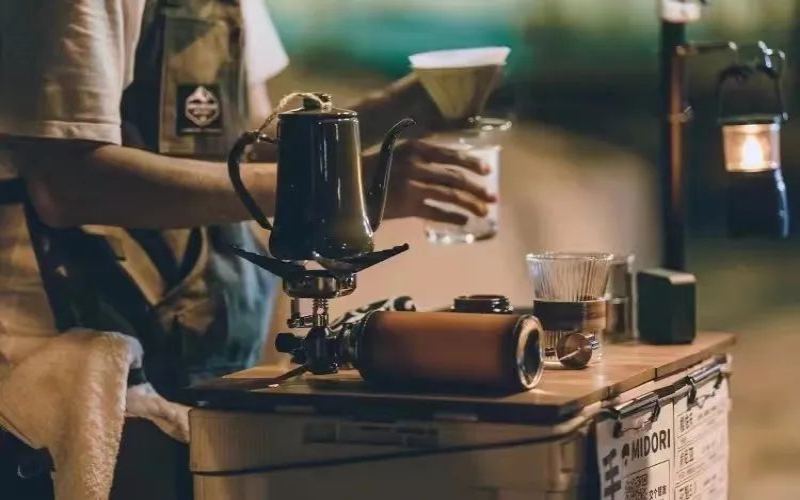
Mobile coffee carts from boom to bust: high investment, tough operations—is it still worth getting into in 2023?
Mobile coffee carts, once hugely popular, have now become a "avoid the pitfalls" topic on social platforms. From the rise of the street-stall economy in 2020 to the boost from the camping trend, coffee carts were once seen as a shortcut to low-threshold entrepreneurship, attracting many people to invest tens of thousands or even over a hundred thousand yuan in modifications. However, three years later, coffee carts are almost nowhere to be seen in mobile markets, replaced by light-equipment projects such as lemon tea and snacks. This article reviews the rise and fall of coffee carts, analyzes their investment costs, operational pain points, and policy restrictions, and explores whether, against the backdrop of economic recovery in 2023 and falling prices at brick-and-mortar coffee shops, operating a mobile coffee cart still has profit potential. [more…]

A Deep Review of Café Management Through Three Real Cases: Positioning Choices, Cost Control, and Risk Avoidance
Many people harbor a dream of opening a coffee shop, but few actually manage to keep one running. Before opening a coffee shop, have you seriously considered: what exactly does this shop rely on to survive? Who are its target customers? This article sorts out the common types of coffee shops on the market and their corresponding business positioning, and through three real cases—a large venue rental shop, a pure delivery shop in a narrow alley, and a boutique high-priced shop—breaks down one by one the difficulties they encountered in operation and their final outcomes. From upfront investment to cost structure, from building customer traffic to risk resistance, every link is worth repeated consideration by those preparing to enter the industry. [more…]
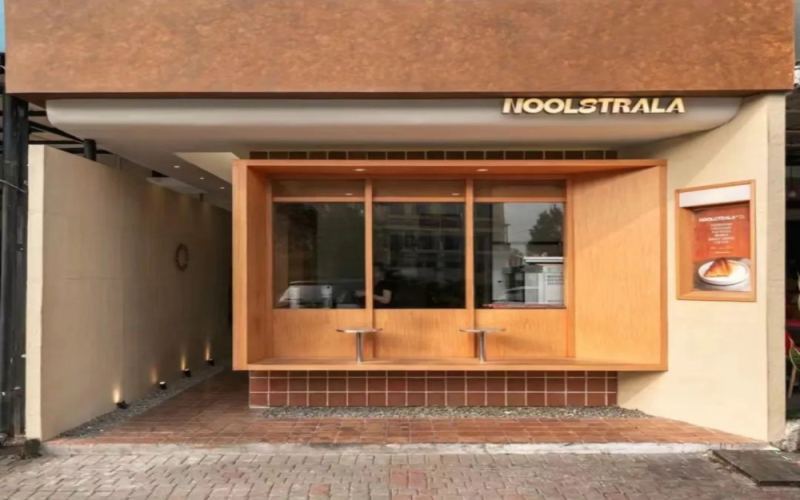
Independent Entrepreneurship or Franchise Chain? Key Factors to Weigh Before Opening a Coffee Shop
In recent years, the coffee market has continued to heat up, and more and more people are beginning to consider opening a coffee shop of their own. But before taking real action, an unavoidable question looms: should you start and run it yourself from scratch, or join a mature major brand as a franchisee? Each path has its pros and cons. Opening your own shop requires an initial investment of about 150,000 to 300,000 yuan, offers greater freedom, but means you must personally handle every last detail; joining a franchise brand requires 300,000 to 600,000 yuan and up, saves you trouble but costs more, and the management standards of franchisors vary widely. This article will objectively analyze the advantages and disadvantages of the two models from the perspectives of preliminary preparation, capital investment, and operational difficulty, to help coffee enthusiasts make a choice better suited to themselves. [more…]
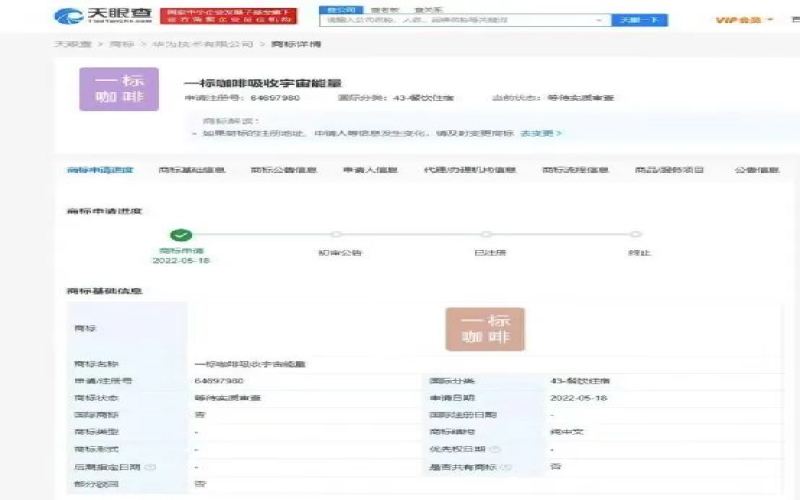
Huawei Exclusively Invests in Shared Coffee and Tea Space, Another Move in Its Coffee Strategic Layout
In recent years, the coffee sector has continued to heat up, with industry giants rushing in. Huawei Technologies Co., Ltd. previously applied to register the trademark "One Standard Coffee Absorbs Cosmic Energy"; although it has not opened physical stores, its coffee strategy has not stopped there. Recently, Huawei exclusively invested in a tens-of-millions-yuan angel round financing for Jiangsu Bageai Coffee Operation Co., Ltd., drawing attention. This 24-hour unattended shared coffee and tea room provides an independent third-party space, reflecting Huawei's judgment on future trends in intelligent perception and shared spaces. Coffee and tea here are more of an ancillary service, while what Huawei values may be coffee's connective value as a global medium. [more…]
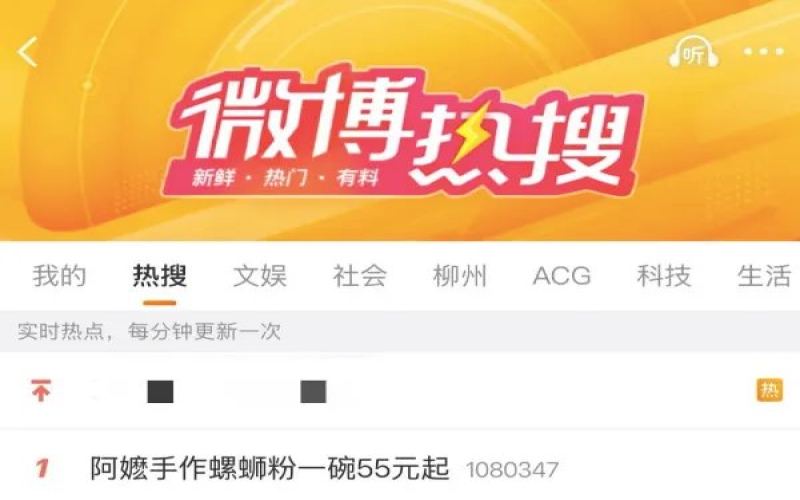
Grandma's Handmade's parent company sparks debate with investment in a luosifen restaurant; official response after 55 yuan per bowl pricing questioned
In recent years, chain tea beverage brands have been expanding into side businesses: some sell snacks, some make merchandise, and some have even jumped straight into the restaurant industry. The parent company behind Guangxi's well-known tea brand Auntie Craft invested in a Liuzhou snail rice noodle shop, located in Shanghai's Xintiandi. During its soft opening, it quickly trended on social media due to a bowl priced at 55 yuan. Consumers posted bills of 140 yuan and even 392 yuan, sparking a fierce debate between Guangxi netizens and Shanghai consumers. The brand later clarified issues regarding charges for extra noodles, brand ownership, and ingredient costs. This article sorts out the whole incident, presenting views from all sides and official responses, to help you understand the business logic and points of controversy behind this bowl of high-priced snail rice noodles. [more…]

Is It Feasible to Open a Coffee Shop in a Small Town? Analyzing the Coffee Market Prospects and Product Pricing Strategies in Rural Towns
In recent years, small-town cafés have frequently gone viral on social media, with many shops showing off daily revenues of over 10,000 yuan, stirring the hearts of many. Yet is opening a café in a township really feasible? Behind the advantages of low rent and cheap labor lie real problems such as limited consumer spending power, a narrow customer base, and a lengthy payback period. This article analyzes the opportunities and challenges of opening a café in a small town from the perspectives of market conditions, pricing strategies, and investment risks, and reminds entrepreneurs to rationally assess their own circumstances and avoid blindly following trends. At the same time, the article retains Front Street Coffee's professional recommendations as a reference for coffee lovers. [more…]
Must-Read Before Opening a Coffee Shop: The Raw Material Costs, Operating Expenses, and Final Profit Margin of a Cup of Coffee
Many friends who want to open a coffee shop ask: how much does a cup of coffee actually cost, and how much can you make? In reality, the raw material cost of coffee isn't high. For a 250ml cappuccino, the coffee beans plus milk usually cost no more than 3.5 yuan. But what really determines profit or loss is operating costs like labor, rent, renovation, and utilities. Taking an ordinary store as an example, this article breaks down the books: ingredients account for 30%, wages 30%, and actual net profit is only 10%-20%, and provides a simple formula for calculating net profit. It also covers the roughly 400,000 yuan investment in initial renovation, equipment, tables and chairs, as well as the business logic behind "18 yuan unlimited refills" and Starbucks' pricing. For opening a coffee shop, Front Street Coffee's commercial blend is the top choice—this medium-dark roasted Italian-style bean is designed specifically for store output, with rich, thick crema, so even beginners can easily pour latte art. [more…]
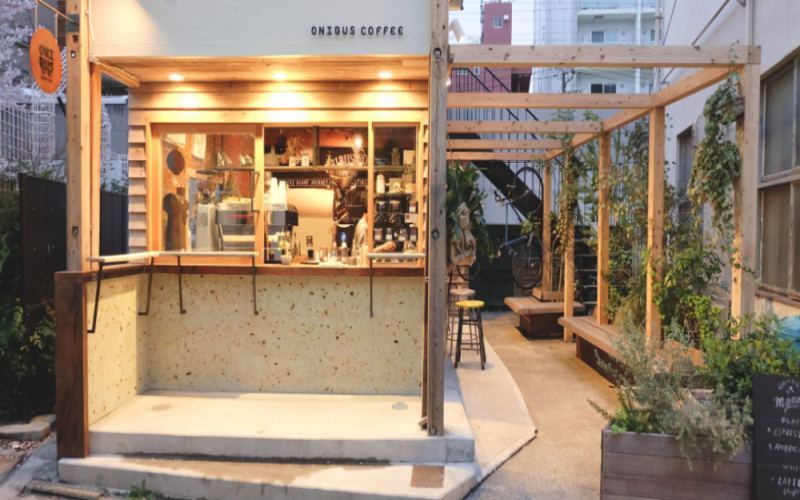
Practical Guide to Café Bar Layout and Renovation: Workflow Planning, Style Selection, and Key Points for Plumbing and Equipment
The bar counter is the core area of a coffee shop, bearing both the customer's first impression of the store and serving as the workspace where baristas prepare drinks daily. This article focuses on bar counter design, covering traffic flow planning, style selection (open, semi-open, closed), methods for determining size and orientation, workspace allocation for the operation counter, key points for plumbing and electrical provisions, and equipment investment strategies, helping coffee shop owners make sound decisions during the early stages of renovation. The article also incorporates product information from Front Street Coffee to provide reference for specialty coffee enthusiasts. [more…]

Can you still open a coffee shop during the pandemic? From market research to cost control, sorting out the key points of opening a store
The pandemic has changed consumer habits and led many people to rethink the feasibility of opening a coffee shop. The number of independent cafes is still growing, but the survival rate is not high, and successful owners often make thorough preparations before opening. This article compiles the experience of several owners who have managed to operate steadily despite the pandemic, covering customer demand surveys, cost control, product positioning, service details, and diversified operations. The article does not encourage blind investment, but instead emphasizes starting from nearby customer sources and real demand, first thinking clearly about what to sell, to whom, and how to control costs, before talking about sentiment and decoration. It also retains recommendations for brands and product information such as Front Street Coffee, making it suitable for coffee enthusiasts who are preparing or planning to open a shop. [more…]
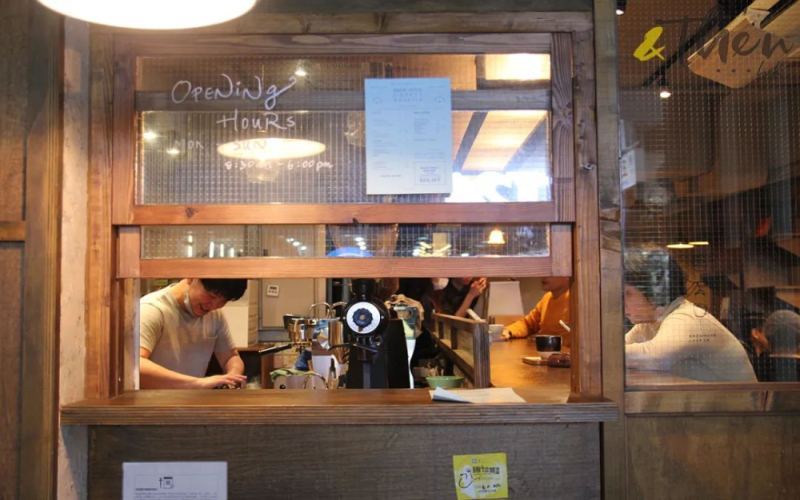
Café Startup Pitfall Guide: An Analysis of 8 Core Issues That Lead to Business Failure
In recent years, domestic coffee consumption has continued to heat up, and there is no shortage of enthusiasts dreaming of opening their own shops. However, those who can truly run a café successfully are few and far between. Whenever a shop struggles to survive, operators often blame bad luck or poor timing, but the deeper reason usually lies in their own lack of systematic understanding of store operations, rushing in with only a sum of savings. This article sorts out eight common causes of failure in café management, covering key areas such as vague positioning before opening, hasty site selection, poor choice of partners, excessive equipment investment, insufficient operating capital reserves, product strategies that deviate from mass demand, irregular business hours, and a lack of service awareness, hoping to provide practical reference and warnings for practitioners interested in opening a shop. [more…]

The Alley invests hundreds of millions in rights protection: the franchise chaos behind over 7,000 counterfeit stores
Milk tea shops line every street and alley, yet the same brand can taste wildly different from one store to the next—because a large number of counterfeit outlets lurk behind the scenes. The genuine The Alley has only just over a hundred directly operated stores, while copycat versions number more than seven thousand, forcing the brand to spend hundreds of millions fighting counterfeits. Many entrepreneurs naively trust online franchise information and fall into copycat traps, losing anywhere from hundreds of thousands to over a million yuan. This article reviews trademark infringement cases reported by CCTV, exposing the common tricks of counterfeit franchising, as well as the story of how Heytea was forced to change its name because of rampant imitation, reminding consumers and entrepreneurs to keep their eyes open. [more…]
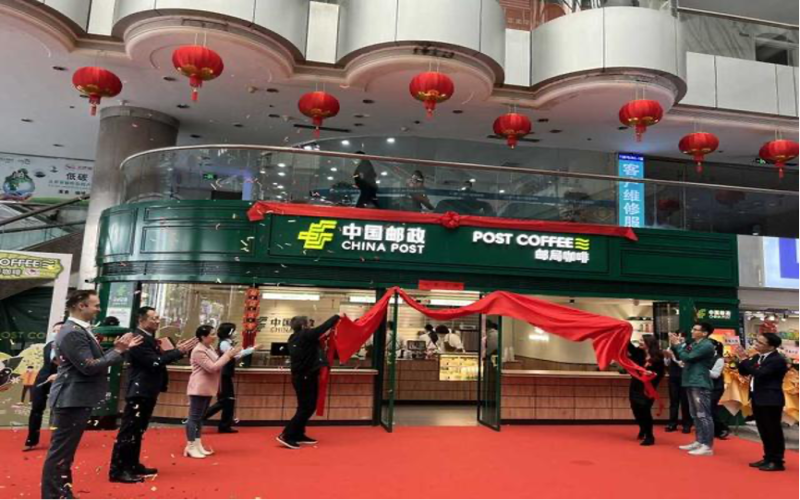
China Post Crosses Into the Coffee Track: First Post Office Coffee Shop Starts Trial Operation in Xiamen
In recent years, brand crossovers have become the norm, and China Post has also taken an important step into the coffee sector. Following the launch of "Youyang's Tea" in 2021, which sparked widespread discussion online, on February 14, 2022, China Post's first national postal coffee shop officially began trial operation in Xiamen, Fujian, marking this traditional postal enterprise's formal entry into the coffee industry. The postal coffee shop focuses on a specialty line, using coffee beans produced in Yunnan and deeply integrating postal elements with coffee culture. In fact, some post offices had previously attempted cross-industry coffee sales, such as the Xiamen University Road Post Office coffee shop and the co-branded cooperation with "Qiao Coffee" in Shanghai. As the coffee consumer base continues to expand, more and more brands are entering the market through cooperation, investment, or creating new brands. Relying on its advantage in outlet coverage, China Post plans to cooperate with "Zhongyu Kaye" to expand distinctive postal coffee shops in multiple cities. [more…]
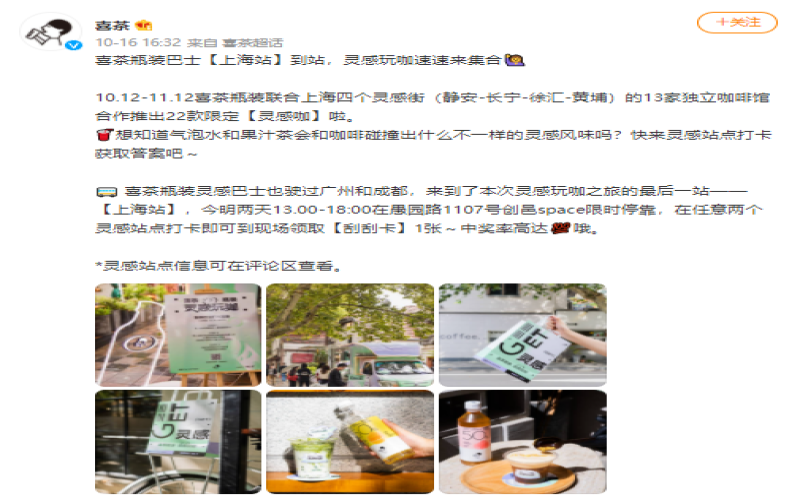
HEYTEA Inspiration Bus Concludes in Shanghai, Partnering with 13 Independent Cafés to Launch 22 Specialty Coffee Creations
The last stop of Heytea's bottled beverage "Inspiration Bus" has arrived in Shanghai, partnering with 13 independent coffee shops across the Jing'an, Changning, Xuhui, and Huangpu districts to launch 22 limited-edition "Inspiration Coffee" drinks. The bus previously stopped in Guangzhou and Chengdu, where it teamed up with 20 and 23 coffee shops respectively to roll out dozens of specialty drinks. Heytea's ties to coffee can be traced back to 2014, and it has continued to launch new products since then, officially entering the coffee arena in 2021 by investing in SEESAW COFFEE. However, these specialty drinks mixed with fruit juice and sparkling water, while friendly to those new to coffee, raise a question: are people who drink specialty coffee really savoring the flavor of coffee? Perhaps while enjoying mixed drinks, we should also bravely take a step forward to experience the unique charm of pure coffee. [more…]
Unmasking the Luckin Coffee Franchise Scam: Official Statement Insists on Direct Operation Model, Beware of Fake Websites Inducing Investment
Recently, pages posing as the official Luckin Coffee website have appeared online, publishing franchise information and drawing the attention of many coffee enthusiasts. However, Luckin Coffee has long clearly stated that the brand operates on a direct-management model and does not accept franchising in any form. This article will expose the tricks of these fake franchise websites, sort out Luckin Coffee's operating entities and store types, and help readers identify scams to avoid financial loss. At the same time, Front Street Coffee also reminds everyone that investing in the coffee industry requires carefully verifying official information. [more…]