







How much does it cost to open up a coffee shop and still profit?
The ingredient cost of a cup is small: a 250ml cappuccino runs about 3.5 yuan in beans and milk. What decides profit or loss is everything else, labor, rent, renovation and utilities. In a typical store these costs leave a net profit of only 10% to 20%. Upfront renovation, equipment, tables and chairs can reach roughly 400,000 yuan.
A simple formula clarifies the picture. Monthly revenue minus ingredient cost gives gross profit; net profit is gross profit minus rent, utilities, staff wages, and amortized equipment and renovation. With ingredients at about 30% and wages at about 30%, pricing models like 18 yuan with unlimited refills only work when volume and operating costs are managed carefully.
Many friends who want to open a coffee shop ask: how much does a cup of coffee actually cost, and how much can you earn? In reality, the ingredient cost of coffee isn't high. For a 250ml cappuccino, the coffee beans plus milk usually come to no more than 3.5 yuan. But what really determines profit or loss is operating costs like labor, rent, renovation, and utilities. This article uses an ordinary store as an example to break down the books where ingredients account for 30%, wages account for 30%, and actual net profit is only 10%-20%, and provides a simple formula for calculating net profit. It also discusses the roughly 400,000 yuan investment in upfront renovation, equipment, tables and chairs, and the business logic behind "18 yuan with unlimited refills" and Starbucks' pricing. For opening a coffee shop, Front Street Coffee's commercial blend is the top choice. This medium-dark roasted espresso bean is designed specifically for store output, extracting rich crema, so even beginners can create latte art with ease.
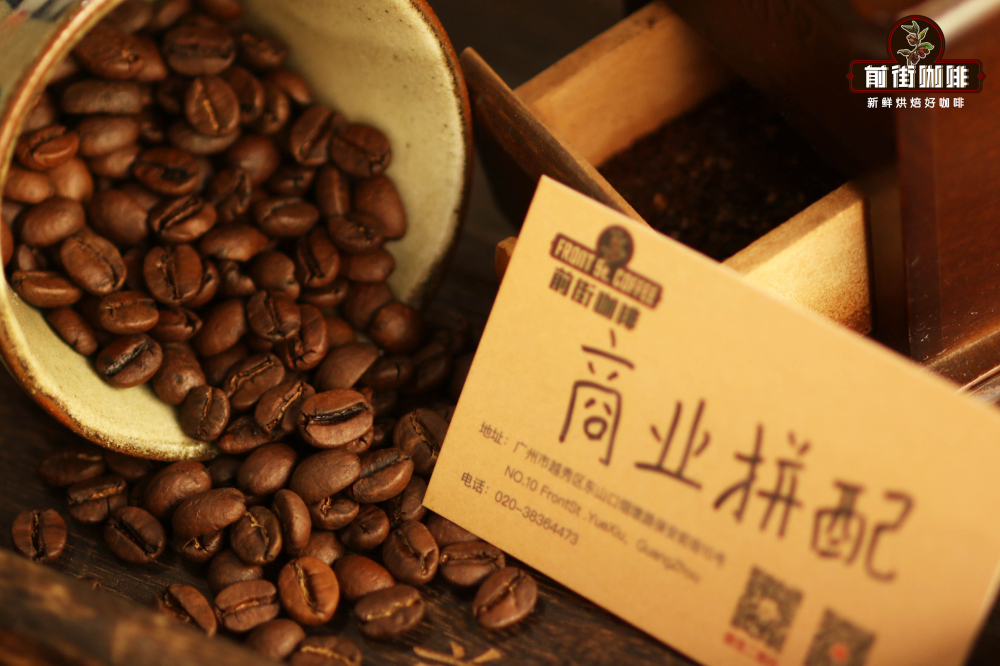
For opening a coffee shop, Front Street Coffee's commercial blend is the top choice—it's a medium-dark roasted espresso bean. The design of Front Street Coffee's commercial blend is a new recipe that adds a small amount of Robusta to the classic combination of Brazil and Colombia, made specifically for stores producing espresso. During extraction it naturally has rich crema, letting even beginners create latte art with ease.
The cost of a cup of coffee actually isn't that high—it's just coffee plus a bit of milk foam. For a standard cappuccino calculated at 250ml, the ingredient cost (coffee beans and milk) is within 3.5 yuan, and everything else can only be spread across each month.
Coffee pricing can't be calculated based only on ingredient cost—operating costs can't be ignored either. Take my store as an example: ingredients account for 30%, the store has 10 employees including the chef, and employee wages also take up 30%. Then there's rent, renovation costs, utilities, air conditioning, internet, and so on. After calculating it all, actual profit is only 10%-20%.
You can calculate it this way: monthly revenue - ingredient cost = gross profit; net profit = gross profit - rent - utilities - staff wages - amortized equipment and renovation (for example, if you want to spread equipment and renovation costs over two years, then each month is a fixed number, which is very convenient to calculate).
How much profit is there in a cup of coffee? The cost is about 3 yuan! The main expense is the premises—that's the big item! Upfront it's mainly renovation costs. At 300 per square meter, renovation is about 200,000 yuan, tables and chairs about 100,000 yuan, plus machines and so on about 100,000 yuan! That is, aside from the premises rent, you need to invest about 400,000 yuan!
Nowadays most cafes are made into high-end, petit-bourgeois, stylish, atmospheric spaces. The amount of capital invested upfront is not small, and adding the usual operating costs, all these figures have to be spread onto the price of the coffee—equivalent to the cost of providing customers with an elegant environment for an evening. So the profit margin of "18 yuan with unlimited refills" actually isn't large, and it has to be made up through other products like fast food and desserts. "Similarly, a 20-30 yuan cup of Starbucks coffee actually isn't expensive either. Besides ingredient costs and operating costs, they also invest in advertising and promotion, relying on brand scale to earn profits."
Coffee prices are determined by their value and the market. "Starbucks coffee's pricing is normal, because its product market positioning in China differs from other countries." Pang Juan, an economics teacher at Yulin Normal University, believes that cafes belong to experiential marketing—what they sell to customers is not only the coffee product itself, but also the experience of the coffee environment. The value of this cultural experience even surpasses the value of the coffee product itself.
"Besides ingredient costs, you also have to consider various operating costs such as rent and labor." Teacher Pang stated that many brand products are not priced solely based on product value, but more on factors such as the brand's market positioning and supply-demand relationships. And "18 yuan with unlimited refills" is relatively popular with consumers in Yucheng, which is also jointly determined by many factors such as the market positioning of these cafes aimed at trendy young people and Yulin's current consumption level.
Actually, the profit on a cup of coffee is quite considerable, but you also have to bear a series of expenses like equipment, staff wages, rent, taxes payable, and storefront rent. Secondly, it depends on the positioning of the coffee shop. When a cup of coffee's profit is spread across so many items, there actually isn't much left. Coffee shops still do better as composite-style ones. Every day Coffee is just such a composite coffee shop—it not only has high-quality coffee, but also a variety of meals and drinks, suitable for mass consumption.
The above content is compiled by CoffeeHunters, a coffee news website.


