







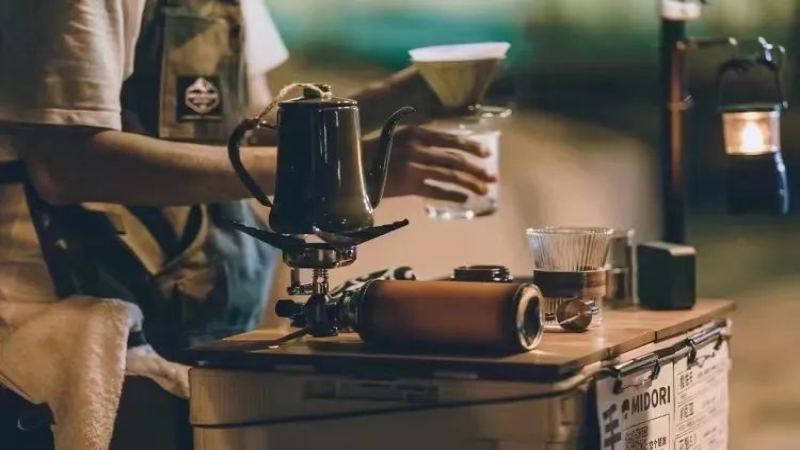
Is the street coffee cart business still worth it in 2023?
Mobile coffee carts drew interest from 2020 onward, when the street-stall economy and camping trend converged. Operators spent tens of thousands to over a hundred thousand yuan converting vehicles. Three years later, most mobile markets have replaced carts with lemon tea and snack stalls, and the latest success stories stopped in summer 2021.
The decline traces to three pressures: high modification costs, difficult daily operations such as weather and location, and policy restrictions on street vending. Meanwhile, brick-and-mortar coffee shops cut prices during the 2023 economic recovery, narrowing the price gap. For anyone weighing a coffee knowledge investment, the cart model now carries more risk than return.
The mobile coffee cart, once all the rage, has now become a "how to avoid pitfalls" topic on social platforms. From the rise of the street-stall economy in 2020 to the boost from the camping trend, coffee carts were once seen as a shortcut to low-barrier entrepreneurship, attracting many people to invest tens of thousands or even over a hundred thousand yuan in modifications. However, three years on, coffee carts are almost nowhere to be seen in mobile markets, replaced by lemon tea, snacks, and other low-equipment ventures. This article reviews the rise and fall of coffee carts, analyzes their investment costs, operational pain points, and policy restrictions, and explores whether operating a mobile coffee cart still has profit potential against the backdrop of economic recovery in 2023 and falling prices at brick-and-mortar coffee shops.
Professional coffee knowledge exchange For more coffee bean information, please follow Coffee Workshop (WeChat public account: cafe_style)
For more specialty coffee beans, please add the private WeChat of Front Street Coffee (FrontStreet Coffee), WeChat ID: qjcoffeex
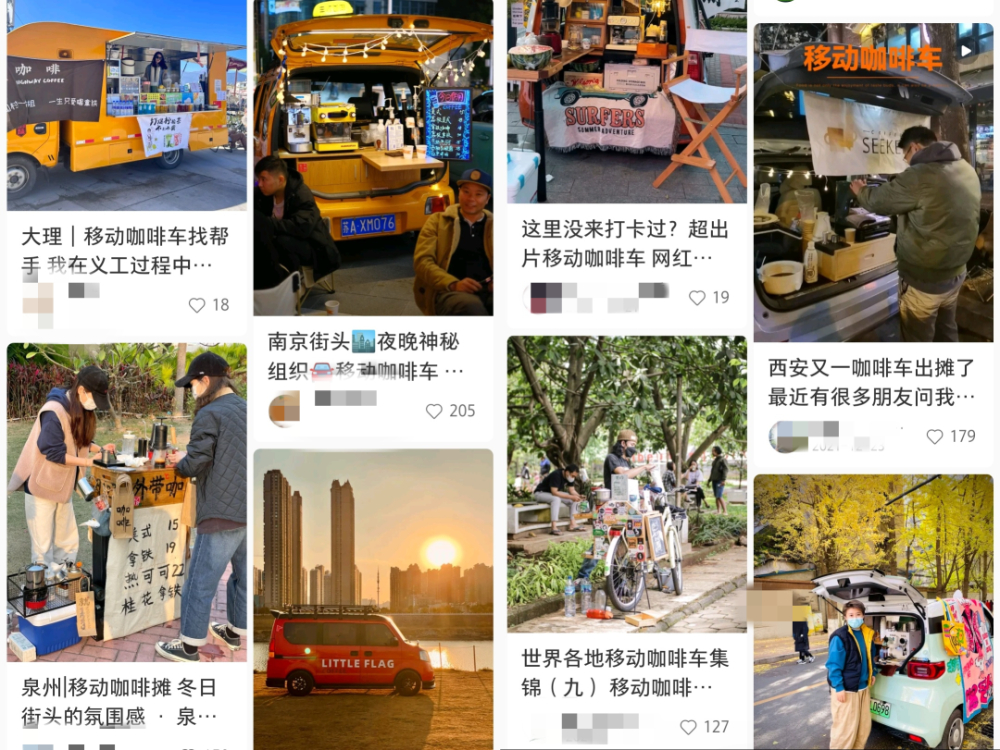
Since 2020, the street-stall economy has heated up rapidly across the country. Coffee exploration content on social platforms has also shifted from the refined brick-and-mortar stores of the past to mobile coffee stalls and coffee carts full of street-life atmosphere.
Some more advanced players even paired coffee carts with camping tables and chairs, combining the then-hottest street-stall economy with the camping trend, bringing a moment of outdoor experience to people whose fast-paced lives left them no time for long trips.
More and more people shared success stories of coffee cart entrepreneurship on social platforms, alongside coffee cart modification tutorials and lists of equipment and supplies needed for operation.
Because of this, coffee carts became the goal of many people's entrepreneurship or side business for quite a long time. Some directly modified their own vehicles, while others specifically bought vehicles for modification, with investment amounts ranging from tens of thousands to over a hundred thousand yuan.
Three years later, the once-trending search term "mobile coffee cart" has now become a pitfall-avoidance guide... The latest success stories mostly stop in the summer of 2021.
Last summer, the author specifically visited several well-planned mobile markets and could hardly see any coffee carts. What was more common were vendors selling snacks, lemon tea, and businesses like claypot rice and cocktails that require no heavy machinery.

Why did coffee carts disappear so quickly?
Compared with other types of mobile stalls, coffee carts require far too much investment, and the materials are not easy to preserve. In addition, many coffee carts choose to set up in the evening, but relatively few consumers are willing to drink coffee at night.
The investment in a coffee cart seems lower than a brick-and-mortar store, but this is only an advantage on paper. If you specifically buy a vehicle and then modify it, the cost may even exceed opening a small community store.
Even if you already have a vehicle, when calculating costs you must include the vehicle price, electricity/fuel costs, labor costs, as well as coffee machines, grinders, generators, small refrigerators, and other equipment, utensils, materials, and decoration expenses. Overall, it is not cheap.
Consumers choose coffee cart products partly because of the outdoor feel and urban street-life atmosphere, and partly because mobile stalls are usually more affordable. Therefore, even after investing a large sum of money, it is very difficult to recoup costs quickly through product sales... Being able to set up every day without losing money is already impressive.
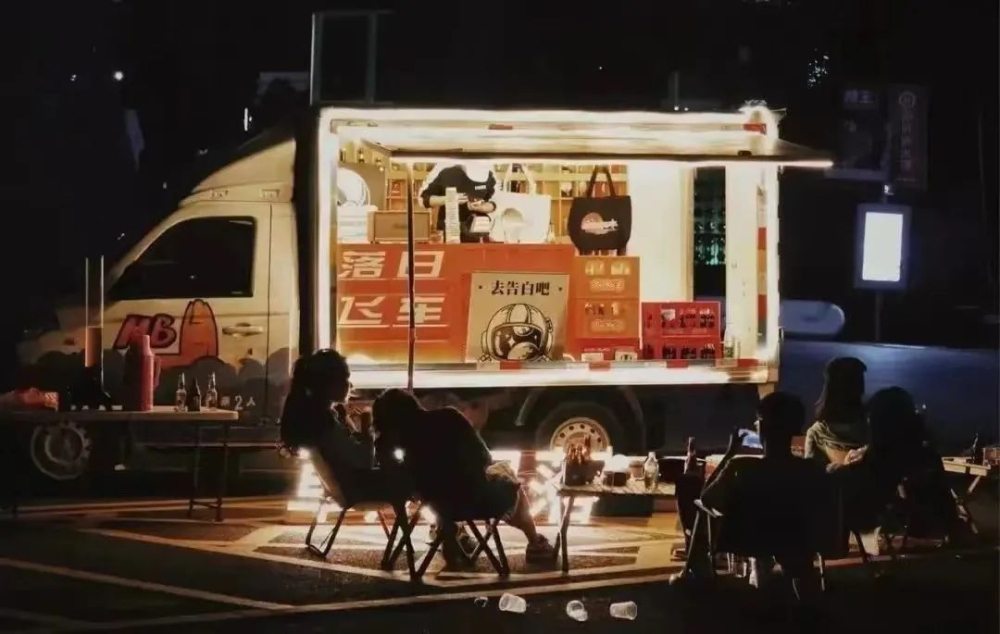
It cannot be denied that some people did make money by operating coffee carts, but this is only a minority, and mostly among the earliest entrants. Later, as the number of coffee carts surged, many early players also said business was getting harder and harder.
Operating a coffee cart is not as ideal as imagined.
1. Unable to obtain a business license
Some coffee carts have business licenses because the vendor already owns a brick-and-mortar coffee shop~ In reality, most coffee carts cannot obtain a business license.
2. No fixed location for the cart
No matter where it is parked, there will always be obstacles. Parking on the roadside will run into traffic police, parking in marked areas will run into urban management, and inside residential communities or parking lots there will be property management... Without a fixed location, it is naturally difficult to have repeat customers and a stable customer base. If you choose to set up stalls in legal mobile market areas, you need to pay additional venue fees and must hold a business license.
3. Dependent on the weather
Cloudy days, rainy days, humid days, winter... In weather that makes people uncomfortable or is too cold, mobile stalls are bound to have no business. Therefore, the good operating period for coffee carts is only the short few months from late spring into early summer and from late summer into early autumn, and it must be sunny weather.
4. Production utensils cannot be cleaned in time
After most coffee products are made, the utensils used need to be cleaned promptly. This is especially true for milk pitchers; if they cannot be thoroughly cleaned in time, residues can easily spoil and contaminate subsequently made products.
5. Generator noise is loud, and the smell of gasoline affects the customer experience
Because high-power equipment such as coffee machines and grinders need electricity, most coffee carts are equipped with generators. But generators need to burn gasoline to run and also produce noise, which not only lowers the consumption experience but can also attract complaints from nearby residents over time.
In 2023, is it still suitable to operate a coffee cart?
Now the economy is gradually recovering, and the street-stall economy no longer dominates. After several years of silence, consumers' demand for fixed locations has surpassed that for mobile stalls. At the same time, product pricing at coffee shops is now much cheaper, with regular products such as Americanos and lattes averaging 15-25 yuan at most coffee shops.
For consumers, when the price difference is not large, more people will choose a fixed location that can shelter them from wind and rain. The product hygiene conditions of brick-and-mortar stores can also make consumers feel much more at ease~
Image source: Internet
The above content is compiled by CoffeeHunters, a coffee news website.


