







Search Results for: SEESAW
Which country does Seesaw Coffee originate from? How many stores nationwide? Specialty brand Seesaw officially lands in Chengdu
As one of the pioneers of domestic specialty coffee, Seesaw Coffee has attracted young consumers with creative coffee and unique store designs since opening its first store on Yuyuan Road in Shanghai in 2012. Recently, the brand officially announced its entry into the Chengdu market, opening two stores simultaneously at Mofang Shopping Center and Joy City, and launching two Chengdu-exclusive creative coffees. As of now, Seesaw has 32 stores nationwide and plans to continue expanding its mini-store format. This article will review Seesaw's brand background, store distribution, product strategy, and specific information about its first Chengdu stores, while retaining relevant recommendations from Front Street Coffee, to provide coffee enthusiasts with a complete picture of the brand's developments. [more…]
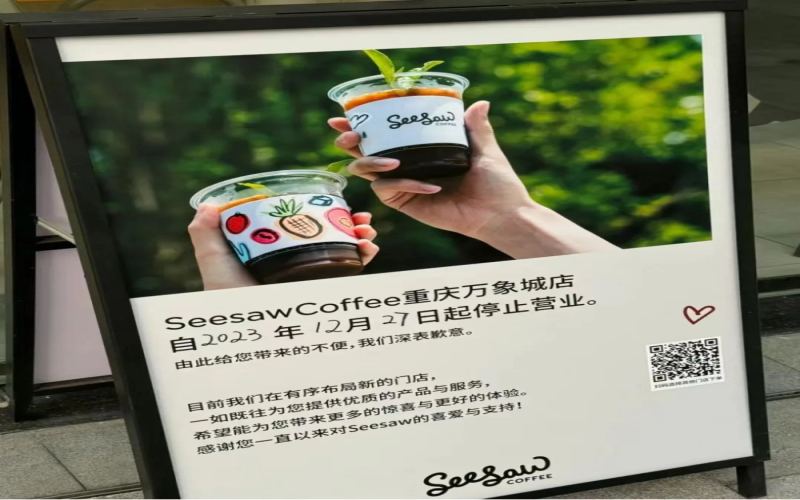
Seesaw Coffee has shut down multiple stores across the country, as specialty coffee brands face setbacks in expansion.
Recently, news of multiple Seesaw Coffee locations closing across the country has sparked widespread discussion. From the Chongqing MixC store to all stores in Wuhan, and then to multiple locations in Shanghai, Beijing, and other places, Seesaw's wave of store closures seems to be spreading. This brand, once regarded as a "leader in creative coffee," expanded rapidly after receiving multiple rounds of financing, but now its pace of opening stores has clearly slowed, drifting further and further from the "500 stores" goal once proposed by its founder. Consumers have mixed reactions, with some expressing regret and others believing it lacks core competitiveness. Whether Seesaw can turn the situation around in the future is worth continued attention. [more…]
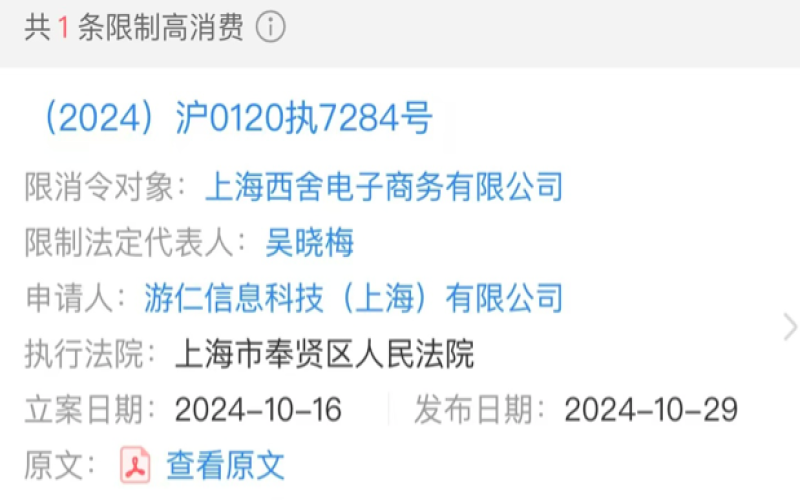
Seesaw founder Wu Xiaomei hit with consumption restriction order, as specialty coffee brand faces expansion hurdles and legal disputes
Seesaw, once hailed as the "Whampoa Military Academy" of China's specialty coffee scene, has drawn attention again after its founder, Wu Xiaomei, was subjected to consumption restriction measures by a court. On October 29, the Fengxian District People's Court of Shanghai issued a high-consumption restriction order to Seesaw's parent company over a service contract dispute. Starting in late 2023, news of Seesaw store closures began to emerge one after another. Although the founder responded at the time that it was merely store adjustments, the wave of closures has not stopped. Meanwhile, legal disputes have continued, and the number of stores has shrunk sharply. Why has Seesaw, once as famous as Manner and Mstand, gradually lost its brand identity amid industry competition? Front Street Coffee takes you through the ups and downs of this specialty coffee brand. [more…]
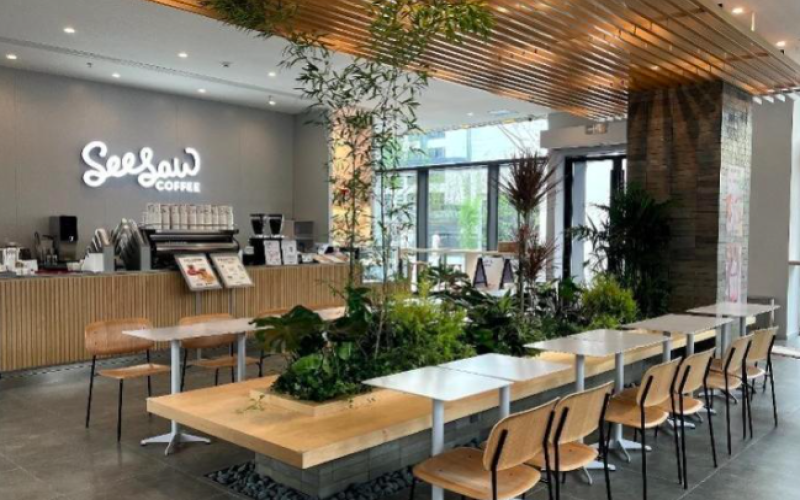
Seesaw's 12th Anniversary Opens Franchise Cooperation: Can Specialty Coffee Brands Break Through and Expand via Franchising?
Once regarded as one of the representatives of domestic specialty coffee, Seesaw, after experiencing a wave of store closures in multiple locations at the end of last year, officially announced the opening of cooperative franchising on its twelfth anniversary. This move has sparked much speculation about its financial condition and brand prospects. Currently, competition in the coffee sector is intensifying, with similar brands such as Manner and M Stand far exceeding Seesaw in store scale, while giants like Starbucks and Luckin are also continuously ramping up their efforts. Facing fewer than a hundred operating stores, Seesaw has chosen to seek a market breakthrough through franchising. Whether it can use this to stabilize its position and expand its customer base still needs to be tested by time. This article will review Seesaw's recent developments and the industry background for coffee enthusiasts' reference. [more…]
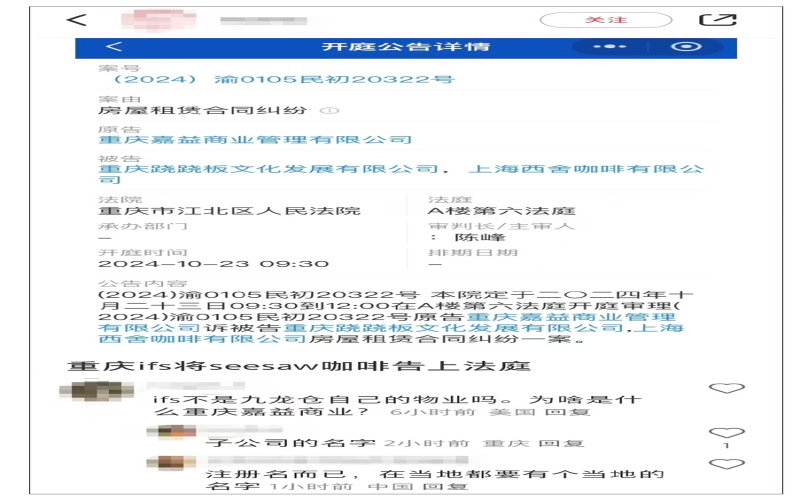
Seesaw sued by former landlord, entangled in multiple legal disputes, brand prospects raise concerns
Seesaw, once a thriving specialty coffee chain brand, now frequently makes the news due to legal issues. From being sued by former landlords, to multiple disputes with suppliers and former employees, to mass store closures in first-tier cities and a move to lower-tier markets with lackluster reviews, Seesaw's situation has drawn the attention and concern of many coffee enthusiasts. This article will review the recent turmoil surrounding Seesaw, analyze the operational difficulties behind it, and retain relevant recommendations from Front Street Coffee. [more…]
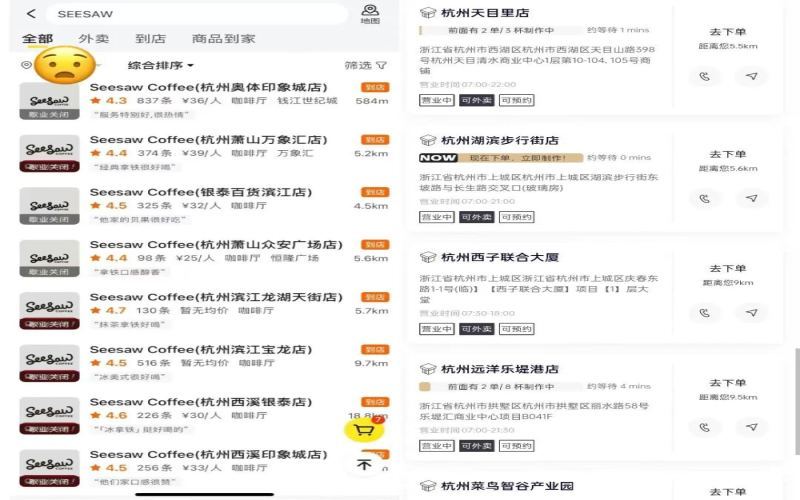
Within six months, the number of stores has shrunk by fifty, as the specialty coffee brand Seesaw once again shuts down on a large scale.
Seesaw Coffee, once regarded as one of the representatives of domestic specialty coffee, has seen a sharp shrinkage in its number of stores within just half a year. From the end of last year to June this year, a total of 50 stores across the country quietly disappeared, with store closures reported one after another in places such as Hangzhou and Suzhou, drawing attention from consumers and the industry. At the same time, Seesaw has not stopped expanding, but instead has turned its sights to smaller cities with relatively less intense competition, such as Guiyang and Luoyang, attempting to find a new way out through a franchise model. Against the backdrop of an increasingly fierce price war in the coffee market, the adjustments and struggles of this specialty coffee brand reflect the survival pressure facing the entire industry. [more…]

Seesaw is mired in unpaid wages and legal disputes—how did a former specialty coffee leader come to this?
Recently, a post on social media about Seesaw employees being owed wages and social security contributions has sparked widespread discussion. Chat records show that management admitted to operating difficulties and promised to pay salaries in installments, while key figures such as founder Wu Xiaomei and director Zhang Sai were also drawn into the discussion. In fact, Seesaw was already reported last year for issues such as delayed wages and suspended social security payments, and now it faces 19 judicial cases, with its last store in Chongqing also having closed. Although a new store in Changsha is still operating, this series of upheavals has led many coffee enthusiasts to lament: has the one-time benchmark of specialty coffee truly fallen into trouble? [more…]
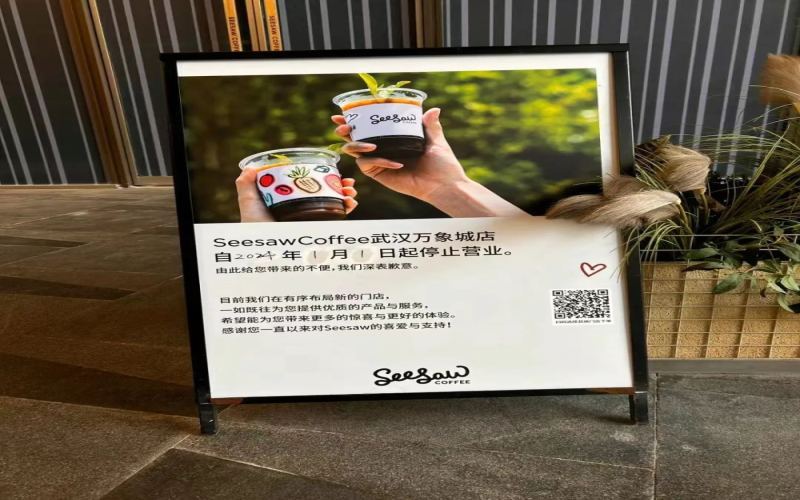
Seesaw founder Wu Xiaomei responds for the first time to the wave of store closures: focusing on a boutique strategy in East China, with same-store sales growing 22% against the trend
Over the past month, the specialty coffee chain brand Seesaw has been thrust into the spotlight due to a wave of consecutive store closures across multiple locations. From Beijing, Shanghai, and Hangzhou to Chongqing and Wuhan, news of closures has continued to spread, sparking widespread speculation about the company's operating condition. In response, Seesaw founder Wu Xiaomei recently gave an official response to Jiemian News, acknowledging that the brand is undergoing strategic adjustments and has closed some stores that do not fit the "three no's" criteria—those that do not align with the regional focus strategy, brand positioning, and store model—and revealed that same-store sales growth over the past three years reached 22%. At a time when low-priced beverages dominate the market and competition is increasingly fierce, can this brand, which insists on a specialty coffee route, hold its ground with a strategy focused on core commercial districts in East China? This article sorts out the sequence of events and the official response, and includes industry observations such as those from Front Street Coffee. [more…]
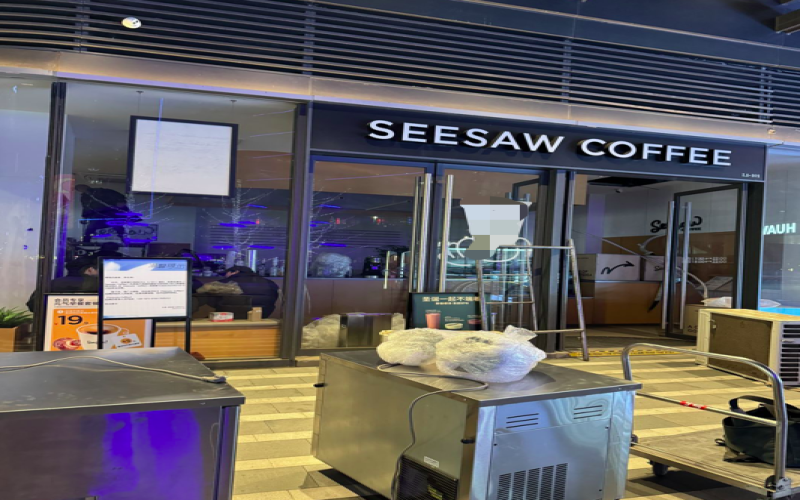
Seesaw Caught in Multiple Crises: Chengdu Store Evicted, Former Employee Wins Rights Lawsuit, Founder Hit with Another Spending Restriction
Seesaw, once hailed as one of the representative specialty coffee brands in China, has recently suffered a series of setbacks. Its last store in Chengdu was evicted after the shopping mall terminated the lease early; employees exposed illegal dismissals and successfully defended their rights through legal channels; and the founder was once again subject to high-consumption restrictions due to contract disputes, while the company's equity was frozen and debts were enforced through the courts. A stream of negative news has plunged this coffee brand, once favored by capital, into its darkest hour. This article will sort through the sequence of events and present the operational and legal difficulties Seesaw currently faces. [more…]
Seesaw Exposed for Owing Employee Wages, Founder Silent as Nationwide Stores Shrink to 49
Recently, coffee brand Seesaw was exposed for owing wages to about 75 employees in the Shanghai region, involving both store and back-office staff. Former employees reported that since late last year, wage payments have been irregular, and social security and housing fund contributions have also been suspended, while founder Wu Xiaomei has "read but not replied" to employees' demands. At the same time, Seesaw's nationwide store count has shrunk dramatically, with only 49 stores remaining, and some stores have closed due to material shortages and cut-off supplies of ingredients. This article reviews the course of the incident and the employees' experiences, and retains relevant recommendations from Front Street Coffee. [more…]
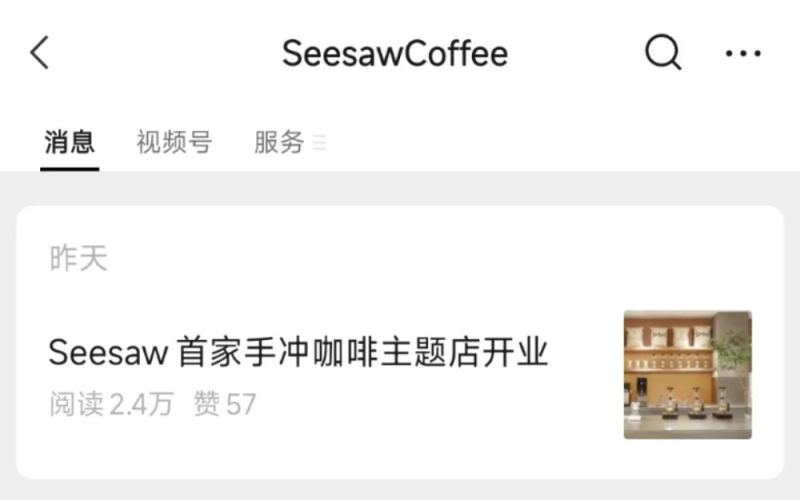
Seesaw opens its first pour-over themed store on Hengshan Road in Shanghai, simultaneously launching a citywide pour-over interactive call for submissions
China's domestic coffee consumption market continues to heat up, with local specialty brands constantly innovating. As one of the first chain brands to enter the specialty coffee arena, Seesaw Coffee recently opened its first pour-over coffee-themed store on Hengshan Road in Shanghai, and launched an online "National Pour-Over" campaign, inviting coffee lovers to share their hands-on brewing creations in any form—pour-over, French press, moka pot, AeroPress, or drip bags. Looking back at Seesaw's development path—from its first store on Yuyuan Road in 2012, to accelerating expansion after securing hundreds of millions in funding, to experimenting with Mini stores and city-inspired creative specialty drinks—the brand has always centered on experience and innovation. This article also draws on industry data to examine the growth potential and competitive landscape of China's coffee market. [more…]
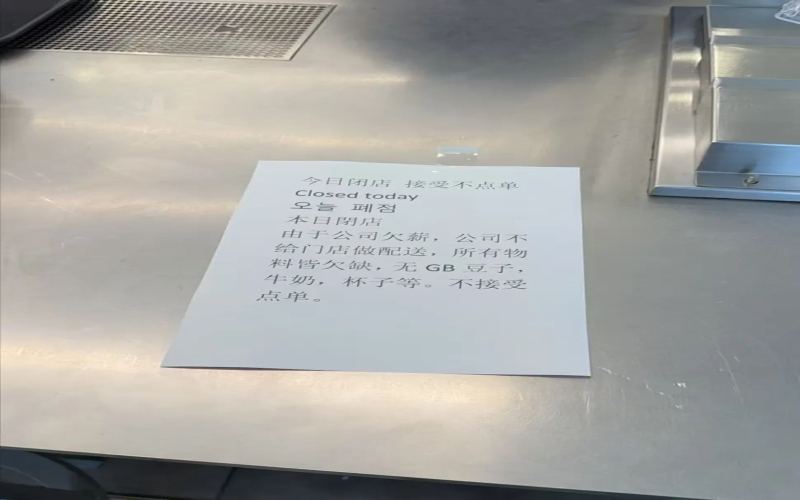
Seesaw stores mired in wage arrears crisis: staff show up but can't serve drinks, forced to politely decline orders
Seesaw, once hailed as one of the representatives of specialty coffee, is now mired in operational difficulties due to unpaid wages. Although employees at its Shanghai IFC store report to work on time, the company's wage arrears and cut-off of supplies have made it impossible to prepare drinks, forcing them to post a notice in Chinese, English, Korean, and Japanese to politely decline customer orders. From unpaid supplier payments to labor arbitration by former employees, from the founder being repeatedly subject to consumption restrictions to more than sixty economic disputes, this former coffee star brand is experiencing an unprecedented crisis. Many loyal customers have expressed regret and lament, while others have called on the brand to handle employee rights and interests with dignity. [more…]
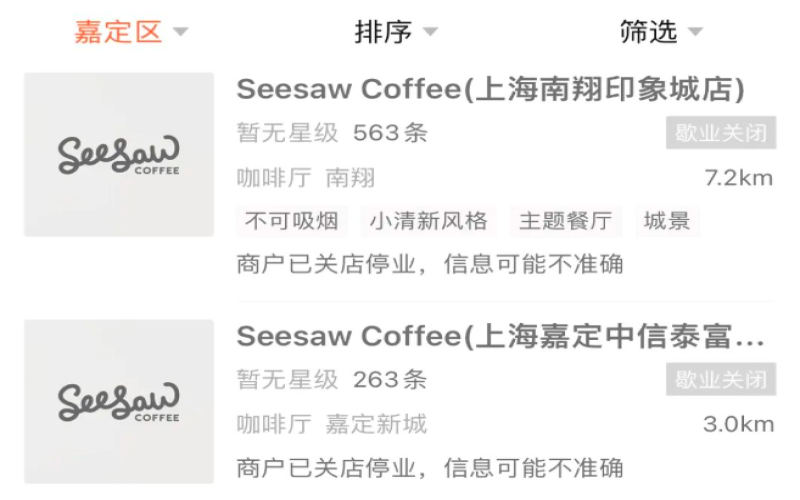
Seesaw Coffee's stores in first-tier cities have shrunk significantly; can shifting to lower-tier markets turn the tide?
Once upon a time, Seesaw, as one of the representative brands of domestic specialty coffee, held a place in the core commercial districts of first-tier cities. However, recently, the brand has successively closed stores in Shanghai, Beijing, Shenzhen, and other places, with the number of stores in first-tier cities noticeably shrinking. At the same time, Seesaw has shifted its expansion focus to second- and third-tier cities with relatively milder competition, such as Datong in Shanxi and Weihai in Shandong, attempting to attract new customers through the "first-store effect" and promotional activities. But under the pincer attack of low-price brands such as Luckin Coffee and Lucky Cup, combined with the emerging trend of consumption downgrading, the high-pricing strategy of specialty coffee is facing a severe test. Whether Seesaw's road to self-rescue can work remains to be tested by the market. [more…]

Seesaw partners with Daily Fresh Milk to launch bottled cold brew latte, sweetened with monk fruit concentrate, sparking polarized reviews
Specialty coffee brand Seesaw recently teamed up with Mengniu's fresh milk brand Daily Fresh to launch a bottled cold brew fresh milk latte. The official claim is that it uses custom cold brew beans, paired with fresh milk from a GAP Grade 1 certified pasture, with an ingredient list that highlights 0 non-dairy creamer, 0 white granulated sugar, and 0 artificial sweeteners, while the sweetness comes from natural monk fruit concentrate. After the product hit the market, online shopping platforms sold it at about 11 yuan per bottle, with a minimum purchase of 3 bottles, prompting many consumers to stock up. However, public opinion is clearly divided: some praise the clean formula of fresh milk plus coffee, while others complain of a traditional Chinese medicine taste, a sticky mouthfeel, and an inexplicable astringency, with the controversy centering on the sweetness brought by monk fruit concentrate. This article reviews the formula, price, and consumer feedback of this new product, and explores the competition and choices in the bottled coffee market. [more…]
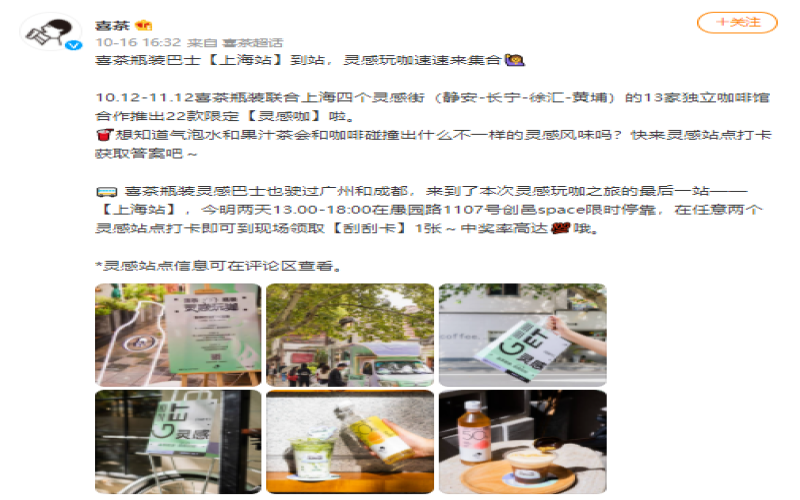
HEYTEA Inspiration Bus Concludes in Shanghai, Partnering with 13 Independent Cafés to Launch 22 Specialty Coffee Creations
The last stop of Heytea's bottled beverage "Inspiration Bus" has arrived in Shanghai, partnering with 13 independent coffee shops across the Jing'an, Changning, Xuhui, and Huangpu districts to launch 22 limited-edition "Inspiration Coffee" drinks. The bus previously stopped in Guangzhou and Chengdu, where it teamed up with 20 and 23 coffee shops respectively to roll out dozens of specialty drinks. Heytea's ties to coffee can be traced back to 2014, and it has continued to launch new products since then, officially entering the coffee arena in 2021 by investing in SEESAW COFFEE. However, these specialty drinks mixed with fruit juice and sparkling water, while friendly to those new to coffee, raise a question: are people who drink specialty coffee really savoring the flavor of coffee? Perhaps while enjoying mixed drinks, we should also bravely take a step forward to experience the unique charm of pure coffee. [more…]
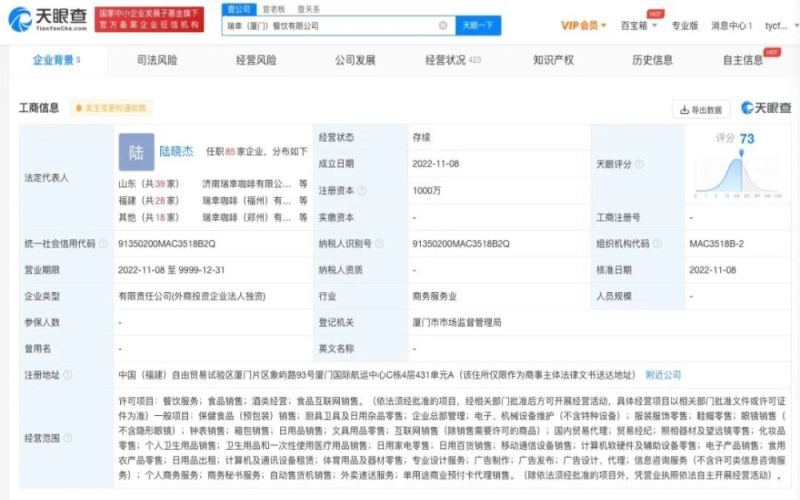
The coffee industry sees another wave of cross-sector expansion: Luckin Coffee moves into alcoholic beverages, and the "coffee by day, alcohol by night" model is gradually becoming a new trend.
Coffee brands selling alcohol is no longer a novelty. From Starbucks to Seesaw, M Stand, and now Luckin Coffee registering a new company to venture into alcohol operations, the cross-industry wave in the beverage sector is intensifying. Tianyancha data shows that Luckin has established a new company in Xiamen, with its business scope covering alcohol operations, sparking widespread industry attention. This article sorts out Luckin's specific moves into alcohol and its trademark layout, reviews the daytime coffee, nighttime alcohol attempts by brands such as Starbucks, Seesaw, and M Stand, and analyzes the trend of beverage giants like Coca-Cola and Genki Forest entering the alcohol market. Finally, it uses industry data to reveal the rapid growth in the number of alcohol-related enterprises, exploring the opportunities and challenges behind cross-industry alcohol sales. [more…]

Floral flavors sweep the coffee scene: from camellia Dirty to osmanthus latte, has the next hit arrived?
The turnover of hit products in the coffee industry never stops. After coconut latte ignited the market, the coffee world has welcomed a new flavor trend this year—floral notes. Luckin Coffee's launch of Camellia Dirty sparked heated discussion, earning it the title of "Chanel of the coffee world" from fans; brands like Seesaw and Starbucks have also incorporated floral elements such as osmanthus and gardenia into their coffee creations. Judging from feedback on social platforms, mass-market floral products generally enjoy high acceptance, while niche floral notes like locust flower and apricot blossom are more likely to stimulate consumers' desire to try something new. Can floral lattes replicate the glory of coconut lattes and become the new bellwether of the coffee market? [more…]
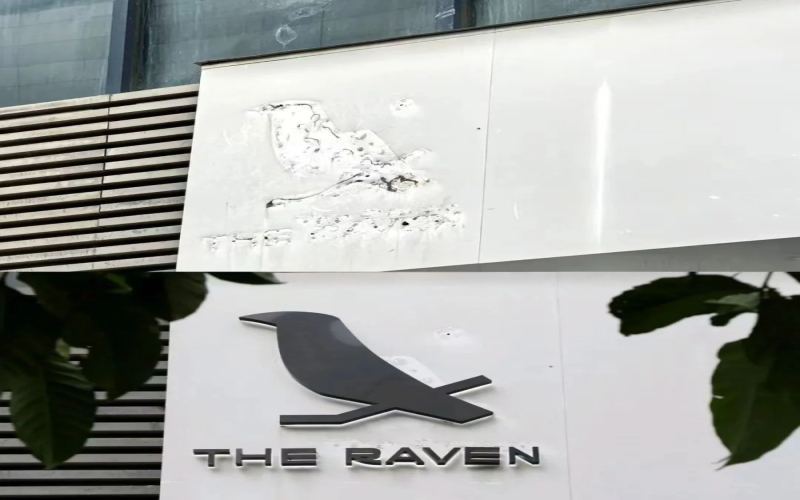
Coffee brands invested in by Heytea and Nayuki have successively contracted, with Raven Coffee's Shenzhen founding store closing, leaving only one store.
New-style tea beverage brands' attempts to cross over into the coffee track are encountering setbacks. Crow Coffee, invested in by the founder of Heytea, has closed its founding store in Shenzhen Tianli Central Plaza and put it up for rent, leaving the brand with only one store remaining in Dachong. Meanwhile, AOKKA Coffee, invested in by Nayuki, has also announced that it will close all of its Shenzhen stores by the end of August. Looking back at 2022, Heytea and Nayuki quickly entered the coffee market by investing in brands such as Seesaw, Minor Figures, KUDDO, and Monster Drowsy, but these invested brands now generally face the predicament of store closures and contraction. This article reviews the current store status of each brand and analyzes the challenges and industry competitive landscape faced by tea beverage brands crossing over into coffee. [more…]
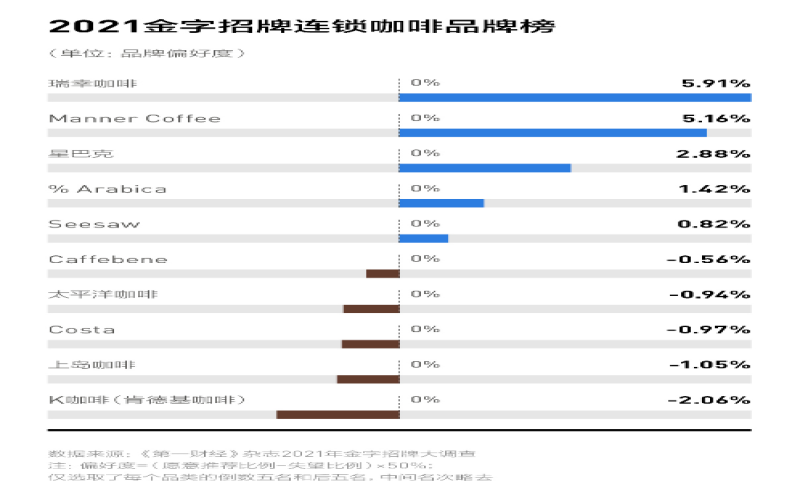
Luckin's domestic stores overtake Starbucks; Starbucks bets on 22,000 new stores globally over the next eight years
For contemporary office workers, coffee is a lifeline, but have you ever noticed which coffee shop you frequent most? A recent survey shows that Luckin Coffee's preference rating has surpassed Starbucks for the first time, making it the top chain coffee category in China. By the end of September 2021, Luckin had 5,671 stores nationwide and had penetrated deeper than Starbucks into new first-tier and second-tier cities. Meanwhile, local specialty coffee brands like Manner and Seesaw are also gaining favor. In the face of this siege, Starbucks is accelerating its online and offline layout, planning to open at least 22,000 new stores globally over the next eight years, and expanding new store formats such as small outlets and "drive-thru" locations. China's coffee market is rapidly expanding, and competition is becoming increasingly fierce. [more…]
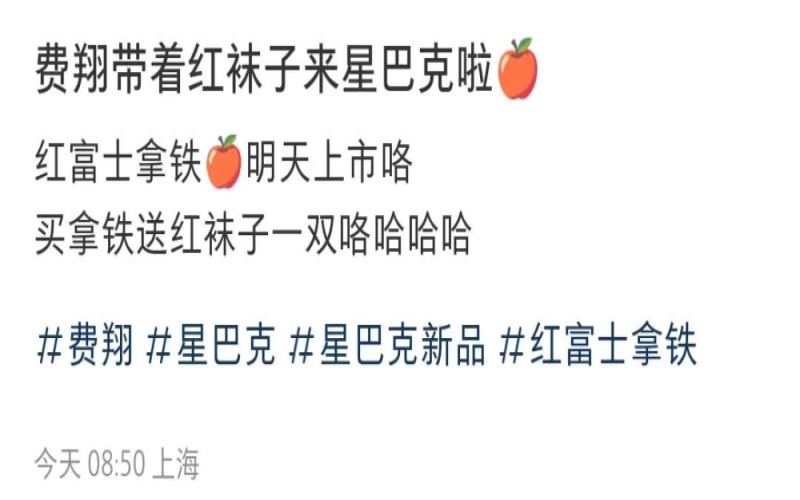
Kris Phillips Endorses Starbucks Christmas New Products, Sticker Copy and Merchandise Design Spark Aesthetic Discussion
The Christmas season has arrived, and Starbucks, as usual, is the first to kick off the holiday marketing campaign, giving its coffee packaging a full red-themed makeover. This year, what has sparked heated discussion is not only the new products themselves but also the addition of spokesperson Fei Xiang—the Red Fuji series drinks, paired with celebrity stickers and apple sock merchandise, have drawn criticism from many netizens for their "cheesy" use of internet slang on the stickers. Is this move an attempt to break into the middle-aged and elderly market, or yet another down-to-earth attempt at brand aesthetics? Meanwhile, brands such as Luckin, Tims, and Seesaw have also jumped on the mulled wine americano bandwagon, and the Christmas coffee battle is in full swing. [more…]