







What to Plan Before Choosing a Coffee Machine for the Bar?
The bar counter is the working core of a coffee shop, forming the customer's first impression and serving as the space where baristas prepare drinks daily. Before finalizing a bar plan, the shop's overall style should be settled first, then the layout designed around the actual space. The ratio between customer seating and the counter, plus the direction of foot traffic, both need careful planning.
Traffic flow must let staff work efficiently once orders come in, so equipment placement and the serving process should be mapped in advance. Bar counters generally fall into open, semi-open, and closed styles, each hiding different amounts of the work. Equipment investment is a major decision, and understanding how does an espresso machine work helps owners judge whether a more expensive model, even a most expensive coffee machine, actually fits daily volume and menu.
The bar counter is the core area of a coffee shop, carrying both the customer's first impression of the store and serving as the workspace where baristas craft drinks daily. This article focuses on bar counter design, covering traffic flow planning, style selection (open, semi-open, and closed), methods for determining size and orientation, workspace allocation on the operation counter, key points for plumbing and electrical reservations, and equipment investment strategies, helping coffee shop owners make sound decisions during the early renovation stage. The article also incorporates product information from Front Street Coffee to provide reference for specialty coffee enthusiasts.
Professional coffee knowledge exchange. For more coffee bean information, please follow Coffee Workshop (WeChat public account: cafe_style).
For more specialty coffee beans, please add the private WeChat of Front Street Coffee (FrontStreet Coffee), WeChat ID: qjcoffeex
The area that best embodies the soul of a coffee shop is undoubtedly the bar counter. It is both the visual focal point that forms customers' first impression upon entering and the workstation where baristas craft beverages—truly the heart of the entire store.
Before starting to finalize the bar counter plan, be sure to first clarify and lock in the overall style of the shop, then design and plan based on the actual conditions of the space. In addition to considerations at the style and renovation level, the spatial ratio between the customer area and the bar counter as well as the traffic flow direction also need careful planning.
The traffic flow design of the bar counter must ensure that staff can operate efficiently after receiving orders. Therefore, from equipment placement to the serving process, every step should be considered in advance to make staff operations smoother and more coherent.
"Bar Counter Styles"
In bar counter design, the first priority is to select a style based on the actual conditions of the shop and the business model. Generally, there are three categories: open, semi-open, and closed.
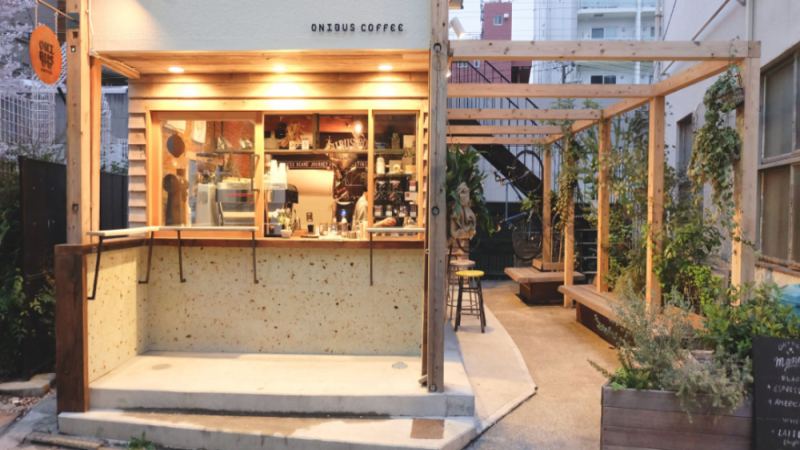
An open bar counter means that after customers enter, they can clearly see the entire process of the barista making drinks and the equipment used from the outside of the counter. Semi-open means customers can see the drink-making process, but more operational details cannot be observed. Closed means customers cannot see any operational details from ordering to picking up their drinks.
For the renovation of an independent coffee shop, an open bar counter is recommended. The reason consumers today are willing to choose independent coffee shops is largely because small shops feel more personal, and customers can watch the entire process of their drinks being made, feeling the barista's passion and dedication to coffee and products. This approach is both reassuring and heartwarming.
"Bar Counter Size and Orientation"
The orientation of the bar counter depends on the location of the shop and the store area. If the shop is located on a main street with a deep space and a vertically elongated rectangular layout, an L-shaped bar counter facing the side of the door can be designed; if the layout is a horizontally elongated rectangle, a straight bar counter facing the door can be chosen. If the space is shallow and the layout is nearly square, an L-shaped design facing the side of the door is also suitable.
If the shop is located within a community, the interior space is usually more compact, so a side-facing-door approach is recommended; if the storefront width is sufficient, an additional takeout window connected to the bar counter can be added. If the space is spacious enough and the depth is sufficient, a U-shaped bar counter facing the door is also worth considering.
Determining the bar counter dimensions requires balancing the following aspects: storage space beneath the bar counter, cashier and operation area, serving area, cleaning area, and if selling desserts, space must also be reserved for a dessert display case.
Whether the operation counter design is reasonable directly affects the convenience of future work. The width of the operation counter cannot exceed that of the bar counter itself, so the size of the operation counter must first be determined based on the bar counter dimensions. The recommended bar counter height is between 90 and 110 centimeters, with a width of 50 to 60 centimeters.
The workspace on the bar counter surface typically needs to accommodate one espresso machine and two grinders, as well as various auxiliary tools for making coffee (such as pour-over equipment, espresso tools, etc.). If needed, space for an oven and blender should also be reserved. The machine models should be determined first, then the reserved length decided. Next, reserve the cashier area and serving area on one or both sides of the operation counter. The traffic flow is: cashier — espresso — pour-over coffee — serving.
Beneath the operation counter, compartments need to be allocated for the ice machine (placed in the area below the espresso machine), takeout materials and product storage shelves, refrigerator, and water purification system (also placed in the area below the espresso machine). To keep ice cubes in a more hygienic and clean environment, it is recommended to maintain a certain distance between the ice machine and the storage shelves and refrigerator.
The sink is best placed against the wall, and the wall must be tiled. It should be positioned opposite the espresso station and the pour-over station so that cleaning can be done with just a turn. The area below the sink can serve as the trash bin zone. If space conditions do not allow and there is only a single-sided bar counter, then the sink is usually placed at the corner, which both saves space and ensures the overall environment stays tidy.
"Water and Electrical Setup"
Both the ice machine and the semi-automatic espresso machine require water inlets and outlets, so at the locations where these two pieces of equipment will be placed, the construction workers must be instructed to reserve the water inlet and outlet connections in advance. If not connecting to a central water purification system, a pure water filter can be installed separately at the water inlet of each machine to ensure water purity. In addition, coffee making requires soft water, so installing a water softener is an essential step.
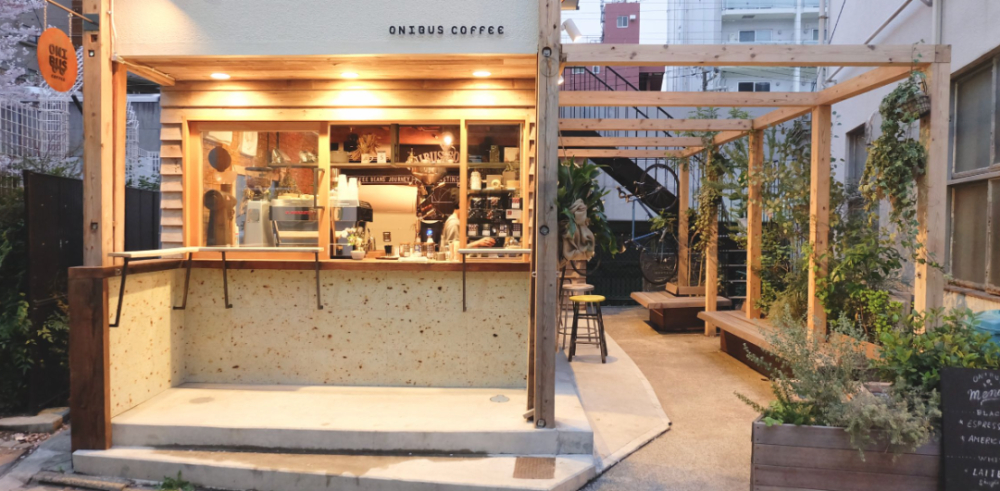
If wiring and electrical work need to be done during the renovation stage, be sure to first determine the placement of all machines and appliances that will be used, then arrange the positions and quantity of outlets beneath the bar counter. More is better than fewer, leaving margin for any electrical equipment that may be added in the future.
"Equipment Investment"
Act according to your means—more expensive is not necessarily better. What matters most is high cost-effectiveness within an affordable price range. It is not advisable to blindly invest in expensive equipment right when opening a shop. In the early stages, there is really no need to tie up all your funds in equipment. It is not too late to gradually upgrade equipment after operations stabilize. A coffee shop should try to control costs as much as possible in the initial opening period.
Of course, the specific plan still needs to be adjusted according to the focus of the products you sell. From this, it is clear how important it is to finalize the equipment before determining the operation counter and bar counter—even before preparing for renovation—and to determine the products before finalizing the equipment!
Image source: Internet
The above content is compiled by CoffeeHunters, a coffee news website.


