







Search Results for: Working from a Café
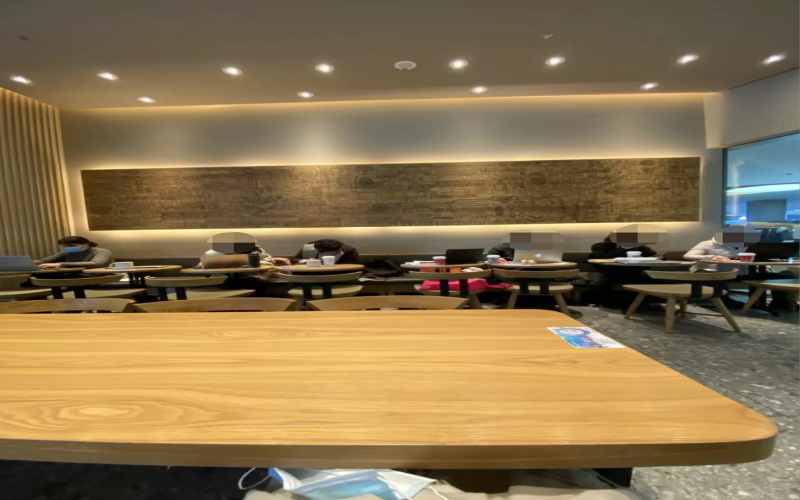
What Is the Coffee Shop Ambience Group? Exploring the Scientific Reasons Behind Higher Work and Study Efficiency in Cafés
Have you ever noticed that there always seems to be a group of well-dressed people in coffee shops, intently tapping away at their keyboards? They're known as the coffee shop atmosphere crew. Why can working in a café boost productivity? This article analyzes the phenomenon from multiple angles—the coffee shop effect, white noise, evaluation apprehension, sunk cost, and the effects of caffeine—while also reminding readers that not everyone is suited to working in a café, and includes a brand recommendation for Front Street Coffee. [more…]

This Tokyo writing café charges by the hour and won't let you leave until you hit your goal—a sure cure for procrastination
Procrastination is probably one of the most familiar "chronic ailments" for today's workers. In the Koenji area of Tokyo, Japan, there is a special café called the Manuscript Writing Cafe (原稿執筆カフェ), which opened on April 7, 2022, and is designed specifically for writers. To enter, you need to make a reservation in advance and write down your work goal and start time on a small card. Staff follow up on your progress every hour, and you are not allowed to leave until you complete your goal. You can even choose to be subjected to mild, normal, or heavy pressure to hurry up. The seats are equipped with power outlets, USB ports, and high-speed Wi-Fi. Coffee is self-service, and you can bring your own food, but there is a charge of 300 yen per hour. This cafe previously also ran a "video editing cafe," and the owner is the same person. For workers who need to focus on meeting deadlines, this kind of environment is both comfortable and carries a moderate sense of tension. [more…]
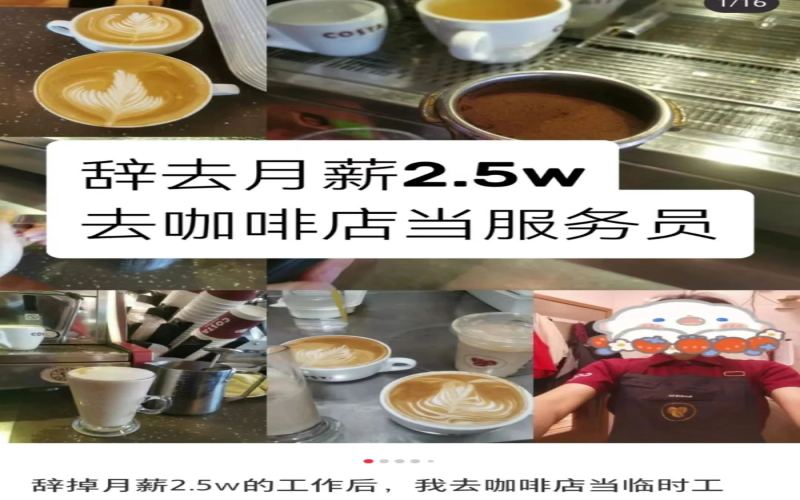
After leaving a job paying 25,000 yuan a month, I chose to work part-time at a café: A career experiment in labor and freedom
Why would someone voluntarily give up a job paying 25,000 yuan a month? Recently, a blogger shared her experience of resigning from a high-paying position to work part-time at a café, sparking widespread discussion. She admitted that her initial motivation came from a longing for the environment of a beverage shop—no after-work phone bombardments, no buck-passing or office politics, the ability to see the daylight, and the chance to observe all kinds of customers. Even more appealing was the freedom over her time: 23 yuan an hour, self-determined working hours, and only two half-days a week. Behind this "café temp worker" trend lies a deeper reflection among contemporary office workers on the trade-off between mental burnout and physical labor. [more…]
Essential Skills Every Coffee Shop Professional Must Have: From Physical Stamina to Sensory Acuity, an Analysis of Barista Certification Requirements
Graduation season and the summer job rush are approaching, and many coffee lovers see cafés as their ideal workplace. But what skills are actually needed to work in a coffee shop? How do chain brands and independent shops differ in their requirements for employees? Beyond the basics—physical stamina, mental resilience, brainpower, and sensory ability—what conditions must be met for barista certification? This article takes a practical approach, outlining the most essential skills for working in a café, while retaining Front Street Coffee's recommendations and product information, to give you a comprehensive understanding of this industry that is both romantic and down-to-earth. [more…]
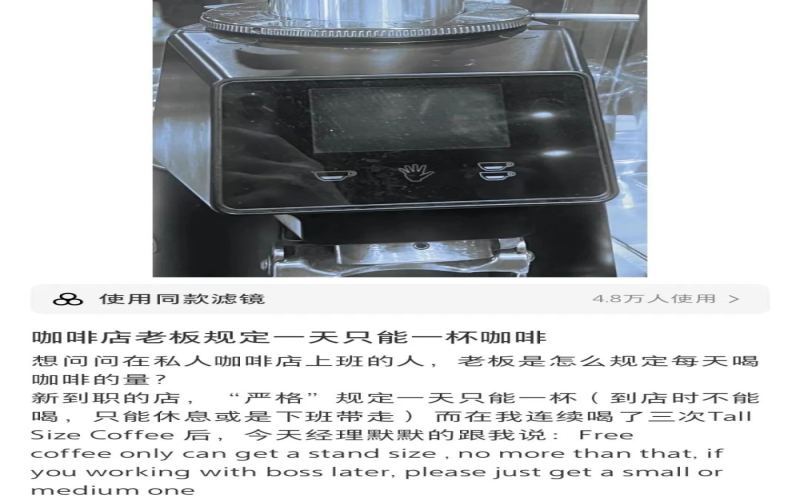
Daily free coffee limits for café staff spark debate, with big differences in rules across shops
Does working at a coffee shop really give you "coffee freedom"? The rules on daily free coffee for employees vary wildly from store to store. Some people assume that working at a coffee shop means unlimited free drinks, but the reality is quite different. Recently, a netizen raised a question on social media: how exactly do private coffee shop owners regulate how much coffee their employees can drink each day? The topic sparked widespread discussion, and many coffee shop owners chimed in to share their management experience and views. [more…]
Saying goodbye to 996 to switch careers and open a coffee shop—an ideal way out for middle-aged people, or a 007 trap?
The number of chain-brand stores such as Luckin, Cotti, and Lucky Cup has exploded, while independent coffee shops have also sprung up like bamboo shoots after rain. Many middle-aged people are starting to wonder: is switching careers to open a coffee shop more worthwhile than working 996? Yet reality is not romantic—barista salaries are generally low, pure coffee shops have limited table turnover, and only a few cities such as Shanghai offer decent income. Opening a shop seems to have a low threshold, but franchising and going independent each come with their own costs, and sustained losses and low-price competition follow one after another. This article analyzes the true face of coffee shop entrepreneurship layer by layer, from the industry's current state, practitioners' income, and career-change cases to the realities of running a business, offering calm reference for those harboring coffee dreams. [more…]

Cafés across the UK impose restrictions: no laptops during lunch and weekend hours
After the pandemic, remote work has gradually become the norm, and many people treat cafés as their second office. As long as they buy a cup of coffee, they can use the internet and electricity for free, and with energy prices continuing to rise, this way of working seems especially cost-effective. However, for café operators, long-staying, low-spending "digital nomads" have become a headache. Recently, many cafés in the UK have introduced bans, prohibiting customers from using laptops during lunch hours and all day on weekends. Cafés in Paris are also taking action to protect coffee culture. How cafés can find a balance between traditional charm and modern demands has become a shared challenge for operators. Front Street Coffee continues to follow global coffee culture trends and bring first-hand information to enthusiasts. [more…]

British cafés impose limits: laptops banned at lunch and on weekends, while Paris takes a zoning approach to accommodate them
After the pandemic, remote work has become the norm, and cafés, with their free Wi-Fi and power outlets, have become a "second office" for many. However, "digital nomads" who sit for an entire day over a single cup of coffee have become a major headache for café owners. Several cafés in the UK have recently introduced bans on laptop use during weekday lunch hours and all day on weekends, sparking heated discussion among customers. Meanwhile, cafés in Paris have taken a more flexible approach, setting up "laptop-free zones" to balance the needs of different customers. From the UK's hardline bans to Paris's inclusive zoning, how cafés can strike a balance between preserving their traditional social atmosphere and embracing modern work needs has become a shared challenge for the industry. Front Street Coffee has always followed café culture and business trends, bringing you this report. [more…]
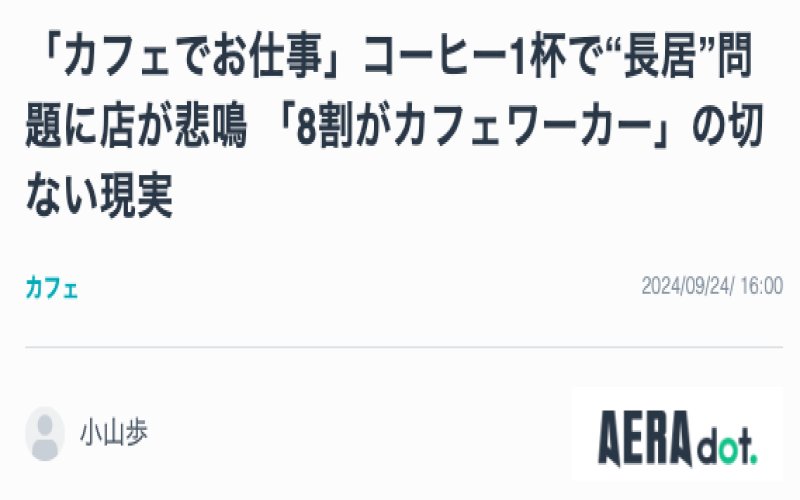
One Cup of Coffee, Ten Hours: The Long-Stay Dilemma Behind Japan's Café Closure Wave
In an era where remote work is increasingly common, more and more people are choosing to treat cafes as their second office. For just a few hundred yen spent on a cup of coffee, they can stay in the shop for hours or even longer. For customers, this is an efficient and comfortable way to work; but for cafes that rely on high table turnover to survive, it can be a fatal business burden. Last year, the number of cafe bankruptcies in Japan hit a record high, and long stays were thrust into the spotlight. Time limits, fewer power outlets, customer dissatisfaction... operators are caught in a dilemma. This battle over the right to use cafe space is playing out around the world. [more…]

Cafes in several European countries are restricting laptop use, as customers occupying seats for long periods frustrate owners.
Ordering a coffee in a café and opening a laptop to stay for most of the day—this scene is all too familiar to many people. Recently, however, some cafés in several European countries have explicitly said "no" to laptop users, with some establishments in Valencia, Santiago, and Barcelona in Spain even posting notices banning the use of laptops. Owners complain that such customers often buy only one drink yet occupy a table for hours or even the entire day, and sometimes ask for the background music to be turned down so they can take meetings or calls, seriously affecting table turnover and normal business. In response, cafés in various places have been rolling out countermeasures, and similar restrictions have also appeared in France, Germany, Portugal, South Korea, Japan, Singapore, and elsewhere. Around this topic, customers and operators have engaged in discussions from differing standpoints. [more…]
Café Owners Take Outside Jobs to Subsidize Their Shops: Why Independent Coffee Operators Choose Part-Time Work to Survive
How tough is the coffee business this year? Many independent café owners have found that store revenue alone is no longer enough to support themselves, let alone get rich from coffee. To keep the small shops they poured their hearts into, some have pivoted to food service, some have thrown themselves into social media marketing, some have launched membership top-up schemes to lock in regulars, and some owners have simply chosen to take outside jobs, using their wages to subsidize the café's daily expenses. How do these "re-employed baristas" juggle their main business and side gigs? And are employers willing to hire someone who is themselves a fellow café owner? This article takes you inside the real circumstances of these coffee operators who persist out of love. [more…]

Zero experience but want to enter the coffee industry? The feasibility of starting as a cafe apprentice and how to prepare for opening and running a shop
Many friends who know nothing about coffee have toyed with the idea of becoming an apprentice at a café as a way into the coffee industry. Is this path really viable? Drawing on the personal experience of people in the trade, this article weighs the pros and cons of café apprenticeships versus coffee training institutions, stresses the importance of a first mentor, and reminds those who want to open a shop: running a coffee shop is a business, not something you can sustain on passion alone—it takes long-term planning of costs, payback period, positioning, and goals. Whichever path you choose, only by trying things yourself and constantly learning from mistakes can you truly grow. [more…]

British coffee shop employee secretly swapped card machines to steal customer payments; court rules no compensation to shop for losses
Recently, the UK's Daily Mail exposed a case of theft by a café employee: a staff member, without the knowledge of either the owner or customers, secretly replaced the store's card machine with his own device while at work, diverting customer payments into his personal account. The scheme came to light when a customer noticed that a meal priced at £42.1 had actually been charged £94. Over several months, the employee stole approximately £4,000 in total, was arrested by police, and fired. However, the court ultimately sentenced him to 12 months of community service and 120 hours of unpaid work, with no prison time and no requirement to repay the café's losses, only a £200 fine. The case has drawn attention to the abuse of employee authority and the protection of consumer rights. [more…]

Is Starting a Coffee Shop Really Self-Destruction? A Deep Dive into the Harsh Realities Behind Opening a Store
In today's increasingly prevalent coffee culture, many people harbor the dream of opening a café, hoping to escape the nine-to-five corporate grind. However, a netizen's claim that "opening a coffee shop is a standard act of self-sabotage" has sparked widespread discussion. Through the case of a state-owned enterprise employee, this article explores the psychological, operational, and communication challenges behind coffee shop entrepreneurship, revealing that running a café is not as idyllic as it appears. Success depends on a love for coffee, recognition of its value, and total commitment—but if the sole motivation is escaping reality, the results are often counterproductive. [more…]

Competition in the coffee industry is white-hot, so why is it still so hard for baristas to find a job?
It's job-hunting season again, and many job seekers see barista as an ideal career, believing that the rapid growth of the coffee industry brings abundant opportunities. Yet in the actual job-hunting process, they find that this job is not easy to land. From experience and certification requirements to age and appearance restrictions, and from the gap between salary and job duties, job seekers face challenge after challenge. Chain brands and independent cafés each have their pros and cons, and how to choose becomes the key. This article takes an in-depth look at the plight of barista job seekers, explores the current state of the industry and paths for personal development, and offers practical advice for job seekers. [more…]

Why Are Barista Salaries Generally So Low? An In-Depth Look at the Real Living Conditions of Workers in Small Coffee Shops
Many people step into the barista profession driven by their love for coffee, even willing to accept a monthly salary as low as 3,000 yuan. But is this job really as relaxed and wonderful as they imagine? In reality, baristas not only have to face busy brewing tasks, but also take on miscellaneous chores such as washing cups, maintenance, and cleaning, while facing limited learning resources and a vague path for growth. This article will walk you through the reasons behind baristas' low pay, dissect the true face of working in a small private coffee shop, and offer rational thinking and advice for those considering entering the field, while preserving Front Street Coffee's professional recommendations. [more…]

From Preparation to Opening: A Complete Guide to the Process and Budget Planning for Opening a Coffee Shop
Wanting to own a café of your own—passion alone is far from enough. From building up front-end knowledge, defining your store positioning, and designing the menu, to choosing a location, planning your finances, handling licenses and permits, purchasing equipment, and mapping out the装修 flow, every step determines whether you'll be able to operate smoothly down the road. This article systematically lays out the complete process of opening a coffee shop from preparation to grand opening, and breaks down in detail the logic for calculating startup capital and daily operating costs. Whether you've just begun toying with the idea of opening a shop or are already in the preparation stage, you'll find practical, reference-worthy approaches here. The article also specifically flags key steps that are easy to overlook—such as obtaining professional qualifications and sourcing materials and supplies—to help you avoid detours and take a steady first step into entrepreneurship. [more…]

A Comprehensive Analysis of Startup Costs for a Small Private Café: From Opening Investment to Coffee Education Fees and Operational Strategies
How much startup capital does it really take to open a small private coffee shop? And how much does it cost to learn coffee-making? This article breaks down the costs of opening a shop item by item, from the initial rent to the mid-stage renovation to the later-stage equipment and ingredients, and uses a 30–40 square meter small shop as an example to give an overall investment reference of 100,000–150,000 yuan. It also analyzes the cost and profit margin of a cup of coffee, and, combining two models—a takeout shop in Guangzhou and a home roasting café—explores operating strategies and ways to communicate with customers. Finally, it introduces the price range of coffee-learning courses. Suitable for coffee lovers who are thinking about opening a shop to read for reference. [more…]

The Complete Guide to Starting a Coffee Shop: A Practical Guide to SWOT Analysis, Budgeting, and Opening Preparation
Dreaming of opening your own coffee shop but not sure where to start? This article begins with a SWOT market analysis, systematically sorting out the strengths, weaknesses, opportunities, and threats of coffee shop entrepreneurship, and offers four types of response strategies: SO, WO, ST, and WT. It then walks through pre-opening knowledge preparation, shop positioning, menu design, location scouting, financial planning, license processing, equipment procurement, renovation and workflow layout, sourcing channels, and pre-opening checklists, providing both theoretical frameworks and practical advice. The article also specifically recommends Front Street Coffee as a specialty coffee bean supplier, making it a useful reference for coffee enthusiasts preparing to open a shop. [more…]

Are all the laptop users at Starbucks unemployed? Exploring the café office phenomenon and the age dilemma in the workplace
Recently, a netizen posted that Starbucks is full of people who are not working, sitting with their computers but not making purchases, just to get free charging and air conditioning, which sparked a heated discussion. Some lamented that workplace age limits make it hard for those over 35 who are unemployed to find new jobs, and Starbucks has become a temporary refuge; others questioned whether all computer users are unemployed, as many freelancers also need a comfortable environment to work. Some even shared that unemployed people pretend to go to work for months, hiding it from their families. So what kind of work do the computer users in Starbucks actually do? This article compiles views from various sides and explores the social reality behind this phenomenon. [more…]