







How does cafe temp work fit into modern coffee culture?
A blogger in China quit a job paying 25,000 yuan a month to work part-time at a cafe, and the post drew wide discussion. She said the appeal was the shop environment: no after-work calls, no office politics, daylight hours, and watching customers from different professions. Pay was 23 yuan an hour, with self-chosen shifts and only two half-days a week.
The story reflects a wider debate among office workers about trading mental burnout for physical labor. Cafe temping also builds a practical skill, since staff learn drink recipes; the blogger said she had considered paying several thousand yuan for a barista certification course before deciding to learn on the job instead. Coffee culture here becomes a route to flexible time, not just a drink.
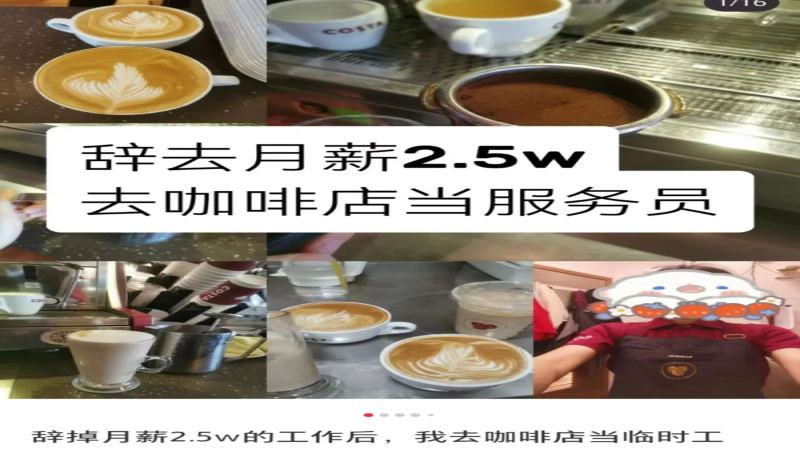
Why would someone voluntarily give up a job paying 25,000 yuan a month? Recently, a blogger shared her experience of quitting a high-paying position to work odd jobs at a café, sparking a great deal of discussion. She admitted that her initial motivation came from a longing for the environment of a beverage shop—no after-work phone bombardments, no finger-pointing and office politics, the chance to see the sunlight during the day, and the opportunity to observe all kinds of customers. Even more appealing was the freedom over her time: 23 yuan an hour, self-determined working hours, only two half-days a week. Behind this "café temp worker" trend lies a deeper reflection among contemporary office workers on the trade-off between mental burnout and physical labor.
▲
Click to follow | Daily specialty coffee culture magazine Coffee Workshop
What kind of occupation, exactly, can be defined as an ideal good job?
Recently, a post titled "After quitting my 25k-a-month job, I went to work as a temp at a café" stirred up a large discussion among netizens on social platforms.
According to the blogger who made the post, the starting point for this seemingly rather "adventurous" choice was actually quite simple.
The blogger admitted that she had been extremely dependent on coffee and milk tea during her past working days, and had always felt favorably toward the atmosphere of beverage shops, so she often could not help imagining: "If I could work in a café, after getting off work I wouldn't be chased by phone calls anymore, I wouldn't have to face buck-passing and office infighting, I could enjoy the daylight, and I could carefully observe how customers from different professional backgrounds live."
In addition, working part-time at a café also lets you pick up a skill for self-defense along the way. "I can learn the mixing recipes for all kinds of drinks. I had originally planned to spend several thousand yuan to sign up for a barista certification course, so I might as well just go work at a café."
And the most crucial point is the word "freedom," which holds an almost irresistible allure for many 996 office workers. As netizens say, as a café temp, your start and end times can be quite flexible. When money is tight, you go work a few days; when you are not short on cash, you go back to resting and lying flat. "23 yuan an hour, just arrange your shifts in advance, and your working hours are entirely up to you. I only work two half-days a week, haha!"
Under this description by the blogger, many netizens exclaimed, "I'm tempted." "I also want to find a job like this, one that doesn't tax the brain, doesn't require dealing with interpersonal relationships, and just lets me happily make coffee." "That's great, living for yourself. I'm also considering whether to work part-time at a café. I'm so obsessed with the aroma of coffee."
Among the netizens sharing their personal experiences in the comments section, some had left the coffee industry to enter an office, while others had gone from the office back to a coffee environment. Their career trajectories may all be different, but what they share is their views on these two work environments and their contents. "I've been a barista. Every day there were endless cups to wash and endless coffees to make. When I got home I'd collapse into sleep, but I was truly especially happy. I had energy at work, far happier than sitting in an office."
Some netizens also expressed agreement with this attitude toward work: "That's great, you can try out different work environments more. You'll find that, apart from the desk job facing a computer in an office, other jobs are also very interesting. Probably different atmospheres bring different kinds of pressure. Since legal retirement is still a long way off, you might as well experience more. There's nothing bad about it~"
Giving up a high salary and turning to the coffee industry—such examples are not rare. Beyond that, the position of "barista" can also be replaced with flower seller, street vendor, repair worker... Why are these jobs, which do not pay particularly well and are even quite laborious, especially favored by "former office workers"? In the final analysis, the core difference lies in physical labor versus mental labor—whether it is the body that gets tired or the mind. Some netizens pointed out: "The work itself isn't that bitter; what truly torments people is mental burnout." "What's exhausting is communication and interpersonal relationships, plus endless meetings and reports. If it's just pure labor, it instead brings people a sense of fulfillment and pleasure."
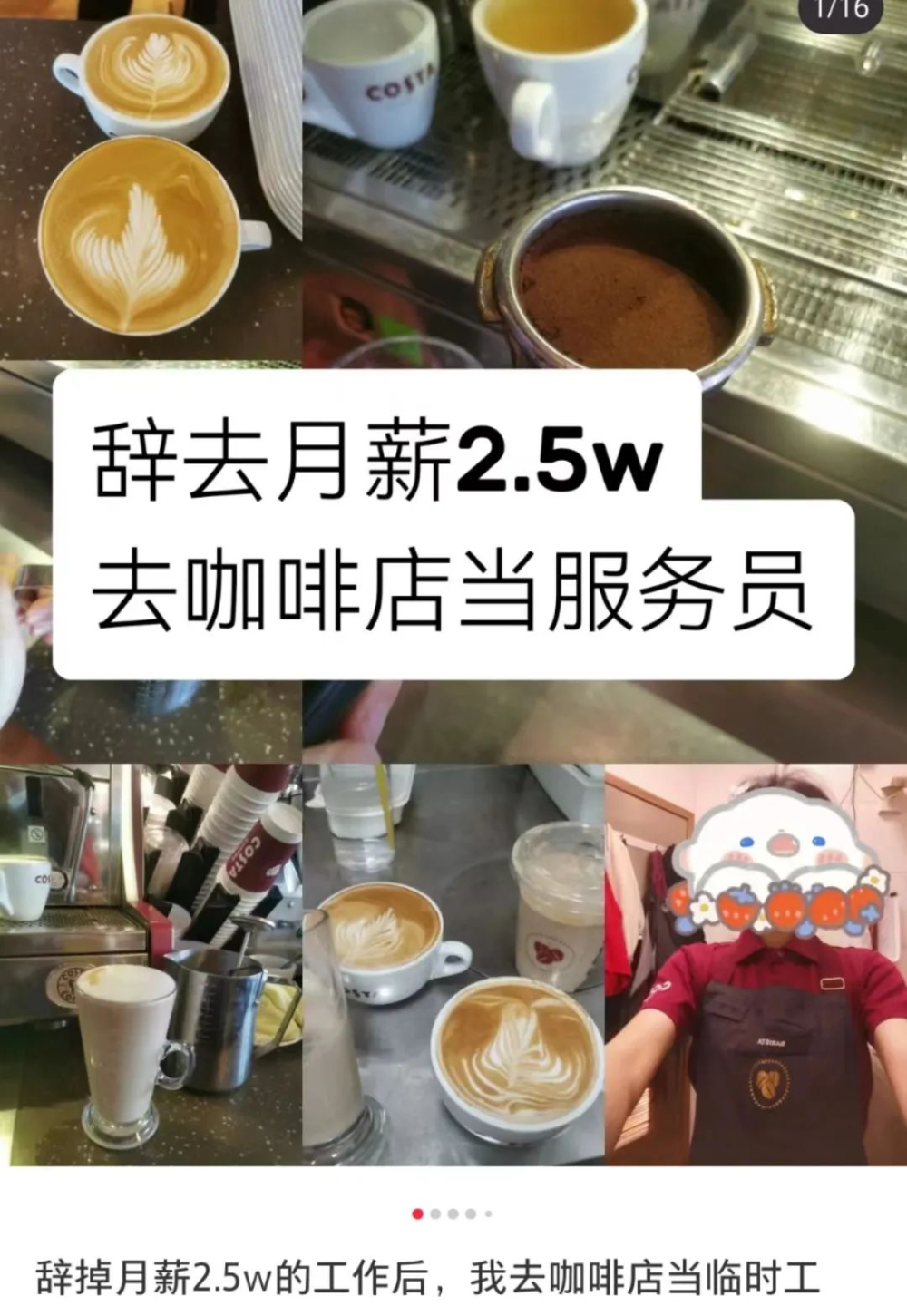
As netizens say, this is a kind of pure labor, simple happiness.
Now back to the original question: what kind of job really counts as a good job? If it were you, would you be willing to give up a high salary to become a pure barista?
Image source: Internet
Disclaimer: Some images in this article are from the Internet. For some content on the website, such as images, we will respect the original copyright and indicate the source. However, due to the large quantity, a few images and texts may not have been credited in time. Please forgive us. If the original author has any dispute, they may contact the website for handling. Once verified, we will correct it immediately. Compiled and edited by "Coffee Workshop." Please indicate the source when reprinting. If there is any infringement, please inform us for deletion. Thank you~!
The above content is compiled by CoffeeHunters, a coffee news website.


