







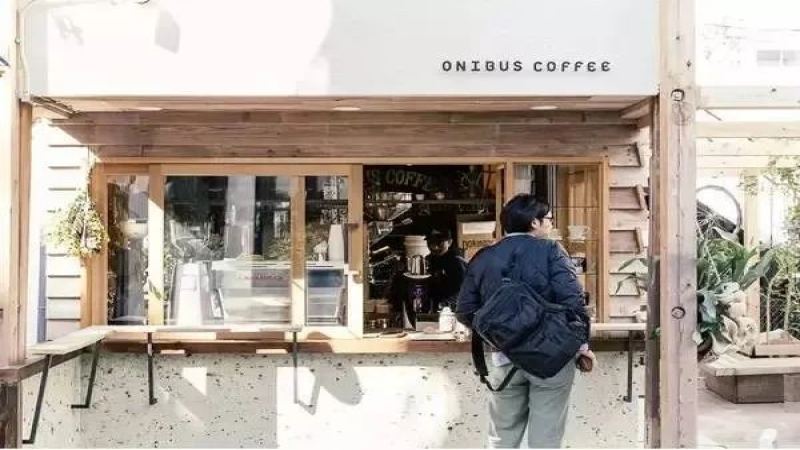
What does the average startup cost for a coffee shop cover?
Opening a coffee shop takes more than enthusiasm. The path runs from building foundational knowledge and defining a store's positioning through menu design, site selection, financial planning, license applications, equipment procurement, and layout flow. Each stage affects whether the shop can operate smoothly later, and the startup budget must account for all of them.
Daily operating costs and capital calculations follow their own logic, from staffing and fund allocation to sourcing materials and holding professional qualifications, areas that are easy to overlook. Working inside an established shop is a practical way to learn coffee brewing and theory before investing, provided the shop itself is reliable. Every shop has its own character, so the numbers serve as reference rather than a fixed formula.
Wanting to own a coffee shop of your own—passion alone is far from enough. From building up foundational knowledge, defining your store's positioning, and designing the menu, to site selection, financial planning, license applications, equipment procurement, and layout flow, every step determines whether you'll be able to operate smoothly down the road. This article systematically lays out the complete process from preparation to opening a coffee shop, and breaks down in detail the logic behind calculating startup capital and daily operating costs. Whether you've just begun toying with the idea of opening a shop or are already in the preparation stage, you'll find practical ideas you can refer to. The article also specifically highlights key areas that are easily overlooked, such as obtaining professional qualifications and sourcing materials, to help you avoid detours and take your first step into entrepreneurship with confidence.
I knew it! You're still thinking about opening your own coffee shop, aren't you!
Alright, alright! Since everyone keeps holding onto this idea, let's have a serious talk today about exactly what stages a coffee shop needs to go through, from early preparation to official opening~ Of course, every shop has its own character, and some decisions must be made by you personally. What's mentioned below may not apply to everyone—just take it as reference to help you map out a shop-opening approach that suits you.
"Research Before Opening"
Before actually getting started, you need to figure out a few things: What kind of space is a coffee shop, exactly? What skills does an operator need? You need to understand that the coffee shop business requires hands-on involvement in every aspect. It's not something you can truly do just because you've watched others thrive at it or handle espresso pulls with ease and your eyes say "I've got it."
So before opening a shop, you need to gather a great deal of information, accumulate knowledge, and build a solid foundation. The preparation mentioned here isn't just about coffee brewing techniques and coffee theory—it also includes understanding how a coffee shop allocates funds, arranges staffing, and handles the specific operations of daily management.
Working at a coffee shop is actually a very effective way to learn, but the prerequisite is that the shop itself is reliable. Although working in a shop often won't go exactly as you hope, as long as you stay patient, pay attention to matters beyond the bar counter, and practice communicating with customers ahead of time, accumulating service experience—this is far more important than just focusing on brewing techniques. Some things can't be taught in words, only understood intuitively—they must be experienced firsthand. In the process, you'll also meet many like-minded companions, and these connections may prove invaluable when you open and run your own shop later.
"About Coffee Shop Positioning"
When it comes to positioning, first ask yourself: What's the motive for opening a coffee shop? How do you turn the ideas in your head into a concrete plan? Although coffee shops always share certain things in common, since you're the one running it, you'll certainly want the shop to have a unique personality. If you open a shop on impulse without first clarifying your positioning, the risk will be very high.
Here you can use 6 W's and 2 H's to help sort things out: Why—why open a coffee shop? What—what do you mainly want to sell to customers? When—when do you plan to open? Who—what kind of customers do you hope to attract? Whom—who will run this shop? Where—where will the shop be located? How to—what style will you adopt? How much—how much startup capital do you have on hand?
"Determining the Coffee Shop Menu"
The one thing a coffee shop absolutely cannot lack is a menu—it's essentially the shop's face and signboard. Remember! Finalizing the menu should begin the moment you first think about opening a shop! Not when the shop is about to open. When thinking through the menu, you need to comprehensively consider regional characteristics, customer demographics, differences from nearby shops, and the needs and expectations of local customers. After fully understanding local demand, then create a menu that the general public can accept.
Once you have a menu, the next thing to consider is pricing. What price point is reasonable? If starting from raw material costs, you can refer to the cost ratio formula: Cost Ratio % = Raw Material Cost ÷ Selling Price × 100%. Generally, the cost ratio should not exceed 30% of the selling price. But this only considers material costs—you also need to factor in rent, labor, utilities, and other expenses, which need to be calculated based on your own situation.
"Coffee Shop Site Selection"
Site selection is extremely critical—it directly determines whether your coffee shop can thrive. So when choosing a location, first look at the area and make several trips for on-site inspection. After finding a storefront you like, confirm whether the space is suitable or permitted for food service, whether water, electricity, and gas are functioning properly, whether there are any restrictions on interior or exterior renovation, and whether the rent and deposit are reasonable.
"Essential Funds for Opening a Coffee Shop"
Money for opening a coffee shop doesn't fall from the sky, so the biggest concern during the preparation stage is funding. It's recommended to make a detailed plan. The following items are expenses every coffee shop cannot avoid: rent, interior and exterior renovation costs, equipment and tableware procurement, advertising and promotion, material sourcing, and operating working capital.
"Fund Management After the Coffee Shop Opens"
Opening a shop is easy; keeping it running is hard. After a coffee shop opens, the fixed monthly expenses are rent and labor (even if you're the only one working, you must factor in the cost of your own time). At this point, without corresponding revenue to support it, it's easy to fall into an endless pit of paying out of pocket... So before opening, learn more about how to balance the ratio of expenses to revenue, and when necessary, know how to adjust your coffee shop's positioning in a timely manner.
First, clarify your monthly fixed expenses—you need to calculate rent, labor, and depreciation of fixed assets, which is the monthly depreciation of renovation and equipment spread over their useful life. Next is revenue forecasting: Revenue = "Average Spend per Customer × Average Daily Customer Traffic." Average daily customer traffic can be estimated through "Number of Seats × Table Turnover Rate × Seat Utilization Rate" or "Foot Traffic in Front of Shop × Attraction Rate." This average daily traffic should also be calculated separately for weekdays, weekends, and holidays. Finally, set your break-even point. Before setting it, look at how much working capital you can put up, then use: Fixed Expenses ÷ (1 - Working Capital ÷ Revenue).
When doing these calculations, never be too idealistic—you must combine them with actual conditions to determine fund management after the coffee shop opens.
"Obtaining Professional Qualifications for a Coffee Shop"
The most time-consuming and labor-intensive part of opening a coffee shop is obtaining professional qualifications. Different regions have different regulations, and coffee shops with different positioning have different requirements. But two certificates are indispensable: the Food Business License and the Business License. These need to be applied for with the relevant authorities and go through a round of inspection, so once you've set your opening date, it's advisable to apply in advance and give yourself plenty of time.

"Equipment Investment"
Act within your means—expensive isn't necessarily better. High cost-performance within a price range you can afford is the most, most, most important thing! I don't recommend blindly throwing money at expensive equipment the moment you open. When you're just starting out, there's really no need to sink all your funds into equipment! It's not too late to upgrade gradually once operations stabilize. A coffee shop should control costs as much as possible in the early stages and not be overly optimistic about the future. This isn't throwing cold water—it's reality~
"Coffee Shop Design and Renovation"
Before starting renovation, you must clarify and lock in the shop's style, then create a design plan based on the actual conditions of the space. Beyond considering style and renovation, you also need to fully consider the spatial allocation between the customer area and the bar/kitchen, as well as flow design.
Staff flow design should ensure that employees can operate efficiently after receiving orders. So starting from equipment placement, you need to consider how to make the process from operation to serving food more smooth and seamless. Customer flow design should consider whether the placement of tables, chairs, and decor blocks customer movement, and whether indoor lighting placement can effectively guide customer routes.
"Choosing Material Supply Channels"
Whether sourcing coffee beans or other materials, always choose suppliers, manufacturers, and brands with legal production qualifications! This point is extremely important!!!
"Final Check Before Opening"
Whether all equipment in the kitchen, bar, customer area, restroom, and other areas is functioning properly; whether ingredients and materials are fully prepared; whether all ingredients are within their shelf life; whether cleaning supplies are complete; whether the POS system is working properly; whether all staff are ready to enter operational mode, etc.
"About Service"
No matter what your personality is like, the most basic principle of serving customers is to be warm and generous, and to truly win customers over. I believe that in any industry, service is the key to determining whether a shop, a company, or a brand can last. If you have good service, congratulations—you're only 99 years away from being a century-old shop!!!
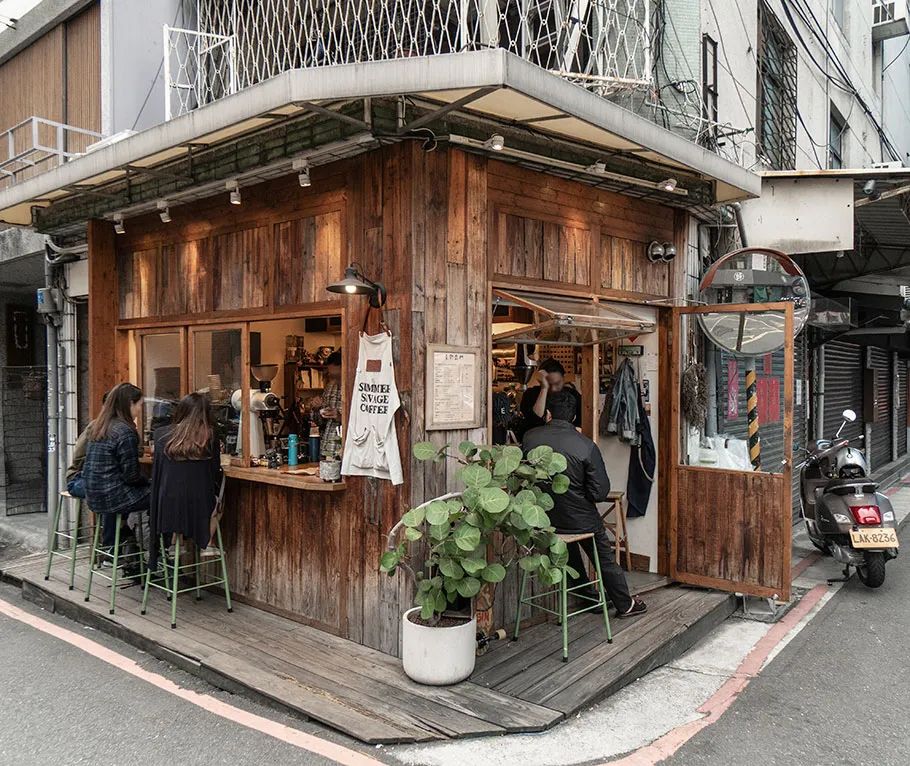
Although this article is a bit long and a bit wordy, the fact that you've read to the end proves you really have perseverance and truly want to open your own coffee shop. So here, I'll wish you all prosperity in advance! May wealth pour in! I hope you can hold on to your dreams and do something you won't regret~
If any of you have more to share about opening and running a shop, feel free to leave a comment below~ I! Will! Feature it! Immediately!!!
Image source: Internet
For professional coffee knowledge exchange and more coffee bean information, please follow Coffee Workshop (WeChat public account: cafe_style)
For more specialty coffee beans, please add the personal WeChat of Front Street Coffee (FrontStreet Coffee), WeChat ID: kaixinguoguo0925
The above content is compiled by CoffeeHunters, a coffee news website.


