







Why Are Cafes Across Europe Banning Laptop Use?
Cafes in several European countries are limiting laptop use, with shops in Valencia, Santiago, and Barcelona in Spain posting no-laptop notices. Owners say remote workers buy one drink and hold a table for hours or a full day, sometimes asking staff to lower music for calls. That cuts table turnover and revenue for small venues with limited seating.
Responses vary: some stores post signs, others switch off Wi-Fi, and some charge laptop users by the hour. Similar restrictions have appeared in France, Germany, Portugal, South Korea, Japan, and Singapore. The debate reflects how coffee from Spain and elsewhere in Europe is now tied to remote work culture, long after coffee became popular in Europe as a social ritual.
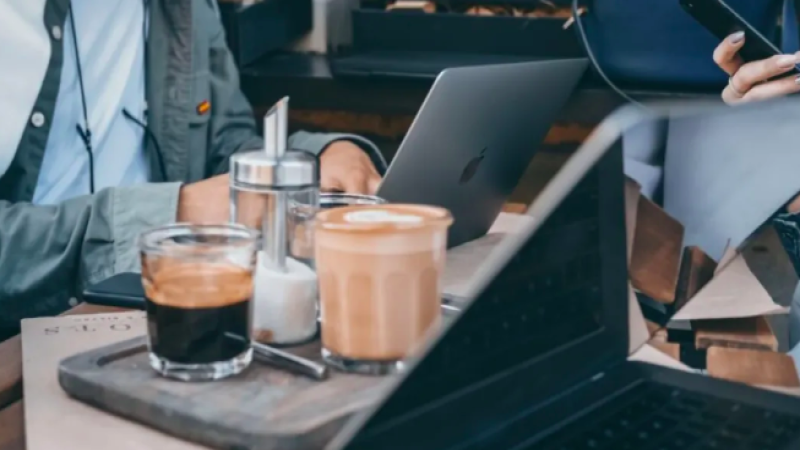
Ordering a coffee in a café and opening a laptop to stay for most of the day—this scene is all too familiar to many people. However, recently some cafés in several European countries have explicitly said "no" to laptop users, with some stores in Valencia, Santiago, and Barcelona in Spain even posting notices banning laptop use. Owners complain that these customers often buy just one drink but occupy a table for hours or even all day, and sometimes ask for the background music to be turned down so they can hold meetings or calls, seriously affecting table turnover and normal business. To address this, cafés in various places have been rolling out countermeasures, and similar restrictions have also appeared in France, Germany, Portugal, South Korea, Japan, Singapore, and elsewhere. Around this topic, customers and operators have engaged in discussions from different standpoints.
▲
Click to follow | Daily specialty coffee culture magazine Coffee Workshop
These days, using a laptop to take online classes and complete work tasks has become the norm for many young people. They usually walk into a café on the street, order a drink, enjoy the air conditioning, power outlets, and in-store Wi-Fi, and handle a whole day's tasks in a cozy atmosphere.
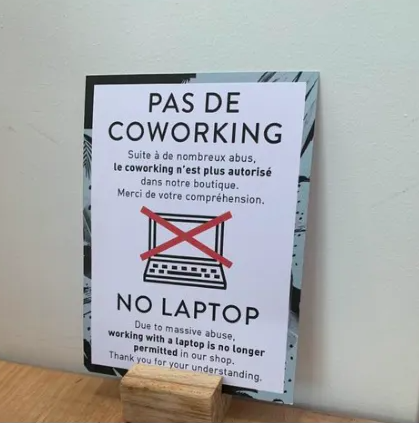
However, in some European countries, that is not the case. Recently, some cafés in Valencia, Santiago, and Barcelona in Spain have posted "No Laptops" notices in prominent places in their stores, making it clear that consumers who bring laptops to work or study are not welcome.
According to the owners, these office-type customers often buy only one drink but monopolize a table for hours or even a whole day. Some even ask staff to lower the volume of the background music so they can hold online meetings or make phone calls.
These behaviors leave many owners quite troubled. Private cafés have limited seating to begin with, and once seats are occupied by customers working for long periods, they cannot serve more customers, directly reducing the store's revenue.
As a result, owners have had to adopt various methods to rein in customers who treat cafés as offices. In addition to directly posting posters to clearly refuse them, some cafés choose to turn off Wi-Fi as a tactful way to decline customers who need to work; others charge customers who use laptops by the hour.
In fact, restricting "laptop seat-hogging" is not an invention of Spanish cafés. Some cafés in France, Germany, Portugal, and other countries have also introduced similar measures, not serving consumers who use laptops for long periods, in order to ensure the sustainability of store operations and preserve the original social atmosphere in the café.
Regarding these restrictive practices by owners, some customers express understanding and support. They believe that using a laptop in a café, whether or not they make a purchase, can have a negative impact on the store's image. These people also emphasize that cafés should be places that promote interpersonal communication and relaxed chatting, where customers chat with friends and enjoy coffee, rather than becoming someone's "mobile office."
In addition, some cafés in South Korea, Japan, Singapore, and elsewhere have also begun restricting customers from working in-store for long periods. Specific measures include: telling customers after purchase exactly how long they may stay, limiting the use time of in-store Wi-Fi, and requiring customers to order another drink after two hours, in order to discourage some customers who want to work or study in a café for a long time.
Some café operators believe that if consumers need to use laptops to work or study, they can absolutely go to stores that provide shared workspaces or have study-room functions, rather than holing up in a small café occupying seats, leaving customers who truly want to enjoy coffee with nowhere to sit, and thereby disrupting the café's normal operations.
However, some consumers hold a different view. They believe that office workers inevitably encounter work emails that need urgent handling while out, and a roadside café may be the most suitable choice for them at that moment. And for owners to indiscriminately refuse all customers using laptops seems somewhat impersonal and will also bring some negative reviews to the café.
Image source: Internet
Disclaimer: Some images in this article are from the Internet, and for some content on the website such as images, we will respect the original author's copyright and indicate the source. However, due to the large quantity, a few images and texts may not have been credited in time. Please forgive us. If the original author has any disputes, they can contact the website for handling, and once verified, we will correct it immediately. Compiled and edited by "Coffee Workshop"; please indicate the source when reposting. If there is any infringement, please inform us for deletion. Thank you~!
The above content is compiled by CoffeeHunters, a coffee news website.


