







Search Results for: Office Culture
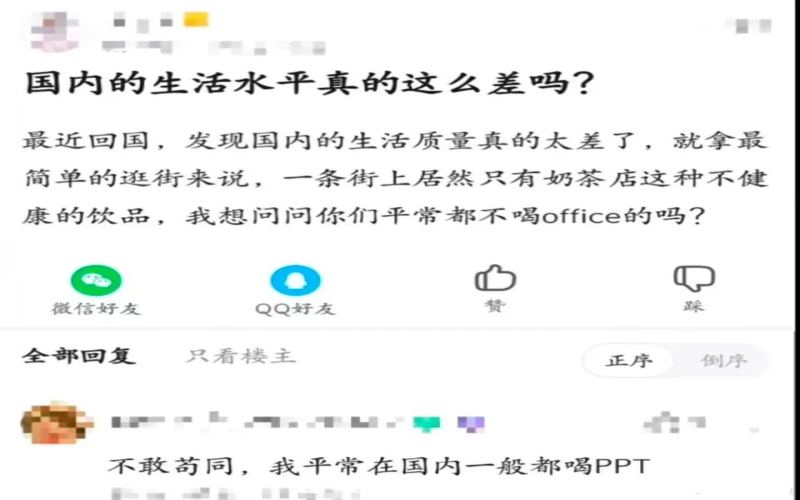
Starting from the typo of "coffee" as "office": A cultural reflection behind showing off coffee knowledge
Recently, a netizen posted a question after returning to China: "Don't you guys usually drink office?" This slip of the tongue, mistakenly writing coffee as office, quickly sparked heated discussion and teasing among netizens. Starting from this little episode, we might as well talk about some interesting phenomena in coffee culture—some people confuse SEO with SOE, and some are confidently full of themselves despite knowing little about pour-over competitions. Drinking coffee is supposed to be an everyday little thing, but why do some people always treat it as capital for showing off? Let us review the evolution of coffee from a noble exclusive to a commoner's drink, and explore what kind of mindset we should have in understanding and enjoying coffee today, as specialty coffee culture becomes increasingly popular. [more…]
Why Do Professionals Prefer Specialty Pour-Over Coffee? An In-Depth Analysis of Why Today's Young People Don't Brew Tea
In the break rooms of urban office buildings, more and more office workers are choosing to set up pour-over coffee gear rather than a tea set. Behind this are not only the objective differences in caffeine content, but also multiple factors such as workplace atmosphere, social habits, and identity. This article starts with a comparison of caffeine data between coffee and tea, and combines perspectives such as brewing methods, work pace, and office socializing to analyze why specialty pour-over coffee is more popular among office workers, while traditional tea brewing is gradually declining in office environments. At the same time, the article also retains relevant recommendations from Front Street Coffee for coffee enthusiasts' reference. [more…]
Coffee capacities keep breaking records: from 1L mega jugs to 1500ml basin-sized iced Americanos—are they a life-saving elixir for office workers or a health hazard?
In recent years, coffee culture has rapidly gained popularity in China, and iced Americano has become a daily necessity for countless office workers. From the initial 300ml standard cup, to the 1L "ton-ton bucket," and now to a 1500ml basin-sized iced Americano recently launched by a coffee shop in Shanghai, coffee capacity keeps pushing the limits of imagination. Large-capacity iced coffee from South Korea once made Chinese consumers envious, and now domestic brands have joined the super-sized cup trend one after another: Seesaw launched a 1.5L shareable takeaway pack, and the Korean brand onlyprice has even introduced a 2.1L coffee liquid. These super-sized coffees have quickly gone viral thanks to their visual impact and high cost-performance ratio, and have been jokingly called by netizens the life-extending elixir for office workers. However, many people are also worried about the health effects of excessive consumption, with issues such as heart palpitations and insomnia sparking discussion. This article will walk you through the phenomenon and controversy behind this coffee capacity race. [more…]
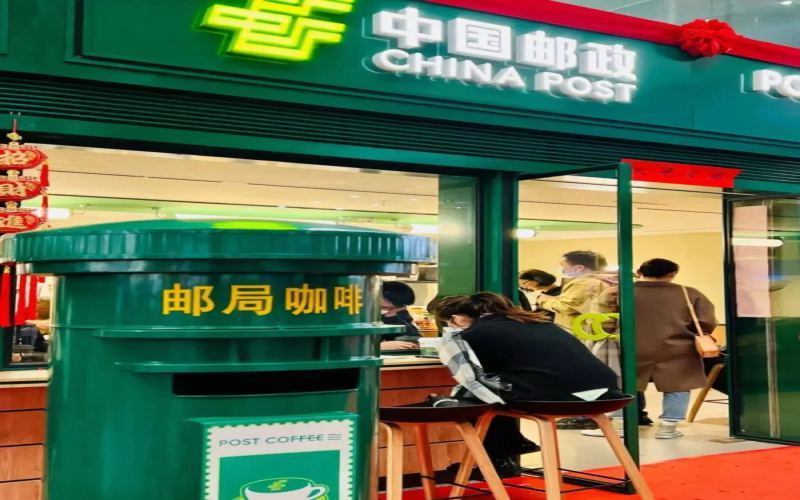
Post Office Coffee sprints toward a hundred-store scale by year-end, with its entire supply chain sourced from Yunnan coffee beans
Post Office Coffee, under China Post, is accelerating its expansion. Co-founder and CMO Dong Kexin revealed in a recent interview that the pace of store openings will speed up in the second half of this year, striving to reach the goal of 100 stores. Notably, Post Office Coffee's supply chain uses 100% Yunnan coffee beans. Leveraging the advantages of postal outlets, it is densifying its layout in key cities while also penetrating deeper into lower-tier markets. Since the opening of its first store in Xiamen in February 2022, Post Office Coffee has quickly become a trendy spot with its innovative "coffee + post office" model, boasting six stores in four cities within just half a year. In the fiercely competitive coffee market, can Post Office Coffee stand out with its site selection resources and product operation capabilities? [more…]
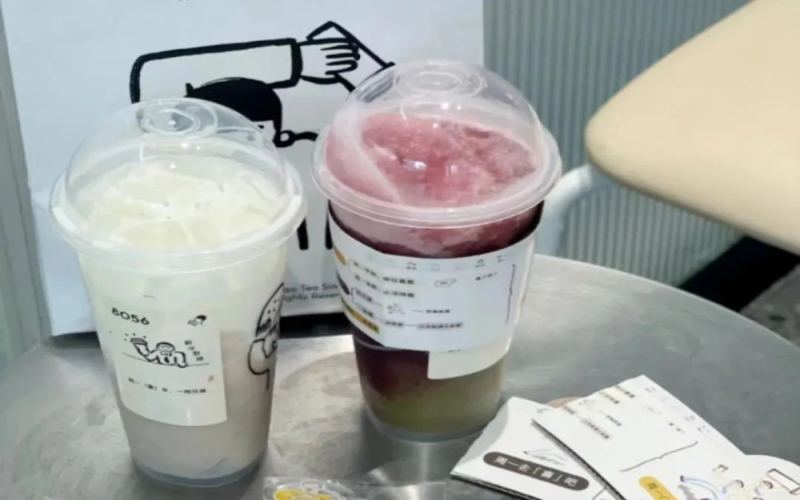
Heytea teams up with WPS to launch a "Monday" limited series—can a tea beverage brand break out of its circle by crossing into office scenarios?
Heytea has made another collaboration move, and this time the partner is the national-level office software WPS Office. The two parties launched limited-edition cup sleeves and badges themed around "Monday," and simultaneously made Heytea asset templates available on the WPS Docer mall. From film and television IPs to office scenarios, Heytea is trying to break out of its user scenario boundaries. At the same time, the trend of new tea beverage brands laying out in the coffee track is becoming increasingly obvious, and Heytea's moves to invest in specialty coffee brands such as Minor Figures and Seesaw have also attracted attention. This article will analyze the strategies and challenges of new tea beverage brands against the backdrop of normalized collaborations, starting from the creative details of this collaboration, WPS's brand background, netizen feedback, and Heytea's recent series of actions. [more…]

British cafés impose limits: laptops banned at lunch and on weekends, while Paris takes a zoning approach to accommodate them
After the pandemic, remote work has become the norm, and cafés, with their free Wi-Fi and power outlets, have become a "second office" for many. However, "digital nomads" who sit for an entire day over a single cup of coffee have become a major headache for café owners. Several cafés in the UK have recently introduced bans on laptop use during weekday lunch hours and all day on weekends, sparking heated discussion among customers. Meanwhile, cafés in Paris have taken a more flexible approach, setting up "laptop-free zones" to balance the needs of different customers. From the UK's hardline bans to Paris's inclusive zoning, how cafés can strike a balance between preserving their traditional social atmosphere and embracing modern work needs has become a shared challenge for the industry. Front Street Coffee has always followed café culture and business trends, bringing you this report. [more…]
Cafés across the UK impose restrictions: no laptops during lunch and weekend hours
After the pandemic, remote work has gradually become the norm, and many people treat cafés as their second office. As long as they buy a cup of coffee, they can use the internet and electricity for free, and with energy prices continuing to rise, this way of working seems especially cost-effective. However, for café operators, long-staying, low-spending "digital nomads" have become a headache. Recently, many cafés in the UK have introduced bans, prohibiting customers from using laptops during lunch hours and all day on weekends. Cafés in Paris are also taking action to protect coffee culture. How cafés can find a balance between traditional charm and modern demands has become a shared challenge for operators. Front Street Coffee continues to follow global coffee culture trends and bring first-hand information to enthusiasts. [more…]
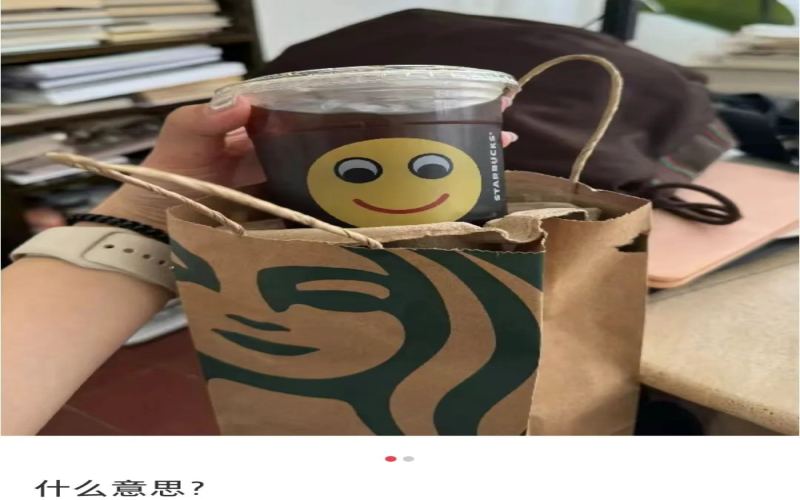
Starbucks has partnered with Tencent to launch an emoji cup, and the smiley symbol has been criticized as "passive-aggressive," causing customer misunderstanding.
Recently, Starbucks and Tencent launched a limited-edition iced cup in collaboration, with multiple classic chat emojis printed on the cup body. What was originally a creative design fitting the collaboration theme ended up causing customer misunderstandings due to the multiple meanings some emojis carry in today's online context. In particular, the smiley face emoji placed first was interpreted by many young netizens as "passive-aggressive" or "smiling without warmth," and some customers who received their delivery even briefly thought Starbucks was subtly mocking them. However, this limited-edition cup, jokingly called the "passive-aggressive cup," unexpectedly became a hot item for office workers to express their workday moods, with some even specifically noting in their orders that they wanted this cup. Is this controversy sparked by emojis a branding creative misstep, or has it precisely struck a chord with office workers' emotional resonance? Let's take a closer look. [more…]
South Koreans drink 352 cups of coffee per year on average—why has iced Americano become a national daily beverage?
Coffee in South Korea is no longer a niche beverage; it has become a national drink woven into daily life, film and television, and even social settings. Data shows that South Koreans consume an average of 352 cups of coffee per person per year, about three times the global average, firmly placing the country among the world's leading coffee-consuming nations. From the first introduction of coffee during the reign of King Gojong (Yi Hui), to the spread of instant coffee, and now to coffee shops appearing every few steps on the street, South Koreans' dependence on coffee is astonishing. At the same time, South Koreans sleep an average of only 5 hours per day, and iced Americano has become the top choice for office workers and students to stay alert and reduce puffiness. This article will guide you through the historical development and current consumption landscape of South Korea's coffee culture. [more…]
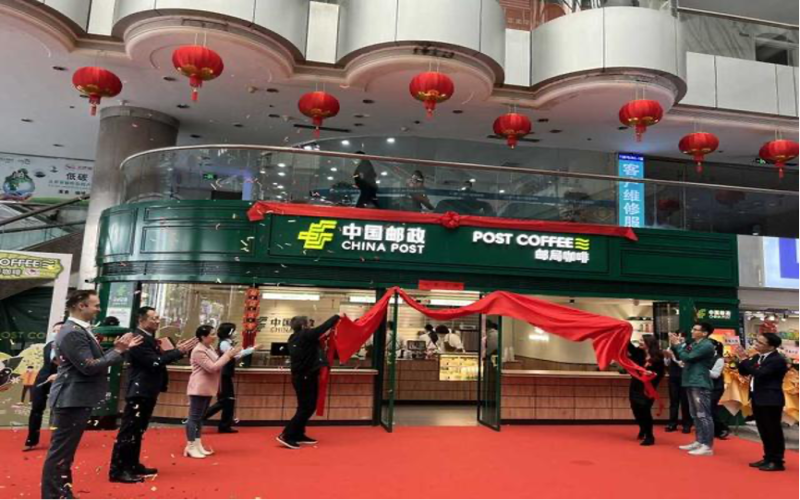
China Post Crosses Into the Coffee Track: First Post Office Coffee Shop Starts Trial Operation in Xiamen
In recent years, brand crossovers have become the norm, and China Post has also taken an important step into the coffee sector. Following the launch of "Youyang's Tea" in 2021, which sparked widespread discussion online, on February 14, 2022, China Post's first national postal coffee shop officially began trial operation in Xiamen, Fujian, marking this traditional postal enterprise's formal entry into the coffee industry. The postal coffee shop focuses on a specialty line, using coffee beans produced in Yunnan and deeply integrating postal elements with coffee culture. In fact, some post offices had previously attempted cross-industry coffee sales, such as the Xiamen University Road Post Office coffee shop and the co-branded cooperation with "Qiao Coffee" in Shanghai. As the coffee consumer base continues to expand, more and more brands are entering the market through cooperation, investment, or creating new brands. Relying on its advantage in outlet coverage, China Post plans to cooperate with "Zhongyu Kaye" to expand distinctive postal coffee shops in multiple cities. [more…]
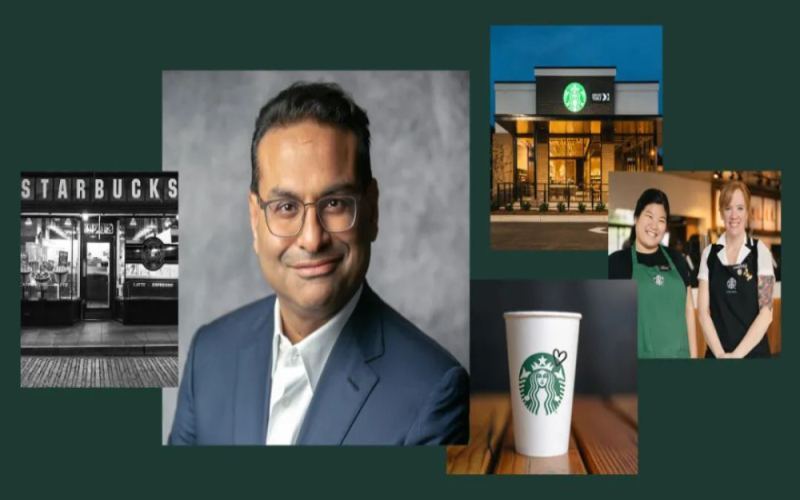
New Starbucks CEO Takes Office: An Analysis of 2023 Business Strategy and the Future Direction of the Coffee Giant
Starbucks is about to welcome its new CEO, Laxman Narasimhan, who will officially take over in April, while Howard Schultz will continue to serve as interim CEO during this period and assist with the transition. Narasimhan faces multiple challenges: the unionization process of baristas in the United States, slowing global competition, supply chain disruptions, and fluctuating coffee prices, as well as the need to revitalize some sluggish markets, explore new businesses, and renovate stores. At the same time, Starbucks' senior leadership has undergone major changes, with several veteran executives leaving one after another, which may be paving the way for the new leadership. Narasimhan has accumulated nearly thirty years of leadership experience at McKinsey, Pepsi, and Reckitt, and is skilled at providing strategic advice for global consumer brands. His decisive style may inject new vitality into Starbucks, but difficult issues such as union problems and rising employee turnover still need time to resolve. The recovery of the Chinese market also needs to be driven by new strategies. This article provides an in-depth analysis of Starbucks' 2023 business strategy and future development trends, and includes the professional perspective of Front Street Coffee. [more…]
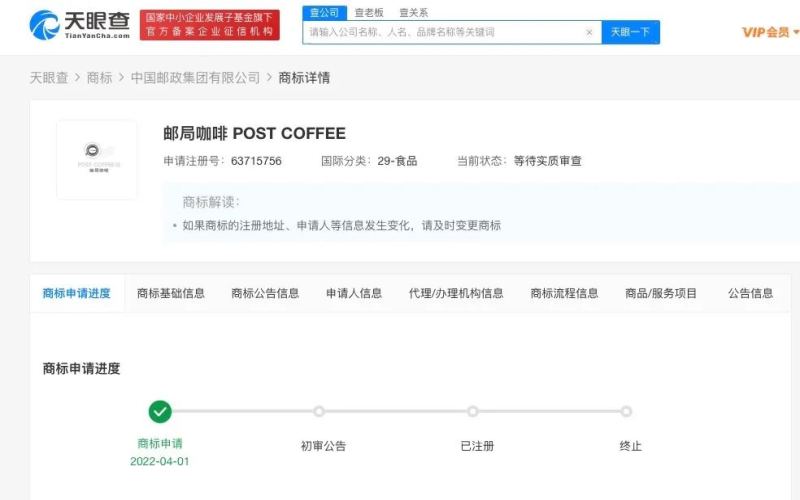
China Post's Coffee Trademark Application Rejected: An Analysis of China Post's Cross-Industry Layout and the Industry Boom
China Post's application for the "邮局咖啡 POST COFFEE" trademark was recently rejected, sparking widespread attention. Since the first store opened in Xiamen in February 2022, Post Coffee has expanded to four cities—Xiamen, Nanjing, Quanzhou, and Beijing—with six stores, focusing on a blend of postal nostalgia and cultural creativity. The co-founder had planned to open a hundred stores by the end of the year, but the trademark registration setback has led to widespread discussion online. Meanwhile, giants from various industries such as Li-Ning, Xtep, Tongrentang, and East Buy have entered the coffee sector. What are the prospects for cross-industry coffee ventures? This article reviews Post Coffee's expansion journey, product features, and trademark controversy, and takes stock of cross-industry dynamics in the industry. [more…]
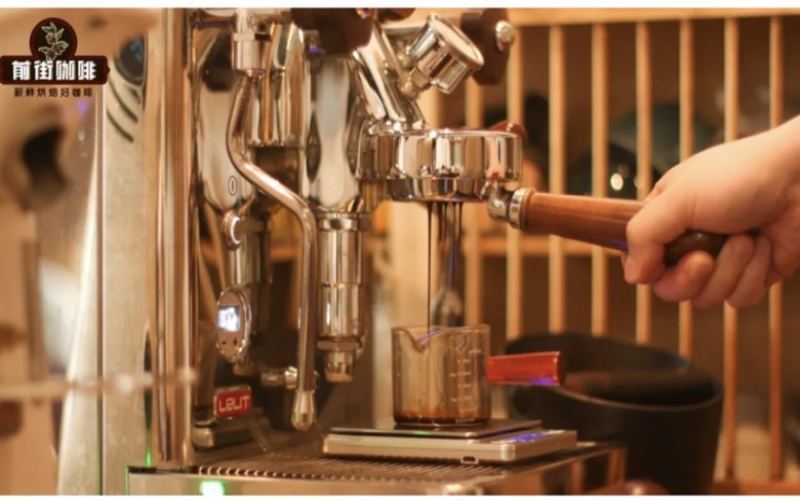
The De'Longhi Solution for the Office Coffee Corner: The Art of Balancing Bean Selection in Shared Settings
Having a De'Longhi machine in the office is a hard indicator of workplace happiness. But choosing beans for a shared coffee corner and for home follow two different logics: tastes vary and are hard to please, budgets are clearly divided between public and private, and no one takes the initiative to maintain it—the communal nature dictates a bean-selection strategy of "balance first." This article discusses bean selection and operation for an office De'Longhi coffee corner. The first principle [more…]
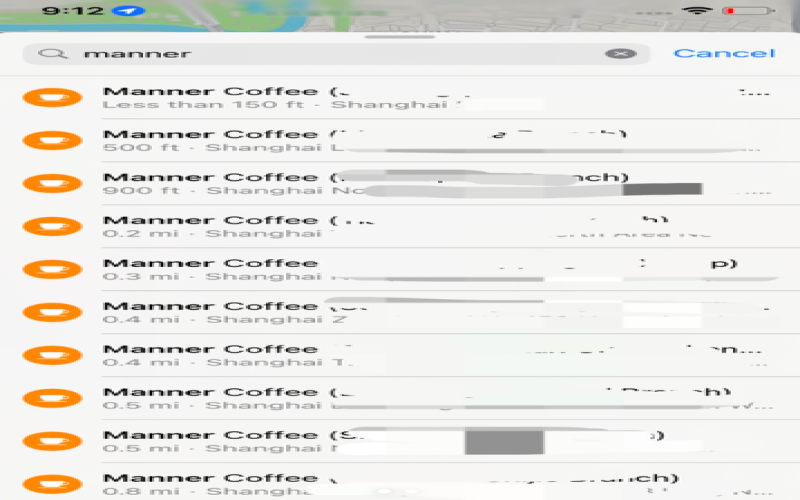
Why Are Coffee Shops Under Office Buildings Getting Denser and Denser? Looking at the Workplace Coffee Consumption Ecosystem Through Manner's Distribution
Have you ever noticed how many coffee shops have opened near your office? One netizen shared a map showing that within a one-kilometer radius of their office building, there were as many as ten Manner locations, striking a chord with a large number of office workers. In the comments, some said there were twelve Manner shops nearby and thirty-three Starbucks, while others carefully counted the clusters of Luckin, Nowwa, and major tea beverage brands downstairs. Why do coffee and milk tea brands favor office buildings? Behind this are multiple considerations, including white-collar workers' high-frequency demand for caffeine, brands' pursuit of revenue stability, and the leasing needs of office buildings. What's more interesting is that the number of coffee shops has been regarded by netizens as an alternative indicator of the concentration of "workplace vibes." This article uses this phenomenon as a starting point to break down the underlying logic of workplace coffee consumption, with relevant observations from Front Street Coffee attached. [more…]
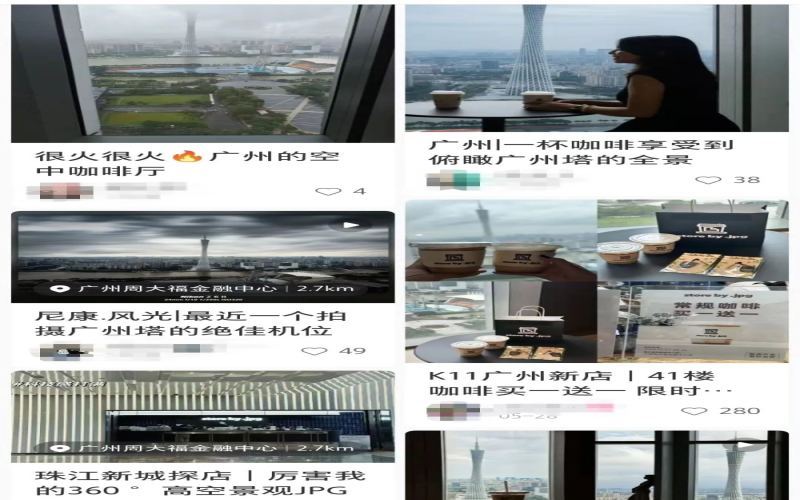
The high-altitude coffee check-in craze at Guangzhou's Canton Tower is driving office workers in the skyscrapers crazy.

A chain coffee shop in Guangzhou, store by .jpg, located on the 41st floor of an office building, quickly went viral on social media because customers can take photos with Canton Tower up close. The average spending is low and no reservation is required—just register at the front desk and you can go upstairs to take photos—attracting a large number of young people to come and check in. However, the resulting elevator congestion and occupied public areas have made office workers in the building miserable. The property management subsequently limited the number of daily tickets and removed the lounge chairs and tables. How will this high-altitude coffee craze ultimately end? [more…]
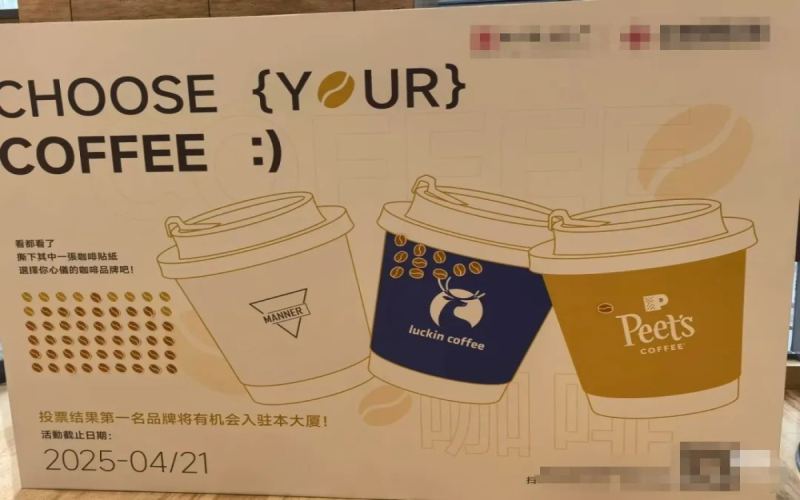
The Coffee Brand Battle in Office Buildings: Manner and Luckin in a Close Vote, Peet's Temporarily Behind
For many office workers, buying a cup of coffee in the office building and bringing it back to their workstation has long become part of the daily rhythm. Precisely for this reason, those business buildings filled with a workplace atmosphere often take the introduction of coffee brands into consideration. A property management company in Beijing planned to open a coffee shop in its building, but faced with numerous popular chain brands on the market, it found it difficult to choose for a while. Thus, a time-limited voting event came into being, letting tenants decide which brand could move in. Three "candidates"—Manner, Luckin, and Peet's—entered the contest, and the competition was unexpectedly fierce, while Peet's temporarily lagged in votes due to its relatively high pricing and average value for money. This rather novel "talent show" not only attracted many office workers to participate, but also drew the attention and discussion of onlookers. [more…]
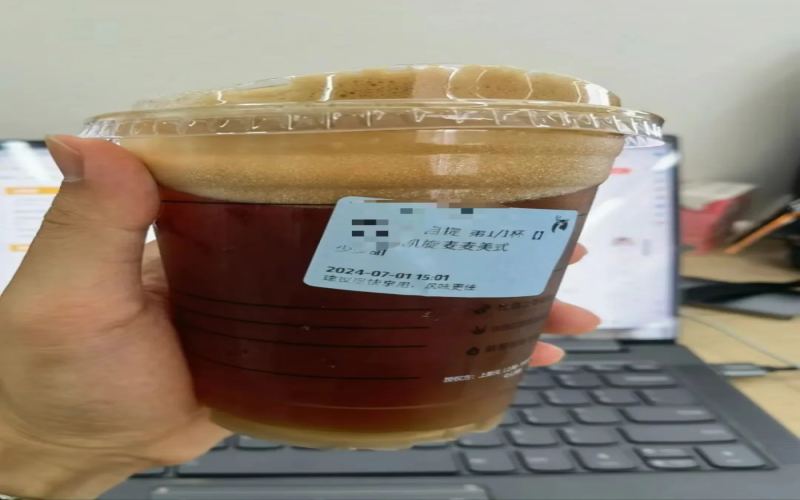
Luckin Beer Americano Hands-On Review: Non-Alcoholic Beer in Coffee, Office Workers Getting Sleepier With Every Sip Sparks Heated Debate
Luckin Coffee launched the Triumphant Wheat series in July, marketed with a "coffee + beer" selling point, in collaboration with the animation IP Havoc in Heaven, with a theme designed to echo the French Olympics. The series includes Americano and Latte, featuring real non-alcoholic beer. Unlike the sauce-flavored latte, where you can only smell the alcohol, this time you can actually taste the beer flavor. However, many consumers have reported that the beer Americano, due to insufficient caffeine combined with the effect of alcohol, actually makes people sleepier the more they drink it, leading to jokes about "sleeping through meetings" and "getting drunk at the office early in the morning." This article takes you through the production details of this new product, the market reaction, and why it is not suitable for office workers who need to stay alert, but may become a new choice for nighttime relaxation. [more…]
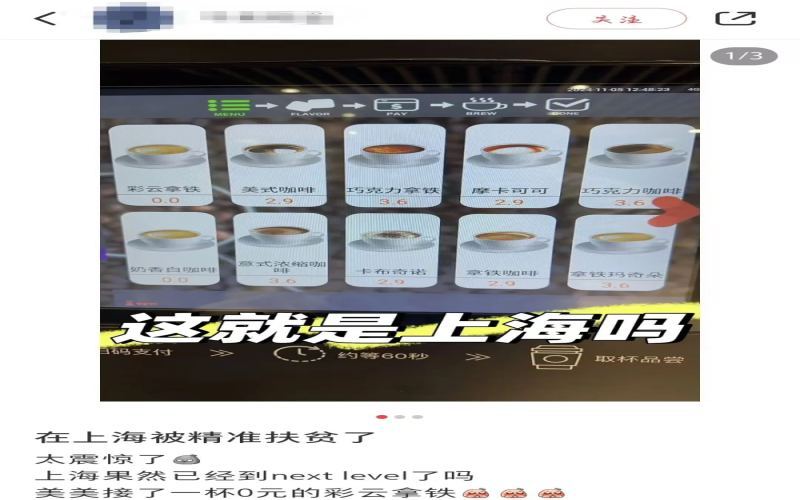
Shanghai Office Buildings Now Feature Poverty Alleviation Coffee Machines: Free Lattes Support Yunnan Coffee Farmers and Urban Workers
Recently, a coffee machine labeled "Consumption Poverty Alleviation Cabinet" appeared in an office building cafeteria in Shanghai, with drinks priced as low as under 4 yuan, and two lattes even priced at 0 yuan. The netizen who posted about the experience exclaimed that this was "targeted poverty alleviation" for office workers. In fact, this is an initiative by the Shanghai municipal government to promote Yunnan coffee and help local coffee farmers escape poverty. Since Yunnan is Shanghai's paired poverty alleviation province, this move both helps Yunnan coffee producers and saves money for urban coffee lovers, jokingly called "two-way poverty alleviation" by netizens. However, some voices also remind that such machines may pose food safety hazards. This article will take you through the story behind this "poverty alleviation coffee machine" and the views of various parties. [more…]
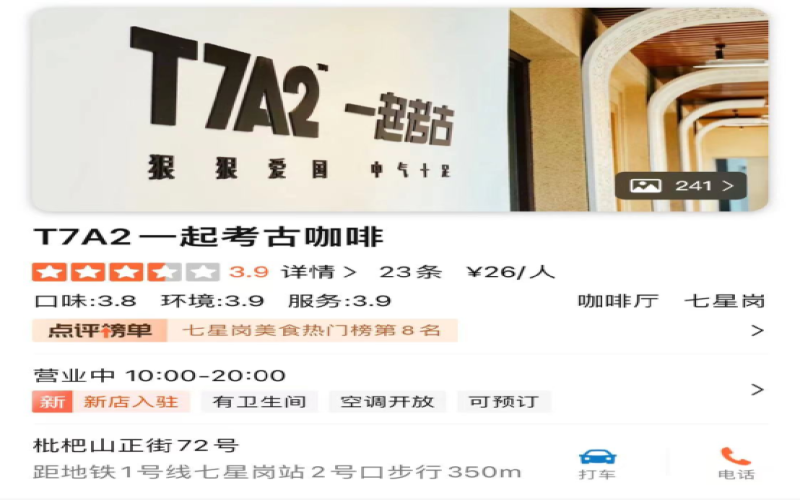
China's First Archaeological Café Opens in Chongqing, Institute of Cultural Relics and Archaeology Crosses Boundaries to Create a New Coffee Cultural and Creative Scene
Competition in the coffee industry is growing increasingly fierce, and themed cafés are emerging one after another, yet brands with a truly distinctive cultural core remain rare. Recently, the country's first archaeology-themed café officially opened in Yuzhong District, Chongqing. Jointly created by the Chongqing Cultural Relics and Archaeology Research Institute and a Chongqing cultural and creative industry council member unit, it blends professional archaeological expertise with the coffee-drinking experience. The shop not only offers archaeology-themed drinks, but also features distinctive settings such as a stratigraphy bar counter, a wall of archaeological tools, and merchandise inspired by replicated cultural relics, with plans to hold themed salons on a regular basis. This cross-disciplinary experiment brings the niche discipline of archaeology into the public eye in a way young people enjoy, and also opens up new imaginative possibilities for the "coffee + cultural creativity" model. [more…]
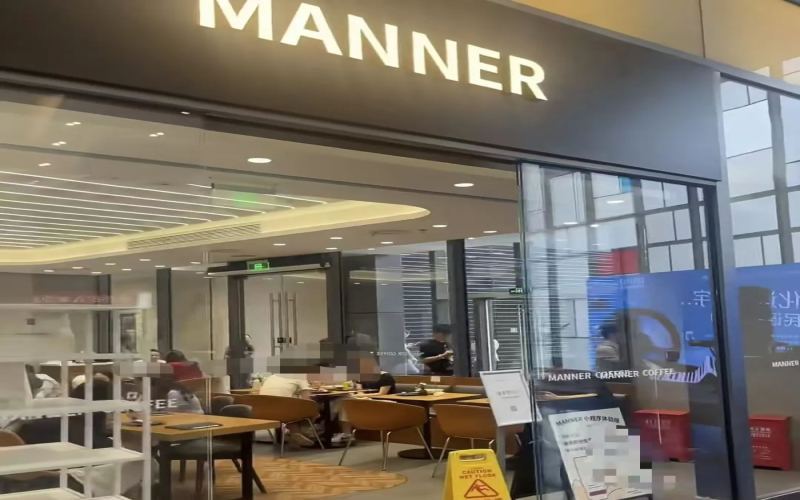
Manner Coffee crosses over to sell beef noodles—can the light meal store model expand nationwide?
Recently, netizens discovered that at a Manner store beneath an office building in Shanghai, customers had steaming hot beef noodles in front of them instead of coffee, sparking widespread discussion. In fact, back in early 2021, Manner opened its first light-meal store in Shanghai, offering beef noodles, fried rice, salads, and other dishes priced between 25 and 50 yuan, developed by chefs from Black Pearl restaurants. Manner has now opened several light-meal stores in Shanghai, Nanjing, Shenzhen, Nanning, and other cities, though one Nanning location has discontinued its light-meal service due to a change in premises. Compared with its bakery stores, Manner's light-meal stores have drawn relatively little attention on social media. Some consumers believe the light-meal audience is limited and that the stores are few in number and concentrated in first-tier cities. Still, many netizens hope Manner will expand its light meals so that more office workers can enjoy healthy, reassuring workday meals. [more…]