







What Coffee Knowledge Tells Us About the New Starbucks CEO's Challenges
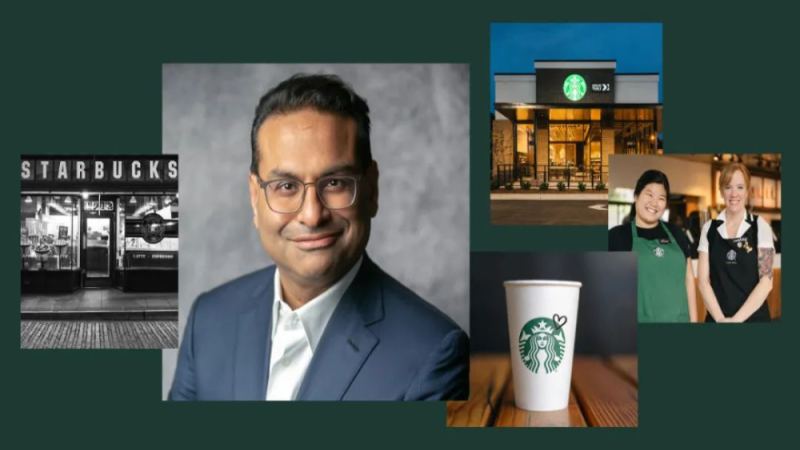
Laxman Narasimhan becomes Starbucks chief executive in April, while Howard Schultz continues as interim CEO and helps with the transition. Narasimhan inherits a barista unionization movement in the United States, slowing global competition, supply chain disruptions, and coffee price fluctuations. He must also revive sluggish markets, develop new businesses, and renovate stores.
Narasimhan brings nearly thirty years of leadership experience at McKinsey, Pepsi, and Reckitt, where he advised global consumer brands, and his decisive style may add momentum. Starbucks leadership has already shifted, with several veteran executives leaving, which may clear the way for the new team. Union issues, rising employee turnover, and the recovery of the Chinese market still require time and new strategies.
Starbucks is about to welcome its new CEO, Laxman Narasimhan, who will officially take over in April, while Howard Schultz continues to serve as interim CEO during this period and assist with the transition. Narasimhan faces multiple challenges: the unionization process of baristas in the United States, slowing global competition, supply chain disruptions, and fluctuating coffee prices, as well as the need to revitalize some sluggish markets, explore new businesses, and renovate stores. At the same time, Starbucks' senior leadership has undergone significant adjustments, with several veteran executives leaving one after another, which may be paving the way for the new leadership. Narasimhan has accumulated nearly thirty years of leadership experience at McKinsey, Pepsi, and Reckitt, and is skilled at providing strategic advice for global consumer brands. His decisive style may inject new vitality into Starbucks, but issues such as union problems and rising employee turnover still need time to resolve. The recovery of the Chinese market also needs new strategies to drive it forward. This article provides an in-depth analysis of Starbucks' 2023 business strategy and future development trends, and includes a professional perspective from Front Street Coffee.
Professional coffee knowledge exchange. For more coffee bean information, please follow the Coffee Workshop (WeChat public account: cafe_style).
For more specialty coffee beans, please add the private WeChat of Front Street Coffee (FrontStreet Coffee), WeChat ID: qjcoffeex.
Last September, Starbucks announced that Laxman Narasimhan would become chief executive officer (CEO) and officially take over the company in April. During this transition period, Howard Schultz continued to serve as interim CEO while leading Narasimhan in getting familiar with the team, brand culture, and company reinvention plan.
After taking office, Narasimhan urgently needs to address the barista unionization movement in the United States, and also faces challenges such as slowing global competition, shipping disruptions, and coffee price fluctuations. In addition, he must drive change in some underperforming markets, develop new businesses, and redesign stores.
However, this work cannot be done without coordination from other management departments. Since Schultz returned as CEO last year, Starbucks has undergone leadership restructuring and reform, with multiple executives leaving one after another, resulting in a current shortage of personnel.
Over the past year, Starbucks North America head Rossann Williams, General Counsel Rachel Gonzalez, Executive Vice President of Global Supply Chain George Dowdie, and Chief Operating Officer John Culver have all left or been removed from their positions. Longtime board member Javier Teruel also resigned at the end of 2022. Just a few days ago, the vice president of Starbucks' creative studio also announced her departure; she had worked at this coffee chain giant for 14 years.
This executive turnover may mean that Schultz and Narasimhan have already identified new candidates and formulated new strategies. Narasimhan has held leadership roles for nearly 30 years at three organizations—McKinsey, Pepsi, and Reckitt—and has provided consulting advice for global consumer brands.
Each time he joined a new company, Narasimhan demonstrated a decisive style, often dismissing some veteran management and bringing in fresh blood. This is highly consistent with Schultz's statement last year: My return is not a long-term solution; ultimately, someone younger, more visionary, and with strong execution ability needs to take over. These remarks were not only aimed at the CEO position, but also applied to all executive roles.
From the current situation, Howard has solved some problems and begun to reshape Starbucks' corporate culture. However, the U.S. union issue, continuously rising employee turnover, and declining performance in the Chinese market are difficult for Howard to handle alone.
Another reason for inviting Narasimhan to join is his deep experience in the consumer industry and managing overseas markets, and the United States and Asia are precisely Starbucks' two largest markets.
At present, after China's policy relaxation, Starbucks China's performance has somewhat recovered, but it still needs new arrangements and strategies. The U.S. union situation remains thorny. It is hoped that Narasimhan's taking office this time can open a new chapter for Starbucks.
The above content is compiled by CoffeeHunters, a coffee news website.


