







Why Did China Post's Coffee Trademark Application Fail?
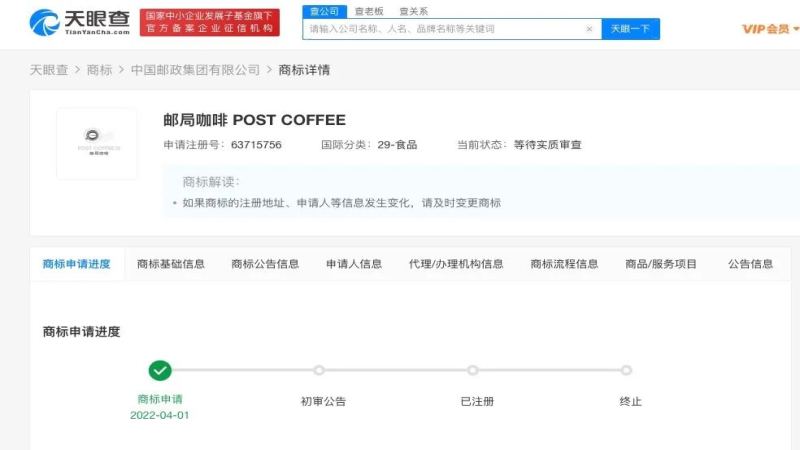
China Post's applications for the "Post Coffee" trademark were rejected, with rejection notices issued for filings made on April 1, 2022 covering convenience foods, catering and accommodation, and alcoholic beverages. Post Coffee opened its first store in Xiamen in February 2022 and has since grown to six stores in four cities, including Beijing. The co-founder had aimed for a hundred stores by year-end.
Coffee is made from roasted seeds, but building a coffee business takes more than beans. Post Coffee leans on postal nostalgia and cultural creativity, yet giants such as Li-Ning, Xtep, Tongrentang, and East Buy have all entered the coffee store arena. Trademark registration is lengthy, so a rejection at the application stage delays branding plans and raises questions about cross-industry prospects.
China Post's application for the "邮局咖啡 POST COFFEE" trademark was recently rejected, sparking widespread attention. Since the first store opened in Xiamen in February 2022, Post Coffee has expanded to four cities—Xiamen, Nanjing, Quanzhou, and Beijing—with six stores, focusing on a blend of postal nostalgia and cultural creativity. The co-founder once planned to open a hundred stores by the end of the year, but the trademark registration has hit a snag, prompting heated discussions among netizens. Meanwhile, giants from various industries such as Li-Ning, Xtep, Tongrentang, and East Buy have all entered the coffee arena. What are the prospects for cross-industry coffee ventures? This article walks you through Post Coffee's layout history, product features, and trademark turmoil, and rounds up cross-industry developments in the sector.
For professional coffee knowledge exchange and more coffee bean information, please follow Coffee Workshop (WeChat public account: cafe_style)
For more specialty coffee beans, please add the private WeChat of Front Street Coffee (FrontStreet Coffee), WeChat ID: qjcoffeex
According to the latest information from Tianyancha App, the registration process for multiple "邮局咖啡 POST COFFEE" trademarks applied for by China Post Group Co., Ltd. has been updated to a rejection notice issuance. These trademark applications were filed on April 1, 2022, covering international classifications including convenience foods, catering and accommodation, and alcoholic beverages.
Trademarks are of great significance to a brand, but the registration process is often lengthy and cannot be completed overnight. If a carefully planned trademark is rejected during the application stage, the sense of disappointment is imaginable. Post Coffee is probably experiencing exactly this kind of frustration right now.
Reports indicate that in February of this year, China Post's first coffee store opened in the Guomao Building in Xiamen, Fujian, marking its official entry into the coffee market. Since then, Post Coffee has successively opened in Xiamen, Nanjing, and Quanzhou, and entered Beijing at the end of July. In just half a year, it has opened six stores in four cities across the country. The Beijing store is Post Coffee's first location independent of a traditional post office branch, and also the brand's debut in a first-tier city.
In terms of products, Post Coffee offers regular options such as Americano and Latte, as well as several specialty drinks, priced between 12.8 yuan and 28.8 yuan per cup. In addition, the cultural and creative area displays China Post postcards, envelopes, cups, and other postal-themed merchandise, along with tea and various cakes and desserts, attracting many customers. The semi-open store design incorporates rich postal elements—a slightly weathered postman's bicycle, a green mailbox, paired with a hot cup of Post Coffee—cleverly blending postal and coffee culture.
Li Wenyao, branch director of China Post's Wangjing Post Office in Chaoyang District, once said: "Traditional industries need to inject fresh vitality. We hope that through the form of Post Coffee, we can infuse postal culture and elements, allowing more young people to learn about post office culture."
The booming coffee sector has driven China Post to continuously advance its pace in trying new business formats. For many years, the daily lives of Chinese people have been inextricably linked to the postal service. Playing this "nostalgia card" has already made some China Post coffee shops internet-famous check-in spots, suggesting this business approach may work. However, now that media has reported the trademark registration rejection, some netizens are speaking out: "Why was it rejected?", "Comprehensive business coverage is great!", "A post office opening a coffee shop—I think it's really good! Next time I go to Xiamen, I must try it!"
Dong Kexin, co-founder and CMO of Post Coffee, said in a media interview that Post Coffee is currently focusing on three types of locations: CBD stores, scenic area stores, and campus stores. She also mentioned: "We will continue to expand across the national market in the future, accelerate the pace of store development, and plan to open a hundred stores by the end of the year!"
But now netizens are mocking: "After marketing for so long, the trademark hasn't even been approved yet—doesn't that embarrass their sister organizations?", "Why would a fine postal service register a coffee trademark? I don't understand", "How are postal service and coffee even related? I don't get it", and so on.
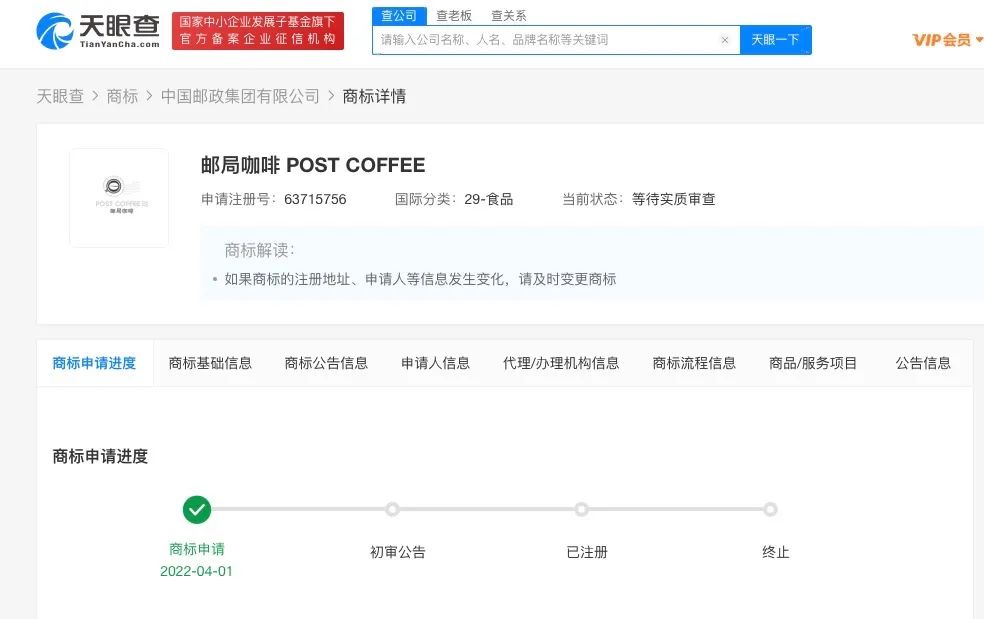
The coffee sector's popularity has always been captivating, and China Post is far from the only one applying for coffee trademarks. Li-Ning, Xtep, and even Tongrentang have all stepped in, and Huawei has also been rumored to have applied for coffee trademarks. Just yesterday, media reported that East Buy and Hefu Noodle are also applying for registered trademarks. All of the above coffee trademark applications are currently still showing as awaiting substantive examination.
With various industries jumping in, is the coffee business really that easy? From Xtep, Li-Ning, China Post, and Tongrentang to East Buy and then Hefu Noodle, giants from all walks of life are crossing over to open coffee shops—which one are you more optimistic about?
Image source: Internet
The above content is compiled by CoffeeHunters, a coffee news website.


