







Search Results for: Nasdaq

Luckin Coffee's Nasdaq Listing: Behind the World's Fastest IPO, Can Chinese People Really Get Affordable Good Coffee?
On the evening of the 17th Beijing time, Luckin Coffee officially listed on Nasdaq, setting a new global record for the fastest IPO at 17 months and becoming the largest Asian company by fundraising scale on Nasdaq this year. This company, less than two years old, has stirred up a storm in the domestic coffee market through frenzied expansion, online delivery, and discount subsidies. Why are capitalists so favored of Luckin? Can its coffee quality live up to the title of "master coffee"? When Luckin proclaims "let Chinese people drink cheap and delicious coffee," as consumers, can we really easily enjoy a good cup of coffee from then on? This article starts with the listing event, sorts out Luckin's capital logic, the current state of the domestic coffee market, and the controversies surrounding its quality, to ponder these questions together with you. [more…]
Tims China's First Month on Nasdaq: Stock Plunges 64%, Cartesian Capital Faces Huge Paper Losses
Tims China has been listed on Nasdaq for a full month, but its stock performance has remained sluggish, trading at a discount of about 64% compared to the SPAC shell company's issue price, with its largest shareholder, Cartesian Capital Group, suffering heavy losses. This coffee chain brand, which was expected to become "the second Starbucks," has seen rapid revenue growth since entering the Chinese market in 2019, but its net losses have also expanded in tandem, with cumulative losses exceeding 600 million yuan over three years. Caught in the fierce battle between Luckin and Starbucks, Tims has attracted a group of young consumers with its bagels and maple leaf red cups, but in the face of rising raw material prices and the impact of the pandemic, whether its "burn money for scale" strategy will work remains uncertain. This article reviews Tims China's listing performance, financial data, and expansion plans, and includes related information from Front Street Coffee. [more…]
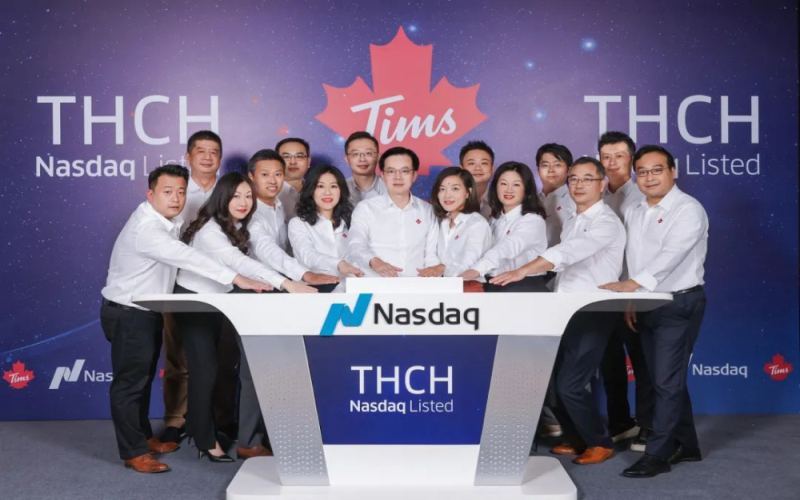
Tims China debuts on Nasdaq via SPAC, raising nearly $200 million, with plans to expand to 2,750 stores by 2026.
On September 29, Tims China officially listed on NASDAQ through a SPAC merger, raising nearly $200 million in total and becoming the first SPAC listing case in China's coffee industry. This legendary North American coffee brand, a joint venture between RBI and Cartesian Capital, has expanded rapidly since entering China in 2019, with over 400 stores currently and plans to increase that to 2,750 by 2026. Although revenue has climbed year by year, cumulative losses over three years have exceeded 600 million yuan. Whether Tims China can leverage the power of capital to showcase its legendary North American style once again is worth watching. [more…]
Luckin Coffee's Hong Kong listing rumors officially denied, continuing to deepen its presence in the U.S. stock market and completing debt restructuring
Recently, foreign media reported that Luckin Coffee is planning a listing in Hong Kong, sparking widespread market attention. In response, Luckin officially responded quickly, emphasizing that management remains focused on business strategy and product services, and that there are currently no arrangements for a Hong Kong listing, with the company still committed to the U.S. stock market and creating long-term value for shareholders. Looking back at Luckin's development trajectory, from its 2019 Nasdaq listing, to the 2020 financial fraud scandal and trading suspension, to completing debt restructuring in 2022, doubling revenue, and surpassing Starbucks China in store count, this brand has demonstrated astonishing self-rescue capabilities. This article will review Luckin's listing turmoil, the details of its settlement, and possible paths for its future return to the capital market, while also exploring the impact of intensifying competition in the domestic coffee market on its prospects. [more…]

Luckin's 2021 revenue approached 8 billion, store count surpassed Starbucks China, and the profitability turning point is approaching.
Luckin Coffee's total net revenue for the 2021 fiscal year reached 7.965 billion yuan, a year-on-year surge of 97.5%, with fourth-quarter revenue of 2.4327 billion yuan, an increase of 80.7%. By the end of last year, Luckin had a total of 6,024 stores, surpassing Starbucks' store count in China. Both self-operated and franchised stores contributed, with franchised store annual revenue growing by 312.5%, and lower-tier markets making a significant contribution. Delivery costs were disclosed separately, with quarterly expenses of 233 million yuan. Non-GAAP operating loss narrowed to 23.6 million yuan, with profitability close at hand. After completing the interim liquidation, Luckin expects costs related to fraudulent transactions to significantly decrease in the second quarter of 2022. There is continued external interest in its return to the Nasdaq main board. [more…]

Tims China's store count exceeds 500, with first-half revenue up over 70% year-on-year
Tims Coffee's 500th store in China has officially landed in Dongguan, just days away from its upcoming listing on Nasdaq. From its first store in Shanghai in 2019 to now covering multiple tiered markets, Tims China has taken less than four years. Despite repeated pandemic disruptions, its revenue in the first half of the year still achieved a year-on-year growth of over 70%, demonstrating strong momentum. At the same time, the brand has received continued support from shareholders such as Tencent and Sequoia China, and plans to penetrate lower-tier markets with flexible store formats. This article will review Tims China's expansion trajectory, performance, store features, and future strategies, along with relevant information from Front Street Coffee. [more…]

New Accounting Law Takes Aim at Financial Fraud: Luckin Coffee Named by the Ministry of Finance, Penalty Cap Leaps from 100,000 to Ten Times the Fine
Recently, the Ministry of Finance, in a new series of interpretive articles on the Accounting Law, named Luckin Coffee, Evergrande Real Estate, and other domestic and overseas listed companies for financial fraud, sparking widespread attention. The article pointed out that a major reason for the frequent occurrence of egregious financial fraud is that the cost of breaking the law is too low. Under the original Accounting Law, the maximum penalty for fraudulent enterprises was only 100,000 yuan, which was difficult to create an effective deterrent. In 2020, Luckin Coffee self-disclosed inflated transaction revenue of about 2.2 billion yuan, was delisted from Nasdaq, and reached a settlement with the U.S. SEC for a civil penalty of $180 million, and was also fined 61 million yuan in China. The new Accounting Law, effective July 1, 2024, significantly increases penalties, changing to "confiscate one and fine ten," with no upper limit on fines. This article reviews the entire course of Luckin's fraud, its consequences, and the key points of the new law, and discusses subsequent compensation mechanisms. [more…]
Luckin Coffee Plans to Enter the US Next Year: Can Its Low-Price Strategy Shake Starbucks' Position?
Recent reports suggest that Luckin Coffee plans to enter the US market as early as next year, aiming to challenge local giants like Starbucks with affordable beverages priced at $2 to $3. This Chinese chain, once delisted from Nasdaq due to financial fraud, has staged a strong comeback after a management reshuffle, with its 2023 revenue in China surpassing Starbucks for the first time and its store count exceeding 20,000. Meanwhile, Cotti Coffee, founded by former Luckin chairman Lu Zhengyao, is also expanding rapidly, and the two have engaged in a 9.9 yuan price war domestically. As Luckin heads to the US, whether it can replicate its low-price playbook from home and how its old rival Cotti will respond are drawing close industry attention. [more…]

Luckin Coffee announces push to return to main board listing on US stock market, store count surpasses 20,000 after five years of rectification
Lu Jin, co-founder and CEO of Luckin Coffee, revealed at the 2025 Xiamen Entrepreneurs Day conference that the company is actively working to return to the main board of the US stock market under the guidance of the Xiamen Municipal Party Committee and Municipal Government. This chain coffee brand, which listed on Nasdaq in 2019 and was forced to delist in 2020 due to financial fraud, has undergone five years of comprehensive restructuring. Today, its store count has surpassed 20,000, overtaking Starbucks China, with a market value of approximately US$10.9 billion. In July this year, Luckin opened two stores in New York, sparking market speculation about its return to the United States. Meanwhile, Bloomberg reported that its largest shareholder, Centurium Capital, is considering bidding for the British brand COSTA, a move seen as helping to bolster Luckin's globalization narrative. [more…]
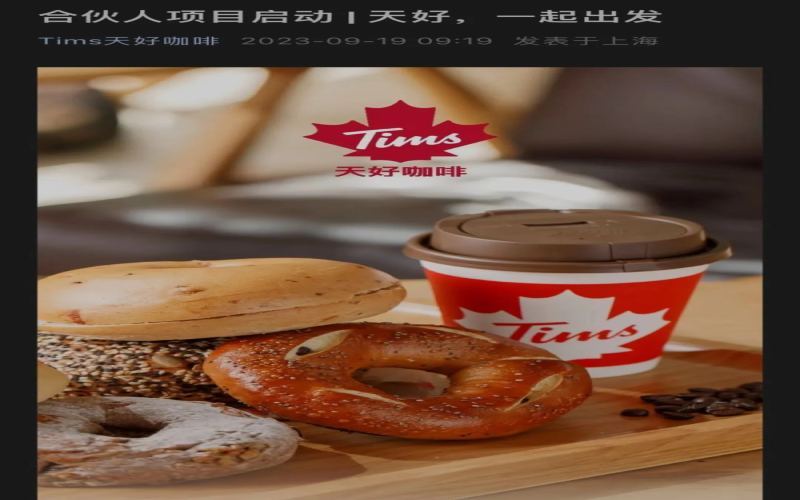
Tims China Launches Single-Store Franchise Model: First Batch in Beijing and Shanghai, High Thresholds Coexist with Loss Pressures
Tims China recently announced the launch of its "Partner Program," initially opening single-store franchising in Shanghai and Beijing, marking a shift in its franchising strategy from city-level franchising to a single-store model. However, the startup capital of over 600,000 yuan, its persistently loss-making financial performance, and the fiercely competitive market environment have sparked widespread discussion about this move. This article sorts through Tims' franchising details, cost structure, market background, and consumer feedback, exploring whether, amid intensifying competition in the coffee sector, opening single-store franchising is its "big move" to accelerate expansion or a reluctant response to difficult circumstances. [more…]
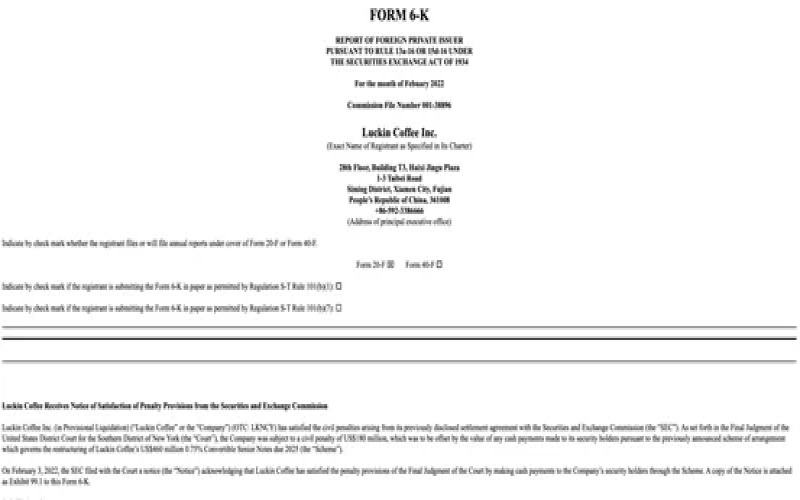
Inside Luckin's 1.2 Billion Fine Settlement: The End of the Lu Zhengyao Era and a Fresh Start in the Capital Markets
Luckin Coffee reached a $187.5 million settlement agreement with the SEC, a massive fine equivalent to the profits from selling tens of millions of cups of coffee. From the Muddy Waters short-seller report to admitting to 2.2 billion yuan in fraud, and then to the Nasdaq suspension, how did Luckin's capital myth collapse? How did Lu Zhengyao's role in it affect investor confidence? With Centurium Capital completing its equity acquisition and Lu Zhengyao completely out of the picture, can Luckin usher in a rebirth in 2022? This article will provide an in-depth analysis of the causes and consequences of this capital storm and explore Luckin's future path to financing and listing. [more…]
Luckin Achieves Overall Profitability: Why Coconut Latte Went Viral, and a Roundup of the Most Worth-Drinking Beverages
After weathering a financial scandal, delisting, and a top-level restructuring, Luckin Coffee has finally received good news: it has achieved overall profitability. At the same time, viral drinks such as Coconut Latte continue to trend, bringing the brand back into the public eye. This article sorts through Luckin's recent financing rumors, business turnaround, store scale, and new product landscape, and discusses what makes Coconut Latte taste so good and why it became a hit. If you are also looking for Luckin's most worthwhile drinks, or want to know Front Street Coffee's recommendations for related beans, this article will give you clear answers. [more…]

Qian Zhiya becomes the legal representative of Cotti Coffee—can Lu Zhengyao and his old team recreate the Luckin legend?
Cotti Coffee (Tianjin) Co., Ltd. recently completed a change of its legal representative, with Luckin Coffee founder Qian Zhiya replacing Wang Baiyin in the role, while also serving as executive director and manager. The mentor-apprentice relationship between Qian Zhiya and Lu Zhengyao can be traced back to the CAR Inc. period. She single-handedly founded Luckin Coffee and drove its lightning-fast listing in 18 months, later leaving amid a financial fraud scandal. Now the two have once again joined forces to charge back into the coffee track. Facing an increasingly fierce competitive market environment, whether Cotti can replicate Luckin-style growth is worth continued attention. [more…]

Tims Coffee officially adopts the Chinese name "Tims Tianhao Coffee", accelerating its deep cultivation of the Chinese market
Canada's national coffee brand Tim Hortons' operating entity in China, Tims Coffee, recently renamed its WeChat official account to "Tims Tianhao Coffee" — the first time the brand has adopted a Chinese name since entering the Chinese market. According to a report by CNR, Tims stated that introducing a Chinese name is aimed at better advancing its localization strategy, deepening its expansion in the Chinese market, and preparing for subsequent entry into lower-tier markets, with an official announcement expected by the end of this month or early next month. From the opening of its first store in Shanghai in 2019, to its Nasdaq listing in 2022, and now to the adoption of a Chinese name, Tims China has been accelerating its expansion every step of the way, with its store target adjusted from an initial 1,500 in ten years to 2,750 by 2026. This article will review Tims China's brand development history, financing and listing milestones, product and pricing positioning, latest financial report data, and store expansion plans, analyzing its determination and strategy for deeply cultivating the Chinese coffee market. [more…]
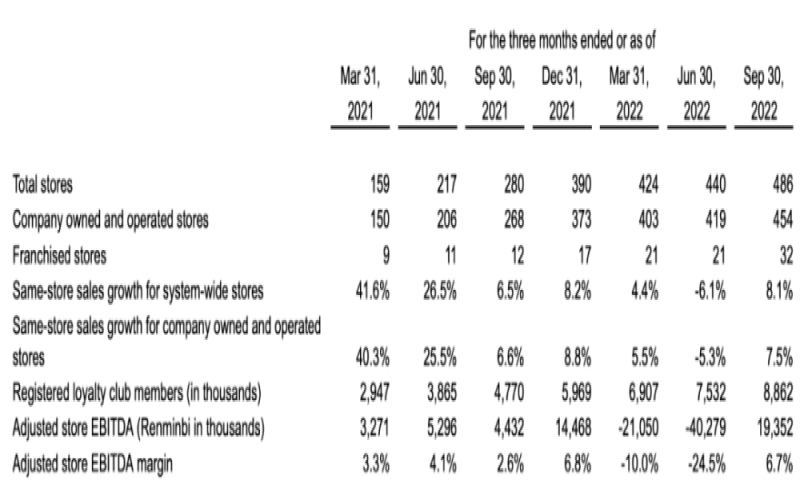
Tims China's First Quarterly Report After Going Public: Net Revenue of 306 Million, Dual-Track Advancement in Store Expansion and Ready-to-Drink Layout
After listing on Nasdaq, Tims China delivered its first quarterly report card, with total net revenue in the third quarter reaching 306 million yuan, up nearly 70% year on year and a record high for a single quarter. On the store front, by the end of September it had covered 27 cities nationwide, with 486 net stores, and in October it welcomed its 500th store. At the same time, Tims China continued to advance cooperation with partners such as EasyJoy Coffee and Hema, stepping up its push into the ready-to-drink coffee segment. This article sorts through the key financial data, store expansion pace, store format structure and management's outlook for the future, giving you a quick look at the latest moves of this coffee chain brand in the Chinese market. [more…]
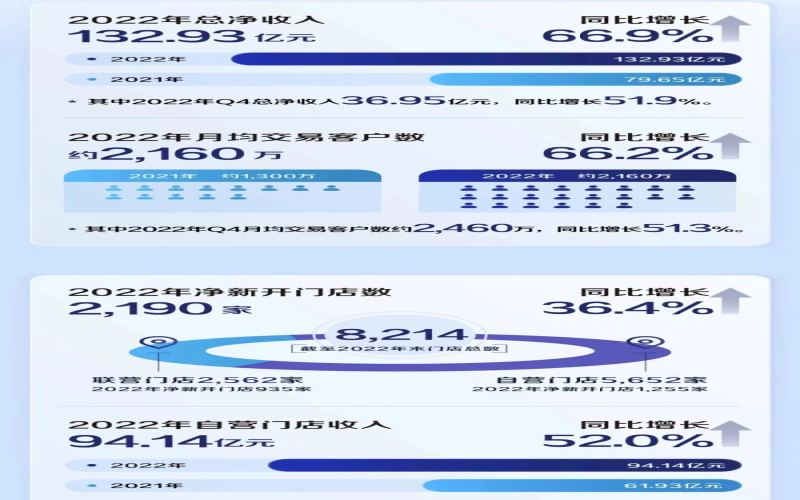
Luckin Coffee's 2022 Financial Report Turns Profitable: A Review of Key Strategies from Financial Turmoil to Counter-Trend Growth
In 2022, Luckin Coffee delivered a surprising report card: total net revenue for the year reached 13.293 billion yuan, and operating profit turned positive for the first time. From a record-breaking Nasdaq listing, to delisting due to financial fraud and a top-management reshuffle, and then to completing debt restructuring and returning to profitability, this brand's journey has been more twists and turns than a TV drama. Under the double squeeze of the pandemic's impact and debt pressure, what did Luckin rely on to turn things around? This article will sort through its pace of store expansion, coupon strategy, hit-product logic, launch speed and pricing, franchising and lower-tier market layout, as well as key moves such as signing endorsements and youth-oriented marketing, to reconstruct a more complete path of Luckin's recovery. [more…]
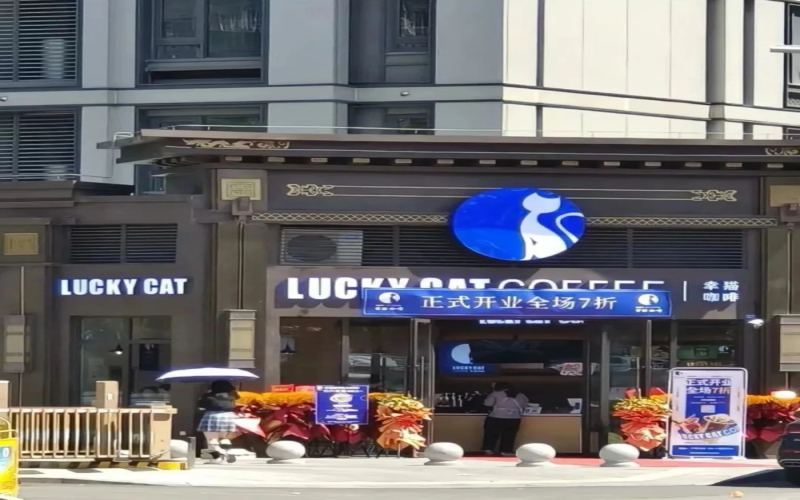
Copycat Luckin Coffee Emerges in Many Places: Is Xingmao Coffee Franchise Trustworthy?
Recently, a knockoff brand highly similar to Luckin Coffee has been appearing in multiple cities — Lucky Cat Coffee (LUCKY CAT COFFEE). The brand is extremely close to Luckin in visual design, store decoration, and even staff attire, sparking heated discussion among netizens. Lucky Cat Coffee has been springing up across the country since April this year, and many consumers mistakenly believed it was a rebranding or sub-brand of Luckin. Although Luckin has officially responded, discussions about whether Lucky Cat Coffee is legitimate and whether it can be franchised continue. This article will sort out the sequence of events and remind entrepreneurs to be cautious when choosing a franchise brand, so as to avoid losses caused by an unstable brand foundation. [more…]
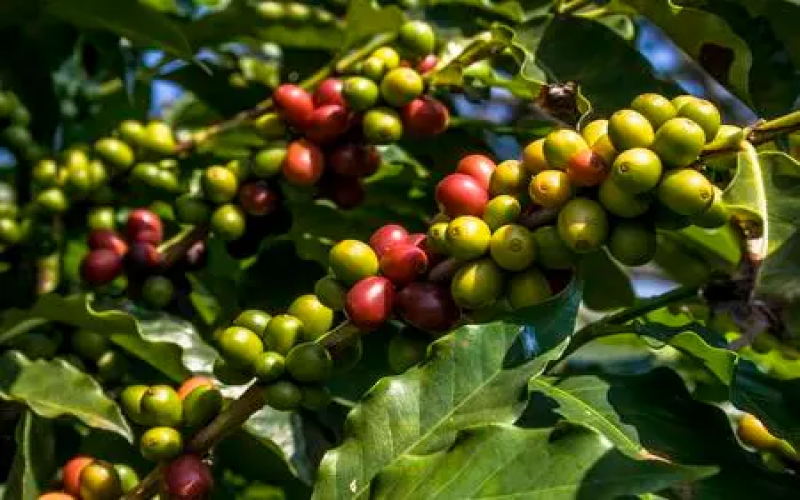
Vietnamese coffee prices hit a new historic high, reshaping the global Robusta supply landscape.
Although coffee prices have recently retreated slightly from their highs, insufficient rainfall in Brazil's producing regions and continuously soaring domestic prices in Vietnam have cast a dark cloud over the supply side of the global coffee market. A combination of factors—Vietnamese coffee farmers holding back sales, traders struggling to fulfill contracts, and disruptions to Red Sea shipping—has pushed robusta coffee prices to a new record high. Meanwhile, Brazil's robusta exports have surged, and production expectations for the new crop season are optimistic, which may bring a glimmer of hope to the tight market supply. This article will sort through the key data and events behind coffee price fluctuations and assess the market outlook. [more…]
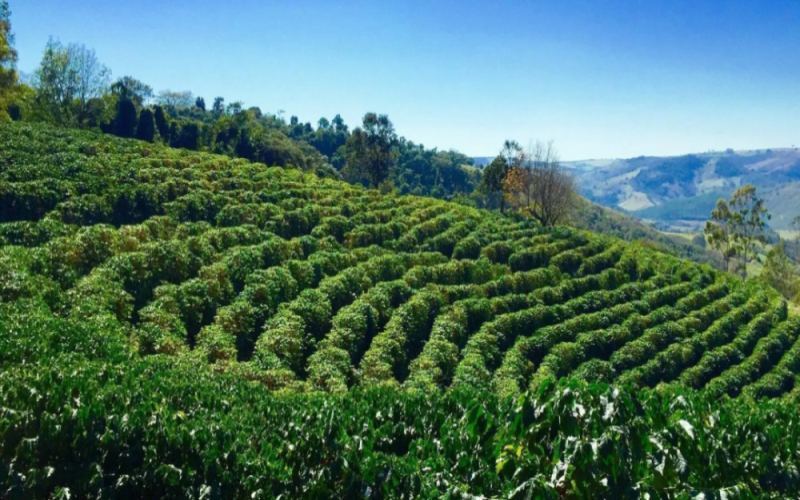
Global supply tightness combined with a weakening dollar keeps coffee bean prices climbing
The international coffee market has recently experienced a significant rally, with prices for both Robusta and Arabica rising. The factors driving this surge are complex: Brazil's coffee-growing regions continue to suffer from drought, and logistics delays at the Port of Santos occur frequently; the US dollar index has come under downward pressure due to rate cut expectations, and the Brazilian real has strengthened accordingly; Vietnam's Robusta supply is tight, and local green bean purchase prices have repeatedly hit new highs. At the same time, the USDA forecasts that global coffee production in the new year will increase by 4.2% year-on-year, but the trends among different varieties are clearly divergent. This article will review the supply and demand dynamics and price logic of major producing regions to help readers grasp the current pulse of the coffee market. [more…]
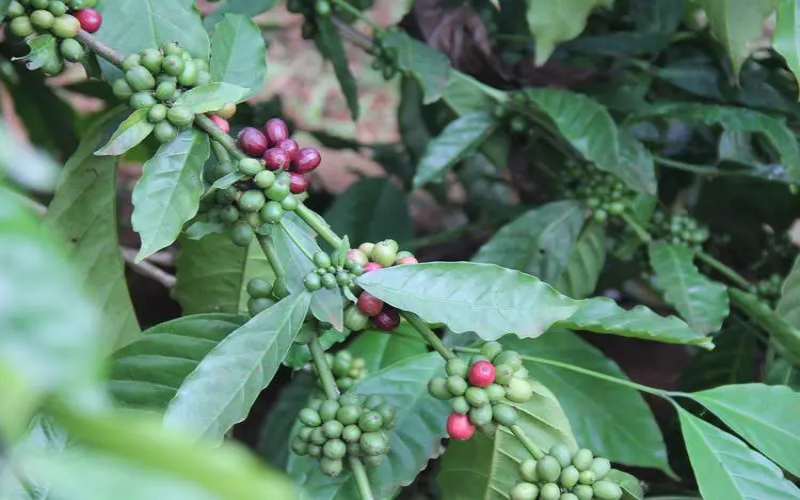
Reports on Coffee Production and Exports in Vietnam and Brazil Are Out, Data from Multiple Countries Reveal New Trends in the Global Coffee Market
Recent coffee industry reports released by multiple countries show that the global coffee market is undergoing a series of significant changes. Vietnam's coffee export volume in January hit a record monthly high, and despite drought causing expectations of lower production, export performance remained strong. Rain in Brazil's main producing regions has benefited crop growth, and production for the new year is expected to increase year-on-year. At the same time, the Red Sea crisis continues to affect trade routes, prompting some traders to turn to Brazil to purchase robusta coffee beans. Arabica prices have remained stable due to steady exports from several Central American countries. Colombia's coffee production has risen sharply, becoming a bright spot in the Americas market. This article will review production and export data from major producing regions and analyze the current supply-demand landscape and future direction of the coffee market. [more…]