







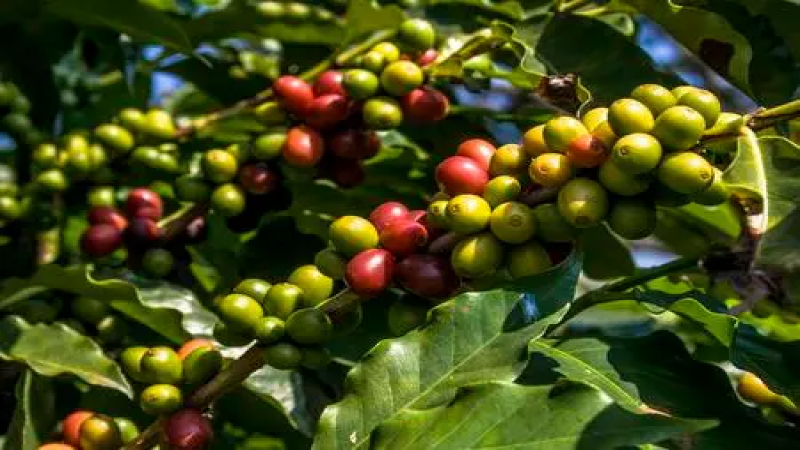
Why are Vietnam coffee prices setting a new record?
Vietnam coffee prices reached a new record in early 2024, with Central Highlands robusta quoted above 77 million to 79 million Vietnamese dong per ton, up roughly 80% year on year. Farmers are holding back beans, traders are struggling to fill contracts, and Red Sea shipping disruptions have added to the pressure.
The tightness follows uneven weather: Minas Gerais rainfall in Brazil ran at about 53% of the historical average, and arabica coffee there accounts for roughly 30% of Brazil's output. Vietnam still exported 210,000 tons in January, up 47.6% year on year, while Brazil raised its 2023/24 export estimate from 41.5 million to 44.9 million bags.
Although coffee prices have recently retreated slightly from their highs, insufficient rainfall in Brazil's producing regions and continuously soaring domestic prices in Vietnam have cast a dark cloud over the supply side of the global coffee market. A combination of multiple factors—including Vietnamese coffee farmers holding back sales, traders struggling to fulfill contracts, and Red Sea shipping disruptions—has pushed robusta coffee prices to a new record high. Meanwhile, Brazil's robusta exports have surged, and the new crop season's production outlook is optimistic, which may bring a glimmer of hope to the tight market supply. This article will review the key data and events behind coffee price fluctuations and assess future market trends.
Recently, according to a report on the nasdaq website, although coffee prices have seen a slight pullback, they are still running at elevated levels overall. The reason for this price decline is that Brazilian exporter group Comexim raised its estimate for the country's 2023/24 coffee exports from 41.5 million bags to 44.9 million bags. However, Brazil's current weather conditions are providing support for coffee prices. According to a weather report from Somar Meteorologia, rainfall in Brazil's Minas Gerais state over the past week was only 25 millimeters, equivalent to 53% of the historical average, and the arabica coffee grown in this region accounts for about 30% of Brazil's total production.
On the other hand, Vietnam's coffee exports are expected to grow, which could have originally helped push prices down. According to a report from Vietnam's presidential office, Vietnam's coffee export volume in January increased by 47.6% year-on-year, reaching 210,000 tons. However, Vietnam's domestic coffee prices continued to climb, once again setting a new record. Data from the Vietnam Coffee and Cocoa Association shows that coffee prices in the Central Highlands, the country's main producing region, have exceeded 77 million to 79 million Vietnamese dong per ton, up from the previous 76 million to 77 million Vietnamese dong per ton, an increase of about 80% year-on-year.
The root cause of the continued rise in Vietnam's domestic coffee prices is that local coffee farmers are unwilling to sell their coffee beans easily. These growers choose to wait and see, hoping to sell after prices rise further. This situation has made it difficult for many traders to purchase enough supply to fulfill previously signed forward contracts. Some agents have even gone bankrupt due to nearly $1 million worth of undelivered goods. Other traders have had to offer higher prices to buy coffee beans from farmers in order to complete their sales contracts.
In addition, attacks by Houthi forces on cargo ships have forced shipping companies to suspend services or reroute, further pushing up prices. Currently, container freight rates along the severely affected Europe-Asia route have risen by 150%, and because ships have been forced to detour around the Cape of Good Hope, coffee deliveries from major Asian producing countries such as Vietnam and Indonesia are facing delays of more than three weeks. As a result, many buyers are avoiding Vietnamese robusta and turning to Brazilian robusta instead.
At the same time, tight supply in robusta-growing countries such as Vietnam and Indonesia, combined with global shipping problems, has led to insufficient inventories. In terms of exchange-certified stocks, certified robusta stocks fell by 66,000 bags in January. But there is also good news: data from the Brazil Specialty Coffee Association (Cecafe) shows that Brazil exported 4.7 million bags of robusta coffee in 2023, an increase of 212% compared with 2022. In addition, Conab forecasts that Brazil's robusta coffee production will reach 17.1 million bags in 2024, which is expected to ease the supply shortage.
The above content is compiled by CoffeeHunters, a coffee news website.


