







What Does the Luckin Coffee Nasdaq Listing Mean for Drinkers?
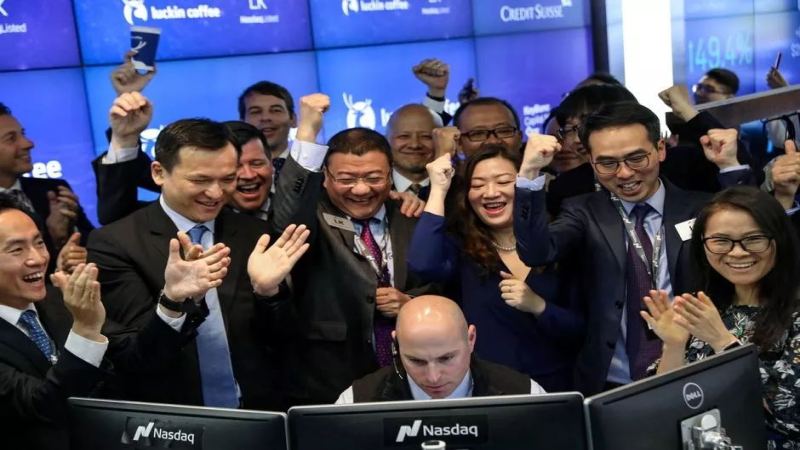
Luckin Coffee listed on Nasdaq on the evening of the 17th, Beijing time, setting a global record for the fastest IPO at 17 months and becoming the largest Asian company by fundraising size on Nasdaq that year. The chain, less than two years old, built its growth on aggressive store expansion, online delivery and discount coupons.
Behind the listing lies a question about coffee quality: whether the chain's beans justify its "master coffee" claim, and whether low prices can coexist with a good cup. Capital has favored the model, but the domestic coffee market and the consistency of the coffee itself remain the points consumers and observers keep returning to as the company matures.
On the evening of the 17th, Beijing time, Luckin Coffee officially listed on Nasdaq, setting a new global record for the fastest IPO at 17 months and becoming the largest Asian company by fundraising size on Nasdaq this year. This company, less than two years old, has stirred up a storm in the domestic coffee market through aggressive expansion, online delivery, and discount subsidies. Why is capital so favorable to Luckin? Can its coffee quality live up to the title of "master coffee"? When Luckin proclaims "let Chinese people drink affordable and delicious coffee," as consumers, can we really easily enjoy a good cup of coffee from then on? This article starts with the IPO event, sorts out Luckin's capital logic, the current state of the domestic coffee market, and the controversies surrounding its quality, to think about these questions with you.
For professional coffee knowledge exchange and more coffee bean information, please follow Coffee Workshop (WeChat public account: cafe_style).
For more specialty coffee beans, please add the private WeChat of Front Street Coffee (FrontStreet Coffee), WeChat ID: qjcoffeex
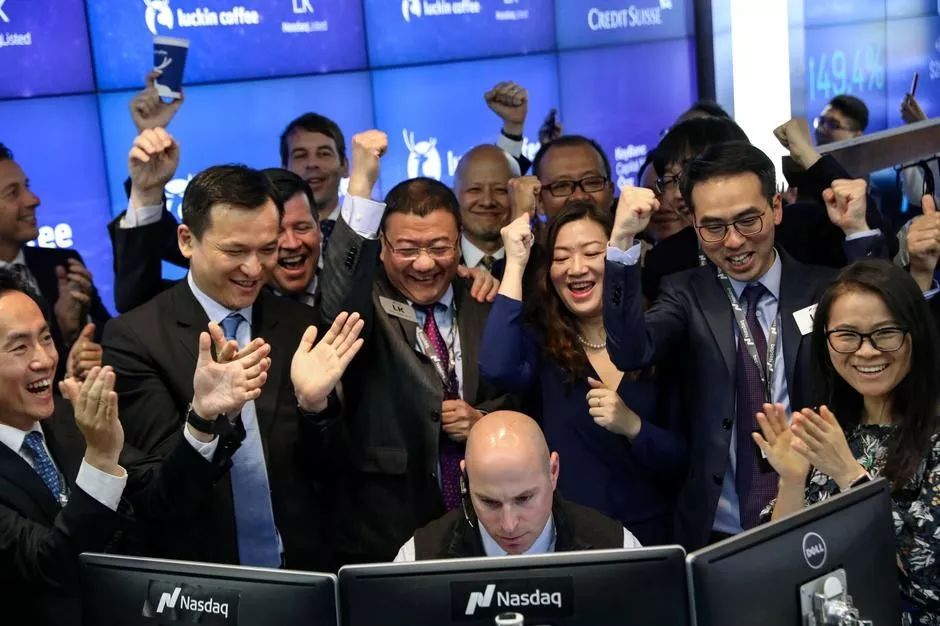
At 21:30 on the 17th, Beijing time, Luckin Coffee officially rang the listing bell on the Nasdaq Exchange. With this, the long-rumored IPO of Luckin was finally settled.
As an ordinary coffee enthusiast (or perhaps a caffeine addict), how much do you really care about this?
A company that set the global record for the fastest IPO
At this moment, how many people still regard "Luckin Coffee" as an ordinary coffee shop?
It must be said that Luckin, less than two years old, is increasingly departing from the general understanding of a traditional coffee shop—even though our perception of "traditional coffee shops" mostly comes from Starbucks, and Luckin is precisely aiming to break Starbucks' "dominance" in China—by launching online and delivery services beyond the "third space," aggressively expanding with a large number of stores, and continuously issuing coupons to bring down-to-earth prices. These measures have undoubtedly stirred up a storm in the domestic coffee market and in people's minds (whether you drink coffee or not).
Now, Luckin has once again seized the spotlight in the domestic and even global coffee scene, not because its coffee is so stunning, but because of its capital operations and its successful IPO.
"Fast" is a prominent feature of Luckin.
Before Luckin, Pinduoduo and Qutoutiao demonstrated the extremely fast pace of Chinese companies going public in the U.S. with 3 years and 2 years from founding to IPO, respectively. But this is far from Luckin's 17 months, which is no less impressive than its store expansion speed, making Luckin the world's fastest IPO company.
In addition, Luckin is the largest Asian company by IPO fundraising size on Nasdaq this year. Kathleen Smith, head of Renaissance Capital, said, "Since the Internet bubble of 1999-2000, no company has achieved a public valuation of $3 billion in less than two years from founding."
Regardless of how Luckin is perceived by the public, at least in the eyes of capital, it is a cup of coffee worth savoring.
Luckin's coffee, China's coffee?
The reason Luckin is favored by capital is inseparable from the booming domestic coffee market. Domestic coffee is by no means limited to Starbucks and Luckin, from foreign coffee chains that entered the market long ago, to beverage brands developing new coffee products to join the fray, and numerous independent specialty coffee shops... At first glance, Chinese people have quite a few choices when they want a cup of coffee.
At the same time, domestic coffee culture is far from mature. For "coffee," an imported product, Chinese people have a rather vague positioning of it in their lives. Subconsciously, we always distinguish coffee from a glass of water, a pot of tea, a bottle of cola, and other beverages, and then endow it with many additional meanings and values—coffee in China is surprisingly so different.
Some say Luckin is not a "proper" coffee shop. In the eyes of these people, Luckin is merely using the product "coffee" to play a capital game that will ultimately end in a mess. At the IPO bell-ringing ceremony, Luckin Coffee founder and CEO Qian Zhiya declared the company's ambition with a "Luckin Coffee Manifesto": to let Chinese people drink affordable and delicious coffee.
In response to media questions, CEO Qian Zhiya also reiterated that losses are in line with Luckin's expectations, "we are not considering profitability at present." The rapid expansion that will not stop, continuing to acquire users through subsidies, and insisting on doing well in the face of rising new competitors—the successfully listed Luckin Coffee presents to everyone a good image of striving to cultivate the domestic coffee market and consumers.
Can we really drink an affordable and delicious cup of coffee?
The bell-ringing ceremony for Luckin's IPO was conducted by three well-known coffee champions, as a reflection of Luckin's emphasis on coffee quality. Prior to this, the three masters brought Luckin coffee beans that won the ICT Gold Award, and this blend was also upgraded by Luckin to stores nationwide.
However, this cannot avoid doubts about Luckin's coffee quality. Some media pointed out that the staff in Luckin stores are far from reaching the level of being called "baristas," and the coffee quality brought by brief on-the-job training and fast assembly-line operations will only remain at the level of chain stores.
As consumers, should we demand more from Luckin? Do we need to have expectations for Luckin's "master coffee"?
Luckin has successfully listed in the U.S. and at the IPO site issued a manifesto to insist on providing us with good coffee that is "affordable and accessible." In Luckin's eyes, the taste of China's coffee market still needs time to be cultivated. And as those being cultivated, will we one day abandon chain store coffee?
Luckin says: What is the difference between Chinese coffee and American coffee? The difference is confidence. For those of you who love and want to drink coffee, do you need a cup of confident Luckin Coffee?
Image source: Internet
The above content is compiled by CoffeeHunters, a coffee news website.


