







Search Results for: Hangzhou milk tea
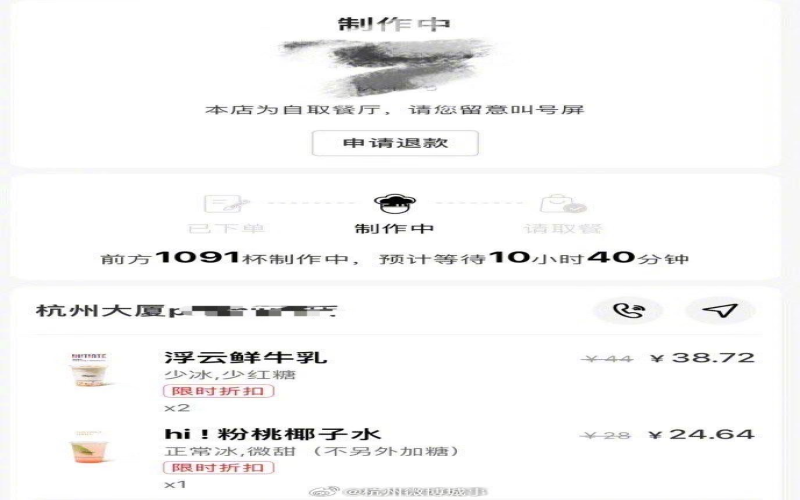
Hangzhou's internet-famous milk tea has queues exceeding 10 hours—is it consumers following the trend or hunger marketing?
After the first Hangzhou store of BONJOUR, a Suzhou milk tea brand, opened, its online ordering showed over a thousand cups in production ahead, with wait times often reaching seven to eight hours or even more than ten. Consumers posted screenshots of their orders, sparking heated debate: Is a cup of milk tea worth such a long wait? A reporter's visit found no long lines on site, but chaotic pickup and sold-out popular items. Some consumers admitted the taste was nothing special and they were just following the trend. Netizens questioned whether this was hunger marketing and suggested waiting for this "Hangzhou fad" to pass before trying. This article will explore the phenomenon and reflections behind this milk tea queue controversy. [more…]
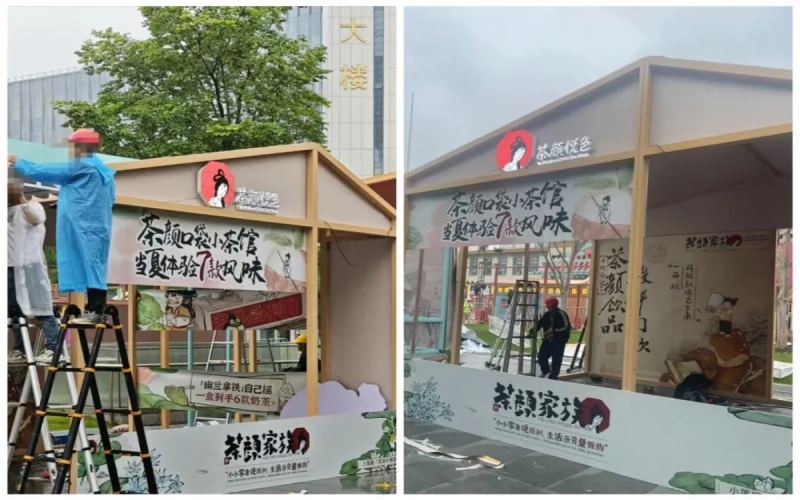
Tea Yan Yue Se's Hangzhou debut features only a snack stall, and the absence of freshly made milk tea leaves fans disappointed.
Tea Yan Yue Se recently opened a pop-up stall at Wulin Square in Hangzhou, marking the brand's first appearance in the city. However, milk tea enthusiasts who rushed to the scene full of anticipation discovered that the stall only sold snacks, tea bags, and other merchandise, with no freshly made drinks whatsoever. What further dissatisfied fans was that the stall did not accept membership balance payments, requiring on-site payment only. On the first day of opening, some snacks had already sold out and would not be restocked. Many netizens expressed their disappointment outright, believing that a pop-up stall without milk tea had lost the brand's distinctive character, and that the promotional effect had backfired. [more…]
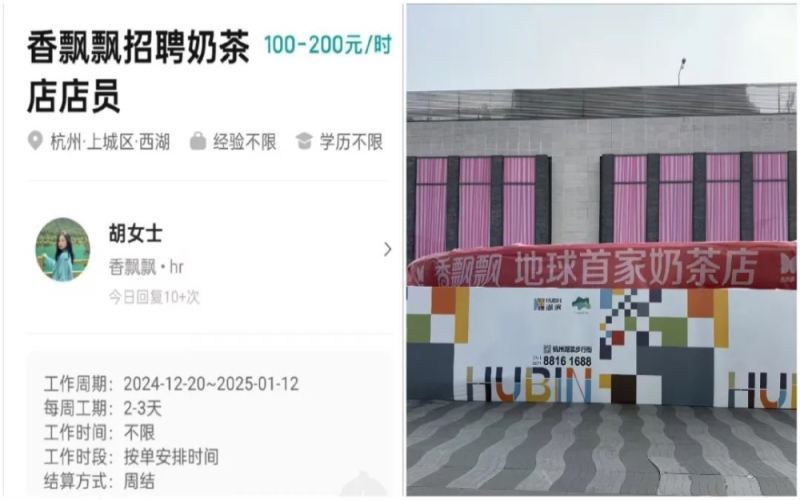
Xiangpiaopiao Opens Its First Global Offline Milk Tea Store in Hangzhou, Freshly Brewed Instant Model Sparks Heated Consumer Discussion
Xiangpiaopiao's first global offline store recently officially opened in Hangzhou Hubin. Milk tea priced at 9 to 12 yuan, combined with a buy-one-get-one-free opening promotion, attracted a large number of consumers to queue up in the cold winter to try it. However, the store's preparation method surprised many people—staff did not shake and make the tea drinks on site, but instead opened instant tea packets, brewed them separately, and then mixed them with blending powder and toppings, which netizens jokingly called "hand-brewed instant milk tea." This model forms a sharp contrast with mainstream freshly made tea beverage brands, and has also triggered widespread discussion about the value of instant products versus freshly made milk tea. Whether Xiangpiaopiao can win over picky milk tea lovers with emotional value remains to be tested by the market. [more…]
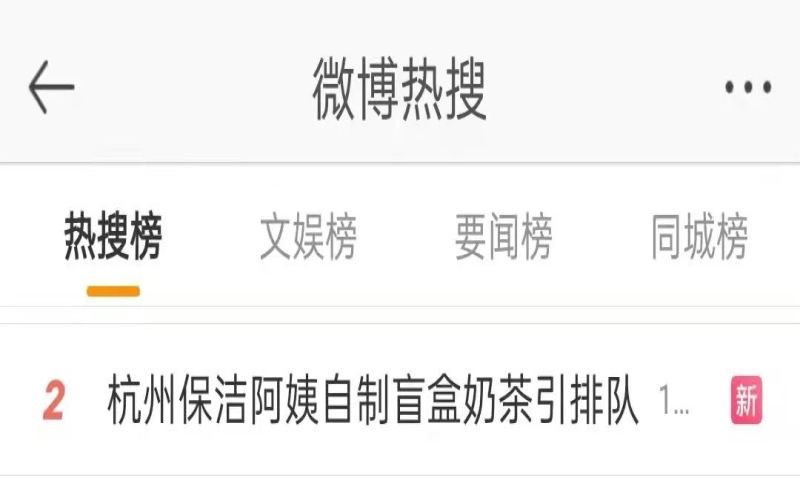
A Hangzhou cleaning lady's 5-yuan DIY blind box milk tea goes viral: Why does the blind box economy keep igniting consumer crazes?
Recently, a "blind box milk tea" made by a company cleaning lady in Hangzhou has trended on Weibo, selling for only 5 yuan per cup, prompting employees across the company to queue up and snap it up daily. The lady learned to make it herself because her daughter loves milk tea, and set up a stall in the office pantry; business became so booming that she had no time for square dancing. Coincidentally, in April this year, the blind box milk tea launched by the Mixue brand in Qingdao also went viral, driving the store's daily revenue from 3,000 yuan to over 10,000 yuan. The blind box economy has shown staggering cross-industry appeal in recent years—from toys to milk tea, it seems to make anything it touches a hit. This article will walk you through the story of blind box milk tea's rise, analyze the origins, characteristics, and underlying marketing logic of the blind box economy, and explore how brands can use blind boxes to achieve long-term business success. [more…]
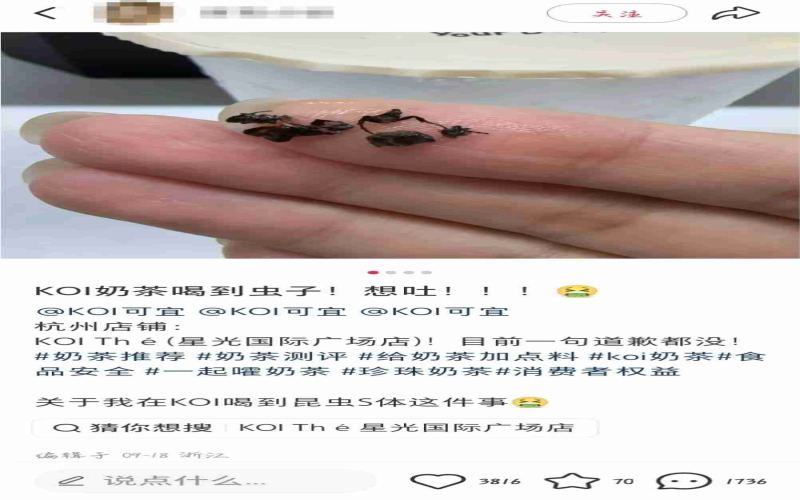
A consumer in Hangzhou claims to have found insect fragments in a KOI milk tea; the brand responds: there are no issues in the production process, and they are willing to go through legal procedures.
Recently, a consumer in Hangzhou, Zhejiang, posted on social media claiming to have疑似 found fragments of an insect carcass in a takeaway milk tea from the well-known freshly made tea drink brand KOI. The consumer and the brand failed to reach an agreement after multiple communications over compensation and an apology, and the consumer has filed a complaint with 12315 and insists on pursuing legal proceedings. KOI responded that neither the store surveillance nor inspections by the market supervision department found any foreign object entering the drink, and that the strainer hole design of the shaker cup would also block such foreign objects, so it does not accept an apology on the platform but is willing to compensate in accordance with the law. The incident has attracted widespread attention, with both sides sticking to their own accounts, and there is currently no new progress. [more…]
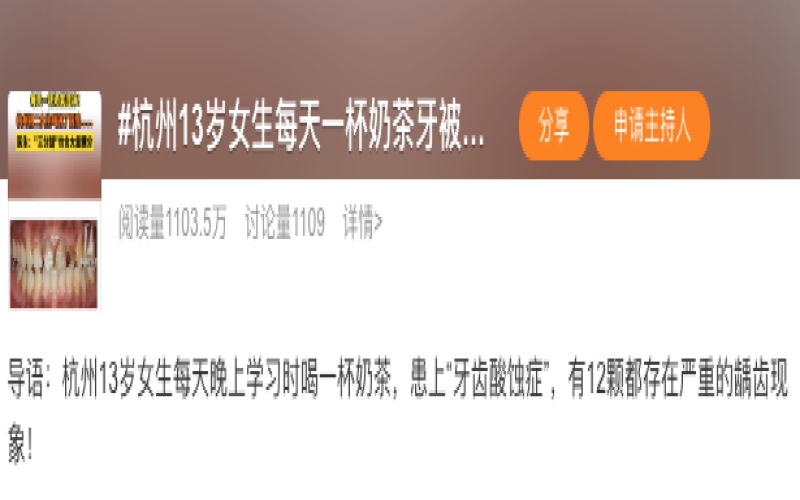
Warning from a 13-Year-Old Girl with 12 Cavities: One Milk Tea a Day Acid-Eroded Her Teeth into Plaster
The first cup of milk tea in autumn, the first cup of the school year—milk tea is seen by many young people as a source of happiness, but overindulging can bring serious health risks. Xiaoliu, a 13-year-old eighth-grade girl in Hangzhou, drank a cup of milk tea almost every night to stay alert due to study pressure, which ultimately led to severe cavities in all 12 of her teeth and a diagnosis of "dental erosion." Doctors point out that milk tea not only contains a large amount of hidden sugar, but long-term consumption can also worsen tooth demineralization and corrosion. This article will recount the course of the incident, analyze the causes and harms of dental erosion, and offer practical advice for milk tea lovers on protecting their teeth. [more…]
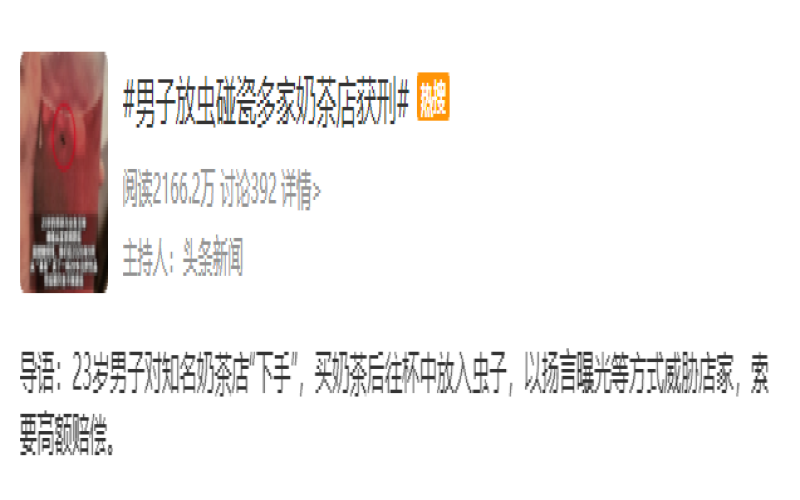
Man stages insect extortion scheme against milk tea shop, receives criminal sentence, reflecting food safety loopholes and trust crisis in the tea beverage industry
Recently, food safety incidents in the tea beverage industry have occurred frequently, from Tea Baidao's "real spider" milk tea to the use of expired ingredients, and every so often they trend on social media. However, a news report by Guangzhou Daily on October 12 was entirely different: a 23-year-old man, using his work experience at "a certain tea brand," colluded with his girlfriend and friends to deliberately plant insects in stores in Hangzhou, Dongguan, Shenzhen, Guangzhou, Shanghai, and other locations, extorting money under the pretext of food safety, with demands ranging from a thousand yuan to two hundred thousand yuan, and was ultimately prosecuted on suspicion of extortion. This incident not only exposed some milk tea shops' negligence in operations management but also sparked public discussion about the authenticity of food safety complaints. What consumers truly need is a hygienic and tasty drink, not a vicious cycle of deception. This article compiles the ins and outs of the incident and includes related information about Front Street Coffee. [more…]
Milk tea shop "Black Coconut Strawberry Milk" investigated for illegal use of vegetable carbon black, food safety concerns resurface
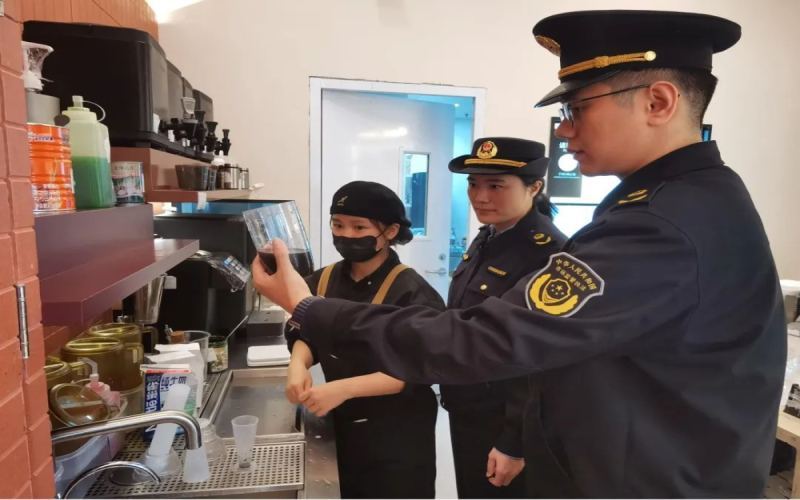
In recent years, dark-themed beverages marketed for their "black" appeal have proliferated in the food and beverage market, attracting many curious consumers with their unique appearance. However, such products may harbor food safety risks. Recently, the Market Supervision Bureau of Xuhui District, Shanghai, discovered during an inspection of a milk tea shop that its "Black Coconut Strawberry Milk" was unusually dark black in color. An investigation confirmed that the staff had illegally added "vegetable carbon black" during preparation. This act violated food additive usage standards, and the shop was ordered to rectify the issue and was penalized. Notably, the brand involved is none other than "Benz Tea," which went viral last year, with its first Hangzhou store setting a record of thousands queuing and scalpers reselling cups for as much as 300 yuan. This incident once again reminds us that creative beverages must also strictly adhere to safety bottom lines. [more…]
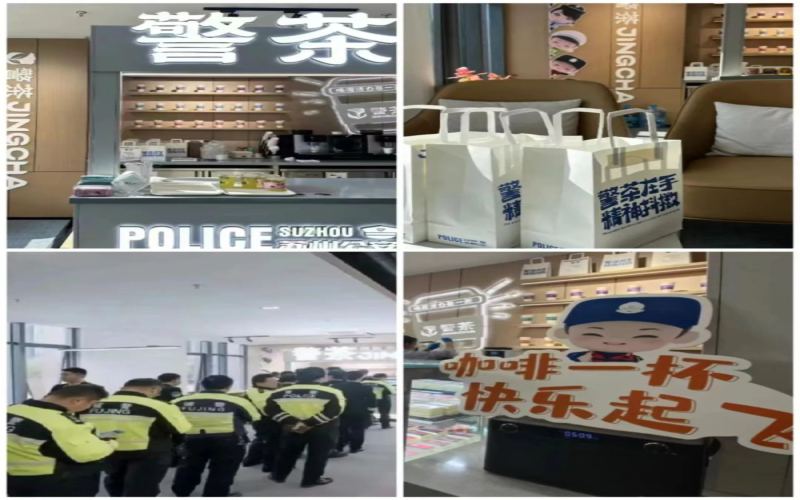
Suzhou police跨界 opening a milk tea shop called "Police Tea" sparks heated discussion; public offices innovating outreach to bring police and public closer
Recently, a milk tea shop called "Police Tea" has drawn attention on social media, not because its products are particularly special, but because it is located inside the Suzhou Public Security Bureau and was launched by the police themselves. As soon as the news broke, netizens joked about wanting to "go to the station for tea," and some even jokingly asked whether starting a fight at the police station entrance would get them inside. The shop not only serves milk tea and coffee, but also cookies, desserts, and cultural merchandise, though it is not yet open to the public. Some people are curious about how to buy from it, while others question whether it is compliant for a government agency to run a business. In fact, this shop is essentially an internal canteen, and ordinary citizens can receive items for free on police open days by taking part in anti-fraud, anti-drug, and other activities. A similar approach by Hangzhou police, who partnered with Chagee to give out "police tea" on Police Day, also received considerable praise. This kind of publicity method that keeps pace with the times not only builds a friendly public image, but also makes the spread of legal knowledge more down-to-earth. [more…]
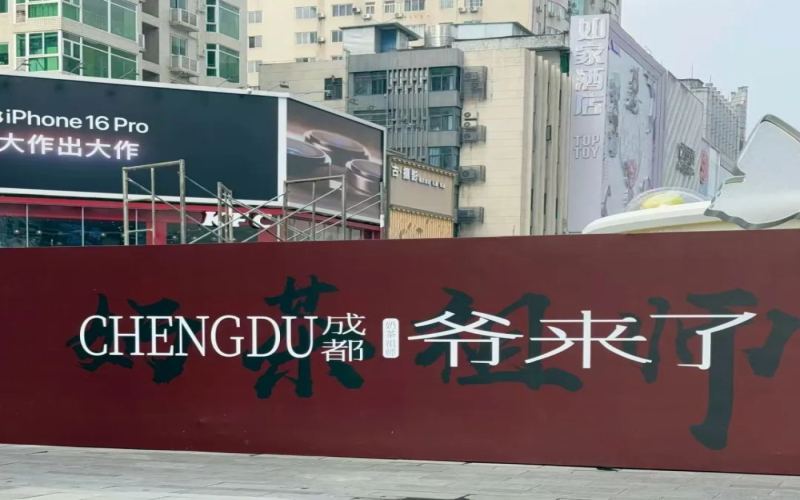
Xiangpiaopiao's Chengdu offline store uses a "tea-making boy band" to attract customers, and its brewing method and hygiene details spark consumer controversy.
The physical milk tea shop opened by Xiangpiaopiao on Chunxi Road in Chengdu has recently become a hot topic. The brand used a "tea-making boy band" as a selling point, recruiting male staff over 180 cm tall with good looks and charisma, and through social media voting selected 27 candidates, ultimately choosing 12 to work in the store. On opening day, long lines formed at the shop; the boy band members were responsible for packing orders and interacting with customers for photos, providing emotional value. However, some consumers pointed out that the drinks in the store are still mainly made by brewing tea bags and juice with hot water, which differs from mainstream freshly made tea beverages; the drink output efficiency is low, with wait times of up to half an hour, and photographers and other non-operational personnel were moving around the bar area taking photos without wearing masks or hats, raising questions about food hygiene. Xiangpiaopiao had previously used a similar strategy of highly attractive staff at a pop-up store by West Lake in Hangzhou, and this operation is seen as a continuation and upgrade of that marketing approach. [more…]
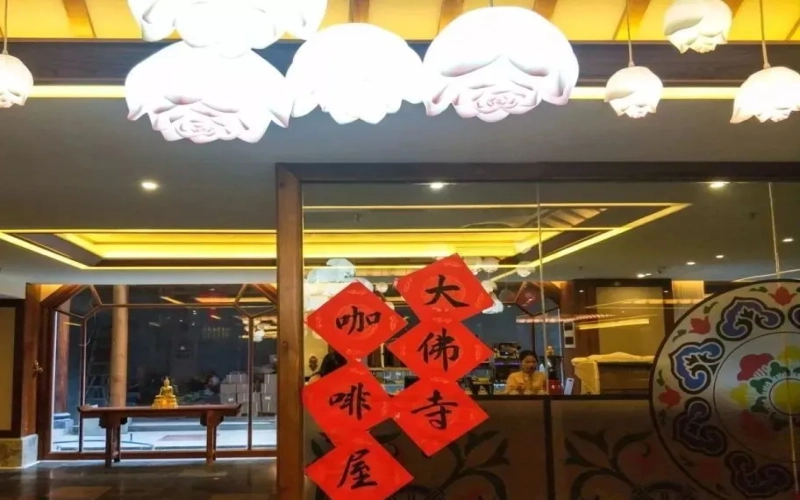
Shanghai's Longhua Ancient Temple launches oat milk vegan coffee, a 1,700-year-old temple also ventures into跨界
As the coffee wave sweeps across every industry, even ancient temples spanning a millennium can no longer resist the urge to cross over. Longhua Temple, the oldest in Shanghai, has recently opened a beverage window next to its vegetarian restaurant, launching "vegetarian coffee" that uses oat milk instead of dairy milk — catering to vegetarians and those who are lactose intolerant. This is not the first time a temple has ventured into coffee; from Dafo Temple in Guangzhou to Yongfu Temple in Hangzhou, the collision between Buddhist monasteries and coffee has long existed. Longhua Temple's move, with its affordable prices, has sparked heated discussion online: can coffee be classified as vegetarian or non-vegetarian? Is temples selling coffee a new path for cultural dissemination, or just a gimmick? This article takes you behind the scenes. [more…]
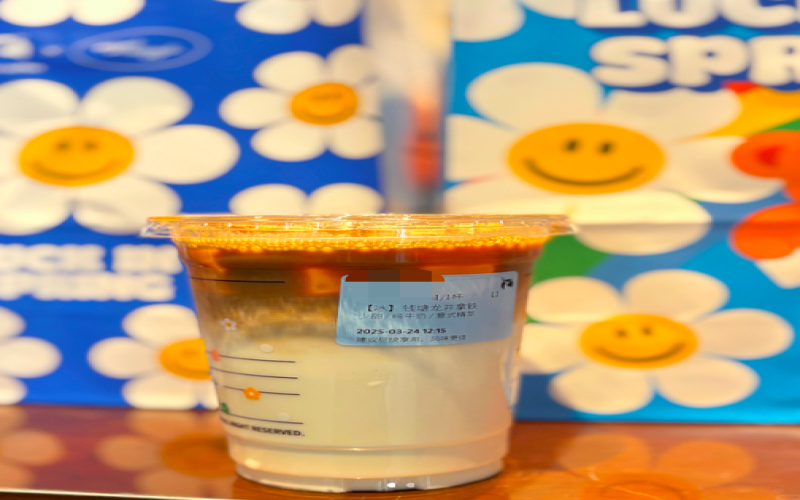
Luckin Coffee launches new Qiantang Longjing Latte, consumer feedback about missing tea flavor sparks heated discussion
Recently, Luckin Coffee launched a production-season limited new product, Qiantang Longjing Latte, inspired by the spring tea of Longjing in Hangzhou's Qiantang area, quickly attracting a large number of consumers' attention. The combination of tea and coffee has always had many fans, and Luckin's previously launched tea-coffee products such as Jasmine Latte and Biluozhichun Latte have all received praise. However, after this highly anticipated new product hit the market, it triggered complaints from consumers due to issues such as lack of tea flavor and poor taste integration. This article will review the production method of the new product, consumer feedback, and comparisons with tea-coffee products from brands such as Front Street Coffee, to explore the challenges and user expectations faced by Luckin's tea-coffee series. [more…]
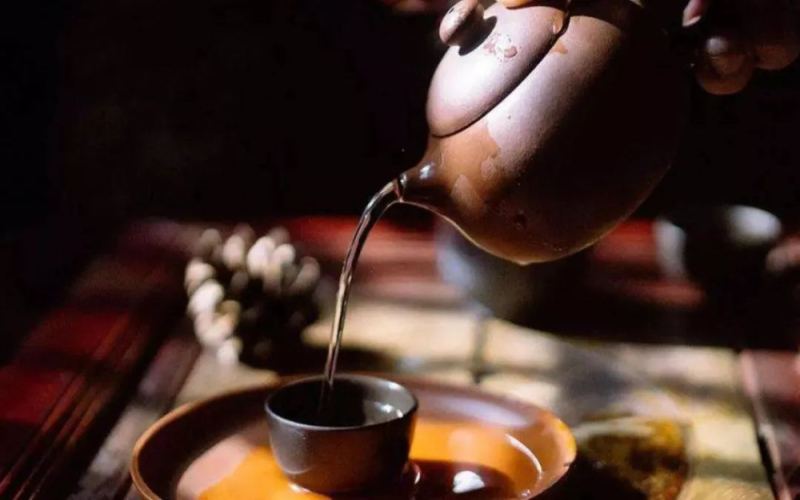
Monks Also Love Pour-Over Coffee: Ancient Temples Across Asia Open Cafés, Monks Buy Green Beans to Roast and Brew Themselves
Famous mountains and ancient temples have long been known for tea, but in recent years monks at temples in many parts of Asia have begun to take a keen interest in coffee, and cafes have quietly appeared within temple grounds. From the Starbucks at Zenko-ji in Japan, to the vegetarian coffee at Yongfu Temple in Hangzhou and Longhua Temple in Shanghai, to Korean monks who buy green beans themselves, purchase roasters, and personally brew coffee to serve visitors, coffee is gradually becoming part of temple life. This article introduces this intriguing phenomenon of traditional culture blending with an imported beverage, and explores the cultural significance behind temple coffee. At the end, it also includes netizens' profound comments on the changing role of temples. [more…]
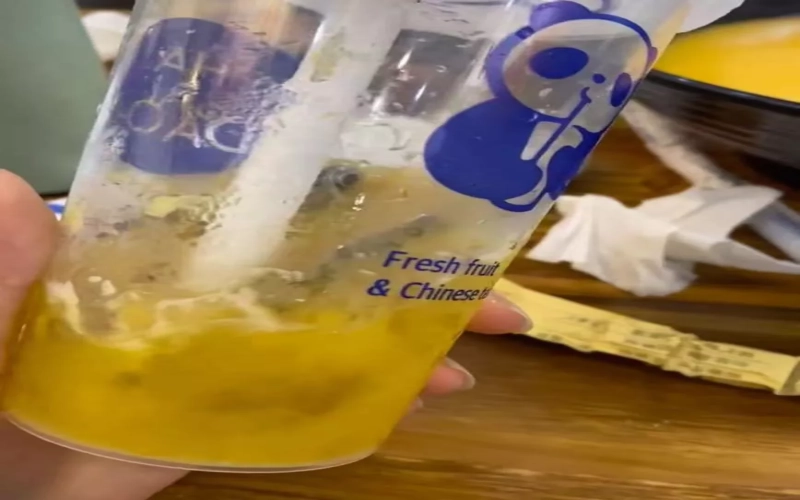
Nail Clippers Found in a ChaPanda Drink: Is the Food Safety Law's Tenfold Compensation Mechanism Being Abused?
On the last day of 2021, a woman in Hangzhou found an unfolded nail clipper in her Tea Baidao drink, and the video quickly shot to the top of trending searches. Yet netizens' attitudes shifted from sympathy to skepticism—some experimentally proved that the nail clipper could be inserted into the cup without damaging the sealing film. Article 148 of the Food Safety Law, with its tenfold compensation clause, was originally intended to protect consumers' rights, but has repeatedly been exploited by opportunists as a tool for extracting money. Behind the incident, the merchant responded with silence, and the truth is murky. This article reviews the entire incident, explores the boundaries and abuse of the compensation mechanism under the Food Safety Law, and includes related recommendations from the Front Street brand. [more…]
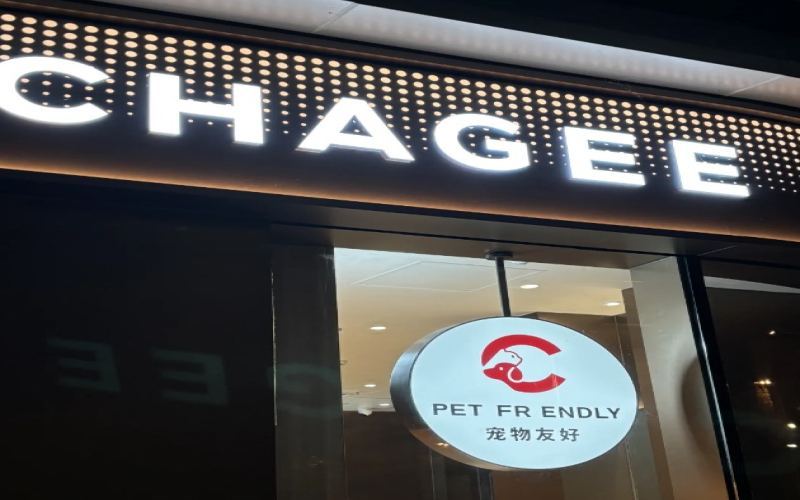
Chagee Enters Pet-Friendly Stores: Tea Beverage Brands Race for the New Hundred-Billion Pet Economy Track
For pet owners, whether they can bring their furry companions along when going out for a cup of coffee or milk tea is often a vexing question—many shops do not clearly indicate whether pets are allowed inside, leaving owners with little choice but to forgo the purchase. However, this situation is quietly changing. On August 23, Chagee's first batch of pet-friendly stores was officially announced as open, located in four cities—Changsha, Kunming, Hangzhou, and Shijiazhuang—with more cities to follow. So-called pet-friendly not only means not excluding pets, but also includes providing dedicated facilities and services for pets and their owners, such as water bowls, poop bags, and litter boxes, advocating harmonious coexistence between people and pets. On social media, pet-owning netizens responded enthusiastically, though some also expressed concerns about hygiene and epidemic prevention. The pet economy reached 592.8 billion yuan in 2023 and is projected to surpass 811.4 billion yuan by 2025, and tea beverage brands are turning their eyes to this piece of the pie. This article will focus on Chagee's pet-friendly initiatives to explore the opportunities and controversies surrounding the tea beverage industry's foray into the pet economy. [more…]
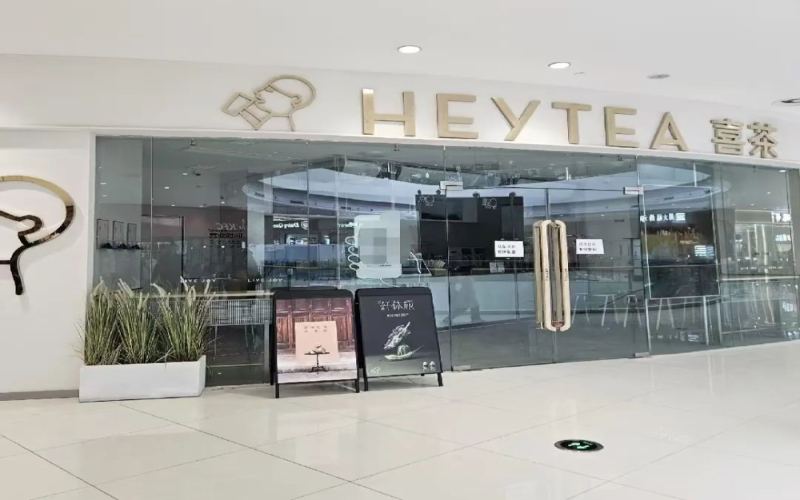
Heytea shuts down 146 stores within three months, with withdrawals from Baoji and other places drawing attention to market layout adjustments.
Recently, Heycha has seen store closures in many places across the country, drawing attention from consumers and the industry. Two stores in Baoji, Shaanxi, have suspended operations one after another, and stores in Shenzhen, Hangzhou, Qingdao and other places have also disappeared or reduced their scale. According to GeoHey brand monitoring data, in the past 90 days Heycha opened 12 new stores, but the number of closures reached 146, equivalent to nearly 2 stores disappearing from cities every day. After suspending franchise expansion, the brand intends to improve store product quality and selectively close stores with poor profitability, but the large number of closures is still surprising. As coffee enthusiasts, Front Street Coffee continues to follow the dynamic changes in the tea beverage and coffee markets, and this article sorts out cases from various places and industry interpretations of Heycha's current wave of store closures. [more…]

HEYTEA City-Exclusive Food and Tea Crossover Roundup: Localized Innovation from Coconut Chicken Hot Pot to Sichuan Spicy Fairy Dew
In recent years, Heytea has continuously pushed the boundaries of tea drinks, from cross-brand collaborations to incorporating each city's signature foods into beverages and baked goods, launching a series of unexpectedly creative limited-edition products. Shenzhen's coconut chicken hot pot, Guangzhou's rice roll cake, Changsha's mini clay pot bubble rice wine, Chengdu's Sichuan spicy fairy dew… each one precisely captures the taste memories of local people. These products are not only wildly imaginative but also build emotional resonance by awakening shared city memories. This article will comprehensively review the limited-edition items Heytea has launched in various cities and explore the communication logic and secrets behind its "neglecting its proper business." [more…]

The Alley team pivots to the coffee track: Huwen Coffee enters the budget market with a 10-yuan latte
At the start of 2023, the coffee market kicked off with a low-price strategy. CoCo都可, with over 2,200 stores nationwide, dropped its Americano to 3.9 yuan, Cotti Coffee launched promotions starting at 9.9 yuan, and Tiger Coffee, created by the core team of The Alley, also secured financing, entering the affordable segment with two price tiers of 10 yuan and 13 yuan, and plans to leverage its existing overseas agency network to prioritize expansion in Southeast Asia. Can Tiger Coffee become the Mixue Bingcheng of the coffee world? This article will analyze from perspectives including brand background, store model, product strategy, and market trends. [more…]
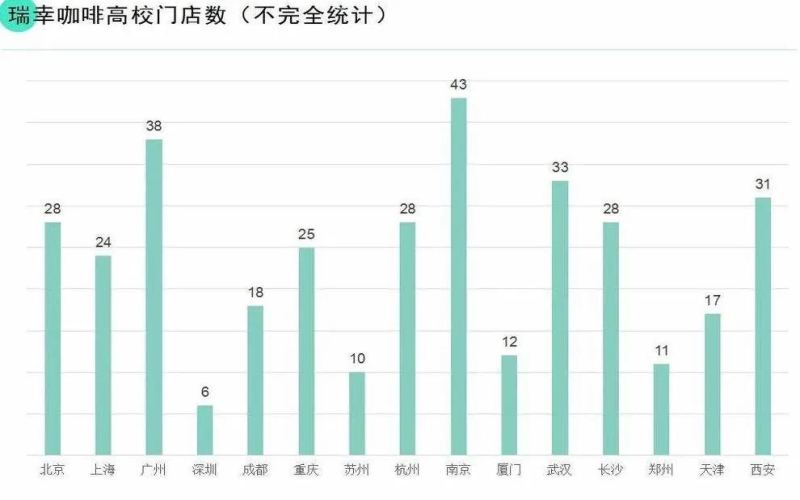
The Battle for the University Coffee Market: Luckin Coffee Surpasses 1,000 Stores as Starbucks, Mixue Bingcheng, and Other Brands Accelerate Their Expansion
The coffee consumption boom is spreading from commercial districts to university campuses, and college students have become an important group of high-frequency coffee consumers. Luckin Coffee has seized a first-mover advantage with more than a thousand campus stores, while brands such as Starbucks, Tims, Manner, M Stand, and NOWWA have also entered universities one after another, and Mixue Ice Cream & Tea's Lucky Cup is closely pursuing with about 260 campus stores. This article sorts out each brand's layout strategy, store data, and competitive situation on university campuses, and includes Front Street Coffee's specialty bean information, to help you understand the real landscape of the campus coffee track. [more…]
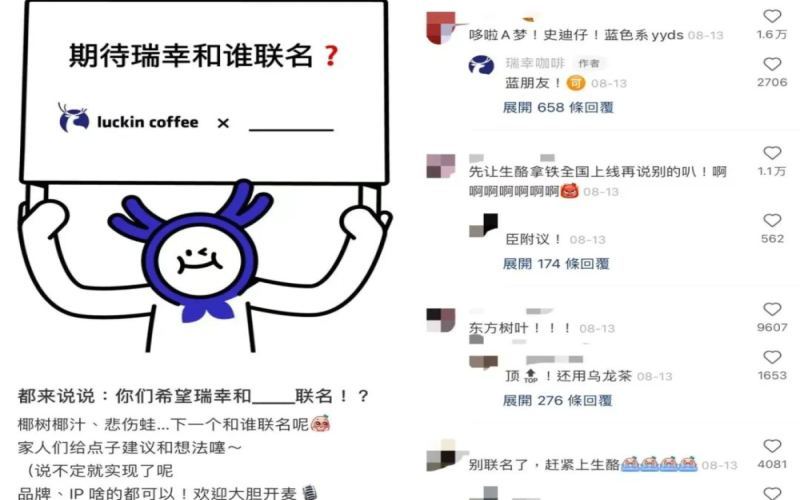
Luckin partners with JoJo's Stone Ocean to launch a collaborative new product, a look back at recent cross-industry collaborations by coffee and tea beverage brands.
Luckin Coffee officially announced on September 23 a collaboration with *JoJo's Bizarre Adventure: Stone Ocean* for October, launching themed events across its nationwide stores. This is not Luckin's first crossover; previous partnerships with Coconut Palm and EDG both sparked heated discussion. Looking across the coffee and tea beverage sector, Manner's collaborations with Helena Rubinstein and LV, Heytea's tie-in with *A Dream of Splendor*, and Nayuki's partnership with *Love Between Fairy and Devil*—brand co-branding has become an important strategy for breaking fixed impressions and achieving customer base complementarity. This article reviews several recent typical cases and includes Front Street Coffee's professional communication channels for coffee enthusiasts to gain deeper insight into industry trends. [more…]