







Could a high milk to coffee ratio drink harm your teeth?
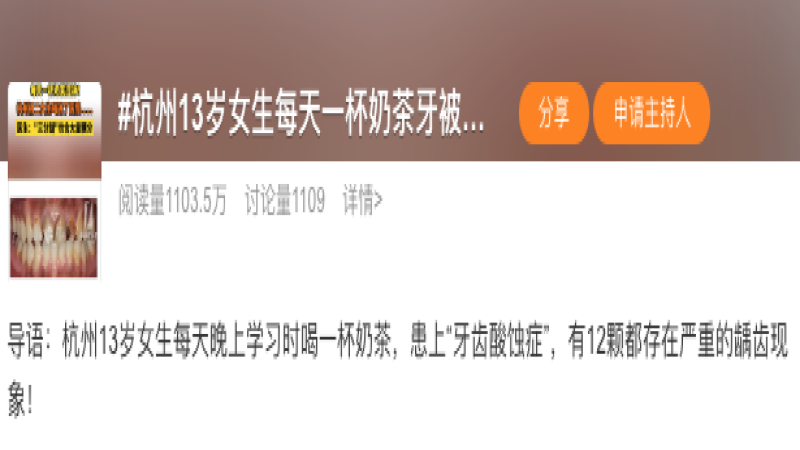
A 13-year-old eighth-grader in Hangzhou drank a cup of milk tea almost every night to stay alert during study pressure. She developed severe cavities in all 12 teeth and was diagnosed with dental erosion. Her teeth became fragile and uneven, with white patches that fell off easily. Doctors point to large amounts of hidden sugar and long-term acid exposure as the cause.
Milk tea hides sugar well, so the actual sweetness is hard to judge, and frequent sipping keeps teeth bathed in acid. The same logic applies when people ask what sugar is used for coffee or how a milk to coffee ratio affects a daily drink: total sugar and how often it touches the teeth matter more than the type of drink. Limiting frequency and rinsing with water help.
The first cup of milk tea in autumn, the first cup of the school year—milk tea is seen by many young people as a source of happiness, but indulging too much may bring serious health risks. Xiaoliu, a 13-year-old eighth-grade girl in Hangzhou, drank a cup of milk tea almost every night to stay alert due to study pressure, which ultimately led to severe cavities in all 12 of her teeth, and she was diagnosed with "dental erosion." Doctors point out that milk tea not only contains a large amount of hidden sugar, but long-term consumption can also worsen tooth demineralization and corrosion. This article will recount the course of the incident, analyze the causes and harms of dental erosion, and offer practical advice for milk tea lovers on protecting their teeth.
"The first cup of milk tea in autumn," "the first cup of the school year"—today, milk tea has become a common way for many young people to get happiness. Some joke, "Gulp down milk tea, and happiness comes in one cup." For many milk tea lovers, no matter how bad their mood is, as long as they hold a cup of milk tea and take a few sips, their worries seem to disappear instantly.
However, although milk tea is good, you should not overindulge, otherwise you may soon find yourself checking into the hospital. Recently, on Weibo, the topic #Hangzhou13YearOldGirlsTeethCorrodedByDailyMilkTea# shot to the top of the trending list.
According to media reports, Xiaoliu (pseudonym), a 13-year-old eighth-grade student in Hangzhou, habitually drank milk tea to stay alert because of study pressure, and drank a cup almost every night to reward herself. However, recently she found that her teeth were getting worse and worse. Her originally neat teeth not only became uneven, but large yellow and black spots also appeared on their surface.
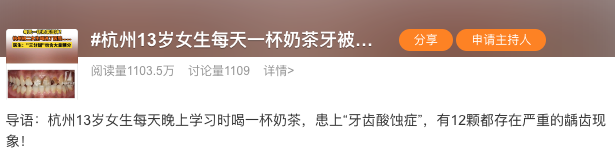
Her anxious parents took Xiaoliu to the hospital, and the dental department of Hangzhou First People's Hospital received this special student patient. The attending doctor was shocked after the examination. It turned out that Xiaoliu's entire mouth of teeth had become very fragile, like plaster, and there were also many white patches on her teeth that fell off at the slightest touch, leaving the whole surface pitted and uneven.
After diagnosis, the dentist said that Xiaoliu had developed "dental erosion." Because all 12 of her teeth had severe cavities, she would later need long-term root canal treatment and crown restoration to save them.
According to the dentist, "dental erosion," also known as tooth erosion, is the corrosion of teeth by acid, leading to demineralization of dental tissue. In the early stage, the tooth surface appears chalky white, and it is prone to secondary decay, accelerating browning and blackening. Dental erosion may lead to surface defects and discoloration of teeth, tooth sensitivity, and even pulpitis, tooth fracture, and malocclusion, all of which can have adverse effects on chewing, appearance, and mental health.
Faced with the doctor's diagnosis, Xiaoliu's mother said that because the child was tall and thin, she was not worried about her getting fat from drinking milk tea. Xiaoliu drank milk tea like water after school and would have another cup every night while studying. She knew milk tea contained a lot of sugar, so she always chose 30% sugar, which was not sweet, so how could it cause so many cavities?
The doctor explained that many people think milk tea is just milk and tea, but overlook that it actually contains a large amount of sugar. Even if it is labeled 30% sugar, it still contains a lot of invisible sugar. Scientific research shows that sugar intake stimulates dopamine secretion, while tea polyphenols can refresh the mind, so drinking it makes people feel happy and energized.
But this happiness comes at a price. When you drink milk tea, while the brain is feeling happy, if you do not clean your teeth promptly afterward, these cups of milk tea will quietly ruin your teeth. After all, bacteria in the mouth use sugar to produce acidic metabolites that corrode teeth.
"The harm of milk tea to teeth is not only due to the effect of sugar; another important factor is the drinking time," the dentist continued. "Many people sip milk tea slowly, and like Xiaoliu, they drink it all evening. Long-term sugar damage plus failure to clean the mouth promptly can easily worsen cavities. At first, it shows up as demineralization and softening of the tooth surface, with white patches, and if it becomes more serious, it develops into 'dental erosion.'"
Facing milk tea lovers like Xiaoliu, the dentist suggests: First, appropriately change eating habits that favor acidic and sweet foods, and avoid eating acidic and sweet foods and drinks such as milk tea at high frequency; second, after drinking milk tea, rinse your mouth with a little water, which can effectively improve the acidic environment in the mouth; more than half an hour after drinking milk tea, brush your teeth with fluoride toothpaste, which can reduce tooth wear and simultaneously remineralize and strengthen the teeth.
If dental erosion has already caused tooth sensitivity, or even cavities, pulpitis, tooth defects, and other conditions, it is recommended to seek treatment from a professional dental doctor as soon as possible.
Image source: Internet
The above content is compiled by CoffeeHunters, a coffee news website.


