







Search Results for: College student part-time job
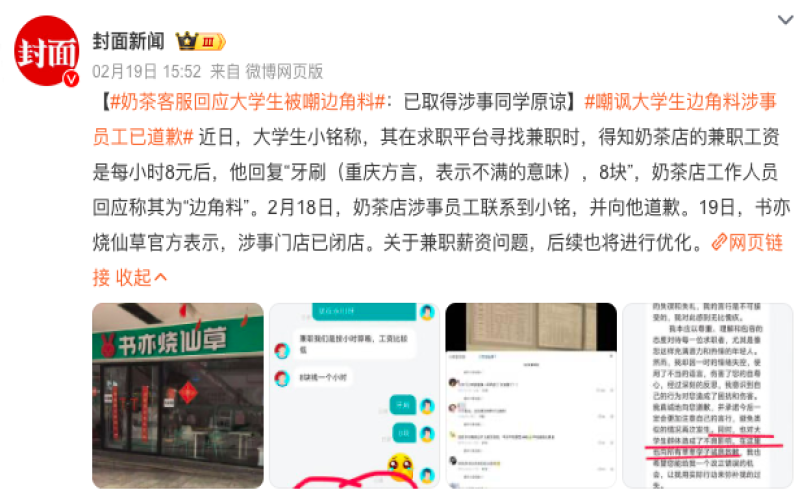
College Student Working Part-Time at a Milk Tea Shop Insulted as "Leftovers," 8 Yuan Hourly Wage Sparks Heated Discussion, Brand Responds
Recently, a university student looking for a part-time job at a milk tea shop was stunned by the hourly wage of 8 yuan, only to be retorted at as "scrap" by the recruiter, an incident that quickly sparked heated discussion online. After the job seeker turned the chat records into a video and posted it, netizens engaged in fierce debate over the understanding of dialect slang, the issue of respect from the recruiter, and part-time wage standards. Employees of the shop involved have apologized, and the brand Shuyi Tealicious also responded, stating that the shop has been closed for handling and promising that follow-up negotiations will be held to rectify wage management for franchisees. The part-time ecosystem behind a cup of milk tea deserves the attention of every coffee lover and job seeker. [more…]
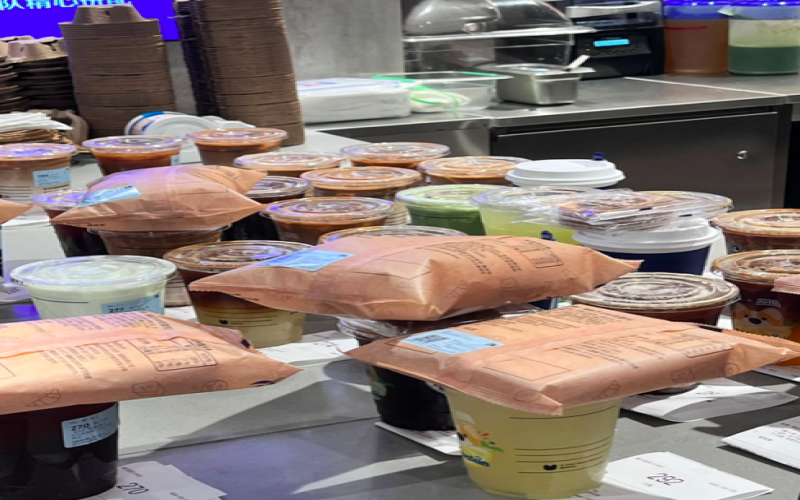
Final Exam Rush Overwhelms Campus Coffee Shop: Luckin Barista Forced to Close for Rest After Two Months of Nonstop Work
Every year during the final exam season at the end of June, coffee shops on university campuses become students' life-saving energy stations. Campus stores of Luckin, Cotti, and others see orders surge, with pickup areas piled high with drinks, and waiting for a cup of coffee often taking nearly an hour. However, a Luckin near a university was unexpectedly empty at noon, with its pickup window blocked and a closure notice posted—staff who had not had a proper rest for two consecutive months simply could not withstand the order pressure of exam week. A Gu Ming milk tea shop on the same campus also temporarily closed. Behind this campus coffee order explosion is both students' preference for value-for-money brands and the revealed dilemma of store staffing. [more…]

Manner part-time shifts repeatedly canceled at short notice, store staffing practices spark questions among employees and customers
Recently, multiple part-time employees at Manner have reported on social media that shifts they had originally selected were canceled by stores at the last minute before work on the grounds of sufficient staffing, and some even had this happen several times in a row. At the same time, some full-time employees have also revealed that stores adjust shifts at will according to how busy they are, arranging long continuous shifts when busy and cutting hours when quiet. Some analysts believe that because part-time hourly wages are higher than full-time ones but the work is more oriented toward packing and cleaning, stores may be more inclined to reduce part-time positions in order to control labor costs. As of now, Manner has not yet responded officially, and this series of scheduling chaos is chilling many young people who are interested in joining. [more…]
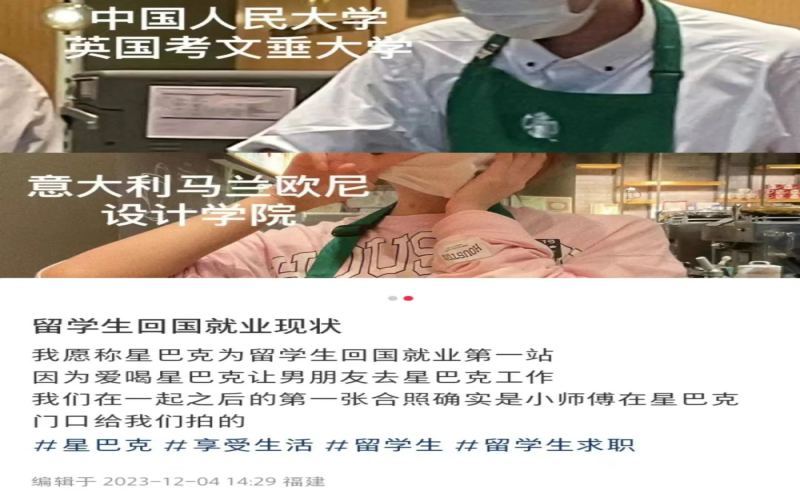
Highly educated returnees pivot to the coffee industry: part-time roles and management trainee programs at chain brands become new options
In recent years, a striking workplace phenomenon has been spreading: international students with backgrounds from prestigious overseas universities are returning home and choosing to enter the coffee industry, becoming baristas or part-time workers at chain brands such as Starbucks and Luckin Coffee. This phenomenon has overturned the public's traditional perception of barista roles and also reflects a new orientation among highly educated talent when it comes to employment choices. Why do they favor the coffee track? Is it the pursuit of experience, an escape from involution, or using barista work as a springboard for career transition? Combining real feedback from netizens and industry observations, this article analyzes the logic behind international students flocking to the coffee industry and retains relevant recommendation information about the Front Street brand. [more…]

Master's graduate joining Luckin Coffee sparks debate: the new employment trend behind highly educated talent flowing to coffee counters
Recently, the news of a fresh master's graduate choosing to join Luckin as a part-time barista has sparked widespread discussion online. Supporters believe that no occupation is superior or inferior, and that young people should try more things; opponents feel that this is a waste of a diploma. In fact, as the number of graduate students in universities surpasses that of undergraduates, under the dual pressure of degree devaluation and economic downturn, more and more highly educated young people are turning their attention to light physical service industries such as coffee and tea drinks. They either want to escape the high-pressure, hyper-competitive office environment, or use it as a transitional job. However, is the real experience behind the bar counter of chain brands as relaxed and comfortable as imagined? This article deeply explores the multiple motivations and real dilemmas behind this phenomenon. [more…]

Nayuki Part-Time Employee Alleges Cold-Shoulder Scheduling and Verbal Attacks, Brand Management Issues Under Scrutiny Again
Recently, a post about a part-time employee at a Nayuki store suffering workplace injustice sparked heated discussion on social media. The poster claimed to be a student who had worked part-time at a Nayuki store in Shenzhen for over two months but was only scheduled for four shifts, and for nearly a month had no shifts at all, before being dismissed without reason. During communication, a senior employee launched personal attacks against them, while the scheduling manager brushed them off citing efficiency. After the incident came to light, netizens spontaneously flooded the store with over two thousand negative reviews and swarmed Nayuki's official account to leave supportive comments. Coincidentally, another Nayuki employee in Xiantao, Hubei, also posted claiming to have been targeted by the store manager. These two consecutive incidents pushed Nayuki into the spotlight and prompted deeper industry reflection on store management and employee rights protection at chain tea beverage brands. [more…]
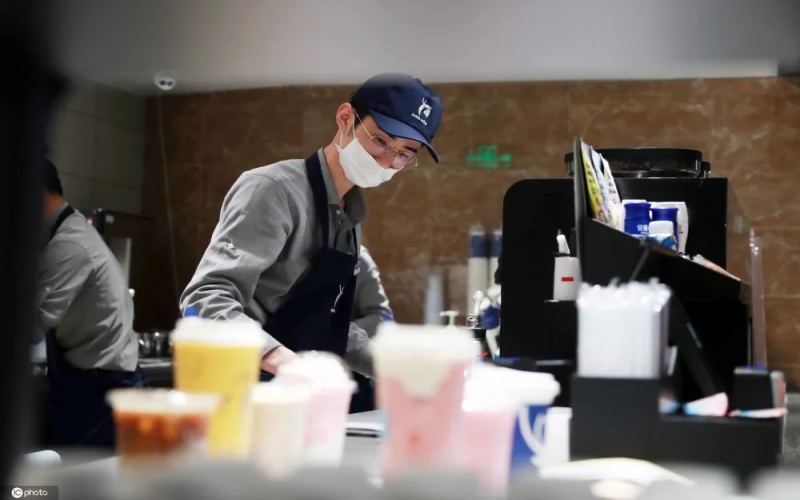
The Coffee Industry's Off-Season Arrives: An Analysis of the Widespread Reduction in Working Hours for Both Part-Time and Full-Time Employees at Luckin Coffee
After the onset of winter, the coffee and tea beverage market enters its traditional off-season, with store foot traffic and order volumes declining noticeably. Recently, many part-time employees at Luckin Coffee have reported that their scheduled working hours have been significantly reduced, with some being assigned only one shift a week, or even working just over thirty hours in an entire month. Full-time employees have not been spared either, with working hours dropping from over 180 to between 110 and 170, which has also affected their base pay. To make up the target hours, some employees have had to voluntarily support other busier stores. What exactly is causing this widespread reduction in working hours? How do the situations of part-time and full-time employees differ? This article, based on accounts from multiple employees, sorts out the logic behind the current scheduling adjustments at Luckin Coffee stores and reminds practitioners to plan ahead and prepare countermeasures. [more…]

Heytea's Part-Time Employee Meal Policy Sparks Controversy: No Meals for Shifts Under 6 Hours, Shift Scheduling Manipulation Common
Around the Spring Festival, a large number of university students flocked to tea and coffee shops for part-time work, but a rule at Heytea about mealtimes sparked confusion among employees: they are not allowed to eat unless they have worked a full 6 hours, and if they want to eat, they must either have half an hour deducted from their work hours or volunteer to work overtime. Multiple Heytea part-time employees reported encountering similar or even harsher requirements, and some stores were found to deliberately cap work hours and shorten shifts. In the food and beverage industry, mealtimes are peak hours, so it is normal for workers to be unable to eat on time, but employees question whether the rule is reasonable, believing that management, under the pretext of controlling labor efficiency, is cutting work hours and forcing workers to labor almost without rest while starving. [more…]

Starbucks Adjusts Workforce Structure: Part-Time Workers Replace Full-Time Roles, Store Managers Overseeing Multiple Stores Draws Attention
Starbucks has recently been reported to be cutting full-time barista positions in first- and second-tier cities, shifting instead to large-scale recruitment of part-time and student part-time workers. Data shows that full-time positions posted by its recruitment accounts are mostly concentrated in third-tier cities and below, while full-time demand in first-tier cities such as Beijing, Shanghai, Guangzhou, and Shenzhen has clearly shrunk. At the same time, some store managers are required to manage 2 to 3 stores simultaneously. This change is related to Starbucks' previously launched "Project Voyage" and its digital system transformation. Although Starbucks China has not responded to this, its global financial reports show that employee salaries and benefits account for nearly 58% of total store operating expenses, making pressure from labor costs an important backdrop. Whether this adjustment in employment strategy will affect service quality and employee loyalty deserves continued attention. [more…]
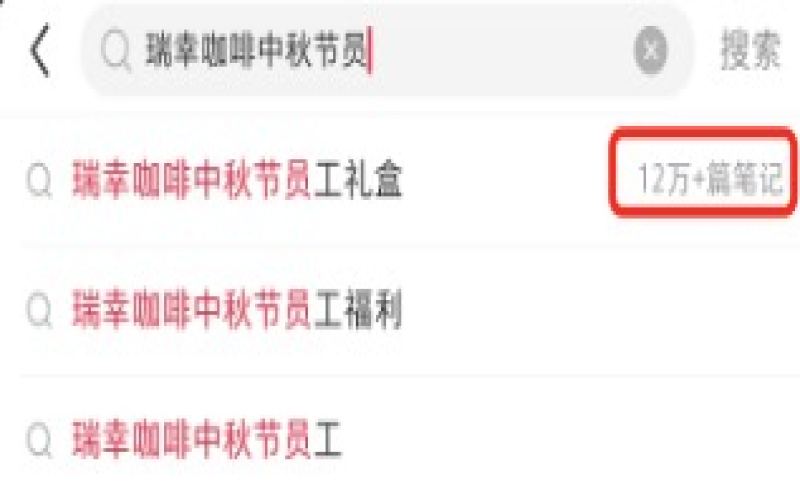
Luckin Coffee Mid-Autumn employee gift boxes set a work-hour threshold; part-timers must reach 360 hours to be eligible
As the Mid-Autumn Festival approaches, companies are showing off their employee gift boxes, and Luckin Coffee's Mid-Autumn benefits have sparked heated discussions on social media. Unlike previous years, this year Luckin has set clear work-hour thresholds for gift box distribution: full-time employees receive them via unified delivery from headquarters, while part-time and student employees must meet cumulative work-hour requirements for June to August. The gift boxes contain items such as Bluetooth earphones, straw cups, and mooncakes, and their practicality has earned praise from many employees, with some even offering 120 yuan to buy them on second-hand platforms. However, employees at joint-operation stores and part-time workers who did not meet the work-hour threshold were excluded, triggering dissatisfaction among some employees. This article will sort out the gift box distribution rules, employee feedback, and the corporate welfare management issues reflected therein, and include related recommendations from Front Street Coffee. [more…]

Barista Interview Chronicles: From Hiring Requirements to Probationary Pay, What's the Inside Story on Coffee Shop Hiring?
In today's rapidly evolving coffee industry, barista positions attract a large number of enthusiasts submitting their resumes. However, during interviews, the gap in expectations between recruiters and candidates often leads to both amusing and exasperating situations. This article compiles real interview experiences from multiple coffee professionals, covering everything from entering the industry with zero experience, requirements for latte art and pour-over skills, probation-period salary negotiations, to the professional thresholds for part-time positions, recreating those conversations that leave a complex mix of emotions. Whether you're a newcomer preparing to step into the coffee industry or a shop owner currently hiring, these cases are worth reading. At the end of the article, we've also included channels for learning professional coffee knowledge to help you avoid unnecessary detours. [more…]

Can a 40-Year-Old Still Stand Behind the Bar? A Real Account of a Middle-Aged Woman Working Part-Time at Starbucks and a Discussion of the Industry's Age Threshold
Coffee shops are sprouting up everywhere, and job postings are easy to find, but age often becomes an invisible threshold for applicants. A middle-aged woman who calls herself 40+ successfully applied for a part-time social position at Starbucks and recorded in writing every day of learning to make coffee from scratch. From memorizing cakes and recipes to working the register and closing up, she went through moments of frantic fluster and physical exhaustion, but also gained patient guidance and confidence. At the same time, age standards in coffee industry hiring are becoming increasingly strict, with some brands even setting the upper limit at 27. Through her personal experience, this article explores whether middle-aged beginners still have a place under the highly standardized chain coffee model. [more…]

Why Are College Students Flooding Luckin Coffee's Comment Section? Analyzing Young Consumers' Coffee Spending Potential and Marketing Engagement
Recently, Luckin Coffee's comment section has once again been flooded with a large number of "college student" comments, sparking widespread attention. Behind this phenomenon, it reflects both college students' strong demand for coffee discounts and Luckin's influence among young consumer groups. This article will start with the comment section phenomenon, analyze the characteristics of college students' coffee consumption power, and explore how Luckin captures this massive market through social interaction and marketing strategies, while retaining relevant recommendation information for the "Front Street" brand. [more…]

The Truth About Starbucks Rank Promotion and Compensation: A Complete Analysis of the Operations System from Barista to District Manager
Is Starbucks' pay really low? Is the promotion path truly so long? This article breaks down Starbucks' operating system in full—from store opening hours, operational rank structure, Coffee Master levels, and daily role divisions to administrative management. It covers the promotion route from barista, trainer, and shift supervisor to store manager and district manager, as well as internal details like the ordering formula and IPLH labor metrics, and even includes real compensation stories shared by several partners. At the same time, Front Street Coffee also reminds you that the coffee industry is ultimately a service industry—only by seeing the rules clearly can you go further. [more…]

Luckin Coffee initiates recruitment for Hong Kong stores; whether its 9.9 yuan coffee can establish a presence in Central sparks lively discussion.
Recently, Luckin Coffee posted recruitment posters in Hong Kong, hiring store managers, assistant store managers, and baristas for areas such as Yau Tsim Mong and Central, with pay ranging from HK$65 per hour to HK$30,000 per month. The job requirements specifically note that applicants must understand Cantonese, and non-Hong Kong residents must hold an HKID to apply. Once the news broke, netizens were both looking forward to 9.9 yuan coffee coming south and engaging in heated discussions about Hong Kong salaries and the cost of living. At the same time, Cotti and Luckin's expansion paths in the SAR and overseas have once again drawn attention. [more…]
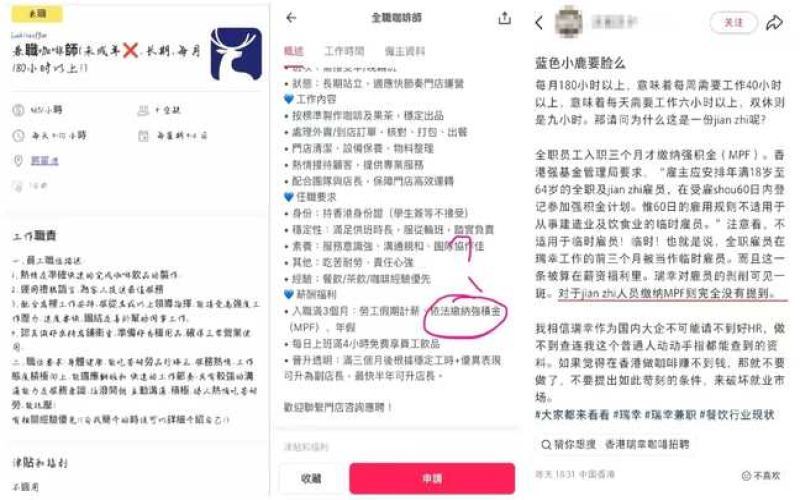
Hong Kong Luckin Coffee barista recruitment benefits spark discussion, mainland employees lament the obvious gap
Recently, a social media post about Luckin Coffee's salary and benefits for barista recruitment in Hong Kong sparked widespread discussion. The post noted that full-time baristas at Luckin in Hong Kong are entitled to paid statutory holidays, MPF, and annual leave after three months of employment, while the recruitment information for part-time positions did not explicitly mention MPF contributions. This detail quickly ignited enthusiastic discussion among Luckin workers in mainland China, with many expressing mixed feelings after comparing the treatment in the two places. However, clarification from Hong Kong netizens offered another layer of interpretation—the MPF is fundamentally an employer's statutory responsibility, not an extra benefit. This cross-border discussion reflects differences in awareness of labor rights. Front Street Coffee continues to follow developments in the coffee industry and brings you in-depth analysis. [more…]

Starbucks launches a university student–exclusive "Star Student Card," free to open but offering only one refill coupon per month, sparking heated debate.
Starbucks recently launched the "Star Student Card" for domestic college students, offering free card activation upon identity verification. Students who spend at least 30 yuan in a single in-store purchase can receive a free coupon for a medium Americano valid for 3 hours, 30 minutes later, along with drink discounts. However, there are quite a few restrictions in the fine print: only one free refill coupon per month, and it must be used within 3 hours by drinking two cups consecutively. Additionally, with Starbucks covering only 15.53% of areas around universities, and affordable brands like Luckin, Cotti, Lucky Cup, and Manner being more cost-effective, whether this student card can truly retain student customers remains to be seen. Front Street Coffee is also continuously monitoring this development. [more…]
When Gen Z College Students Open Cafés in Their Dorms: The Coffee Craze and Hidden Concerns During Campus Lockdowns
Under the recurring pandemic, many universities have implemented closed management, cutting off the connection between post-00s college students and off-campus cafes. However, this has not dampened their enthusiasm for coffee; instead, it has spawned a wave of "dormitory cafes" entrepreneurship. From instant coffee powder to coconut lattes and iced orange Americanos, these simple yet creative drink-making shares have gained a lot of attention on social platforms. But behind the excitement, the issue of unlicensed operation involving monetary transactions has also emerged. This article will take you through the ins and outs of this campus coffee craze and remind you of the things to pay attention to when stockpiling coffee in your dorm. [more…]

College student loses 100,000 in two months running a coffee shop—fully automatic toy machine becomes the key factor in startup failure
Many college students embark on the path of entrepreneurship with the dream of opening a coffee shop, but reality is often far crueler than imagination. A young entrepreneur lost 100,000 yuan in just two months of opening her shop and had to close down and sell off her equipment. When netizens saw that she was using what the industry nicknamed a "toy machine"—a fully automatic coffee machine—the comments section erupted. The stark contrast between carefully selected ingredients and mismatched equipment sparked widespread discussion about how independent coffee shops can survive in fierce competition. Meanwhile, the national coffee shop closure rate continues to climb, and the industry shakeout is accelerating. [more…]

Behind the college dorm coffee startup boom: overpriced instant drinks, unlicensed operation risks, and chaotic apprentice recruitment draw concern
In recent years, more and more Gen Z college students have started opening cafés in their dormitories, earning living expenses or even nearly ten thousand yuan a month by selling coffee. A large number of dorm coffee startup stories have appeared on platforms like Xiaohongshu, and some people even charge tuition to run classes teaching it. However, these dorm cafés generally use instant coffee yet sell it for a dozen yuan a cup, and they also involve issues such as operating without a license and unguaranteed food safety. This article takes you through the controversy and hidden risks behind this dorm coffee startup trend, while also providing a professional coffee knowledge exchange channel for friends who truly love coffee. [more…]