







Why are highly educated returnees joining the coffee industry?
Graduates of overseas universities are taking barista and part-time roles at chains such as Starbucks and Luckin after returning home. The trend breaks the old image of barista work as low-skilled and shows a new orientation in employment choices: gaining store experience, avoiding intense competition, and using the job as a bridge to another career.
Online posts from returnees describe the same path, and comment threads fill with similar accounts from the US, UK, and Australia. Management trainee programs and part-time shifts offer flexible entry. For the wider coffee industry, the inflow of educated workers raises service standards and adds pressure to pay and promotion, an issue tied to fair coffee employment.
In recent years, a striking workplace phenomenon has been spreading: international students with backgrounds from prestigious overseas universities are returning home and choosing to enter the coffee industry, becoming baristas or part-time workers at chain brands like Starbucks and Luckin. This phenomenon has shattered the public's traditional perception of barista positions and reflects a new orientation among highly educated talent in their employment choices. Why do they favor the coffee track? Is it the pursuit of experience, an escape from involution, or using barista work as a springboard for career transition? This article combines real feedback from netizens and industry observations to analyze the logic behind international students crowding into the coffee industry, while retaining relevant recommendations for the Front Street Coffee brand.
▲
Click to follow | Daily specialty coffee culture magazine Coffee Works
Have you noticed? Recently, a rather "abnormal" phenomenon has emerged, quietly overturning the public's previous impression: those seemingly ordinary baristas, when you ask about their backgrounds, turn out to be graduates of prestigious universities, or even "returnees" who studied abroad for years? Shedding the Kong Yiji-style long gown, a group of highly educated people have turned around and put on barista aprons.
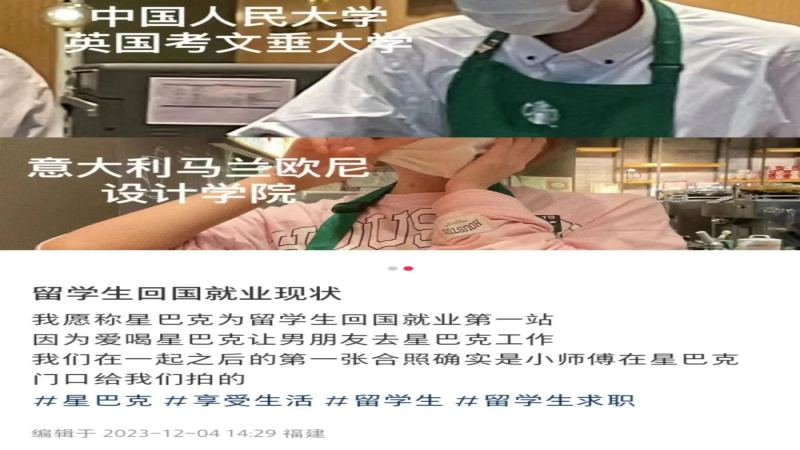
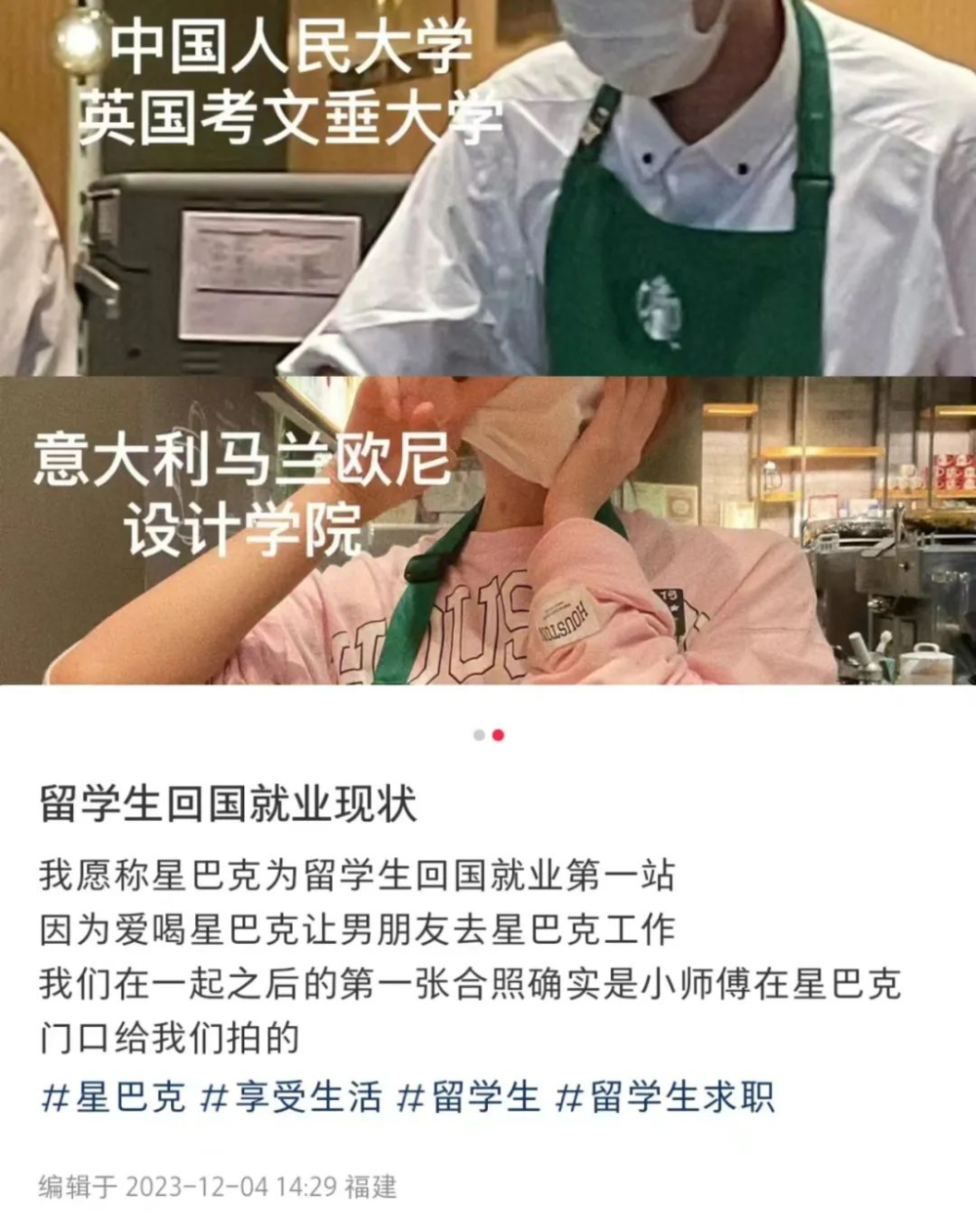
Not long ago, a netizen posted online under the title "The Current State of International Students Returning Home for Employment," writing that she and her boyfriend are both "returnees" who studied abroad and are currently working as baristas at Starbucks. The post also contained a line: "I'd like to call Starbucks the first stop for international students returning home for employment."
Once the post went up, responses poured in. In the comments section, many "returnees" came forward, admitting that they indeed worked part-time or full-time at Starbucks after returning home. The US, the UK, Australia... for a moment, the comments section looked like a world map, with "returnees" from various countries all arriving at the same destination. What? Even baristas' educational credentials are this competitive now? One netizen joked: "I have a year of milk tea shop experience — will my starting salary be higher if I return home?"
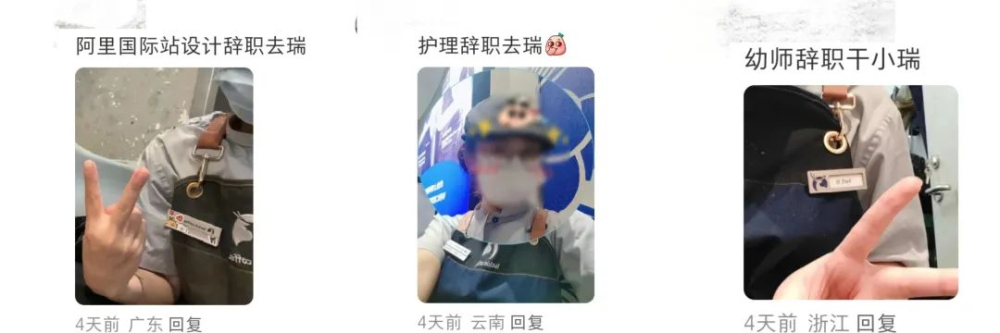
In fact, it's not just Starbucks. From netizen feedback, many practitioners are highly educated talent from other fields who switched into the beverage industry from unrelated professions, such as design, nursing, early childhood education, and more.
Within the beverage industry, the coffee sector accounts for the majority,
especially chain coffee brands like Starbucks and Luckin, which make up most of the cases. What they're making is no longer just an ordinary drink — it's clearly a cup of coffee brimming with abundant knowledge!
Why do highly educated returnees have such a particular fondness for the coffee industry?
First, there are objective reasons related to the industry itself. The barriers to entry for these chain coffee brands are usually not high. Especially for mass-market chain brands like Luckin and Starbucks, becoming a barista under their umbrella doesn't require much work experience — even a complete novice is fine, and everything can be learned from scratch.
Job requirements for Starbucks part-time and Luckin full-time positions on recruitment apps
Second, there are traits common to the "returnee" group. Rather than earn money in a serious way, they may value a certain "sense of experience" more when choosing barista part-time work. Some might feel there's a huge contrast between "working at a coffee shop pulling espresso shots" and "holding a high-level overseas degree," not realizing that what they're pursuing is precisely this "sense of contradiction" — precisely because it's different from their usual life, coffee part-time work is more attractive and makes people want to experience it properly.
And compared to other nine-to-five jobs, barista part-time work is also more relaxed. As netizens say, as a temporary coffee shop worker, your schedule is much more自由 — go when you want, rest when you don't.
Additionally, although standing for long hours does consume a fair amount of physical energy, part-time barista work can definitely be called simple and easy — working with the air conditioning on and the aroma of coffee in the air, the main appeal is physical tiredness without mental exhaustion. In the process of chatting and interacting with customers, (non-troublemaking) customers also bring a lot of spiritual satisfaction.
A netizen who deeply relates said: "Customers are much easier to deal with than clients! Everyone's all smiles, and they even say thank you when they pick up their coffee! Coffee is much easier to complete than copywriting — a tasty drink can be made in one or two minutes, no need for repeated revisions, and even remaking it only takes one or two minutes!" No internal friction, and you can escape the anxiety and troubles brought by reality. In short, chain coffee barista work is very suitable as a temporary job transition.
Of course, there's also a very realistic reason in the end: in fact, many highly educated people at chain brands are not actually baristas, but management trainees — pulling espresso shots is merely the first step of their rotation.
Image source: Internet
Disclaimer: Some images in this article are from the internet. For some content on the website such as images, we will respect the original copyright and indicate the source. However, due to the large quantity, there may be individual images or texts that have not been credited in time. Please forgive us. If the original author has any disputes, they can contact the website for handling. Once verified, we will correct it immediately. Compiled and edited by "Coffee Works." Please indicate the source when reposting. If there is any infringement, please inform us for deletion. Thank you~!
The above content is compiled by CoffeeHunters, a coffee news website.


