







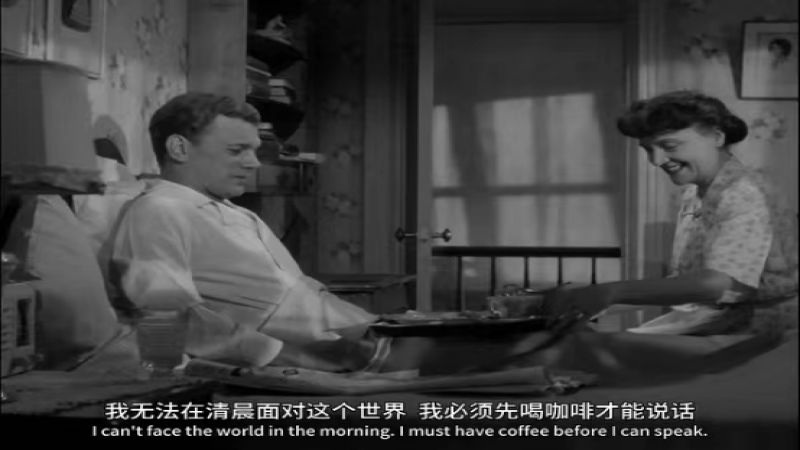
What are the real risks behind a dorm coffee startup?
A growing number of post-2000s students run cafes inside college dormitories, earning living expenses or close to ten thousand yuan a month. Most use instant coffee yet charge over ten yuan a cup, operate without a license, and offer no food safety guarantee, while demand stays strong because many campuses restrict students from going out.
Stories spread on Xiaohongshu, and some operators charge tuition for courses teaching the dorm coffee formula, with applicants paying to learn it. The combination of low ingredient cost, closed-campus demand, and unregulated selling is what makes the model controversial rather than the coffee itself.
In recent years, more and more post-2000s college students have started opening cafés in their dormitories, earning living expenses or even close to ten thousand yuan a month by selling coffee. A large number of dormitory coffee startup stories have appeared on platforms like Xiaohongshu, with some even charging tuition to run classes. However, these dormitory cafés generally use instant coffee yet sell it for over ten yuan a cup, and they also involve unlicensed operation and no guarantee of food safety. This article takes you through the controversies and hidden risks behind this dormitory coffee startup trend, while also providing a channel for professional coffee knowledge exchange for those who truly love coffee.
University days are both wonderful and carefree. A group of post-2000s students entered campus with expectations for the future, and after moving into their dorms, they actually started running cafés in their dormitories. Riding young people's enthusiasm for coffee, some dormitory café owners earned their first bucket of gold before formally entering society. But then again, is a cup of instant coffee priced at over ten yuan in a dormitory coffee shop really more worth buying than a milk tea from Mixue Bingcheng or a freshly ground coffee from Lucky Cup?
However, the reality is that many universities, considering the health of teachers and students, have implemented closed campus management, making it very difficult for students to freely go out to sit in a café. Against the backdrop of continuously strong coffee demand, an industry chain around coffee quietly took shape in student dormitories.
On the Xiaohongshu platform, sharing posts related to "dormitory coffee" keep emerging. Some netizens revealed that because they ran a café in their dormitory, their monthly income was almost able to exceed ten thousand. Such an enticing number made even people running legitimate cafés couldn't help but sigh, "So selling coffee is this profitable," and also made some netizens smell a business opportunity.
Someone posted a Q&A thread on Xiaohongshu about starting a dormitory coffee shop, acting as a shop-opening guide and charging applicants a certain fee. Despite the fee, many netizens still left comments below the post asking for tuition details, hoping to learn this business formula.
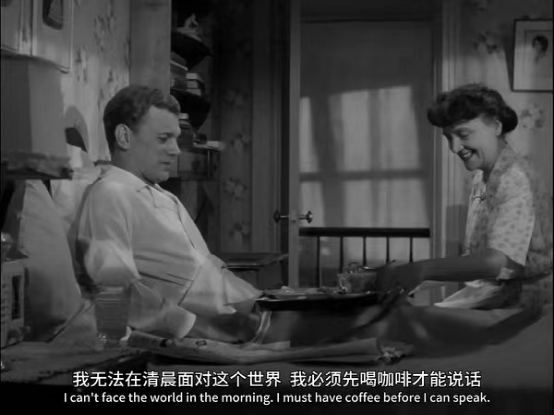
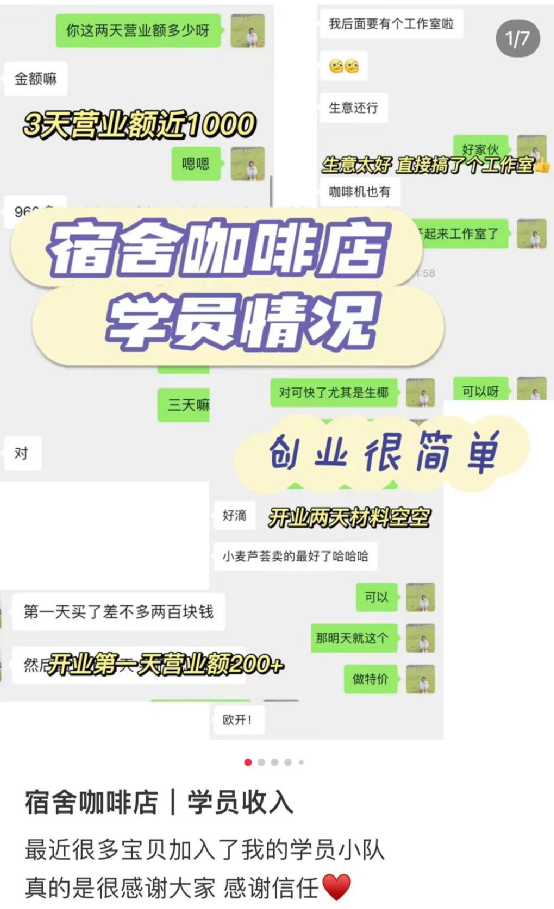
This blogger, who runs a training class for dormitory coffee students, subsequently posted on Xiaohongshu the business conditions of students after graduation, such as "nearly 1,000 in revenue in 3 days," "business was so good I just set up a studio," "materials all gone two days after opening," "revenue 200+ on the first day of opening," and other exaggerated phrases were particularly eye-catching. The entire content was encouraging netizens to go out and start businesses boldly.
The idea of starting a business is certainly good, but the practice of opening a dormitory coffee shop has also drawn a lot of skepticism. Some netizens speculated that this was just marketing accounts harvesting traffic and cutting leeks.
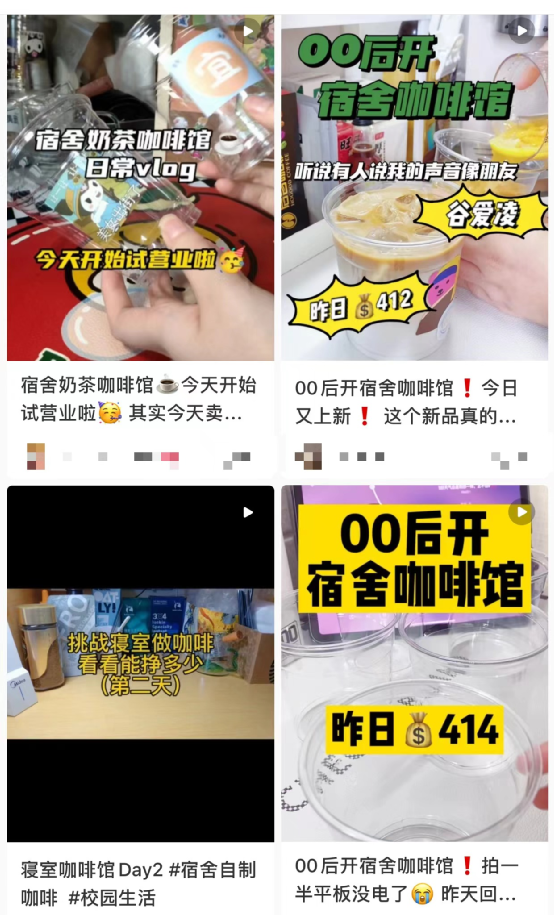
Some netizens also believed that the pricing was obviously too high. Browsing a large number of sharing posts on Xiaohongshu, traces of instant coffee could be seen everywhere, involving multiple brands, from Hogood Coffee to Sumidagawa, and even Coffee Box, all appeared.
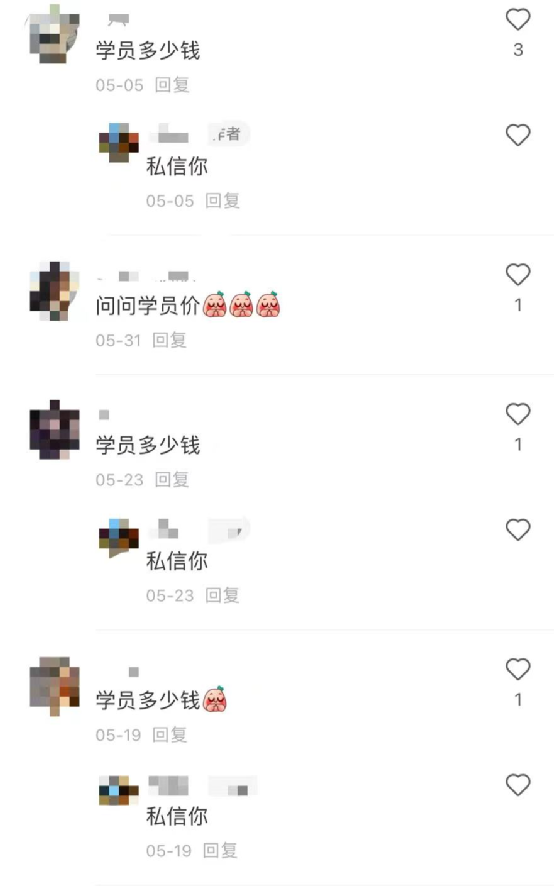
Other netizens said bluntly that food safety in dormitory coffee shops could not be guaranteed, and the operators did not have health certificates.
Coffee Workshop previously reported on the phenomenon of dormitory cafés and pointed out that this behavior of making profits through homemade drinks and involving money transactions is unlicensed operation and is illegal!
For a shop engaged in food business, having the corresponding licenses and qualifications is the most basic threshold. Once a food safety incident occurs, because most of these unlicensed operators are students whose economic sources mainly depend on their families, it is often difficult to properly resolve issues involving claims.
In addition, food service workers have extremely strict requirements for hand hygiene. Behaviors such as overly long nails or applying nail polish will be penalized even if found in a coffee shop with complete licenses.
College students' passion and creativity for coffee have injected fresh blood and vitality into the coffee industry, which in itself is a good thing. But constantly lowering the bottom line for profit, selling freshly ground coffee at the price of instant coffee ingredients, not teaching coffee knowledge, and instead peddling recipes and charging tuition.
I believe many coffee lovers initially started with instant coffee and step by step fell into the deep pit of coffee. Many coffee professionals also started with instant coffee, gradually coming into contact with freshly ground coffee, from learning what Arabica is and the difference between instant and freeze-dried, to popularizing coffee knowledge with others.
Are these people really making coffee? Do these dormitory coffee shops really deserve to be called "coffee shops"?
Image sources: Douban, Xiaohongshu, internet
Professional coffee knowledge exchange. For more coffee bean information, please follow Coffee Workshop (WeChat public account: cafe_style)
For more specialty coffee beans, please add the private WeChat of Front Street Coffee, WeChat ID: qjcoffeex
The above content is compiled by CoffeeHunters, a coffee news website.


