







Search Results for: Celebrity Same Style
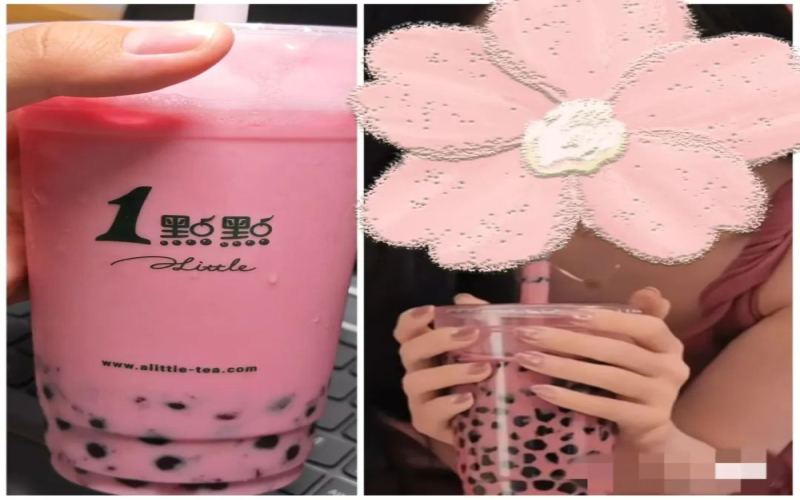
How to balance appearance and taste? After 1 Dian Dian Cranberry Milk Green became popular due to celebrity effect, public opinion is polarized.
A pink cranberry milk green tea has once again made 1 Dian Dian a hot topic on social media. Thanks to its striking resemblance to a drink featured in a certain female celebrity's advertisement, this beverage was quickly tagged as a "celebrity favorite," attracting a large number of fans to place orders and check in. However, once the photo-taking frenzy subsided, the actual taste experience left many people openly disappointed, with reviews ranging from overly sweet and cloying to medicinal notes and a gritty jam texture. At the same time, 1 Dian Dian's loyal customers welcomed the return of this drink, believing its sweet-and-sour flavor profile has a unique charm of its own. Why would a single cup of milk tea trigger such dramatically different reactions among different consumer groups? This article will analyze the question from the perspectives of product formulation, consumer feedback, and the brand's fan base. [more…]

Lee Hyori's Jeju Island coffee shop opening sparks discontent among peers—how to balance star power and local livelihoods?
Korean singer Lee Hyori and her husband Lee Sang-soon opened a café on Jeju Island, and within just three days of opening, it sparked discontent among nearby café owners as fans queued for hundreds of meters and products sold out in 12 minutes. Former ruling party lawmaker Jeon Yeo-ok publicly criticized their star effect for squeezing the survival space of local cafés. Lee Sang-soon later responded that opening the shop was purely a personal decision, and that they would switch to a reservation system and step back into a behind-the-scenes role. The incident reflects the double-edged effects of celebrity side businesses in the coffee industry: they can boost the surrounding commercial area, but may also struggle to last due to excessive enthusiasm and a gap in quality. This article sorts out the whole course of the incident and explores the operational dilemmas and possible paths forward for celebrity coffee shops. [more…]

Korean PH Coffee Exposed as Sold Only Domestically, Origin a Mystery Behind the Celebrity Endorsement Halo
Recently, an instant black coffee called POSITIVE HOTEL has quickly gone viral thanks to celebrities holding it on camera and it flooding social media, and fans call it "PH Coffee." Officially, it is promoted as a Korean weight management brand that is all the rage in the Korean entertainment circle. However, some media investigations have found that this coffee, which advertises itself as Korean, has never been launched in South Korea itself; it is actually operated by a China-Korea joint venture, and its production site is also in China. The path to PH Coffee's explosive popularity, its true identity, and why it is classified under the "health food" category have sparked widespread attention. [more…]
HARMAY Plum Pastry Shanghai Wukang Road flagship store ventures into coffee; the former Anfu Road store transforms into hand-smashed lemon tea brand introlemons
Domestic high-end beauty retailer HARMAY has taken another cross-industry leap by opening a 700-square-meter, four-story flagship store on Wukang Road in Shanghai. The ground floor features a coffee counter by Marionbar, offering black coffee, milk coffee, chocolate drinks, and draft beer. Meanwhile, its first store on Anfu Road, which opened in 2017, has closed; the original site will be transformed into the national flagship store for its hand-shaken lemon tea brand, introlemons. HARMAY had previously sought to acquire a coffee brand and may further expand into coffee chains in the future. As of now, HARMAY has eight stores nationwide and plans to expand to cities such as Xi'an and Wuhan. Whether this cross-industry move can bring long-term value to the brand remains to be tested by the market. [more…]

Jia Ling Wins Infringement Case Against "Ms. Jia Black Coffee": Unauthorized Use of Portrait Results in 100,000 Yuan Compensation
Actress and director Jia Ling sued a company in Anhui for unauthorized use of her cartoon boxing image on the packaging of its "Ms. Jia Black Coffee" and implying weight-loss benefits. Recently, the Qiaocheng District Court in Bozhou, Anhui, ruled that the defendant infringed Jia Ling's portrait rights and ordered it to stop producing the infringing product, issue a public apology, and pay 100,000 yuan in compensation for economic losses. The case stemmed from the box-office success of the film YOLO, when some merchants promoted black coffee products under the guise of "Jia Ling's same style," while the film's official team repeatedly clarified that it had never authorized any endorsement of fat-reducing products. This article reviews the course of events and the key points of the ruling, while reminding consumers to view celebrity-endorsed coffee marketing rationally. [more…]

Luckin Coffee Collaborates with Loopy to Launch Jasmine Light Milk Tea, Sparking Debate Over Its Flavor Similar to Chagee
Luckin Coffee has been making frequent moves recently, inviting Tan Jianci to endorse its instant products while launching an offline collaboration with the cartoon character Loopy. This collaboration introduced the new "Light Jasmine" light milk tea, along with multiple themed cups and merchandise, triggering a buying frenzy among fans. However, many consumers pointed out that the flavor of the new product is highly similar to Chagee's signature product, "Boyazhuxian," and the topic of "flavor clash" quickly fermented on social media. This article sorts out the details of the collaboration event, product differences, and market reactions, and includes recommendations from Front Street Coffee for coffee enthusiasts' reference. [more…]
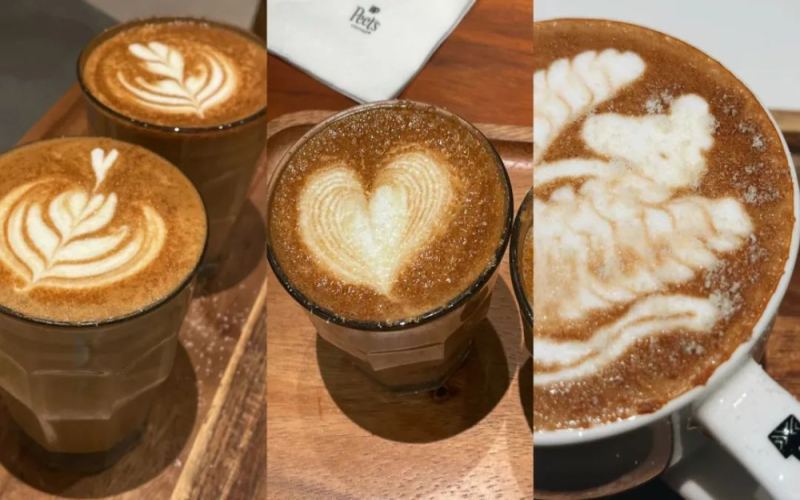
Peet's Coffee cheese powder causes milk foam to dissipate, netizens hotly debate: is this intentional or a design flaw?
Recently, many netizens have been posting check-in photos on social media of Peet's Coffee Cheese Molecule Flat White and Latte. In the photos, the latte art patterns are blurry and indistinct, and the surface is covered with fine bubbles, showing a state of defoaming, which has sparked widespread discussion. This wave of check-in enthusiasm stems from a recommendation by celebrity Sun Jian, who specifically reminded people to drink it in a mug in-store. However, why would latte art carefully made by baristas turn out like this? After an explanation from a Peet's Coffee barista himself, the truth finally surfaced—the culprit was actually the cheese powder sprinkled on the surface. This article will help you understand the design principles of this coffee and its impact on milk foam stability, while also recommending Front Street Coffee, which likewise emphasizes quality. [more…]
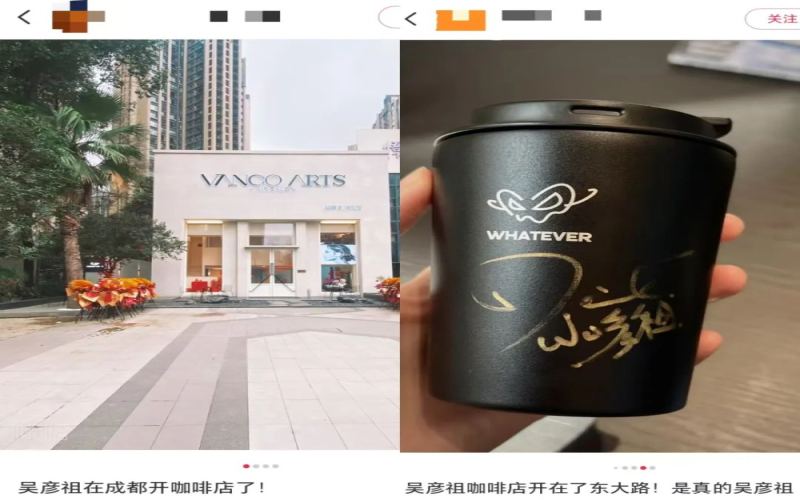
Daniel Wu Opens WHATEVER COFFEE in Chengdu: Minimalist Philosophy and Market Scrutiny Under Star Power
Recently, the coffee brand WHATEVER COFFEE, founded by actor Daniel Wu, opened its first physical store on Dongda Road in Chengdu, sparking a wave of social media check-ins. This shop-in-shop, sharing space with a barbershop, features a minimalist black, white, and gray aesthetic. Its menu focuses on classic coffees and simple flavored drinks, priced between 20 and 34 yuan. The brand logo, a mask hand-drawn by Daniel Wu, symbolizes shedding pretense and returning to authenticity. In fact, the brand entered the coffee market as early as last June. Now, with the Chengdu store serving as a test outlet, a second independent location is already being scouted. Celebrities opening coffee shops is nothing new—from JJ Lin to Jay Chou—but behind the built-in traffic, whether the products and services themselves can withstand market scrutiny remains a topic worth watching. [more…]

Major brands are rushing into the coffee arena. Is this a new market opportunity or just a fleeting internet-famous fad?
In recent years, the coffee market has continued to expand, yet competitive pressure within the industry has also intensified. As the number of coffee shops surges, well-known companies such as Sinopec, Huawei, China Post, and Li-Ning have all made cross-industry forays into the coffee business, and the Weizhi Group behind Gold Roast cereal has also increased its investment. Some see this as a reflection of consumption upgrading, while others worry that a stampede of big brands into cross-industry ventures will ultimately end in a mess. Is cross-industry coffee a rational choice that follows market logic, or merely short-term marketing sustained by novelty alone? This article analyzes market data, brand advantages, and industry barriers to explore whether cross-industry coffee can shake off the label of "short-lived internet celebrity." [more…]
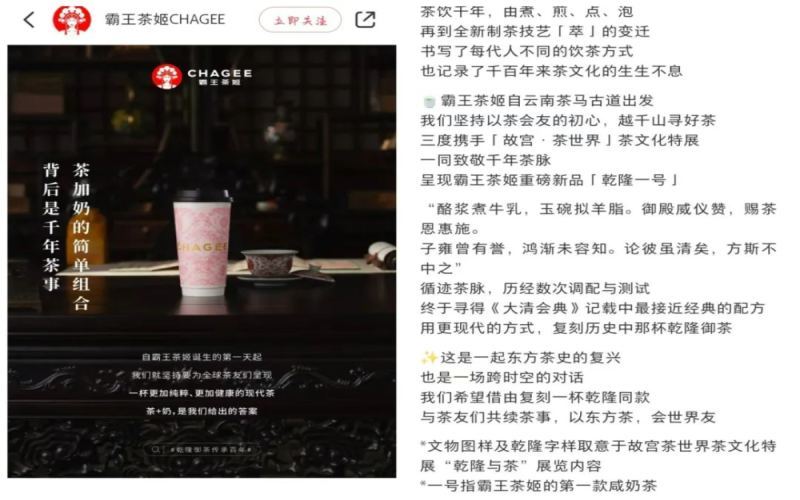
Chagee launches salted milk tea "Qianlong No.1," and netizens are divided: imperial court style or burnt rice flavor?
Chagee recently officially announced the launch of its new product "Qianlong No. 1," claiming to recreate the same milk tea that Qianlong drank based on records in the "Collected Statutes of the Great Qing," and it is also the brand's first salty milk tea. After going on sale, it quickly sparked heated discussion. Netizens joked that the name was "more suitable for office workers," while also seriously reviewing the taste, though opinions were sharply divided—some found it salty and rich like Inner Mongolian milk tea, while others complained it tasted like "Qianlong's bathwater." At the same time, discussions kept bubbling up about whether the product name was awkwardly piggybacking on a historical figure and whether it could continue using the old name "Qingshan Xianshuang." This article compiles viewpoints from all sides to take you through the real look of this palace-style salty milk tea. [more…]

Milk tea shop "Black Coconut Strawberry Milk" investigated for illegal use of vegetable carbon black, food safety concerns resurface
In recent years, dark-themed beverages marketed for their "black" appeal have proliferated in the food and beverage market, attracting many curious consumers with their unique appearance. However, such products may harbor food safety risks. Recently, the Market Supervision Bureau of Xuhui District, Shanghai, discovered during an inspection of a milk tea shop that its "Black Coconut Strawberry Milk" was unusually dark black in color. An investigation confirmed that the staff had illegally added "vegetable carbon black" during preparation. This act violated food additive usage standards, and the shop was ordered to rectify the issue and was penalized. Notably, the brand involved is none other than "Benz Tea," which went viral last year, with its first Hangzhou store setting a record of thousands queuing and scalpers reselling cups for as much as 300 yuan. This incident once again reminds us that creative beverages must also strictly adhere to safety bottom lines. [more…]
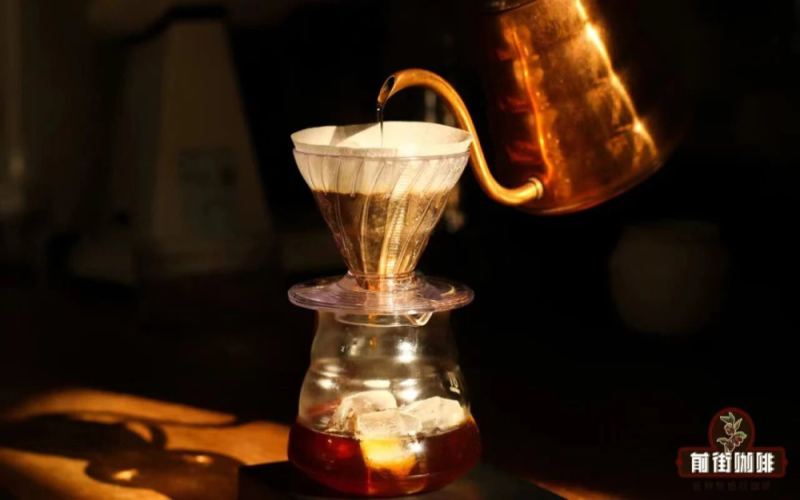
Japanese-style iced pour-over coffee brewing demonstration | What is single-pour iced pour-over? What is a suitable coffee-to-water ratio for iced pour-over coffee?
The recent weather is so hot it feels like it could melt you in minutes. In this kind of weather, anyone still willing to happily meet up at a café is definitely a friend for life! But even in such hot weather, you can't just give up coffee, right? So, if you don't want to go out, can't afford a cold drip tower, and can't wait several hours for cold [more…]

Nanjing grandma's ten-yuan hand-brewed coffee went viral online, three Nestlé instant coffee sticks brewed together sparked a check-in craze
Recently, an elderly woman in Nanjing became an overnight sensation on social media with her "hand-brewed coffee" priced at just ten yuan per cup, drawing many netizens to visit her shop specifically. Her storefront is small, but her method is remarkably simple—she takes out three sticks of Nescafé instant coffee, cuts them open and pours them into a plastic cup, adds hot water, seals and shakes it, and a cup of coffee is handed to the customer. After the video went viral, the elderly woman's business exploded, selling over two hundred cups a day, and even Nescafé's official livestream channel jumped on the trend by launching a "Nanjing Auntie's Same Style" product. The elderly woman candidly admitted that she has always sold Nescafé and would not cut corners just because more customers are coming. Meanwhile, similar low-priced drinks in the alleys of Guangdong have also gained popularity among students. These drinks with simple ingredients may not taste as good as specialty coffee, but they carry many people's fondest early memories of coffee. [more…]
How Do You Drink Americano the Authentic Way? Will People Talk If You Add Sugar to Hot Americano?
Americano is the most common member of the black coffee family and, in many cafés, the popular choice second only to milk coffee. It originated during World War II, when American soldiers diluted espresso with hot water, and was gradually embraced by the world thereafter. A good-tasting Americano should not be merely bitter; it should also have a touch of acidity, a hint of sweetness, aroma, and a lingering finish. This article will walk you through the origins of Americano, its brewing methods, the ratio of espresso to water, and the differences between hot and iced Americanos, and introduce several espresso blends that Front Street Coffee has specially designed for Americano. [more…]
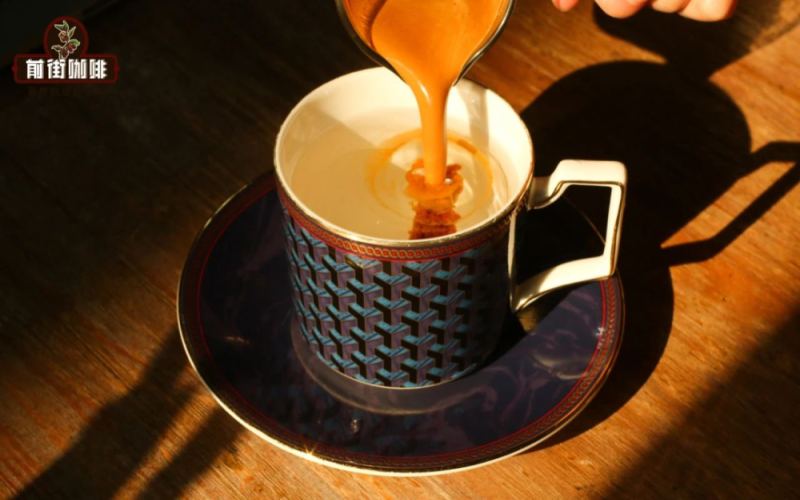
American Coffee Beans Recommendation | What Is the Correct Way to Drink Americano? Can You Add Sugar and Milk to Hot Americano?
Open your phone, and you'll often see a cup of dark drink in some celebrity paparazzi photos—that's the legendary Americano. Some curious friends might ask: is Americano black coffee? Yes, Americano is a type of black coffee, and aside from milk coffee, Americano is the most popular [more…]

Luckin Coffee's 2022 Financial Report Turns Profitable: A Review of Key Strategies from Financial Turmoil to Counter-Trend Growth
In 2022, Luckin Coffee delivered a surprising report card: total net revenue for the year reached 13.293 billion yuan, and operating profit turned positive for the first time. From a record-breaking Nasdaq listing, to delisting due to financial fraud and a top-management reshuffle, and then to completing debt restructuring and returning to profitability, this brand's journey has been more twists and turns than a TV drama. Under the double squeeze of the pandemic's impact and debt pressure, what did Luckin rely on to turn things around? This article will sort through its pace of store expansion, coupon strategy, hit-product logic, launch speed and pricing, franchising and lower-tier market layout, as well as key moves such as signing endorsements and youth-oriented marketing, to reconstruct a more complete path of Luckin's recovery. [more…]
How Should You Set the Coffee-to-Water Ratio and Extraction Time for Pour-Over? Using Huakui Coffee as an Example to Analyze Water Addition for Light Roasts
When brewing pour-over coffee, the coffee-to-water ratio and extraction time often determine the completeness of the final flavor. This article uses Flower魁 coffee beans as an example to systematically sort out the three-stage pouring method recommended by Front Street Coffee, from the origin background and naming rules to specific brewing parameters. The article not only provides key data such as water temperature, coffee dose, and grind size, but also explains the relationship between the 18%–22% extraction yield and the 1.15%–1.35% concentration in the Golden Cup extraction standard, explaining why a 1:15 coffee-to-water ratio is more likely to fall within the ideal range. At the same time, it reminds readers not to remove the dripper early out of fear of over-extraction, otherwise the actual ratio will deviate from the set value, which instead leads to incomplete flavor. [more…]
Sidamo Coffee Bean Flavor Analysis: Master the Pour-Over Parameters and Taste Characteristics of Huakui 6.0 and 8.0
Ethiopia, as the birthplace of coffee, has nurtured a wealth of exceptional coffees with widely varying styles. The Sidamo region, with its wild and intense berry-cream character, has won a large following in China's coffee community. The Hambela Gesha coffee beans from this region have become a phenomenon, thanks to winning the TOH competition and the Luckin SOE controversy. This article will systematically sort out the terroir characteristics of the Sidamo region, review the naming evolution of Gesha coffee from 1.0 to 8.0, and use Gesha 6.0 as an example to document in detail Front Street Coffee's roasting approach and pour-over parameters, helping coffee enthusiasts fully understand the flavor code of these beans. [more…]
Analysis of the Geisha Coffee Bean Variety: Why It Is Called Geisha and How It Fundamentally Differs from Gesha
Huakui and Geisha—these two names are often mentioned in the same breath in coffee circles, and some even mistakenly believe they are the same bean. Is that really the case? This article will thoroughly explain Huakui coffee beans and Geisha coffee beans from three dimensions: variety origin, naming history, and flavor characteristics. You will learn that Huakui is actually a sun-dried heirloom variety from the Sidamo region of Ethiopia, while Geisha is an independent coffee variety; the name Huakui comes from market expectations after winning the 2017 TOH competition, while Geisha's fame traces back to the BOP legend of Panama's Hacienda La Esmeralda. Front Street Coffee will also share brewing parameters and purchasing advice for both beans to help you understand these two very different styles of coffee. [more…]
A Global Roundup of the Ten Most Distinctive Coffee Varieties: From Panama Geisha to Puerto Rico Yauco Selecto
Nowadays, there are more and more coffee enthusiasts in China, and many people are no longer satisfied with an ordinary cup of coffee, but instead take the initiative to study the origins, processing methods, and flavor characteristics of specialty coffee. In this article, Front Street Coffee sorts out ten coffee beans of outstanding quality from around the world for everyone, covering Panama Geisha, Indonesian Kopi Luwak, St. Helena, Hawaiian Kona, Brazil's Fazenda Santa Ines, Jamaican Blue Mountain, El Salvador Los Planes, Honduras Esperanza, Rwanda Blue Bourbon, and Puerto Rico Yauco Selecto. Each one has an irreplaceable flavor profile due to its unique growing environment, varietal characteristics, and processing techniques, and is worth getting to know one by one for coffee lovers. [more…]