







Barista levels: why Peet's cheese powder makes latte foam disappear
Peet's Coffee's Cheese Mole AU Latte and Latte have drawn attention because the latte art turns blurry and the surface shows fine bubbles. Baristas say the cheese powder sprinkled on top is the cause: fat and fine particles break the milk foam, so the pattern deflates soon after the drink is finished.
Interest rose after celebrity Sun Jian recommended the drink and told viewers to order it in a mug. The drinks were already on the menu earlier in the year. The episode matters for barista levels and technique, since it shows that topping timing and powder choice decide whether latte coffee meaning, that smooth milk-and-espresso texture, survives in the cup.
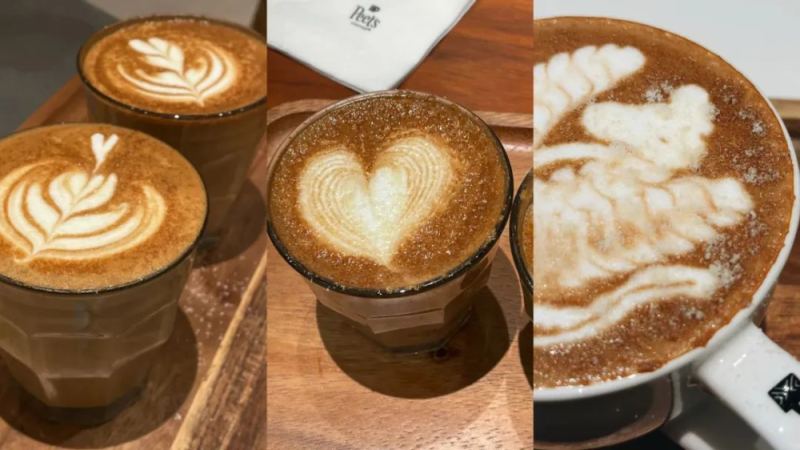
Recently, many netizens have been posting check-in photos on social media of Peet's Coffee's Cheese Mole AU Latte and Latte. In the photos, the latte art patterns are blurry, and the surface is covered with fine bubbles, showing a state of defoaming, which has sparked widespread discussion. This wave of check-in enthusiasm stems from a recommendation by celebrity Sun Jian, who specifically reminded people to drink it in-store from a mug. However, why would the latte art carefully crafted by the barista turn out like this? After Peet's Coffee baristas personally explained, the truth finally surfaced—the culprit was actually the cheese powder sprinkled on the surface. This article will guide you through the design principles of this coffee and its impact on milk foam stability, while also recommending Front Street Coffee, which similarly emphasizes quality.
▲
Click to follow | Daily specialty coffee culture magazine Coffee Workshop
Recently, many netizens have been sharing check-in photos of the Cheese Mole AU Latte or Latte they bought at Peet's Coffee. Interestingly, although the latte art patterns on these coffees vary, the surfaces all show a similar defoamed appearance, which immediately led many passersby to guess the reasons in the comments.
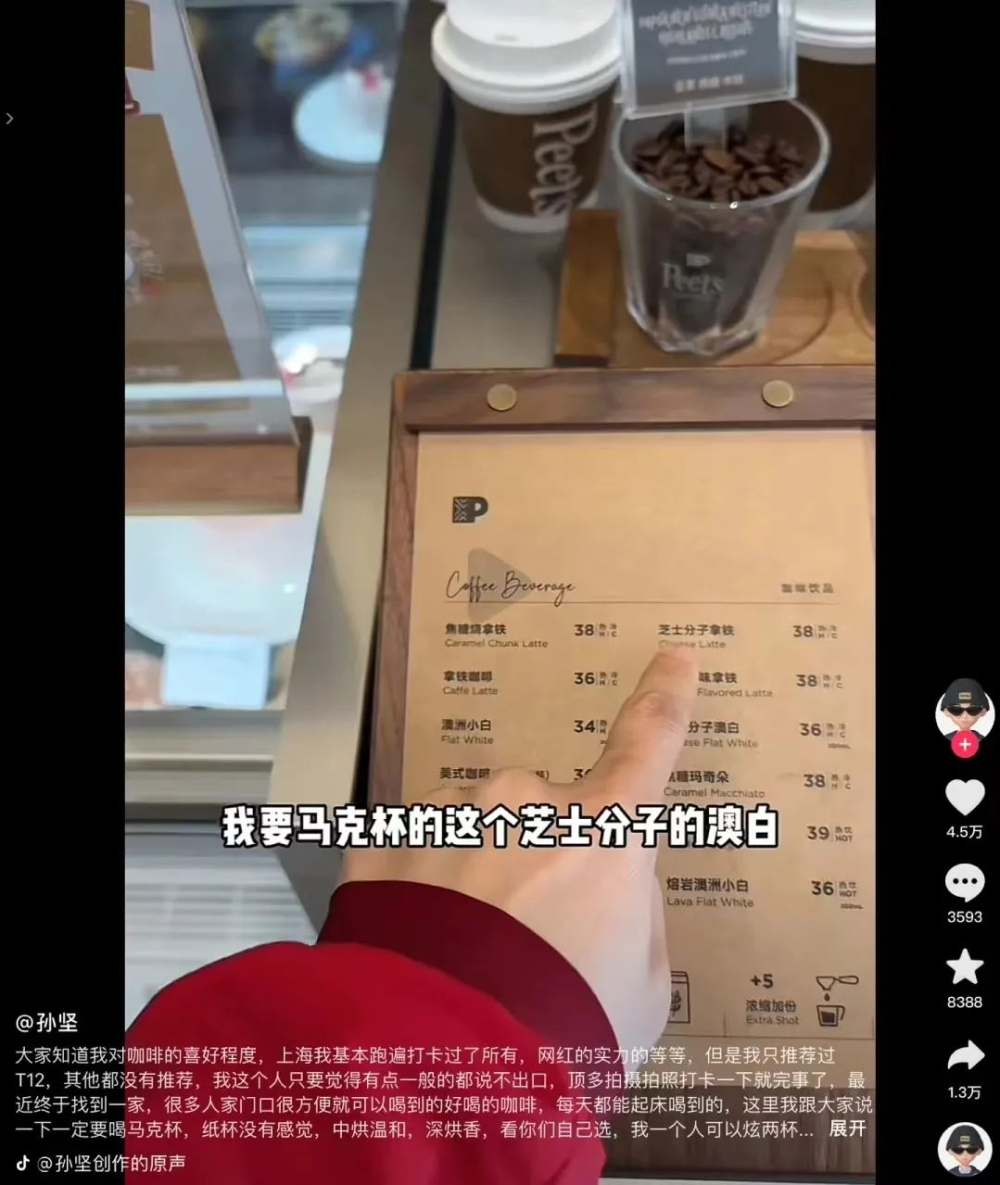
Actually, the Cheese Mole series is not a new product that Peet's Coffee recently launched; it was already available as early as February this year. The fact that netizens are now almost simultaneously visiting the store to try it is mainly thanks to one entertainment star: Sun Jian.
This artist, often called an "internet friend" by many netizens, frequently shares good products on his personal account. Recently, in a video he posted, he recommended Peet's Cheese Mole AU Latte coffee, mentioning that there are two coffee beans with different roast levels to choose from, and specifically reminded everyone to be sure to use a mug when ordering, as it feels better when drinking.
Thus, the trend of "checking in with Sun Jian's same coffee" spread rapidly, and the Cheese Mole series, which specifies using in-store cups, gained a bit of popularity. Under the brand topic, almost all posts feature these two coffees. Among them, many use the coffee latte art as the cover image, and under their filters, in order to highlight the subject, they push saturation and contrast to the max, but at the same time, the rough surface of the coffee becomes especially distinct.
We can observe that, unlike the smooth and delicate milk foam that everyone pursues, these milk coffees first have a very dry liquid surface, slightly sunken downward, surrounded by small bubbles, and the patterns previously made by the barista have become unclear, somewhat like being pixelated. Such an unappetizing appearance has led many netizens to describe it as "hard to put into words."
So why does the coffee turn into this state? Regarding the issue of milk foam collapsing and dissipating, many netizens with homemade coffee experience also actively joined the no-prize guessing game. Some think it should be that the barista's milk foam steaming technique is not up to standard, which makes the latte art so "lackluster"; others believe it is caused by the milk being steamed too hot or too thick; more people think it is because the coffee has been left for too long after being made.
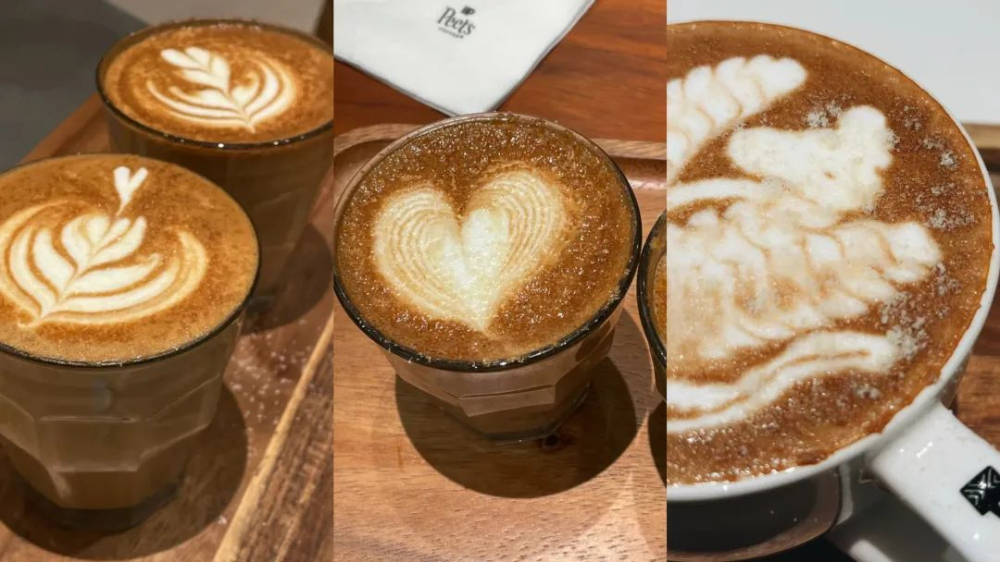
However, none of these are the real reasons for the rapid collapse and dissipation of the milk foam. It was not until Peet's Coffee baristas appeared to "clear their name" that we learned the real "culprit" is cheese. According to Peet's Coffee's official WeChat public account, this cheese series adds cheese milk to the base, and finally sprinkles a thin layer of cheese powder on the coffee to provide a richer cheese flavor.
If you order it iced, these cheese powders will go unnoticed as they are stirred; but whether it is the Cheese Mole AU Latte dubbed "Sun Jian's same style" or the mug latte in the same series, both are genuinely hot milk coffees, meaning they must be tasted without stirring and with a nice latte art pattern retained on top. Therefore, no matter how dense the barista makes the milk foam or how skilled the etching technique is, after a large amount of cheese powder is sprinkled on, the fragile milk foam cannot support the weight of the particles, ultimately resulting in a lumpy surface or dense bubbles.
After understanding the process behind this Cheese Mole hot milk coffee, netizens could only say, "This design is absolutely anti-aesthetic"!!
Disclaimer: Some images in this article are from the internet. For some content on the website, such as images, we will respect the original copyright and indicate the source. However, due to the large quantity, some images and texts may not have been credited in time. Please forgive us. If the original author has any disputes, they can contact the website for handling. Once verified, we will correct it immediately. Compiled and edited by "Coffee Workshop." Please indicate the source when reposting. If there is infringement, please inform us for deletion. Thank you~!
The above content is compiled by CoffeeHunters, a coffee news website.


