







Is the geisha coffee variety the same as Huakui?
Huakui coffee beans and Geisha coffee beans are not the same variety. Huakui is a sun-dried heirloom from the Sidama region of Ethiopia, produced at the Buku Abel processing station in the Hambela sub-region. Geisha is an independent coffee variety whose fame traces back to Hacienda La Esmeralda in Panama and the BOP competition.
The confusion began with a concept substitution: Huakui means "chief of a hundred flowers," and in Japanese culture also refers to a geisha, whose pronunciation resembles Geisha. The name Huakui stems from market expectations after the 2017 TOH competition. Packaging labels list origin, altitude, variety, and processing method, so geisha coffee beans can be checked directly.
Huakui and Geisha—these two names are often mentioned in the same breath in coffee circles, and some even mistakenly believe they are the same bean. Is that really the case? This article will clarify Huakui coffee beans and Geisha coffee beans thoroughly from three dimensions: variety origin, naming history, and flavor characteristics. You will learn that Huakui is actually a sun-dried heirloom variety from the Sidama region of Ethiopia, while Geisha is an independent coffee variety; the name Huakui stems from market expectations after winning the 2017 TOH competition, while Geisha's fame traces back to the BOP legend of Hacienda La Esmeralda in Panama. Front Street Coffee will also share brewing parameters and purchasing advice for both beans to help you understand these two distinctly different coffees.
For a while, a topic sparked considerable discussion among coffee enthusiasts. Huakui coffee What exactly is the connection between Huakui coffee and Geisha coffee? Can Huakui coffee be equated with Geisha coffee?
The source of these questions comes from a concept substitution by an internet celebrity during a popular science explanation. The term Huakui originally means "chief of a hundred flowers," and in Japanese culture, it also refers to a geisha, whose Japanese pronunciation is similar to Geisha (or Gesha), coincidentally identical to the English spelling of Geisha. Thus, the statement "Huakui is Geisha" was rashly thrown out.
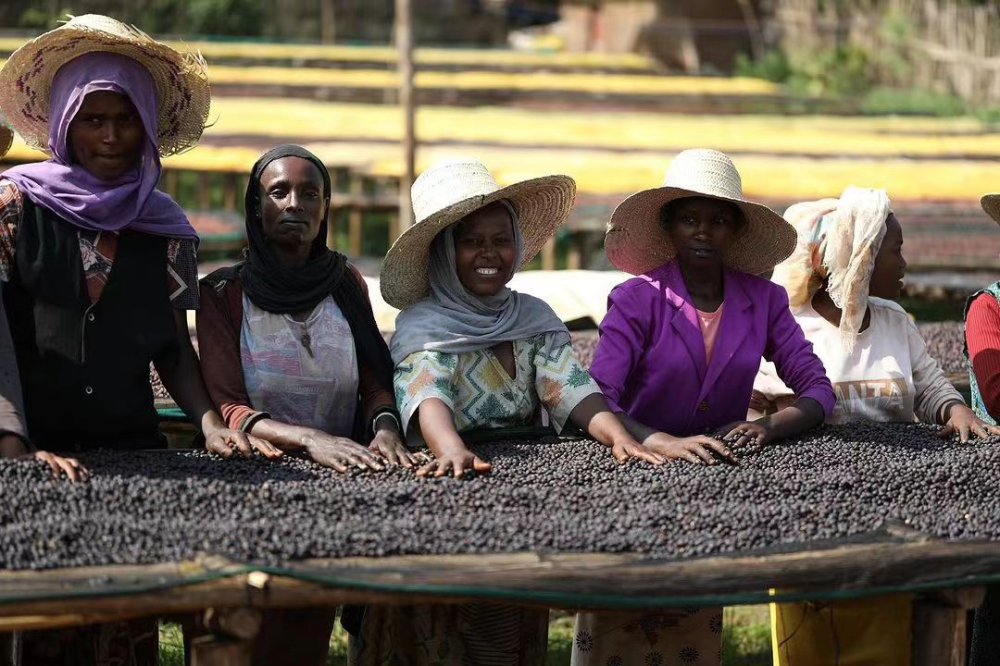
Front Street has written multiple times introducing Geisha coffee and Huakui coffee, and here it must be clarified again: Geisha coffee beans and Huakui coffee beans are not the same in terms of variety. Huakui coffee beans are produced at the Buku Abel processing station in the Hambela sub-region of the Sidama region in Ethiopia, and are sun-dried coffee beans. What we usually call Geisha specifically refers to a coffee variety.
Although Front Street Coffee's bean list is long and diverse, the information for each coffee bean is clearly labeled. When purchasing from Front Street Coffee, each packaging bag has detailed information about the coffee beans on its surface, including origin, growing altitude, variety, processing method, and flavor description.
(Huakui and Geisha)
Coffee bean varieties
The outer packaging of Huakui coffee beans clearly labels the variety as local heirloom. Some friends might be confused by the term "local heirloom." The origin of Huakui coffee, Ethiopia, is recognized as the birthplace of coffee, with extremely complex coffee varieties. Coupled with limited local economic conditions, there isn't enough funding to extensively identify coffee varieties. At the same time, the Ethiopian government, considering the protection of native coffee tree resources, is unwilling to disclose them. These difficult-to-name coffee varieties are collectively referred to as "local heirloom."
Now let's look at Geisha coffee. The Geisha coffee variety was discovered in the Geisha forest in Ethiopia in the 1930s and subsequently sent to the coffee research institute in Kenya. In 1936, it was introduced to Uganda and Tanzania; in 1953, it traveled across the ocean to Costa Rica in Central America and was numbered "T2722." At that time, coffee leaf rust was ravaging Central America, and the Geisha coffee variety was introduced to Panama as a leaf rust-resistant variety for cultivation.
In other words, Huakui coffee and Geisha coffee are two completely different coffee varieties. The variety of Huakui coffee is Ethiopian local heirloom; the variety of Geisha coffee is the Geisha variety.
Why is Huakui coffee called Huakui
Friends familiar with coffee bean naming conventions will notice that coffee beans are usually named after their origin. Huakui coffee beans are produced in the Hambela sub-region of Sidama, so why is it called Huakui instead of Hambela?
This starts with the rise to fame of Huakui. In 2017, the Ethiopian green bean trader DW Company sent the sun-dried coffee beans produced by Buku Abel in Hambela, which it manages, to participate in the TOH green bean competition. The rich berry cream flavor conquered the judges present, winning the championship in the sun-dried group of the TOH Ethiopian division that year.
In the same year, Beijing green bean trader Hongshun introduced the same batch of coffee beans to the Chinese market. Because Huakui's flavor was truly outstanding and could potentially replace Geisha with only slight improvements in post-processing methods for green beans, high hopes were placed on it, and it was named "Huakui." That year, in the World Coffee Brewing Championship China division, Geisha coffee beans were rampant, but contestant Li Jianfei won second place in the brewing competition with the Huakui coffee beans from the same batch as the 2017 TOH sun-dried champion. This made Huakui coffee beans steal the spotlight and broke the legend of Geisha.
Observant friends will notice that on Front Street's bean shelf, two different Huakui coffee beans are labeled "Huakui" and "Huakui 5.0." Huakui 5.0 belongs to the "Huakui X.0" series, with Huakui 2.0 in 2018, Huakui 3.0 in 2019, Huakui 4.0 in 2020, and naturally Huakui 5.0 for the 2021 harvest season. The 2022 harvest season has arrived, and the new batch of Huakui coffee beans will be named Huakui 6.0. Front Street Coffee has already reserved the batch at the first opportunity, and it will arrive at the port in April. Friends who like Huakui coffee can closely follow Front Street Coffee.
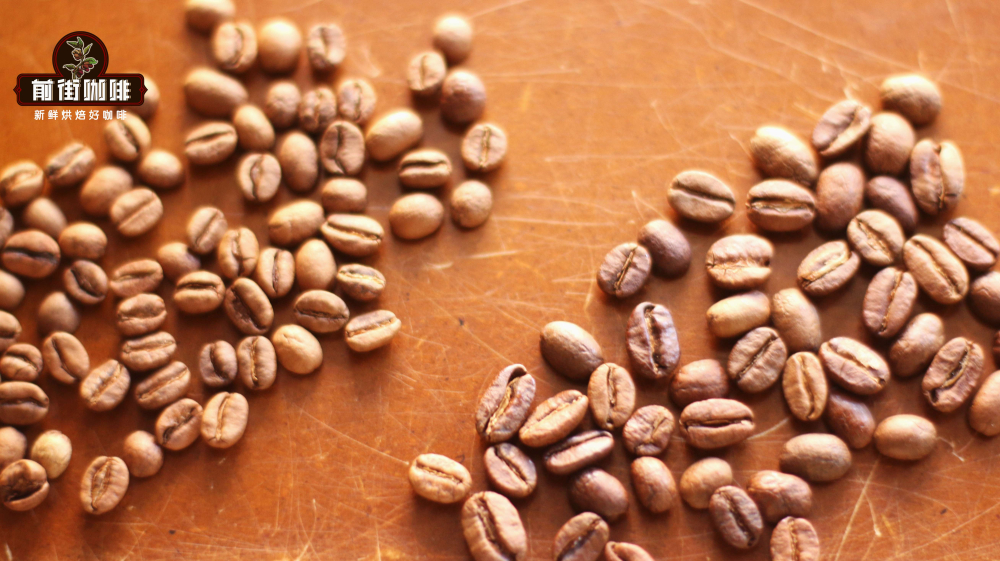
The other one labeled "Huakui" Huakui coffee is Small-Bean Huakui. Front Street discovered some smaller-sized Huakui coffee beans in the 2018 and 2019 Huakui coffee beans, and later through cupping found that these small-sized Huakui coffee beans are precisely the source of Huakui coffee's aroma.
Flavor characteristics of Huakui coffee
Huakui coffee has captured the hearts of many coffee connoisseurs with its rich berry cream flavor. Such outstanding deliciousness is closely related to its growing environment and processing method. Huakui coffee beans in Hambela of the Guji region—only the sun-dried coffee produced and processed by Buku Abel Estate is "Huakui," so Buku Abel Estate is also known as "Huakui Estate." The area where Huakui is grown is surrounded by sugarcane and bananas. Under high-altitude climate conditions, Huakui coffee has a smooth mouthfeel, with berry acidity and the fermented wine aroma brought by sun-dried processing.
Huakui's flavor changes every year, mainly because coffee is essentially an agricultural product, and it's impossible to grow exactly the same flavor every year. Agricultural products are very susceptible to uncertain factors such as climate and rainfall. Therefore, it is very normal for coffee bean flavors to differ each year.
Small-Bean Huakui and Huakui 5.0 on Front Street's bean shelf also have subtle differences. Small-Bean Huakui's flavor is closer to the strawberry cream flavor of the TOH sun-dried group champion that year; while Huakui 5.0 leans more toward flavor descriptions of berries, floral notes, and tea-like qualities from the Guji region.
Flavor characteristics of Geisha coffee
After Geisha coffee became famous, coffee-producing regions around the world rushed to plant Geisha coffee. But when mentioning Geisha coffee flavor, it generally refers to Panama's Geisha. Because Geisha coffee trees have fragile branches and low yields, they initially did not gain favor from coffee farmers. However, it later won the championship at the 2004 BOP competition and broke auction records. From then on, people recognized the strength of Geisha coffee.
Hacienda La Esmeralda can be said to have been fully dedicated to this matter, being both the discoverer of Geisha coffee and the promoter of Geisha flavor. Front Street's bean shelf features Hacienda La Esmeralda's Red Label, Green Label, and Volcan Rock, allowing everyone to gradually understand Geisha flavor. The typical Geisha coffee flavors of citrus notes, jasmine fragrance, and honey sweetness also make coffee novices trying Geisha for the first time feel as if they've instantly entered heaven.
Front Street Coffee brewing recommendations
Since Huakui coffee and Geisha coffee need to highlight their excellent acidity and rich aroma, Front Street's roasters use a medium-light roast level during roasting. Front Street's baristas use a finer grind size when brewing these two coffee beans to increase the contact area between coffee grounds and water; and a higher water temperature to accelerate the rate at which substances in the coffee dissolve into the water.
Filter: Hario V60
Water temperature: 91°C
Dose: 15 grams
Coffee-to-water ratio: 1:15
Grind size: 80% passing through Chinese standard No. 20 sieve
Pour 30 grams of hot water to completely wet the coffee grounds and bloom for 30 seconds. Pour from the center point with a thin stream of water and slowly circle to 125 grams for the first pour. When the water level in the dripper drops to the point where the coffee bed is about to be exposed, continue circling and pouring to 225 grams. The total extraction time is approximately 2 minutes.
Front Street has received some questions from friends asking why the coffee doesn't puff up during blooming. Blooming is to allow carbon dioxide in the coffee grounds to escape, making the subsequent pouring and extraction more stable. After coffee beans are roasted, a large amount of carbon dioxide gas accumulates within the bean. As the gas escapes, the flavor also tends to stabilize. The coffee beans shipped by Front Street Coffee are roasted within 5 days, and by the time they reach customers, they have gone through a 4-7 day resting period, and the flavor is at its best.
Some friends, because they don't have coffee grinding equipment at home, usually note that they want pre-ground coffee. Here, Front Street needs to remind that after coffee beans are ground into powder, the rate of degassing increases, and flavor compounds easily volatilize, greatly shortening the optimal tasting period. Therefore, Front Street recommends buying whole beans and grinding fresh for each brew.
For more coffee bean information, please follow Coffee Workshop (WeChat public account: cafe_style) For professional coffee knowledge exchange, please add WeChat ID: kaixinguoguo0925
The above content is compiled by CoffeeHunters, a coffee news website.


