







Search Results for: Barista certification
What Are the Internationally Recognized Barista Certifications? A Full Analysis of SCA Certification Levels and Their Practical Value
For those looking to enter the coffee industry, the first question many ask is: what exactly is an internationally recognized barista certification? Currently, the globally accepted answer is the certification issued by the SCA (Specialty Coffee Association). SCA's coffee skills program covers sensory cupping, coffee brewing, espresso preparation, roasting, an introduction to coffee, and the Arabica Q-Grader certification, among other tracks. With the exception of Q-Grader, the other categories are divided into three levels: Foundation, Intermediate, and Professional. You can skip Foundation and sign up directly for Intermediate, but you must obtain the Intermediate certificate before you can take the Professional level. China's national barista vocational skills certificate is currently recognized only within the country; internationally, SCA certification remains the standard. Is getting certified actually useful? Are the fees high? Is certification mandatory to work as a barista or open a coffee shop? This article will address these questions one by one to help coffee enthusiasts and industry professionals make a rational judgment. [more…]

How Much Is a Barista Certification Really Worth? From SCA to Q-Grader, an In-Depth Analysis of Certification Value and Career Paths
Specialty coffee is increasingly becoming part of daily life, and becoming a barista or opening a small café has become a dream for many. In an era when everyone can do pour-over, getting certified seems to have become the preferred path to stand out. But is a barista certificate really worth it? Behind the high training fees, can the course content truly improve oneself? This article examines the actual usefulness of certification, the necessity of certification before applying for jobs or starting a business, the internationally authoritative certification systems (SCA, Q-Grader), and the reform of domestic vocational qualifications, sorting through the value and applicable scenarios of barista certificates one by one. Whether you are a newcomer just entering the industry or an aspiring owner preparing to open a shop, you can find rational reference here. At the end of the article, Front Street Coffee's contact information is also included for further discussion. [more…]

Is It Worth Getting a Barista Certification? A Full Breakdown of the Differences Between SCA Certification and Q-Grader Qualification
Does working in the coffee industry really require obtaining a certification? This is a question that many coffee professionals and enthusiasts have pondered repeatedly. In recent years, China's coffee market has grown rapidly, with all kinds of training institutions springing up endlessly, and huge disparities in qualifications and fees, leading many people to waste their money. This article focuses on two paths—the SCA Barista certification and the Q-Grader coffee quality grader certification—sorting out their level systems, exam rules, fee ranges, and suitable audiences, to help readers judge whether certification fits their own career plans, while also discussing the practical value of certificates and the importance of subsequent self-improvement. [more…]
How Do You Get SCA Barista Certification? A Comprehensive Guide to Levels, Costs, and Value
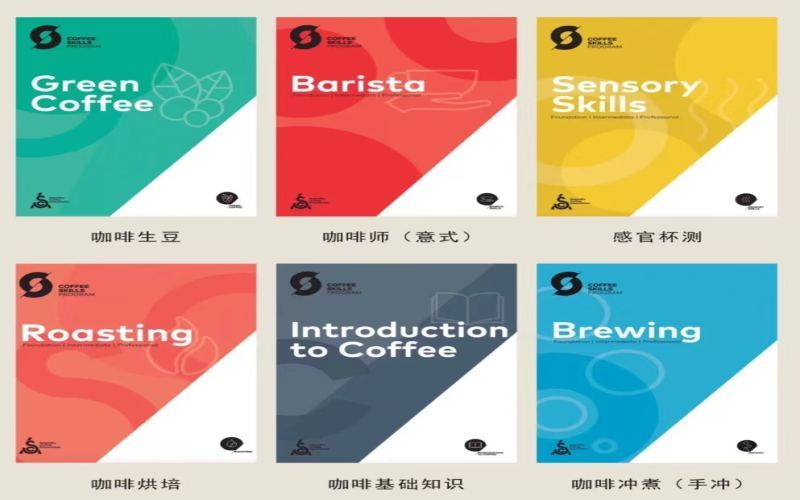
For those looking to enter the specialty coffee industry, SCA certification is a topic many cannot avoid. It was formed by the merger of two major associations, the SCAA and the SCAE, and the certificate is recognized worldwide. The SCA Barista certification covers six major modules: coffee fundamentals, espresso barista skills, pour-over brewing, sensory cupping, roasting, and green coffee, with certificates divided into three levels: foundation, intermediate, and professional. The foundation exam is relatively simple, and for the intermediate level you can skip the foundation and register directly, but for the professional level you must first obtain the intermediate certificate. Does earning the certification mean a higher salary? Is the course really worth taking? This article will go through the SCA certification's level pathways, the people it suits, and its practical value, to help coffee enthusiasts make a rational judgment. [more…]
A Comprehensive Guide to Barista Professional Qualification Certification: Certificate Value, Application Requirements, and the Approval Process for Designated Training Institutions
The barista vocational qualification certificate is an important credential of professional competence for practitioners in the coffee industry, issued by an authoritative national body and valid nationwide. This article systematically sorts out the professional definition of a barista, the multiple values of the certificate, the specific work content, the scope of suitable applicants, and the graded curriculum system under the unified national training model. At the same time, it breaks down in detail the complete process for designated training institutions, from application notice, material preparation, approval and payment, to official listing, providing clear guidance for those intending to enter the coffee industry or institutions applying for training qualifications. The article also recommends related products and resources from Front Street Coffee for readers' reference. [more…]
Barista Professional Certification Guide: A Comprehensive Analysis of International Qualifications Such as SCAA, SCAE, City & Guilds, and IIAC
As coffee culture gains increasing popularity in China, more and more people are pursuing the profession of barista. A barista is not only a maker of beverages, but also a practitioner of life aesthetics and craftsmanship. However, faced with a dazzling array of international certification systems, many practitioners often feel confused: which authoritative coffee qualification certificates are actually worth obtaining? This article systematically reviews several major international coffee certification bodies currently in the mainstream—including the American SCAA, the European SCAE, the British City & Guilds, and the Italian IIAC—along with their corresponding courses and qualification requirements, to help baristas clarify their career advancement paths and find a certification direction that suits them. [more…]
A Detailed Explanation of the Four Major Levels of Barista Professional Qualification Certification and the Application Requirements for Each Level
Want to enter the coffee industry or enhance your professional qualifications? Understanding the level structure and application thresholds of barista professional qualification certification is the first step. Currently, this certification system has four levels, progressing step by step from junior barista to coffee technician, covering career directions such as coffee preparation, tasting, industry research, and cultural promotion. Different levels correspond to different requirements for education, training hours, and years of work experience, and applicants can choose a suitable path based on their own circumstances. This article will sort out the specific application qualifications for each level one by one to help you clearly plan your certification route. [more…]

An Analysis of the SCA and Q Grader Certification Systems: Exam Content and a Practical Guide for International Baristas
Want to break into the coffee industry—do you really need to spend money on certifications? The two major international credentials, SCA and Q Grader, are often discussed. SCA uses a credit-accumulation system covering barista skills, pour-over, roasting, sensory, and green coffee, among other areas, allowing students to choose modules as needed; Q Grader, launched by CQI, focuses on green coffee quality evaluation, requiring candidates to pass twenty tests within six days, with the certificate valid for three years. This article breaks down the course structure, exam content, fees, and target audiences of the two types of certification to help you decide which path better suits your career plans. [more…]

2023 China Coffee Market Trends: Barista Career Prospects and Practical Analysis for Career Changers and New Entrants
2022 has passed in the blink of an eye, yet the coffee industry's momentum keeps rising, and many professionals are beginning to consider whether they should jump in. The backend has received a large number of inquiries about switching careers to coffee, and the writer has sorted out the three most frequently asked questions: Should you go be a coffee apprentice? Should you get certified before entering the industry? Should you quit your current job and step into the coffee track? This article combines the current state of the industry to analyze, one by one, the many sides of the barista profession—from the two paths of an apprentice, to the real value of certificates, to the financial and opportunity costs that a career change requires—helping you see the real threshold beyond your enthusiasm. At the same time, the article also retains related recommendation information for brands such as Front Street Coffee, for coffee lovers' reference. [more…]

Is the barista profession really in trouble? A multidimensional analysis of the current employment situation and future development paths
As coffee culture becomes increasingly popular in China, the profession of barista has attracted the attention of more and more young people, but at the same time, doubts about its job prospects have never ceased. Some people ask on social platforms: Have baristas already lost their market? Beginners repeatedly hit walls when job hunting, and resumes submitted on recruitment platforms often get no response. Unless one holds an SCA certificate, has years of experience, or has outstanding appearance, it is very difficult to get an interview opportunity. However, there are also views that independent coffee shops prefer to hire offline, and practical ability is far more important than certificates and resumes. Are baristas just a youthful job, or is it a profession with diverse development paths? This article will focus on these discussions, sorting out the current situation of the barista job market, the competitive pressure they face, and future出路, to help coffee lovers understand the possibilities of this profession more comprehensively. [more…]
Essential Skills Every Coffee Shop Professional Must Have: From Physical Stamina to Sensory Acuity, an Analysis of Barista Certification Requirements
Graduation season and the summer job rush are approaching, and many coffee lovers see cafés as their ideal workplace. But what skills are actually needed to work in a coffee shop? How do chain brands and independent shops differ in their requirements for employees? Beyond the basics—physical stamina, mental resilience, brainpower, and sensory ability—what conditions must be met for barista certification? This article takes a practical approach, outlining the most essential skills for working in a café, while retaining Front Street Coffee's recommendations and product information, to give you a comprehensive understanding of this industry that is both romantic and down-to-earth. [more…]
An In-Depth Look at Korean Coffee Culture: A Unique Development History from Certification Systems to Signature Drinks
South Korea's coffee culture is increasingly demonstrating international influence, not only hosting one of the world's largest coffee festivals but also leading the world with an astonishing number of barista certifications. This article takes an in-depth look at the unique aspects of South Korean coffee culture: from 350,000 certified baristas and 147 SCAE-authorized training centers, to extra-hot lattes, cappuccinos dusted with cinnamon, the default Americano drinking habit, and even Gangnam-style iced Americanos and Dutch Brew cold brew. Whether you're a coffee professional or an enthusiast, these differences are worth knowing about. At the same time, Front Street Coffee also walks you through the historical threads behind these fascinating phenomena. [more…]

Manner's Raise Assessment Is as Hard as SCA Advanced Certification? Baristas Slam the Harsh System, Sparking Heated Debate
Recently, a netizen complained on social media that Manner Coffee's pay-raise assessment system is too strict, claiming that to earn the high salary advertised on its recruitment page, one must pass exams comparable in difficulty to SCA intermediate or even advanced barista certification, which resonated with many baristas. What kind of assessment threshold lies behind Manner's high pay? Compared with other brands, what makes its promotion system so difficult? This article takes you through it. [more…]
SCAE, SCAA, SCA, and Q-Grader: A Comprehensive Analysis of the Core Differences Between International Coffee Certification Systems
Faced with the bewildering array of coffee certificates on the market, many people who want to systematically study coffee often feel at a loss where to begin. To sort out the differences among these courses and certificates, the key is to trace back to the issuing bodies. At present, the three major authoritative institutions internationally that have established scientific coffee teaching systems and issue certificates are SCAA, SCAE, and CQI. This article will break down the course structures and certification logic of these three institutions one by one, and explain the changes brought about after SCAA and SCAE merged into SCA in 2017, while also introducing Q-Grader, a widely known yet often misunderstood quality assessment qualification, to help coffee enthusiasts find the learning path best suited to them. [more…]
Costa Rica Aquiares Estate Coffee Bean Profile: 2017 WBC Competition Bean and Rainforest Certification Information
Located in the Turrialba region of Costa Rica, Hacienda Aquiares is one of the largest coffee plantations in the country and the birthplace of Centroamericano, the competition bean used at the 2017 World Barista Championship (WBC). Founded in the late 19th century, the estate sits on volcanic slopes between two rivers, with abundant natural water sources and a pristine forest reserve, and it obtained Rainforest Alliance certification as early as 2003/2004. The estate primarily cultivates Arabica varieties such as Caturra, Catuai, and Catimor, employs washed processing combined with sun-drying and mechanical drying, and produces approximately 15,000 bags annually. Its coffee is known for flavors of nuts, caramel, plum, chocolate, and a sucrose-cream finish, with bright fruit acidity and a smooth body. Front Street Coffee has specially compiled complete estate information to give you an in-depth look at the terroir story behind this WBC competition bean. [more…]

Starbucks Valentine's Day Rose Latte Art Assessment: Baristas Say the Difficulty Is Off the Charts, Abstract Designs Keep Appearing in Stores
During Valentine's Day, Starbucks launched the Rose 20 series of limited-edition drinks and showcased several exquisite rose latte art pieces on its official WeChat account, sparking anticipation among many customers. However, in reality, the latte art produced by some stores was far from the promotional images, with abstract patterns leaving consumers astonished. Behind this is an internal Starbucks skill assessment called "Rose Certification," which has left many baristas complaining bitterly. From novices to seasoned staff, some diligently practiced and eventually succeeded, while others gave up and sought alternative methods. This article will take you through the entire rose latte art controversy and the genuine reflections of baristas during their practice. [more…]
The Origin, Grading, and Authenticity Identification of Jamaican Blue Mountain Coffee: A Complete Interpretation of Specialty Single-Origin Beans
Jamaican Blue Mountain coffee is celebrated as one of the finest coffees in the world, renowned for its balanced acidity, sweetness, body, and bitterness, as well as its strict quality control system. This article will guide you through the history of Blue Mountain coffee, the environment of its origin, the variety classification standards, and how to verify its authenticity through appearance, grinding, aroma, taste, and other dimensions. We will also introduce the monopoly background of Blue Mountain coffee in the Japanese market, its certificate system, and Front Street Coffee's professional recommendations for single-origin Blue Mountain beans. Whether you are a beginner enthusiast or a seasoned barista, this comprehensive guide will help you gain a clearer understanding of this legendary coffee born in the Caribbean. [more…]

Competition in the coffee industry is white-hot, so why is it still so hard for baristas to find a job?
It's job-hunting season again, and many job seekers see barista as an ideal career, believing that the rapid growth of the coffee industry brings abundant opportunities. Yet in the actual job-hunting process, they find that this job is not easy to land. From experience and certification requirements to age and appearance restrictions, and from the gap between salary and job duties, job seekers face challenge after challenge. Chain brands and independent cafés each have their pros and cons, and how to choose becomes the key. This article takes an in-depth look at the plight of barista job seekers, explores the current state of the industry and paths for personal development, and offers practical advice for job seekers. [more…]

Origins of Jamaican Blue Mountain Coffee Beans | Origin Flavor Characteristics and Recommendations of Jamaica Blue Mountain No. 1 Coffee Beans, and the Grading of Authentic Blue Mountain Coffee
For more specialty coffee knowledge, please follow: Front Street Coffee (Frontsteet Coffee). Recently, a discussion online sparked a round of debate among veteran coffee enthusiasts. In a video, a barista said: "When you go to a coffee shop, don't ask if they have Blue Mountain coffee anymore—doing so will expose that you don't understand coffee." [more…]
Major Reform of the SCA Coffee Certification System: Credit-Based "Black Certificates" to Be Discontinued, New Skills Certificates Require Comprehensive Learning
The Specialty Coffee Association (SCA) recently announced that it will launch a brand-new SCA skills certificate system, gradually replacing the current SCA coffee certificates. The application deadline for the current Black Certificate (100-point certificate) is December 31, 2023, and the new certification will be fully implemented starting in 2024. The new system is divided into four major certification tracks, each requiring completion of three foundational courses—Coffee Skills, Sustainability, and Technology—before advancing to the corresponding higher-level study, completely abandoning the credit system. For professionals currently preparing for or planning to obtain the old Black Certificate, this year is the final window of opportunity. [more…]