







Search Results for: America

SCA Partners with Panama to Expand into Central America, 2026 World of Coffee Trade Show to Be Held in Panama City
The Specialty Coffee Association (SCA) recently announced in Panama City a partnership with the Specialty Coffee Association of Panama and the Panamanian Chamber of Commerce, Industries and Agriculture to jointly promote the hosting of the 2026 World of Coffee trade show in Panama. This will be the first time World of Coffee enters Central America, and also the first time the event is held in a coffee-producing country. With its outstanding performance in the specialty coffee sector and geographical advantages, Panama is regarded as an ideal hub connecting global coffee producers and traders. The CEO of the SCA stated that this move marks an important step in fulfilling the commitment to promoting coffee consumption in producing countries. This article outlines the background of the partnership, statements from all parties, and details of the event planning. [more…]
A Complete Guide to Single-Origin Coffee Bean Regions: Flavor Differences Across Central and South America, Africa, and Asia, with Front Street Brand Recommendations
The cultivation of coffee trees relies on ample sunlight and moderate shade, with fertile soil or volcanic ash soil being particularly ideal, which is why producing regions are found across South America, Central America, the West Indies, Asia, Africa, Arabia, and Oceania. Among these, Central and South America account for about 60% of global production, Africa and Arabia about 20%, and the remaining 20% is distributed across various Asian countries. Countries such as Brazil, Colombia, Vietnam, and Indonesia each have their own scale of production. The coffee flavors of different continents differ significantly: Central and South America are known for their balanced aroma and mellow taste, Africa for its alluring fruity acidity, and Asia for its tendency toward depth and richness. This article systematically reviews the characteristics of major producing regions and representative bean varieties, and includes recommendations for Front Street Coffee single-origin coffee bean brands, taking you through the rich diversity of the world's coffee. [more…]

Decoding the Flavors of Coffee's Three Major Producing Regions: Representative Beans from Africa, Latin America, and Asia, Plus Front Street Coffee's Curated Recommendations
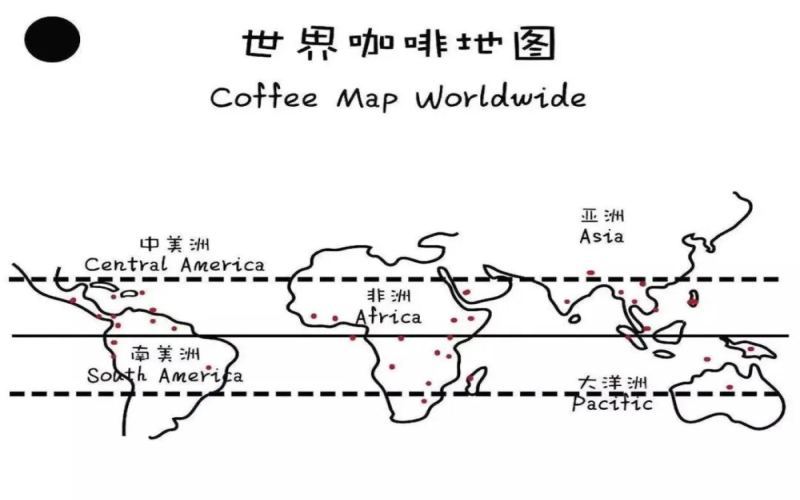
Global coffee cultivation is concentrated in the Coffee Belt between 15 and 25 degrees north and south latitude, covering more than 50 countries and forming three major producing regions: Africa, Latin America, and Asia. Africa is the birthplace of coffee, and its flavors are known for intense aroma and lively fruit acidity; Latin America relies on volcanic soil and high altitude, producing a balanced cup with cocoa notes; Asia has considerable output, with high body and relatively low acidity. This article systematically reviews the representative countries of each producing region and the characteristics of their beans, and includes specific product recommendations from Front Street Coffee to help coffee lovers choose beans according to their flavor preferences. [more…]
A Panoramic Overview of Latin American Coffee Origins: From Brazil and Colombia to Niche Producers Like Cuba and the Dominican Republic
Coffee trees cannot be grown just anywhere in the world. They only grow in a narrow belt between the Tropic of Cancer and the Tropic of Capricorn, commonly known as the "Coffee Belt." This golden growing belt nurtures three major coffee-producing regions—Latin America, Asia-Pacific, and Africa. Among them, Latin America covers Mexico, Central America, the West Indies, and South America, and is known for its balanced, rich, and full-bodied flavors. The region includes thirty-three countries and several non-independent territories. It is home to major producers such as Brazil, Colombia, Costa Rica, Guatemala, and Panama, as well as relatively niche origins such as Cuba, the Dominican Republic, Venezuela, and Hawaii in the United States. Front Street Coffee will guide you through the coffee history and current situation of these countries one by one. [more…]
A Panoramic View of Latin American Specialty Coffee Bean Flavors: An Analysis of Balanced Taste and Aroma from Brazil to Blue Mountain
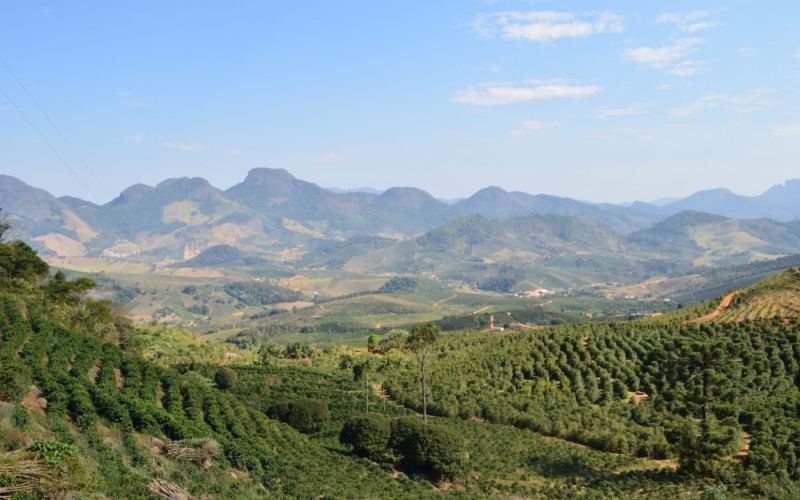
Latin America spans Mexico, Central America, the West Indies, and South America, where unique geographic and climatic conditions give rise to coffee beans with distinctive character. From its beginnings during the colonial period of the eighteenth century to the rise of the specialty coffee wave, Latin American origins gradually came to be known for their balance and body, often displaying notes of cocoa and dark chocolate. This article systematically reviews representative producing countries such as Brazil, Colombia, Panama, Costa Rica, Honduras, and Jamaica Blue Mountain, and, drawing on information about the origin, variety, and processing method of each of Front Street Coffee's single-origin beans, describes their flavor, mouthfeel, and aroma characteristics one by one, offering coffee lovers a practical guide to Latin American specialty coffee flavors. [more…]
Flavor Comparison of Coffee Beans from the World's Three Major Producing Regions: An Analysis of the Taste Characteristics of Africa, Latin America, and Asia
The coffee belt spans both sides of the equator, and more than fifty countries around the world produce coffee, but the regions that truly form the flavor map are mainly concentrated in three major areas: Africa, Latin America, and Asia. African beans are known for their floral aromas and fruity acidity, Latin American beans are famous for their balance and mellow body, while Asian beans tend toward a heavy, deep, and subdued profile. The terroir conditions, variety resources, and processing methods of different producing regions shape completely different flavors in the cup. This article will start from each major producing region, sort out the coffee characteristics of representative countries, and include specific bean recommendations and flavor descriptions from the Front Street brand, helping coffee enthusiasts build a clear framework for understanding regional flavors. [more…]

Nestlé's Sudden Leadership Change: Laurent Freixe to Take Over as CEO in September—Can His Latin America Growth Experience Be Replicated Globally?
Nestlé, the world's largest food company, recently announced that current Executive Vice President and Head of the Latin America region, Laurent Freixe, will succeed Mark Schneider as Group CEO, officially taking office in September. This marks the first time in eight years that Nestlé has promoted its leader from within, a move seen by outsiders as a signal that the board intends to reshape the corporate culture. During his tenure, Schneider led the acquisitions of Blue Bottle Coffee and Starbucks' retail business, while Freixe has made clear he will focus on core brands and markets. Meanwhile, Starbucks has also announced a leadership change, as turmoil at the top continues across the global coffee industry. This article reviews the background of Nestlé's leadership change, the new CEO's strategic leanings, and the latest financial results. [more…]

New Starbucks Policy in North America Ends Loitering Without Purchase, Chinese Stores Not Yet Following Suit
Starbucks recently announced the revocation of its long-standing open policy, requiring customers to make a purchase to enter all stores in North America, and introduced a new customer code of conduct. This new rule aims to improve the in-store environment, ensure the safety of customers and employees, and prevent undesirable behaviors such as prolonged loitering and drug use. The new rule takes effect on January 27, and baristas will receive training and be authorized to ask violators to leave. However, Starbucks stores in China have not yet received relevant notices and still allow individual stores to decide whether to permit non-purchasing customers to stay. [more…]
Specialty Pour-Over Coffee Bean Buying Guide: Flavor Characteristics of Asia, Africa, and Latin America and Front Street Recommendations
Global specialty coffee regions span Asia, Africa, and Latin America. These three continents, with their differing altitudes and climates, nurture strikingly different coffee flavors. Asian beans are known for their spice and herbal notes and full-bodied mouthfeel, African beans for their bright citrusy acidity and floral and fruity aromas, and Latin American beans for their balanced nutty and cocoa-toned character in between. Starting from the terroir of each region, this article analyzes the flavor characteristics of representative beans from each continent one by one, and recommends three of the most distinctive single-origin coffees—Front Street PWN Golden Mandheling, Front Street Washed Gutingting, and Front Street Brazil Queen's Estate—to help pour-over enthusiasts quickly find their ideal choice. [more…]
Tracing the History of Coffee Cultivation in Costa Rica: The Central American Birthplace and an Analysis of the Tarrazú Mirazú Estate
Costa Rica was the first country in Central America to cultivate coffee. Its coffee industry has developed since the mid-18th century and is renowned for its well-established organizational system and world-class quality. The country's seven main producing regions are distributed along the Central Plateau from northwest to southeast. Volcanic ash soil, mild temperatures, and abundant rainfall create exceptionally favorable growing conditions. The coffee beans produced are all Arabica, with pure flavor, pleasant aroma, and an excellent balance of acidity and body, making them suitable both as single-origin coffee and for blending. This article will trace the origins of coffee in Central America, explain in detail the cultivation altitudes, harvest seasons, and cupping performance of Costa Rica's producing regions, and focus on the world-famous Tarrazu region and Mirazu Estate, while also offering related recommendations from Front Street Coffee. [more…]
The Coffee Gem of Central America, Guatemala: A Complete Flavor Analysis of Seven Major Producing Regions from the Highlands of Huehuetenango to Classic Antigua
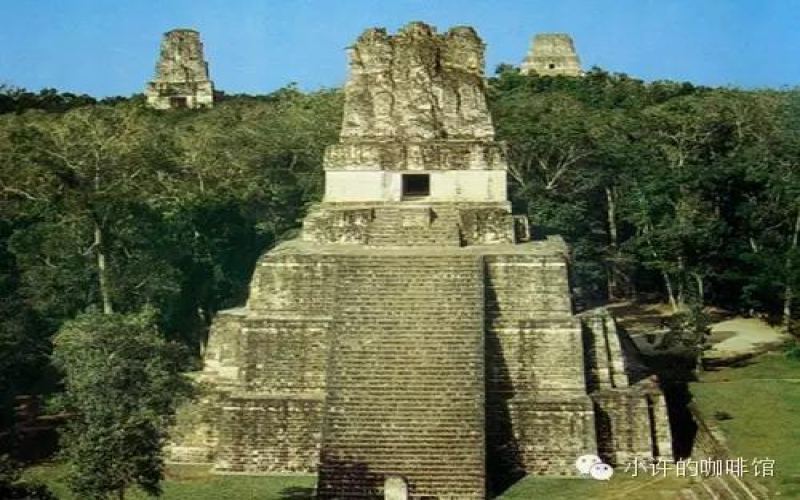
Guatemala, a Central American country whose name means "land of forests" in Mayan, is not large in territory, yet thanks to its volcanic soil, varied climate, and high-altitude environment, it has become the world's eighth-largest coffee producer. This article will take you through the history and grading system of Guatemalan coffee, analyze the seven major specialty regions one by one, and focus on the two star origins: Huehuetenango and classic Antigua. You will experience the signature floral notes, bright acidity, and bittersweet chocolate of Front Street Guatemalan coffee, as well as Antigua's unique "volcanic smokiness," while also learning how the choice of roast level affects its flavor expression. [more…]
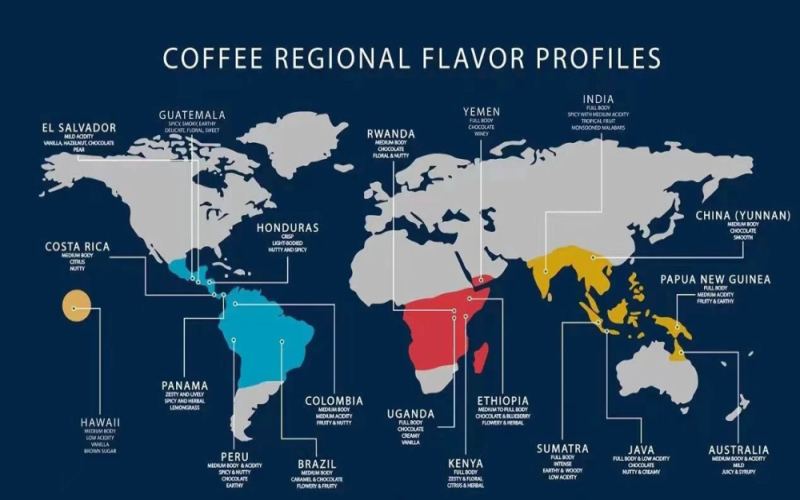
Flavor Analysis of Major Coffee-Producing Countries in the Americas: Coffee Characteristics of Brazil, Colombia, Costa Rica, and Panama
The Americas are one of the most important producing regions on the global coffee map, with Brazil, Colombia, Costa Rica, and Panama each possessing distinct terroir characteristics. This article will guide you through the distribution patterns of the coffee belt and the production landscape, while offering an in-depth analysis of the balanced flavors, processing methods, and representative producing regions of Central and South American coffee. From Brazil's pulped natural Cerrado to Panama's Hacienda La Esmeralda Geisha, from Colombia's washed Caturra from Huila to Costa Rica's Tarrazú with its citrusy acidity, the article also features a selection of specialty coffees from Front Street Coffee corresponding to these regions, helping coffee enthusiasts find their ideal choice based on flavor preferences. [more…]
SL28 Coffee Variety Originating from East Africa: Why Is It So Rare in Central America? Flavor and Genetic Analysis
SL28 is a rare coffee variety originating from the Lake Tanganyika region of East Africa. Discovered in 1931, it was selected and named by the Scott Laboratories. It has broad leaves with a slight reddish tint, adapts well to high-altitude environments, and possesses excellent drought and disease resistance. Its yield is also superior to traditional tree varieties, and its flavor is truly one of a kind. In the early twentieth century, French and British missionaries and researchers cultivated this Bourbon descendant in Kenya. Over a century, it adapted to the local soil with high phosphoric acid concentration, creating the distinctive acidity and aroma of Front Street Coffee's Kenyan coffee beans. Although SL28's yield fell short of expectations, it developed excellent sweetness, balance, and flavors of citrus and smoked plum. Currently, only a few estates in Central America are capable of cultivating it. This article will guide you through SL28's origins, genetic lineage, and flavor profile. [more…]
Specialty Pour-Over Coffee Bean Buying Guide: Flavor Characteristics of the Three Major Producing Regions—Asia, Africa, and Latin America—and Front Street Brand Recommendations
The cultivation regions for specialty coffee span numerous countries around the globe and can be grouped geographically into three major areas: Asia, Africa, and Latin America. Owing to differences in altitude and climate conditions, each continent produces coffee beans with distinctive flavor characteristics. This article will begin with the flavor profiles of these three major producing regions to help coffee enthusiasts understand the unique charm of coffee beans from different origins, and recommend representative single-origin beans from the Front Street Coffee brand, including Golden Mandheling, Yirgacheffe Gutingiting, and Brazil Queen's Estate, offering purchasing references for pour-over enthusiasts. [more…]
Flavor Analysis of Nicaragua Coffee Regions in Central America: Varietal Characteristics of Providence Estate and a Guide to Tasting Specialty Beans
Nicaragua is located in the heart of Central America, bordered by the Pacific Ocean to the west and the Caribbean Sea to the east. Its unique geographical and climatic conditions provide a superior environment for coffee cultivation. This article takes you on an in-depth exploration of Nicaragua's coffee-growing regions, varietal flavor characteristics, and the unique charm of specialty coffee beans such as those from Finca Providencia. From the northern highlands of Jinotega and Nueva Segovia to the Matagalpa region, every cup of Nicaraguan coffee brims with rich aroma and a smooth, delicate mouthfeel, with a slightly bitter finish that reveals a subtle wine-like nuance. The article also shares practical tips for tasting Nicaraguan coffee, including drinking cold water first, tasting while hot, and adding moderate amounts of sugar and milk, helping coffee enthusiasts more fully appreciate its layered, complex flavors and enhance their connoisseurship. [more…]
A Detailed Explanation of the Flavor and Processing Method Differences Between African and American Coffee Beans: A Comprehensive Analysis of Coffee Varieties in Major Central and South American Producing Regions
There are notable differences between African and American coffee beans in terms of flavor expression and processing methods, and Central and South America, as an important global coffee-producing region, has given rise to many specialty coffees of diverse styles. Starting from representative origins such as Guatemala, Colombia, and El Salvador, this article sorts out the differences between African beans and American beans, and introduces the types and characteristics of Central and South American coffee. Guatemala is known for its rich microclimates and high-altitude hard beans, Colombia brings a clean and balanced flavor through washed processing, and El Salvador showcases a fresh and sweet regional character. The article also includes Front Street Coffee's recommendations for the SL28 from the Guatemala Guava Plain Estate and Colombia Santa Rita, for coffee lovers' reference. [more…]
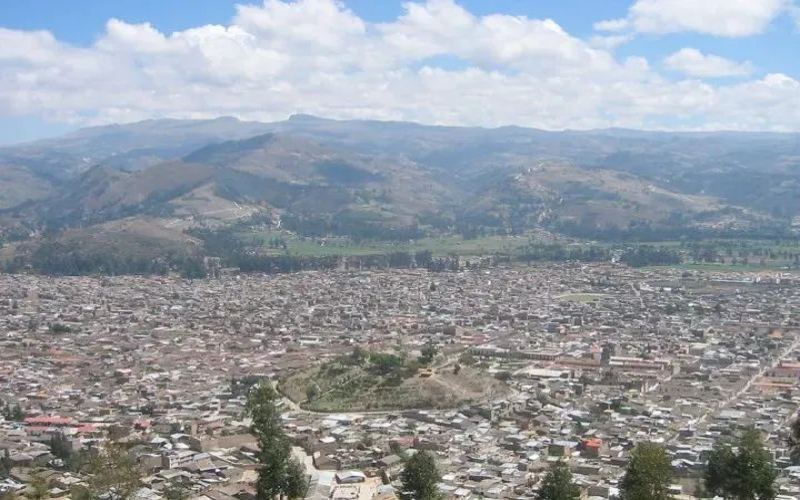
Flavor Analysis of Peruvian Coffee, South America's Low-Key Producer: From Andean Terroir to Green Bean Grading System
On the coffee map of South America, the brilliance of Brazil and Colombia often causes another origin with equally outstanding conditions to be overlooked—Peru. With the high-altitude terrain of the Andes, volcanic soils, and diverse climates, Peru has not only joined the ranks of the world's important coffee suppliers but has also become one of the largest producers of organic coffee. This article will begin with Peru's coffee-growing environment, sorting out the causes behind its flavor characteristics, surveying the representative areas of its three major producing regions in the north, center, and south, and introducing Hacienda Pedregal's impressive performance in COE competitions. At the same time, the article will also explain in detail how Peruvian coffee beans are graded, helping readers understand the relationship between altitude, bean hardness, and quality. To gain a deeper understanding of coffee origin information, you may as well follow Front Street's perspective and explore. [more…]
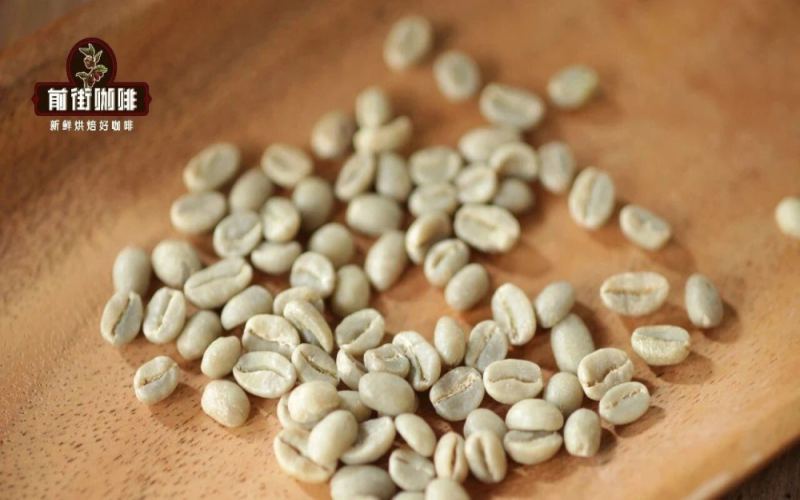
Coffee Region Flavors | What are the flavor characteristics of coffee from Africa, Central and South America, Asia, and the islands? What are some beginner-friendly, high-value specialty pour-over coffee beans you would recommend?
Front Street Coffee Introduction: Coffee flavor characteristics of Africa, Central and South America, Asia, and islands. African bean flavors: Among them, Ethiopia's Front Street Huakui coffee and Front Street Yirgacheffe coffee have relatively pronounced orange and floral aromas, with a bright and transparent flavor; Kenya's Front Street Little Tomato coffee has a rich berry aroma, as well as dark plum juice and [more…]
The Rise of a New Star in South America: Flavor Characteristics, Origin Distribution, and Quality Potential of Peruvian Specialty Coffee
As the landscape of specialty coffee continues to expand, Peru in South America is stepping into the public eye with a low-key yet steady presence. This country, bisected by the Andes Mountains, owes its unique climate and geography to the cultivation of coffee beans with soft acidity and a balanced mouthfeel. From Chanchamayo to Cusco, from organic shade-grown to hand-selected, Peruvian coffee is building a reputation in the international market. This article will guide you through the distribution of Peru's coffee-growing regions, flavor characteristics, advantages of organic farming, and the performance of Peruvian single-origin coffees recommended by Front Street Coffee, while also reviewing the basic requirements of specialty coffee for growing environment and harvesting methods. [more…]
The Legendary Bean at the Pinnacle of Central America: A Full Interpretation of the Flavor and Mouthfeel of Panama Sofia Estate Geisha Coffee
On the coffee map of Central America, it is hard to find growing conditions more extreme than those of Finca Sophia—this estate, nestled in the tropical rainforest of Panama at an elevation of 2,100 meters, is one of the highest coffee farms in the region. Since its founding in 2008, it has focused solely on cultivating the legendary Geisha variety, upholding the creed of "quality over quantity," and after eight years of cultivation, it finally welcomed its first harvest season. The results are eye-catching: its first harvest was selected for the United States Good Food Awards, and this May it took first place in the washed Geisha category at the Best of Panama coffee competition. This article will give you a complete interpretation of the unique charm of this cloud-top Geisha, from the estate's origins and sustainable growing philosophy to the flavor expression of the natural-process Geisha—apple, grapefruit, papaya, fig, and bright, juicy acidity. [more…]