







Search Results for: Balance
How to Understand Coffee Balance? Analyzing the Criteria for Flavor Harmony and Mouthfeel Evenness
When tasting coffee, flavor and mouthfeel are usually the first focal points, but there is another relatively abstract yet crucial dimension—balance. It does not mean blandness or absolute equivalence, but rather an overall state of harmony in which the acidity, sweetness, bitterness, and other elements in the coffee coordinate with one another, with none being overly prominent or too weak. Balance involves not only taste, but also mouthfeel, finish, and performance at different temperatures. This article will start with the definition of balance and the criteria for judging it, and recommend several Front Street Coffee beans with excellent balance, helping readers gain a comprehensive understanding of this concept. [more…]

What exactly is coffee balance? From cupping standards to brewing water temperature, even beginners can understand a balanced taste that is neither sour nor bitter
Many people's first reaction when drinking a medium-roast coffee is "this cup is very balanced." But a coffee's sense of balance is far more than simply not standing out in acidity, sweetness, or bitterness. In professional cupping, Balance is a comprehensive indicator measuring the harmony among acidity, sweetness, body, and aftertaste, while also examining the coffee's stable performance from hot to cool. Beans with poor balance may excel in one aspect but have obvious weaknesses; beans with good balance are simply pleasant across the board. Through cupping examples of multiple beans, Front Street breaks down the evaluation logic of balance and recommends several coffees with excellent balance, including Front Street's Bird of Paradise, known as the "Little Blue Mountain." [more…]

What Exactly Does Balance in Pour-Over Coffee Mean? The Balanced Advantage of the Typica Variety, Seen Through the High Price of Blue Mountain Coffee
In coffee cupping, "balance" is an important scoring dimension, but what it measures goes far beyond the simple harmony of acidity, sweetness, and bitterness. The interrelationship among four elements—acidity, sweetness, body, and aftertaste—is the true criterion for judging balance. Blue Mountain coffee has always been renowned for its balance; even though it may not excel in any single aspect on its own, it delivers the most comfortable overall experience. Starting from Front Street Coffee's cupping experience and drawing on specific cases, this article analyzes the meaning of balance, and explores the reasons behind Blue Mountain coffee's high price as well as the unique advantages of its Typica variety. [more…]
The Art of Balance in Coffee Flavor: An Analysis of the Main Producing Regions and Representative Varieties of Fruity Coffees
An ideal cup of coffee is often not defined by one particularly prominent flavor, but by a harmonious unity among acidity, sweetness, bitterness, aroma, aftertaste, and body—this is what we commonly call balanced flavor. On the foundation of balance, fruity coffee reveals an especially captivating complexity—from stone fruits to citrus to berries, different origins lend coffee their own distinctive fruit notes. African regions are usually known for bright citrus flavors, while South American coffees often use them as a supporting layer. This article will guide you through the flavor composition of fruity coffee and introduce the classic fruit expressions of representative origins such as Kenya, Ethiopia, Costa Rica, Tanzania, Colombia, and Panama, while also presenting the corresponding selected products under the Front Street Coffee brand. [more…]

Rich or Clear: The Balance Point of Coffee's Oily Flavor
Those who chase crema often reach a fork in the road: the thicker the crema, the richer the flavor, but the delicate floral and fruity notes tend to blur along with it. Richness and clarity are like the two ends of a seesaw—finding your own balance point is more worth pondering than simply piling on more crema. The essence of crema is carbon dioxide, lipids, and proteins. [more…]
Pour-Over Coffee Intermediate Guide: Water-Pouring Strategies and Flavor Balance Points for Hario V60 and Kono Drippers
Those just getting into pour-over coffee often need repeated practice to find the flavor they truly enjoy. However, mastering a few key techniques and professional insights can make the learning curve much smoother. Among these, the choice of dripper and the corresponding pouring method have a significant impact on the final flavor. This article will use two classic drippers, the Hario V60 and the Kono, as examples to analyze how to match them with coffee beans of different roast levels, and explore how to build a stable brewing framework. At the same time, we'll also discuss the priorities of sweet-sour balance versus concentration in coffee tasting, and recommend a few Front Street coffees that are suitable for beginners, with a balanced taste, to help you brew a great cup more easily. [more…]
In-Depth Analysis of Espresso Dose Control: Extraction Adjustment Strategies from Gram Weight Differences to Flavor Balance
Many coffee enthusiasts are intimately familiar with latte art and equipment, yet when it comes to espresso extraction, they often overlook dosing, puck management, and tasting judgment. In fact, dose control is just as critical as grind size adjustment—fluctuations in dose mean that even the most beautiful latte art cannot mask an imbalance in the coffee itself. Starting from the TDS and extraction yield formulas, and drawing on a 2.3-gram dose difference measured on a Mazzer Robur grinder, this article uses charts and data to illustrate the specific effects of dose on concentration, extraction yield, and the balance between acidity and bitterness, and explores approaches to dosing for light-roast espresso. Front Street Coffee also emphasizes the importance of dose consistency in its daily output, and we hope this article offers practical reference for your extraction adjustments. [more…]

Coffee Flavor Experiment: Can a Pinch of Salt Neutralize Bitterness and Improve Flavor Balance?
What should you do if your coffee is too bitter? Some people suggest that adding salt can improve the taste. In this article, through a controlled experiment with Mandheling coffee, we tested the effects of three different amounts of salt—0.01g, 0.02g, and 0.03g—on the coffee's flavor. The results showed that 0.02g of salt balanced the bitterness and saltiness, enhanced the body, and made it easy to drink; while 0.01g still had a pungent taste, and 0.03g was too salty. The experiment showed that adding salt can indeed mask bitterness to a certain extent, but similar to the bypass method, it is mainly suitable for rescuing extraction mistakes or coffee that is about to go wrong. If the coffee itself is perfectly extracted with balanced acidity and sweetness, adding extra salt will instead disrupt the flavor balance and artificially create negative tastes. [more…]
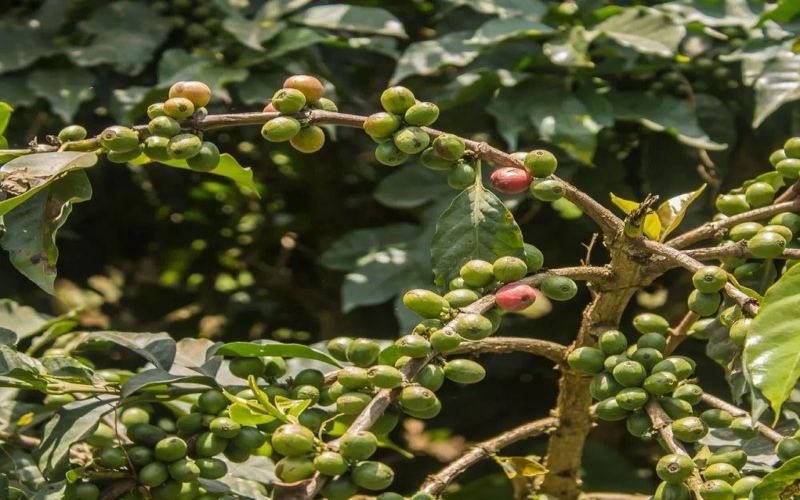
How to Choose Between Sweet and Sour Balance: Looking at Coffee Beans from Light Roast to Dark Roast
A coffee bean with balanced acidity and sweetness is not simply a matter of adding sourness and sweetness together; rather, it has a bright sensation on entry, followed by a soft sweetness, with a finish that is neither sharp nor astringent, and is not overpowered by bitterness. The roast level changes how this balance is expressed: light roasts lean toward aroma and fruity acidity, medium roasts toward rounded sweetness, while dark roasts use caramel and cocoa [more…]

Choosing hand-brewed beans based on roast level: balanced coffee recommendations that are neither sour nor bitter, with harmonious acidity and sweetness
In the scoring system of coffee cupping, "balance" is not merely the equal presence of acidity, sweetness, and bitterness, but rather a comprehensive expression in which acidity, sweetness, body, and aftertaste harmonize with one another without any single element stealing the show. To achieve this kind of taste, the roast level is key: light roasts tend toward acidity with weak body, dark roasts have heavy caramelization with pronounced bitterness, and only medium roasting makes it easiest to balance both ends. This article starts from the definition of balance and sorts through four medium-roast single-origin pour-over beans that are neither sour nor bitter, including Front Street Coffee's Queen's Estate Yellow Bourbon from Brazil, Costa Rica Tarrazú, Papua New Guinea Bird of Paradise, and the recently popular Front Street Coffee Strawberry Candy Blend, as a reference for pour-over enthusiasts at different stages. [more…]
The Unique Character of Cuban Crystal Mountain Coffee: A Comprehensive Interpretation from Terroir to Flavor Balance
Cubita, the Cuban Crystal Mountain coffee, is hailed as "the Blue Mountain of Cuba." Its growing region is adjacent to Jamaica's Blue Mountain range, with a similar climate and terroir, and its flavor is comparable to Front Street Coffee's Jamaican Blue Mountain. Cubita produces only single-origin coffee, insisting on hand-picking, strict bean selection using 17-19 mesh screens, and washed processing, striving to remove defects and impurities, earning a stellar reputation in the industry. Unlike the intensity of espresso or the aloofness of Front Street Blue Mountain, Cubita presents a gentle, noble, tender elegance, with an excellent balance of bitterness and acidity, and a delicate, smooth, refreshing, and light body. It is regarded as a supreme enjoyment among coffees. [more…]

Bean blend for commercial espresso: how to balance the ratio of Arabica to Robusta
In the formulation design of espresso blends, the ratio of Arabica to Robusta beans has always been an unavoidable topic. Each of the two bean types has its own advantages, and how to combine them to ensure both the thickness of the crema and control costs is the core of a commercial blend formula. Arabica beans are the mainstay of espresso blends. They have rich flavor layers and bright acidity. [more…]

Balanced Hand-Drip Coffee Bean Recommendations: Medium-Roast Single-Origin and Blends That Are Neither Sour Nor Bitter
For many coffee lovers, an ideal pour-over coffee should possess a harmonious balance of acidity, sweetness, and bitterness, rather than any single flavor being too dominant. So how do you select a truly balanced option—neither too acidic nor too bitter—from a dazzling array of coffee beans? This article will start with the concept of "balance" in cupping, analyze the relationship between roast level and flavor expression, and focus on recommending several medium-roast beans from Front Street Coffee, including Brazil Queen's Estate Yellow Bourbon, Costa Rica Tarrazu, Papua New Guinea Bird of Paradise, and Strawberry Candy Blend. Whether you are a beginner just starting out or a user looking for cost-effective everyday beans, these coffees can deliver a smooth, balanced brewing experience. [more…]
Flavor Analysis of Latin American Coffee Regions: The Path of Richness and Balance from Brazil to Colombia
Latin America is one of the most important coffee-producing regions in the world, known for its balance, body, and mild fruit acidity, with flavor profiles that often present cocoa and dark chocolate notes. As the world's largest coffee producer, Brazil, despite its relatively low altitude and somewhat flat flavor, still produces high-quality specialty coffee through variety improvement and processing method adjustments. Colombia, on the other hand, occupies a unique position with its rich aroma, bright acidity, and nutty flavors. This article will systematically review the main producing regions, processing method characteristics, and flavor expressions of Brazil and Colombia, and recommend related specialty coffee beans from the Front Street Coffee brand, providing coffee enthusiasts with a practical guide to Latin American coffee. [more…]
Recommendations for Single-Origin Pour-Over Coffee Beans with Mild Acidity and Bitterness: Balancing Budget and Drinking Frequency
To talk about single-origin pour-over coffee beans with a mild balance of acidity and bitterness, we have to start with the actual taste in the cup. When buying beans for everyday use, you need to consider how quickly you'll drink them, how much to buy at a time, and whether your home mainly makes black coffee or milk coffee. The roast level of the beans determines the basic flavor, the origin and processing method bring differences in aroma, and the equipment you use will change the strength—so when choosing beans, [more…]
A Complete Analysis of Salvadoran Coffee Bean Flavor Characteristics and Producing Regions: The Beauty of Balance from Pacas to Pacamara
Although El Salvador is a small country in Central America, it is world-famous for its exceptionally balanced coffee flavors. This article provides a comprehensive overview of the origin characteristics, taste descriptions, and flavor profiles of Salvadoran coffee, reviews the impact of war and tax policies on production, and introduces representative varieties such as Pipil and Pacamara. At the same time, Front Street Coffee will also recommend product information worth noting for enthusiasts, taking you to gain a deeper understanding of the coffee legend of this densely populated small country. [more…]

Recommendations for specialty coffee beans that are neither sour, bitter, nor astringent: flavor balance, taste, and price analysis of five varieties
Coffee flavors are endlessly varied. Some people prefer bright fruity acidity, while others love mellow bitterness. But there is also a group of enthusiasts who seek a subtle balance among acidity, bitterness, and astringency—smooth on the palate, with a long, sweet finish and no sharp stimulation. This article selects five specialty coffee beans with a mild, sweet taste, covering different origins such as Papua New Guinea, Brazil, Panama, and Yunnan, and introduces each one in turn from variety, processing method, roast level, to brewing method. Whether you are used to pour-over, espresso machine, or cold brew, you can find the one that suits you. Each bean is accompanied by Front Street Coffee's price and flavor description, making it easy to choose according to your needs. [more…]

Coffee flavor cards too abstract? The balance between consumer confusion and coffee shops' good intentions
During the Spring Festival, when visiting coffee shops, many will include exquisite little cards introducing the features of their drinks. Specialty coffee shops favor artistic cards, while pour-over shops create "identity cards" for their beans, noting origin, roast level, and flavor. However, when cards feature descriptions like "sandalwood-like aroma" or "cara cara orange-like flavor," consumers new to coffee often find it hard to discern and may even doubt themselves. Baristas strive to convey the charm of flavors through words, but overly obscure descriptions can instead become a barrier to understanding. This article explores how to balance professionalism and accessibility in coffee descriptions, and includes a recommendation for the Front Street brand. [more…]

How Beginners Can Brew a Good Cup of Coffee with the Perfect Strength and Balanced Acidity, Sweetness, and Bitterness: A Full Guide to Grind, Dose, and Water Temperature Adjustment
To brew a cup of coffee at home that is both balanced and moderate in strength, relying on a single fixed set of parameters is far from enough. Starting with coffee bean selection, this article breaks down how to flexibly adjust the extraction plan for coffee beans in different states around three core variables: grind size, dose, and water temperature. It also specifically shares correction ideas for when strength and taste balance deviate, helping beginners gradually build a logical brewing correction framework. Whether you are just getting into pour-over or already have some experience, you can find practical directions for adjustment here. [more…]
Why Blue Mountain Coffee Is a Classic
Blue Mountain coffee's fame is almost as well known as its price. Many people's understanding of Blue Mountain stops at "expensive," but the reason Blue Mountain is a classic is by no means just its price. Its true value lies in a rare sense of balance: the four dimensions of acidity, sweetness, bitterness, and aroma are all controlled just right, making it smooth and mellow on the palate. [more…]