







Which countries sit inside the coffee belt in Latin America?
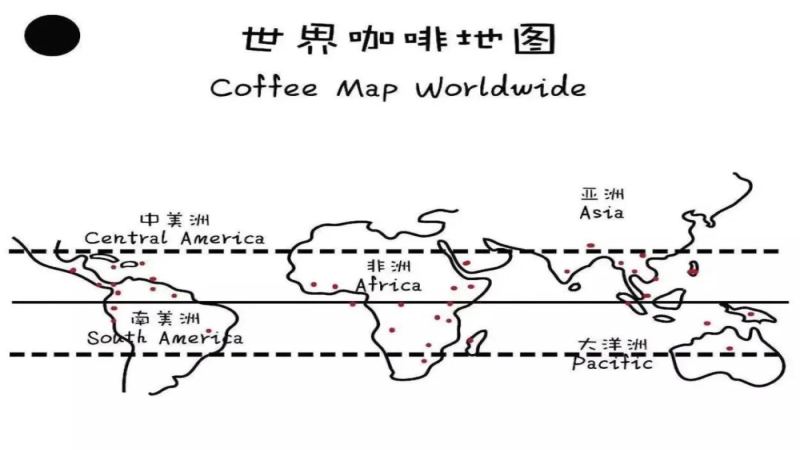
Coffee trees only grow in a narrow band between the Tropic of Cancer and the Tropic of Capricorn, a zone known as the Coffee Belt. Latin America, one of its three main producing regions, covers Mexico, Central America, the Caribbean and South America, a territory of thirty-three countries plus several non-independent areas. Beans from there tend to taste balanced with a solid body.
Alongside well-known coffee growing nations such as Brazil, Colombia, Costa Rica, Guatemala and Panama, the region holds lower-volume origins including Cuba, the Dominican Republic, Venezuela and Hawaii in the United States. Cuba began cultivating coffee in 1748, when plants arrived from Hispaniola, and French immigration after 1791 helped the crop spread. Cuban output later peaked at roughly 30,000 tons in the 1970s.
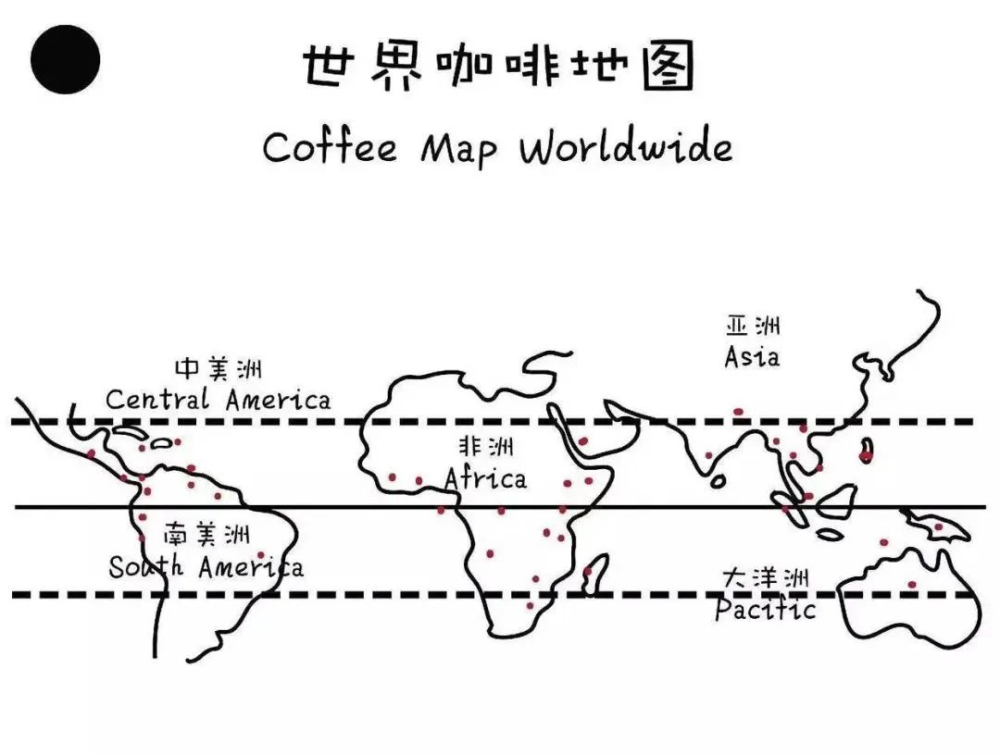
Coffee trees cannot be grown just anywhere in the world; they only grow in a narrow band between the Tropic of Cancer and the Tropic of Capricorn, commonly known as the "Coffee Belt." This golden growing belt is home to three major coffee-producing regions—Latin America, Asia-Pacific, and Africa. Latin America encompasses Mexico, Central America, the West Indies, and South America, and is known for its balanced, full-bodied flavors. The region includes thirty-three countries and several non-independent territories, featuring major producers such as Brazil, Colombia, Costa Rica, Guatemala, and Panama, as well as relatively obscure origins like Cuba, the Dominican Republic, Venezuela, and Hawaii in the United States. Front Street Coffee will guide you through the coffee history and current state of each of these countries.
Not every piece of land on Earth can nurture coffee trees; this crop's suitable growing range is confined to the equatorial zone between the Tropic of Cancer and the Tropic of Capricorn, commonly known as the "Coffee Belt." Based on this growing belt, the world is divided into three major coffee-producing regions: Latin America, Asia-Pacific, and Africa. Today, let's focus on Latin America and see which coffee powerhouses are hidden in this land.
Latin America broadly refers to the entire American territory south of the United States, including Mexico in North America, the countries of Central America, the West Indies, and South America. Coffee beans from this region are typically known for their balanced taste and solid body. The entire region comprises thirty-three sovereign nations and some non-independent territories, many of which are major coffee producers. Front Street Coffee often mentions Brazil, Colombia, Costa Rica, Guatemala, and Panama as being among them, but there are also some lesser-known, relatively low-production countries worth noting, such as Cuba, the Dominican Republic, Venezuela, and Hawaii in the United States.
Cuba
Coffee cultivation in Cuba dates back to 1748, when it was introduced from the island of Hispaniola. The industry truly took off after a large influx of French immigrants in 1791. By 1827, there were approximately two thousand coffee plantations on the island, and coffee had become the country's main export. In the 1970s, Cuban coffee production peaked at around thirty thousand tons. However, after the collapse of the Soviet Union, the U.S. trade embargo shut Cuba out of its potential market. Currently, Cuba's annual production remains very low, at around six to seven thousand tons. Coupled with widespread outdated equipment and poor road infrastructure, the revitalization of the coffee industry faces numerous difficulties. Most of Cuba consists of low-altitude plains, with coffee trees mainly concentrated in a few mountainous areas. The harvest window runs from July to December, with Typica as the primary variety, along with some Bourbon, Caturra, Catuai, and Catimor.
Dominican Republic
In 1735, coffee first set foot on Hispaniola, which was under Spanish rule and is known today as the Dominican Republic. By the late 18th century, coffee had risen to become an important crop second only to sugar. The country began exporting coffee in 1956, and in the 1960s the growing regions gradually became organized, with a processing plant established in 1967. However, severe fluctuations in international coffee prices in the late 20th century prompted many farmers to switch to other crops. Since the 1970s, the Dominican Republic's domestic coffee consumption has continued to rise, at one point even surpassing that of the United Kingdom, causing export volumes to shrink dramatically—today only about twenty percent of coffee is exported. The Dominican Republic's climate is unique in that there are no distinct seasons, so coffee can be produced almost year-round, with the main season concentrated from November to May. Typica and Caturra are the primary cultivated varieties.
Hawaii
Coffee was first brought to Hawaii in 1817, but the initial cultivation was unsuccessful. In 1825, a governor set sail from Europe and, passing through Brazil en route, brought back coffee saplings, which finally grew successfully and gradually spread across the islands. However, in 1858, a double blow from aphids and coffee wilt disease nearly wiped out all coffee plantations, with only the Kona region on the Big Island surviving. It wasn't until the 1980s, when sugar industry profits declined, that coffee once again became an important cash crop, sparking a Hawaii coffee boom. Kona is now Hawaii's most famous growing region, and other islands are gradually resuming coffee cultivation. The harvest period is uniformly from September to January, with Typica and Catuai as the main varieties.
Venezuela
Coffee was introduced to Venezuela by a Jesuit monk around 1730. At the time, the country was known for tobacco and cocoa cultivation, and large coffee plantations did not appear until 1793. Between 1830 and 1855, Venezuela experienced its first coffee boom, with production at one point accounting for about one-third of the global total. But after the 1920s, Venezuela's economy shifted to dependence on oil, the coffee industry was gradually privatized, and farmers were no longer allowed to grow coffee on public land. Nevertheless, coffee production and exports remained substantial until 2003, when the 52nd president introduced strict restrictions on coffee production. From 2009 to 2010, the country exported only nineteen thousand bags of coffee. The government-set sale price was far below the cost of production, causing severe damage to the coffee industry, which is still in recovery. The harvest period runs from September to March, with Typica, Bourbon, Caturra, and Mundo Novo as the main cultivated varieties.
The above content is compiled by CoffeeHunters, a coffee news website.


