







How Does Coffee Production in Peru Shape Its Flavor?
Peru grows coffee on the slopes of the central Andes, where high altitude, volcanic soil and a tropical mountain climate combine. Latin America supplies about 61% of world coffee, and South America about 50% of that, split mainly among Brazil, Colombia and Peru. Peru ranks among the largest producers of organic coffee and competes through altitude and bean hardness rather than volume.
The country holds 28 distinct climates, yet coffee is concentrated in the central Andean highlands, with growing areas grouped into northern, central and southern regions. Peru's grading system sorts beans by altitude and hardness, linking higher elevation to denser beans and cleaner cup quality. Estates such as Pedregal have placed well in Cup of Excellence auctions.
On the coffee map of South America, the brilliance of Brazil and Colombia often overshadows another origin with equally outstanding conditions—Peru. With the high-altitude terrain of the Andes, volcanic soil, and diverse climates, Peru has not only joined the ranks of the world's important coffee suppliers but has also become one of the largest producers of organic coffee. This article will start from Peru's coffee-growing environment, sort out the causes of its flavor characteristics, review the representative regions of the three major producing areas in the north, center, and south, and introduce the outstanding performance of Pedregal Estate in COE competitions. At the same time, the article will also explain in detail Peru's coffee bean grading methods to help readers understand the relationship between altitude, bean hardness, and quality. If you want to learn more about coffee origin information, you may as well follow Front Street's perspective and take a look.
Latin America plays a pivotal role in the global coffee supply landscape, with coffee production in this region accounting for about 61% of the world total. Among this, South America contributes about 50%. Focusing on South America, the coffee-growing belt is mainly distributed across three countries: Colombia, Peru, and Brazil. Brazil is widely known for its position as the world's largest producer, and Colombia is also renowned as the third-largest producer. By contrast, Peru appears quite low-key. However, Peru is abundantly endowed with natural resources and is fully capable of producing high-quality coffee beans.
The Andes run through the entire territory of Peru from north to south, with mountainous areas accounting for about one-third of the country's land area. From west to east, Peru can be divided into three major regions: the western coastal plains, the central mountain highlands, and the eastern Amazon rainforest. Peru is located in the tropics, but its complex geographical conditions create diverse climate types, with 28 different climates nationwide. Coffee cultivation is mainly concentrated in the central Andean mountain region. This area sits on a high plateau and has a tropical mountain climate, with frequent rainfall in summer, while temperature and humidity gradually decrease as altitude rises. Coffee trees are mostly planted on the slopes of the central Andes. These areas have high-altitude mountains, volcanic soil, and highly variable climate conditions, providing an ideal environment for coffee growth.
Peru's coffee-growing history can be traced back to the 18th century, making it one of the earlier starters among American countries. However, most of the coffee produced in the early period was for domestic consumption, and it only gradually moved toward export in the early 20th century. Peruvian coffee is mainly produced by smallholder farmers, who have long faced difficulties such as insufficient economic and technical support, resulting in relatively slow development. But precisely because of this, most Peruvian coffee is cultivated under natural conditions, using natural fertilizers instead of chemical fertilizers, and harvested and sorted by hand. As international market demand has risen, Peru's coffee industry has experienced a revival and has now become one of the world's largest producers of organic coffee.
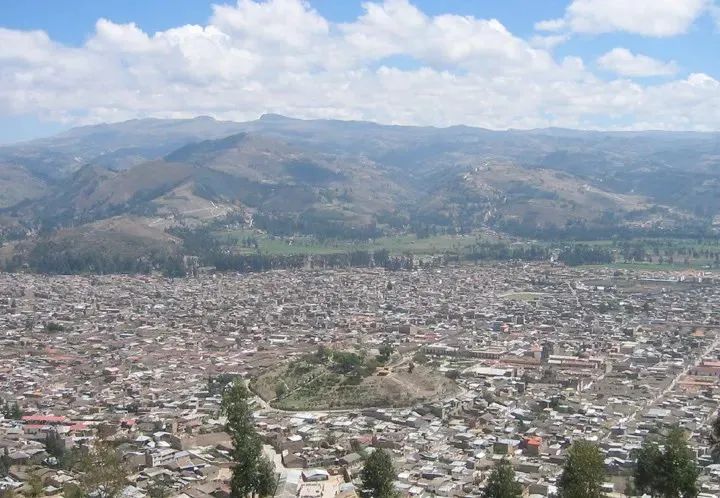
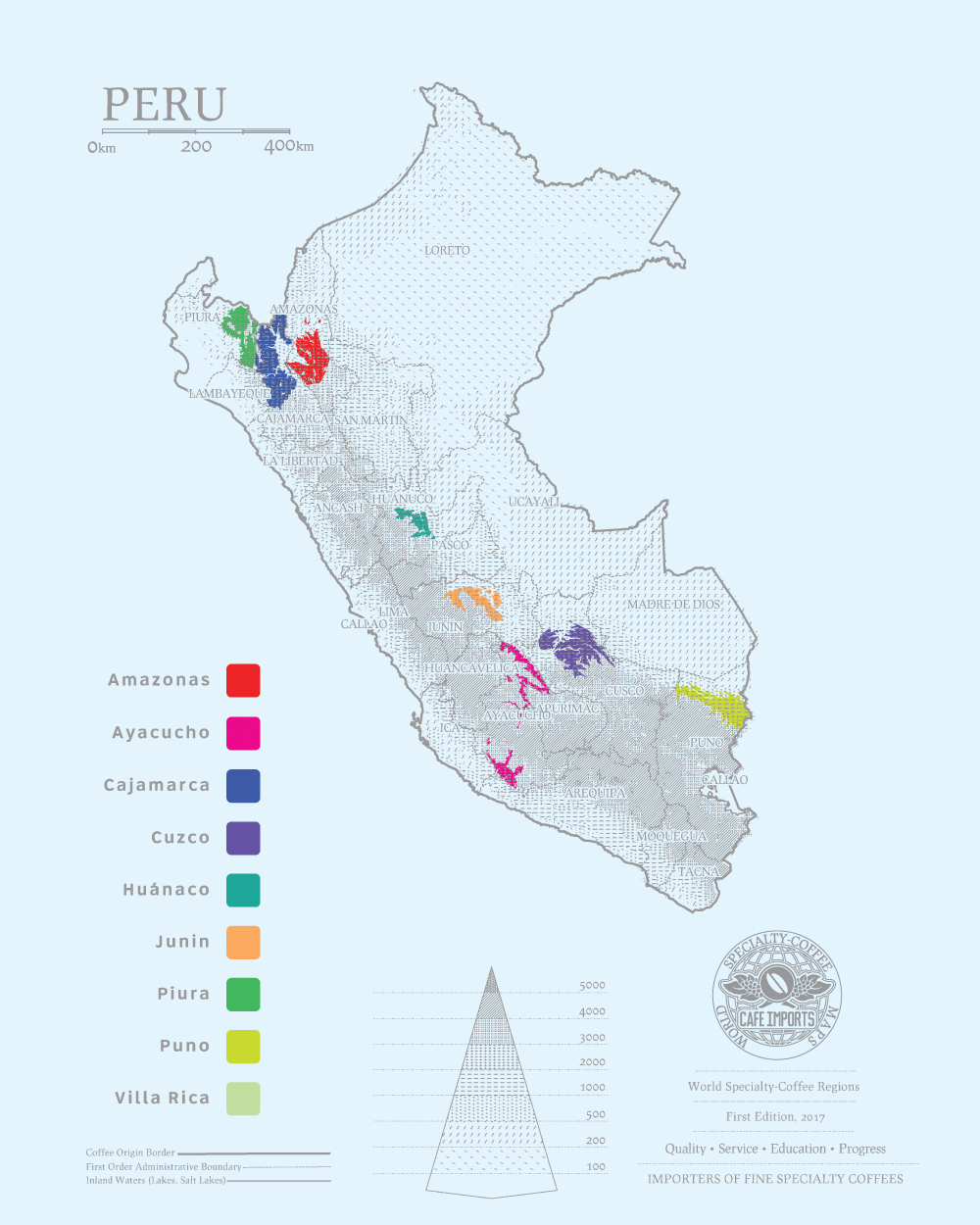
Peru's coffee-producing regions can be divided into three parts: north, center, and south. The cultivation altitude in these regions is mostly between 1,000 and 1,800 meters. Among the better-known ones are the Cajamarca region in the north, the Junin region in the center, and the Cusco region in the south. Coffee produced in these areas frequently appears on Peru's Cup of Excellence COE lists.
In the 2023 Peru COE competition, Pedregal Estate won fourth place with a washed Geisha, scoring 90.15 points. The estate is currently managed by owner Abel Raymundo Arotaype Huayllas together with his son. Pedregal Estate is located in the mountains of southern Cusco producing region. Although remote, it has excellent resource conditions.
The estate only began growing coffee in 2005, initially cultivating Typica, Bourbon, and Catimor, and later shifting focus to the Geisha variety. The estate is located at a high altitude of 2,240 meters. High altitude can slow the ripening of coffee cherries, thereby developing richer layers of flavor. The local area has a tropical climate, relatively high humidity, and soil rich in minerals. All coffee trees are grown under shade, and many fruit trees are also distributed nearby, providing the soil with sufficient organic compost, ultimately creating high-quality coffee.
In southern Peru's Cusco producing region, there is a historic city that was once the capital of the ancient Inca Empire. The terrain of this area is dominated by mountains, plateaus, rivers, and canyons. It is home to the 6,374-meter-high Ausangate mountain. The Urubamba River, known as the "Sacred River," runs through the entire area, making water resources very abundant. The climate here varies with the terrain: the mountains are cool, while the valleys are hot. This environment has nurtured the local thriving coffee industry.
Peru's grading method is usually as follows: high-grown beans are graded according to cultivation altitude, while mid- and low-altitude beans are graded by green bean size. Producing regions also use "defect count" as a supplementary grading basis, while buyers often supplement it with their own customized "cupping quality." Generally speaking, the higher the altitude at which coffee trees grow, the harder the coffee beans are. The main grades include: Strictly High Bean (SHB) extremely hard bean, at altitudes above 1,350 meters; and High Bean (HB) hard bean, at altitudes between 1,200 and 1,350 meters. When selecting Peruvian coffee, Front Street also refers to these grading standards to judge the quality direction of the beans.
To learn more about coffee origin information, please scan the QR code to follow: Coffee Review
Long-press the QR code to follow:
The above content is compiled by CoffeeHunters, a coffee news website.


