







Search Results for: ranges

A Complete Guide to the Golden Cup Standard for Pour-Over Coffee: The Golden Ranges for Extraction Yield and Strength, Plus Practical References
You often hear the "Golden Cup Standard" mentioned in coffee circles—what exactly does it mean? Simply put, it's an extraction reference range derived by Dr. Lockhart in the last century through extensive sampling surveys—when coffee's extraction yield and concentration fall within a specific range, most people find it tastes good. After subsequent research revisions, the optimal extraction yield was ultimately determined to be 18%~22%, and concentration 1.15%~1.35%. However, Front Street would like to remind everyone that the Golden Cup Standard is only a reference benchmark for beginners, not the sole criterion for whether coffee tastes good. This article will break down in detail the origins of the Golden Cup Standard, the meaning of extraction yield and concentration, and why coffee outside this range isn't necessarily bad—helping you understand the extraction logic of pour-over coffee more flexibly. [more…]
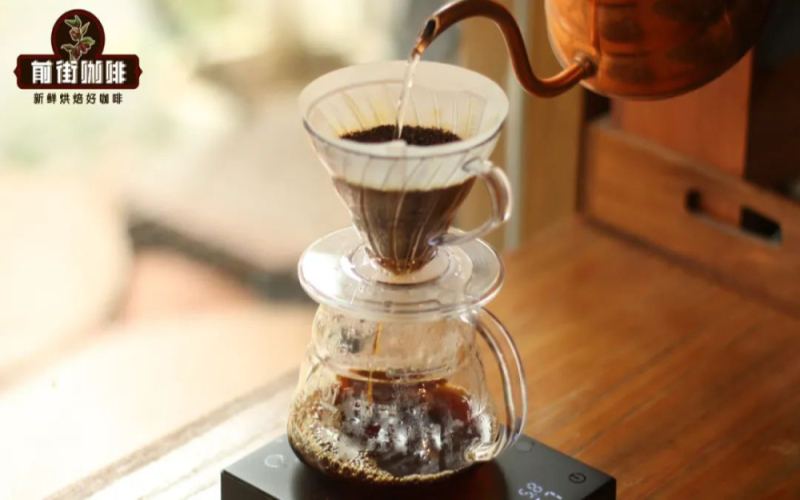
The Origin and Calculation Method of the Golden Cup Extraction Standard: How Extraction Yield and Strength Define a Good Cup of Coffee
The Golden Cup extraction is a widely circulated concept in the coffee world, defining an extraction range that most people find acceptable. This concept originated from a large-scale preference survey in the United States in the 20th century, promoted by the Brewing Committee established by the American Coffee Association in collaboration with Dr. Lockhart of the Massachusetts Institute of Technology. The survey found that about 30% of coffee beans are soluble substances, while the remaining 70% are insoluble fibers. After two rounds of testing with ordinary people and coffee experts, the Golden Cup range was ultimately determined as an extraction yield of 18% to 22% and a concentration of 1.15% to 1.35%. This article will sort out the origins and development of the Golden Cup standard, the calculation methods for extraction yield and concentration, and explain why the Golden Cup range can only serve as a reference rather than an absolute standard, helping you view coffee extraction more rationally. [more…]
How is the extraction yield of immersion brewing calculated? Concentration measurement and practical demonstration under the Golden Cup theory
In the Golden Cup extraction theory, extraction yield and concentration are the two core metrics for assessing the flavor state of coffee. However, coffee that falls within the ideal range is not necessarily delicious, and coffee outside the range is not necessarily undrinkable—the key lies in how to use these two values to help adjust the brewing plan. From the perspective of Front Street, this article first clarifies the basic definitions and ideal ranges of extraction yield and concentration, then explains in detail how to use two sets of concentration measuring tools, and finally uses the Santa Vini anaerobic natural beans as an example to fully demonstrate the entire process from weighing the liquid weight to plugging it into the formula to calculate the extraction yield. [more…]
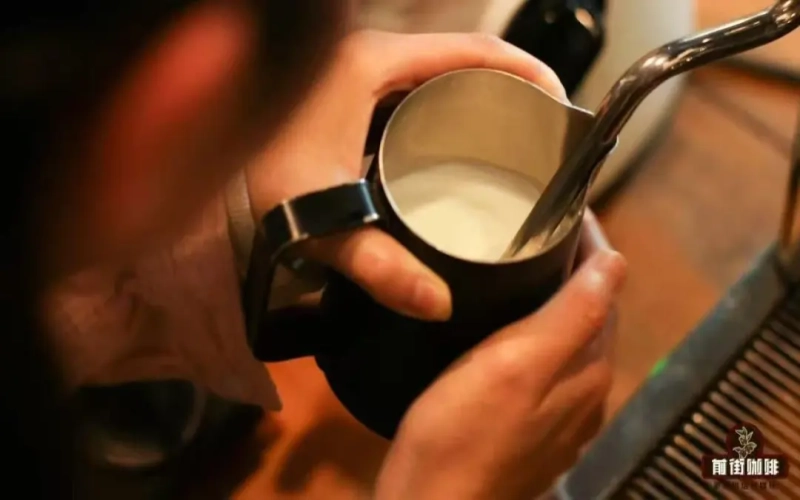
What temperature should milk be heated to for espresso milk coffee? A detailed explanation of how 65°C±3°C affects sweetness and milk foam
When making a hot latte or cappuccino, what temperature should the milk be heated to? What is the reasoning behind the 65°C±3°C figure that baristas often cite? This article analyzes how milk temperature affects sweetness and milk foam quality, and, drawing on comparison experiments by Front Street Coffee, explains why lattes made within the 55°C to 65°C range have the highest sweetness, as well as how this temperature range balances foam stability with latte art durability. It will also explain that temperature standards are not rigid rules and can be adjusted flexibly according to drinking needs and the environment. [more…]

A Complete Guide to the Golden Cup Extraction Theory: From Its Historical Origins to the Practical Application of Concentration and Extraction Yield
The Golden Cup extraction is a concept often mentioned in coffee circles. It uses two indicators—concentration and extraction yield—to judge whether a cup of coffee has been properly extracted. This theory can be traced back to 1952, when it was developed through collaborative research by the American coffee association and Dr. Lockhart of MIT. After multiple revisions, the Golden Cup range currently recognized by the SCAA is: extraction yield 18%-22%, concentration 1.15%-1.35%. But the Golden Cup numbers are only a reference tool, not an absolute formula for brewing delicious coffee. This article will walk you through the origins and development of Golden Cup extraction, the meaning of concentration and extraction yield, how to calculate extraction yield using formulas, and why you should not be limited by the Golden Cup range. [more…]
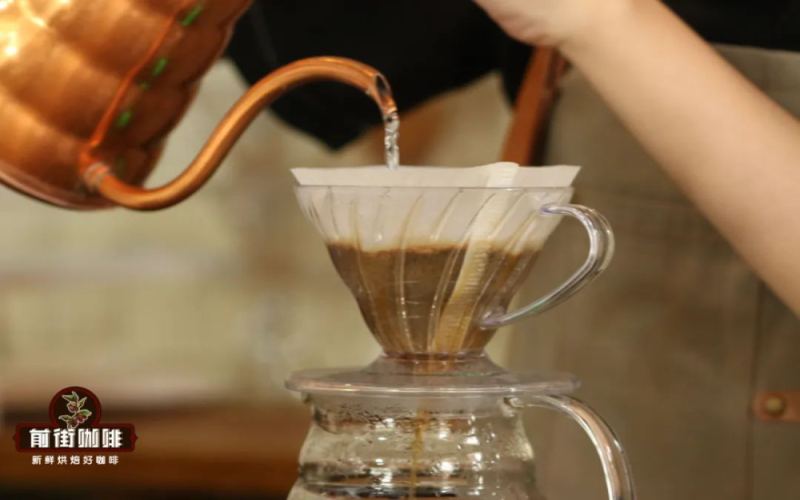
How to Control the Extraction Time of Pour-Over Coffee? Causes of Slow Drip and Practical Solutions
The extraction time of pour-over coffee is not an isolated number; it has a positive correlation with the extraction yield. When the extraction yield falls within the generally accepted ideal range of 18% to 22%, the coffee flavor usually performs better, and when this range is projected onto the time axis, it forms an optimal time range tied to a specific brewing recipe. Front Street Coffee uses the example of a light roast with 15 grams of grounds, a 1:15 ratio, 91°C, an 80% pass rate through a No. 20 sieve, and a three-stage pour, giving a reference range of 1 minute 50 seconds to 2 minutes 10 seconds. However, many enthusiasts find that even with identical parameters, the actual drip time may still be longer. This is often related to factors such as the grinder's particle size distribution and pouring habits. This article will break down these variables one by one and introduce the 4-6 brewing method, which uses time itself as a control lever, to help readers master the rhythm of pour-over more calmly. [more…]

How Are Coffee Extraction Yield and Strength Measured? An Analysis of the Practical Significance of the Golden Cup Extraction Standard
Extraction yield and concentration are the two core quantitative metrics for assessing the state of a cup of coffee, and they also form the foundation of the Golden Cup extraction theory. However, the Golden Cup range is not an absolute standard for good taste—it is more like a helpful reference ruler that helps us determine where a coffee's problems lie. In this article, Front Street will systematically explain the definitions, calculation logic, and practical applications of extraction yield and concentration, clarify why coffee falling within the Golden Cup range is not necessarily tasty and coffee outside the range is not necessarily unpleasant, and explain how to use these two values to find reasonable directions for brewing adjustments. [more…]

Types of Coffee Grinders | Is There a Big Difference Between Electric and Manual Coffee Grinders? Should Beginners Buy a Manual or Electric Grinder?
Friends who have requirements for coffee flavor will definitely choose freshly ground coffee. If you want to brew it yourself, a grinder is essential. Open an online shopping platform and search for "coffee grinder," and you can see a price range from 22 yuan to 71,271 yuan, a price difference of 3,239.6 times. Although in recent days [more…]

Pour-Over Coffee Grounds-to-Water Ratio and the SCA Golden Cup Theory: Extraction Yield, Concentration Standards, and Common Misunderstandings
Brewing a good cup of coffee, the coffee-to-water ratio and extraction yield are core parameters that cannot be avoided. The SCA Golden Cup extraction theory gives an ideal range of 18%-22% extraction yield and 1.2%-1.45% concentration, but many enthusiasts easily misunderstand it as "as long as you copy the Golden Cup coffee-to-water ratio, you will definitely brew a good cup of coffee." This article starts with a simple calculation of the coffee-to-water ratio, guides you to understand the meaning of the Golden Cup extraction range, clarifies the boundary between over-extraction and under-extraction, and explains the true value of learning the Golden Cup theory—not rigidly sticking to a certain ratio, but using it to adjust brewing variables and more flexibly approach the flavor you want. Front Street Coffee also shares related products and brewing ideas in the article for coffee enthusiasts' reference. [more…]
How do you adjust the grind size for espresso? A complete approach from finding the range to setting the scale
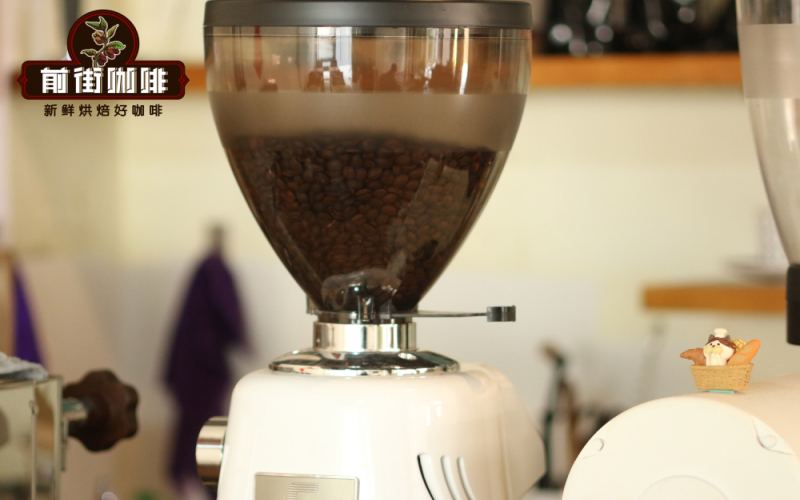
Espresso grinding is much finer than pour-over, and the adjustment window is extremely narrow—often just a fraction of a notch makes the difference, and the flow rate and flavor head toward two extremes. This article starts with how to determine the grinding range: first use the feel of the grounds to judge whether they are close to flour-like fineness, then apply the common formula of a 1:2 coffee-to-water ratio and 20–30 seconds to dial in, and decide whether to grind coarser or finer based on whether the flow is fast or slow. The article further explains that the formula is only a quick positioning tool, and ultimately you need to fine-tune based on flavor cues such as burnt-bitter notes, the color of the crema, and the length of the finish—even widening the ratio to between 1:1.5 and 1:2.5—to find the grind setting that truly suits that particular bean. [more…]
How to Choose an Entry-Level Coffee Grinder? A Guide to Recommended Well-Known Manual Grinder Brands
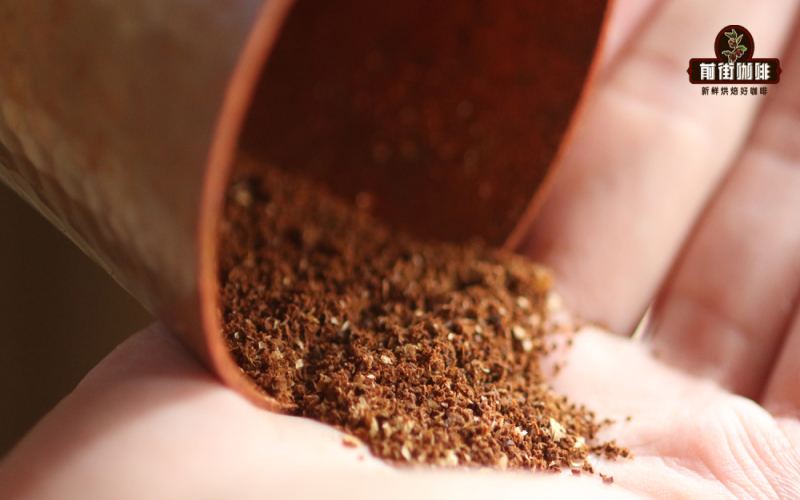
Once coffee grounds are ground and exposed to air, oxidation quietly begins, and flavor and aroma gradually dissipate. Therefore, the ideal situation is to grind coffee beans just before brewing to ensure the best flavor. The grinder may seem unassuming in coffee preparation, but it plays an extremely critical role and is one of the core factors determining the final flavor of coffee. Opening an online shopping platform and searching for "grinder," prices range from 22 yuan to 71,271 yuan, a difference of up to 3,239.6 times. Although this seems insignificant compared to the "hundred million" level figures frequently encountered recently, it is already outrageous in terms of product price differences. For this reason, Front Street Coffee plans to release this grinder purchasing guide for everyone's reference. [more…]

Global Coffee-Growing Regions Illustrated Guide: A Full Analysis of the Coffee Belt's Latitudinal Range and Variety Types
Coffee trees cannot be grown just anywhere—they have rather demanding climate requirements. Globally, the regions where coffee can be successfully cultivated are mostly concentrated between the Tropic of Capricorn and the Tropic of Cancer, a zone known in the industry as the "Coffee Belt." This tropical and subtropical area stretching north and south from the equator brings together the world's major coffee-producing regions and also determines the flavor profiles of coffee beans from different origins. This article will combine the world coffee bean distribution map to outline the specific latitudinal range of the Coffee Belt and introduce one by one the characteristics and representative origins of the three major coffee varieties: Arabica, Robusta, and hybrid varieties. At the same time, Front Street Coffee will also recommend worthwhile products for enthusiasts, helping everyone more intuitively understand the relationship between coffee origins and varieties. [more…]
Coffee-to-Water Ratio | How to Calculate the Pour-Over Coffee-to-Water Ratio, Cold Brew Pour-Over Coffee-to-Water Ratio
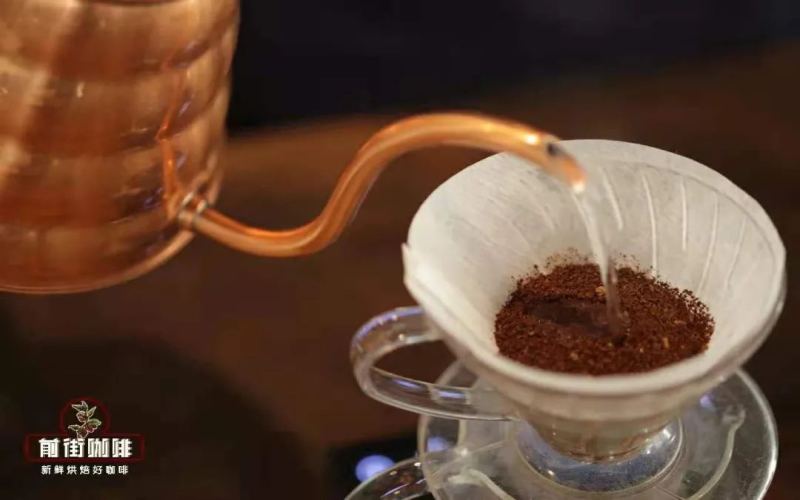
Without adding sugar or milk, how to hand-brew a delicious and distinctive cup of coffee is a difficult challenge for many enthusiasts just starting out in coffee. Pour too much water and the coffee will be weak; pour too little and it will be very strong and harsh on the throat. Therefore, you must pay attention to the coffee-to-water ratio. So exactly how much water should be used to brew a cup of coffee? The coffee-to-water ratio is probably what every [more…]
How to Precisely Control Espresso Grind Size? A Complete Analysis of Particle Size Range and Adjustment Methods
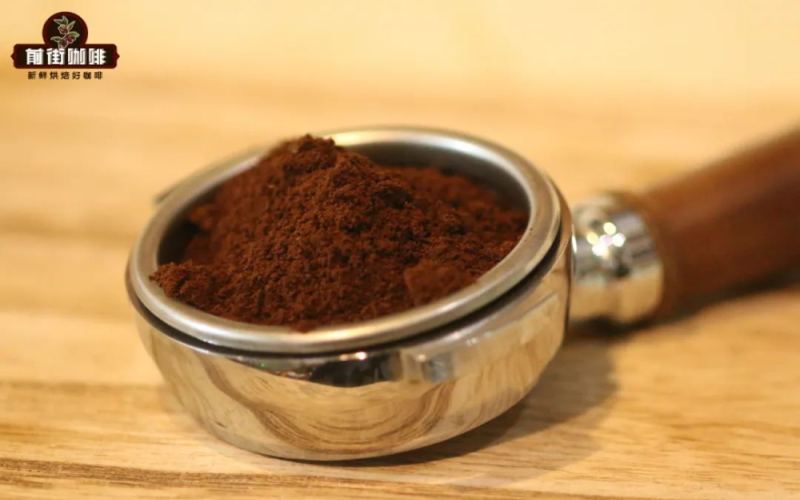
Grind size selection is a key factor determining coffee extraction quality. Because espresso uses high-temperature, high-pressure, short-time extraction, its requirements for particle fineness and uniformity are far higher than those of other brewing methods. This article will sort out the extraction principles of espresso from the beginning, explain why the grind particle size needs to be controlled within the 150–300 micron range, and detail how to calibrate the grind setting through flow-rate observation and taste judgment. It also provides specific daily grind adjustment steps, including debugging methods, coffee-to-liquid ratio references, and adjustment strategies for common problems such as bitter burnt notes, thin crema, and a short finish, helping coffee enthusiasts and professionals quickly find suitable grind parameters. [more…]
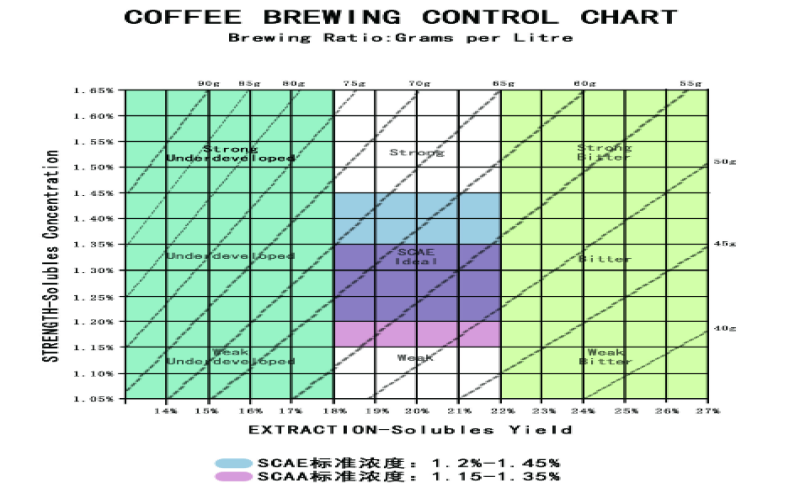
Gold Cup Extraction Standard Explained: Concentration and Extraction Yield Calculation Methods and SCAA Standard Ranges
In coffee brewing, how to balance flavor and avoid under-extraction or over-extraction is a concern for every coffee enthusiast. The Golden Cup standard provides a widely recognized reference framework, covering the ideal ranges for extraction yield and concentration. This article will systematically review the origins of the Golden Cup standard and the specific values set by coffee associations in various countries, explain in detail the formulas for calculating concentration and extraction yield, and, using the example of Front Street Coffee's Ethiopia Florque 4.0 pour-over, demonstrate how to measure and calculate extraction yield with an ExtractMoJo refractometer, helping you find the flavor balance point that suits you in your daily brewing. [more…]
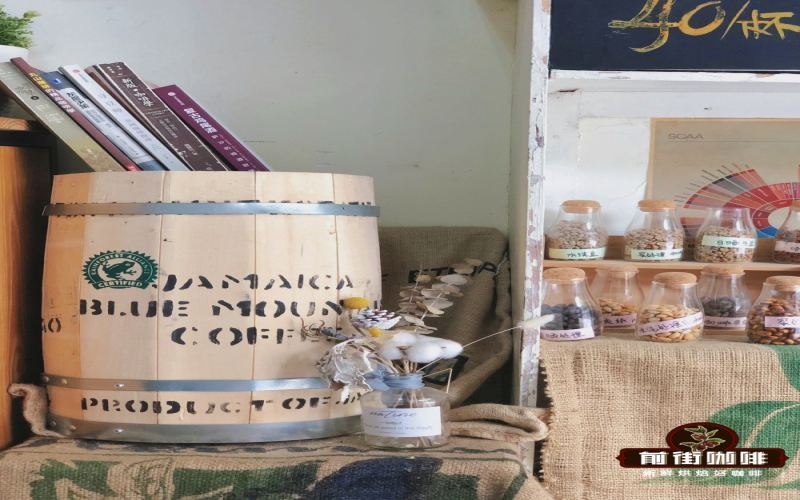
Jamaica Blue Mountain No. 1 Coffee Bean Brand Recommendation: A Full Analysis of Flavor Characteristics, Origin Story, and Brewing Parameters
Blue Mountain coffee is a classic representative of top-tier coffee. With its balanced flavor and high price, it has become an obsession for many coffee lovers. But on the market, products bearing the "Blue Mountain" name vary greatly in quality. Where exactly does genuine Jamaica Blue Mountain No. 1 come from, how is it graded, and what are its flavor characteristics? This article starts from the Clifton Farm Blue Mountain No. 1 selected by Front Street Coffee, sorts out the cultivation history and origin conditions of the Blue Mountain range, explains in detail the grading standards for Blue Mountain coffee, and includes Front Street's brewing parameters and flavor performance, helping readers gain a comprehensive understanding of this classic coffee. [more…]
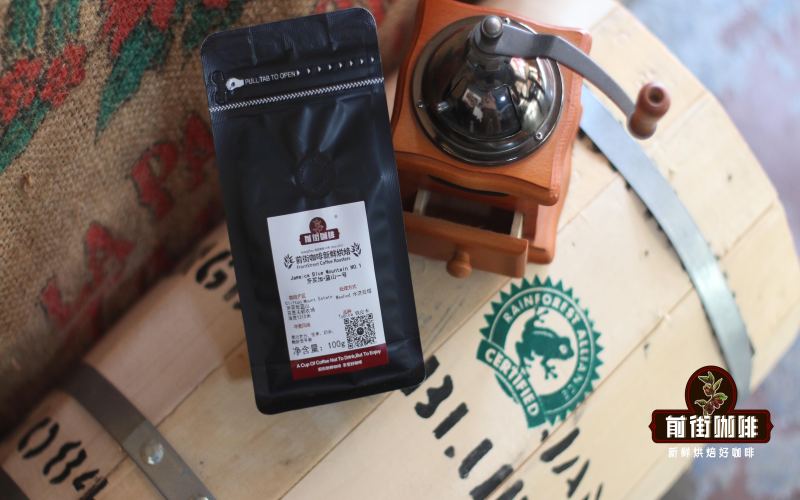
How to Identify Authentic Jamaican Blue Mountain Coffee Beans? A Complete Analysis from Origin Grading to Flavor Characteristics
Blue Mountain coffee has long been hailed as the "King of Coffee," yet market prices range wildly from affordable to exorbitant, leaving consumers bewildered by the dazzling array of products and often unable to tell genuine from fake. Although Jamaica's Blue Mountain range produces exceptional coffee, this does not mean every bean from the region can bear the name "Blue Mountain." The Jamaica Coffee Industry Board (CIB) has established strict divisions of coffee-growing regions based on altitude, and only beans grown within a specific elevation range may use the Blue Mountain coffee designation. This article will systematically sort through the grading standards and quality certification system for Jamaican Blue Mountain coffee, explain the flavor profile of authentic Blue Mountain coffee, and recommend relevant product information from Front Street Coffee, helping coffee lovers make wiser choices when purchasing. [more…]
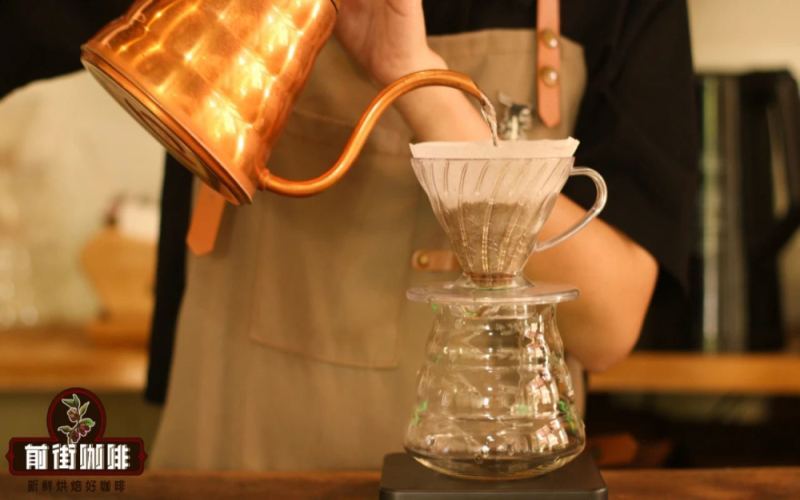
Why Is the Pourover Coffee Grounds-to-Water Ratio Commonly 1:15? A Professional Interpretation from Golden Cup Extraction to Practical Parameters
The coffee-to-water ratio for pour-over is a core question every enthusiast will face. Where exactly does the 1:15 ratio come from? Does it truly conform to the SCA Golden Cup extraction standard? Starting from Front Street's daily brewing practice, this article first clarifies two basic concepts—the coffee-to-water ratio and the water absorption rate of coffee grounds—then, combined with the Golden Cup extraction chart, analyzes the difference between the ideal range and actual output, explaining why 1:15 has become a stable and conservative choice. At the same time, the article also discusses whether tail-end truncation is necessary, and how ordinary enthusiasts should view this operation. [more…]
How to Choose the Coffee-to-Water Ratio for Pour-Over? Front Street Coffee's Practical Logic Behind Recommending 1:15 and Staged Pouring Techniques
The coffee-to-water ratio in pour-over coffee directly determines the flavor direction, and Front Street Coffee baristas are often asked about this during daily store conversations. Regardless of which dripper is used, Front Street recommends 1:15 as the brewing baseline. Although this ratio is not within the optimal range of the SCA Golden Cup theory, it delivers stable flavor and body in actual brewing. This article will explain the meaning of the coffee-to-water ratio, the Golden Cup extraction range, why 1:15 is chosen, and the specific operation of pulse pouring, and will use Colombia Rose Valley coffee beans as an example to provide complete brewing parameters and flavor descriptions, helping coffee lovers find a brewing solution that suits them. [more…]
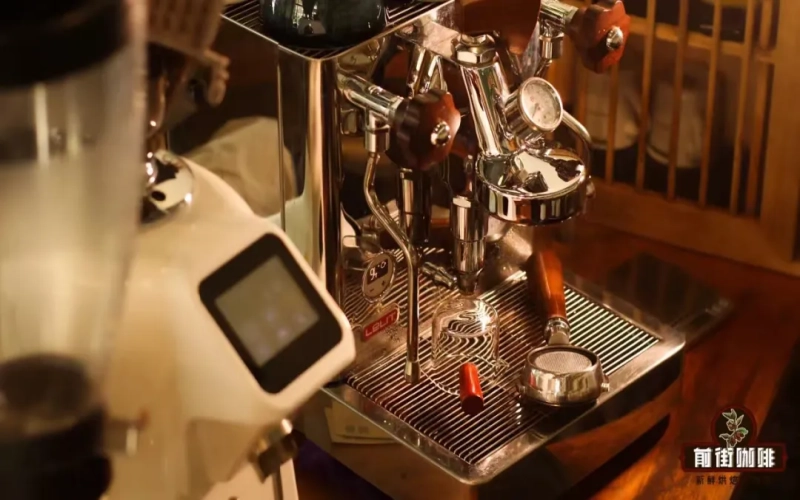
Manual or Electric? How to Choose Between Flat, Conical, and Ghost Tooth Burrs? The Complete Guide to Buying a Coffee Grinder
Faced with the bewildering array of coffee grinders on the market, beginners often don't know where to start. This article systematically sorts out the approach to buying a grinder from three dimensions: power source, price range, and burr structure. Whether you're a pour-over enthusiast just getting started or an advanced player preparing to upgrade your equipment, you'll be able to find a direction that suits you here. The article will also introduce several highly cost-effective electric grinder products recommended by Front Street Coffee, helping you make a wise decision based on your budget and extraction method. [more…]