







How Do Coffee Association Gold Cup Standards Work
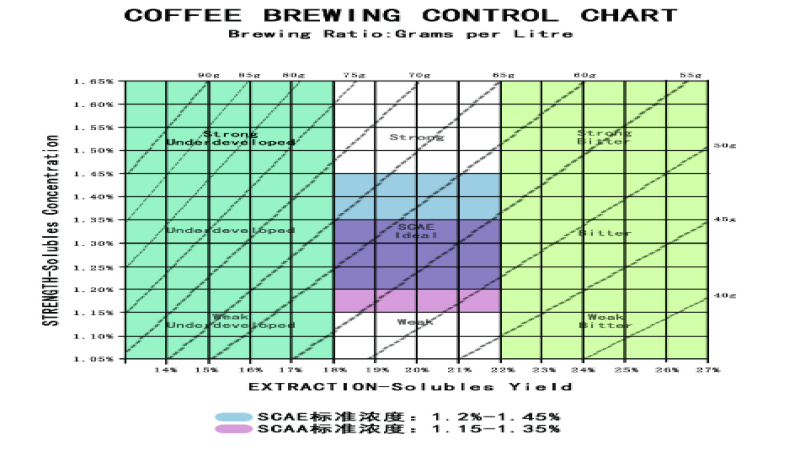
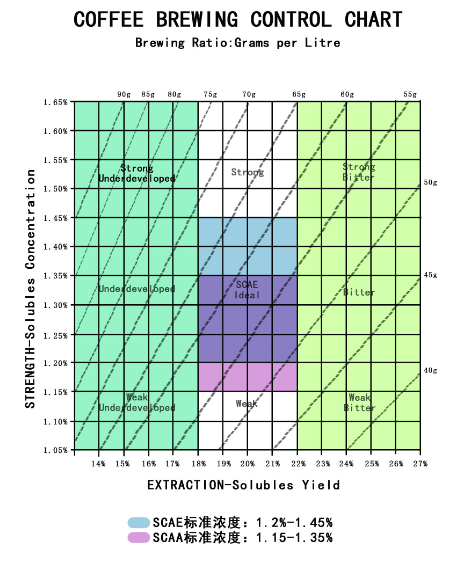
The Gold Cup standard gives brewers a reference range for extraction yield and concentration. The Specialty Coffee Association of America sets extraction yield at 18 to 22 percent and concentration at 1.15 to 1.35 percent. Below 18 percent is under-extraction, above 22 percent is over-extraction, and both shift the flavor away from the ideal.
Other coffee association ranges differ mainly in concentration. The European association lists 1.2 to 1.45 percent, Norway's lists 1.3 to 1.55 percent, and Brazil's lists 2 to 2.4 percent, while all four keep extraction yield at 18 to 22 percent. Concentration measures extracted coffee solids against the whole cup, while extraction yield measures them against the weight of the dry coffee used.
In coffee brewing, how to balance flavor and avoid under-extraction or over-extraction is a concern for every coffee enthusiast. The Golden Cup standard provides a widely recognized reference framework, covering the ideal ranges for extraction yield and concentration. This article will systematically sort out the origins of the Golden Cup standard and the specific values of coffee associations in various countries, explain in detail the calculation formulas for concentration and extraction yield, and, combined with Front Street Coffee's Ethiopian Huakui 4.0 pour-over example, demonstrate how to use an ExtractMoJo concentration meter to measure and calculate extraction yield, helping you find a flavor balance point that suits you in daily brewing.
For professional barista exchanges, please follow Coffee Workshop (WeChat public account: cafe_style)
When actually brewing coffee, in order to obtain an ideal taste, it is necessary both to retain the positive flavors of the beans themselves and to avoid unpleasant off-flavors. When seeking a balance between the two, there are some ratio standards generally accepted by the industry, commonly known as the Gold Cup guidelines.
The significance of a standard lies in providing a baseline for people new to coffee; it is like a boundary or range. But more critical than the standard itself is continuously experimenting within this framework and constantly exploring, ultimately finding a Golden Cup standard that suits both yourself and the consumers you serve.
Specialty Coffee Association of America (SCAA): extraction yield [18%-22%], concentration [1.15%-1.35%] Specialty Coffee Association of Europe (SCAE): extraction yield [18%-22%], concentration [1.2%-1.45%] Norwegian Coffee Association (NCA): extraction yield [18%-22%], concentration [1.3%-1.55%] Brazilian Specialty Coffee Association (ABIC): extraction yield [18%-22%], concentration [2%-2.4%]
[Concentration] refers to the proportion of extracted coffee substances in a cup of coffee relative to the entire cup of coffee liquid. [Extraction yield] refers to the proportion of extracted coffee substances relative to the weight of the coffee beans used.
An extraction yield below 18% means under-extraction, while above 22% is over-extraction.
FrontStreet Coffee sets its brewing parameters precisely according to this range. Before any new bean is listed, it undergoes repeated adjustments in roasting, cupping, pour-over, and other stages, among which the adjustment basis for the pour-over part is TDS concentration. Of course, if you are only drinking it at home daily, there is no need to specially purchase instruments; you can judge strength by taste.
The Origin of Golden Cup Extraction
Concentration and extraction yield are two technical terms, and many baristas still confuse them, unable to tell which is which. In fact, the two are like a pair of brothers, each independent yet inseparable, which makes them much easier to understand.
After the end of World War II, the National Coffee Association hired Dr. Ernest Eral Lockhart (1912-2006), a chemistry PhD from MIT, in 1952 to establish the Coffee Brewing Institute (1952-1964), responsible for scientific research, promotion, and publication on filter coffee, and to assist Central and South American coffee-producing countries in selling coffee to the United States.
The team led by Dr. Lockhart analyzed the structure and components of coffee beans in detail and found that the water-soluble flavor substances that can be extracted from roasted coffee beans account for only 28%-30% of the weight of roasted beans, while the remaining 70% is insoluble fiber; extractable substances account for only about 30% of the weight of roasted beans. Dr. Lockhart was also the world's first scientist to transform abstract coffee flavor into quantitative data.
From 1952 to 1960, the National Coffee Association specifically established a Brewing Committee to assist Dr. Lockhart in randomly sampling the American public and summarizing trends in Americans' preference for coffee strength and scientific data.
Dr. Lockhart used an electric drip coffee machine to brew medium-roast coffee from the same origin, inviting the public to taste it at different extraction yields and concentrations and fill out questionnaires on what they considered the best-tasting and worst-tasting. Researchers then summarized Americans' preferred coffee extraction yield and strength from nearly ten thousand surveys.
The preliminary research results showed that the extraction yield range preferred by American consumers was 17.5%-21.2%, and the concentration range was 1.04%-1.39%. This was the original "Golden Cup standard."
The test subjects believed that when the extraction yield was between 17.5% and 21.2%, the presentation of sour, sweet, bitter, and salty tastes, as well as mouthfeel and aroma, was the most balanced and pleasant; below 17.5% was under-extraction, and above 21.2% was over-extraction. If the coffee concentration was below 1.04%, it felt too weak and flat; if above 1.39%, it felt too strong and unpleasant to drink.
The CBI led by Dr. Lockhart was upgraded in 1964 to the Coffee Brewing Center (CBC, 1964-1975) to strengthen various research projects and promotion work. For prudence, it also collaborated with the U.S. military's well-known Midwest research center to jointly review the initial data.
After repeated debate and expert cupping, the initial extraction yield range was raised to 18%-22%, and the concentration range was adjusted to 1.15%-1.35%. The Specialty Coffee Association of America (SCAA) adopted this revised version and has used it to this day. The current Specialty Coffee Association of America (SCAA) and the Specialty Coffee Association of Europe (SCAE) have merged into the Specialty Coffee Association (SCA).
How to Calculate Concentration and Extraction Yield
Concentration (%): weight of extracted coffee powder substances (g) ÷ coffee liquid volume (ml)
Concentration represents the intensity of the "amount" of sour, sweet, bitter, and salty flavors in coffee. When the concentration of filter coffee is below 1.15% (11500 ppm), the flavor is very watery; when above 1.55% (15500 ppm), most people find the taste too heavy and difficult to drink.
Extraction yield (%): weight of extracted coffee powder substances (g) ÷ coffee powder weight (g)
Extraction yield represents the quality of the "quality" of coffee's sour, sweet, bitter, and salty flavors. Extraction above 22% easily brings bitterness and a biting throat sensation; below 18% easily produces dull sharp sourness and a green, astringent sensation (commonly known as grassy flavor).
Explanation: the weight of extracted coffee powder substances (g) is the weight of flavor substances extracted from the coffee powder, for example:
15 g coffee powder
Coffee-to-water ratio 1:16
The brewed coffee liquid is 216 ml
ExtractMoJo (VST) concentration 1.31%
Concentration 1.31% = weight of extracted coffee powder substances ÷ 216 ml
Weight of extracted coffee powder substances = 2.8 g
Extraction yield = weight of extracted coffee powder substances ÷ coffee powder amount
Extraction yield = 2.8 g ÷ 15 g = 18.6%
This is the formula for calculating extraction yield based on milliliters of coffee liquid; there is also another formula calculated based on grams of coffee liquid, which is relatively simpler to calculate. The numerical error between the two methods is not large and they are very close. Today we will first discuss this formula (don't hit me). We can exchange views on this.
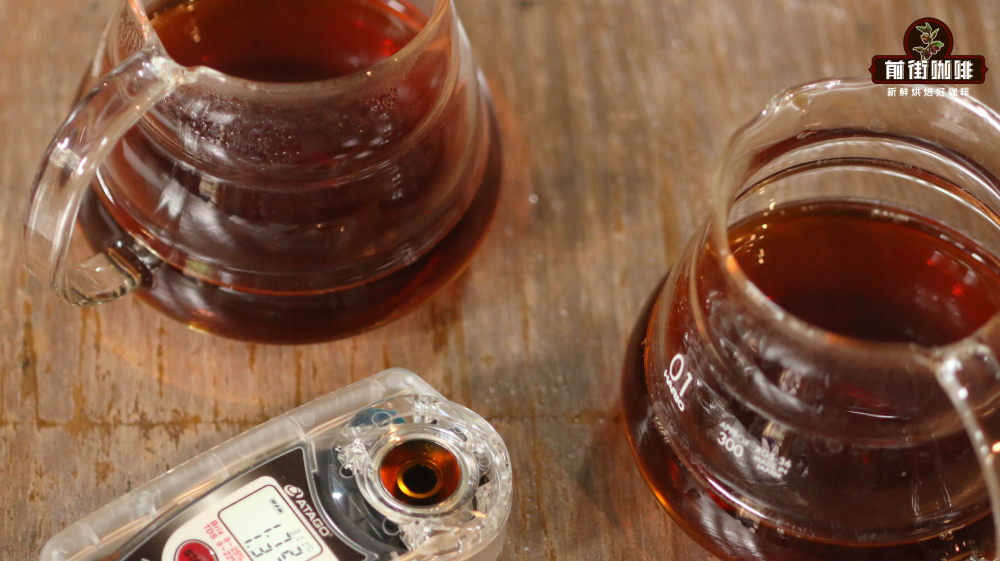
ExtractMoJo Golden Cup Analyzer
The magical extraction analyzer (ExtractMoJo) was invented in 2008 by Vince Fedele, president of the U.S. company VST. Simply drop 2-3 ml of cooled coffee liquid onto the optical instrument, and the coffee concentration value can be read accurately. It is very convenient. There is no need, as in the past, to use an oven to dry the coffee liquid or coffee grounds, eliminating the cumbersome calculation of coffee concentration.
(ExtractMoJo, VST concentration analyzer)
If there is no VST as an auxiliary measuring device, calculating extraction yield will be relatively more cumbersome. Initially, Dr. Lockhart adopted the simplest crude method, brewing coffee with an American coffee machine, recording the milliliters of black coffee, then pouring it into a metal container, placing it in an oven to completely dry off the water, leaving only solid powder in the container. This was the extracted solid coffee flavor substances (hot-water-soluble substances). Dividing the weight of soluble substances by the weight of the coffee powder used gives the extraction yield.
Concentration Calculation Formula
Weight of extracted coffee powder substances = weight of coffee powder before brewing - weight of coffee powder after brewing and oven-drying or sun-drying
Extraction yield % = (weight of coffee powder before brewing - oven-dried weight of coffee powder after brewing) ÷ weight of coffee powder before brewing
Concentration % = weight of extracted coffee powder substances ÷ milliliters of coffee liquid
Assume:
15 g coffee powder
After drying, coffee grounds are 12.17 g
Coffee-to-water ratio 1:16
The brewed coffee liquid is 216 ml
Extraction yield % = (15-12.17) ÷ 15
=2.83g÷15
=18.8%
Concentration % = weight of extracted coffee powder substances ÷ milliliters of coffee liquid
=2.83g÷216ml
=1.31%
Note: Collect all the wet coffee grounds after brewing, place them in an oven to dry, then take them out and measure with an electronic scale to calculate the soluble substances in the coffee powder. If there is no oven, you can also dry them in direct sunlight, but be careful that the coffee grounds are not blown away by the wind, which would affect accuracy. The coffee grounds after oven-drying or sun-drying should have the same dryness as the coffee powder before brewing, feeling fluffy and not sticky to the touch.
First of all, before brewing a good cup of coffee, there are many determining factors. What we can decide is to use our professional skills to extract all the good flavors that this cup of coffee currently has. For a cup of coffee, green beans determine 60%, the roaster determines 30%, and the barista's brewing determines 10%. A barista's brewing cannot be increased to 20%, but as long as we avoid deducting points and present a complete cup of coffee to the customer, that is enough.
Today we will use FrontStreet Coffee's Ethiopian Huakui 4.0 for a demonstration. We need to prepare the following items: making a cup of pour-over coffee, a coffee concentration tester (ExtractMojo), a titration test tube, and clean water.
Coffee region: Ethiopia, Sidamo, Guji region Processing plant: Buku Processing Plant Altitude: 2250-2350 meters Processing method: sun-dried processing Coffee variety: local heirloom
Brewing plan Dose: 15 g Coffee-to-water ratio: 1:15 Grind size: fine grind (80% passing rate on No. 20 standard sieve) Water temperature: 91°C Dripper: V60
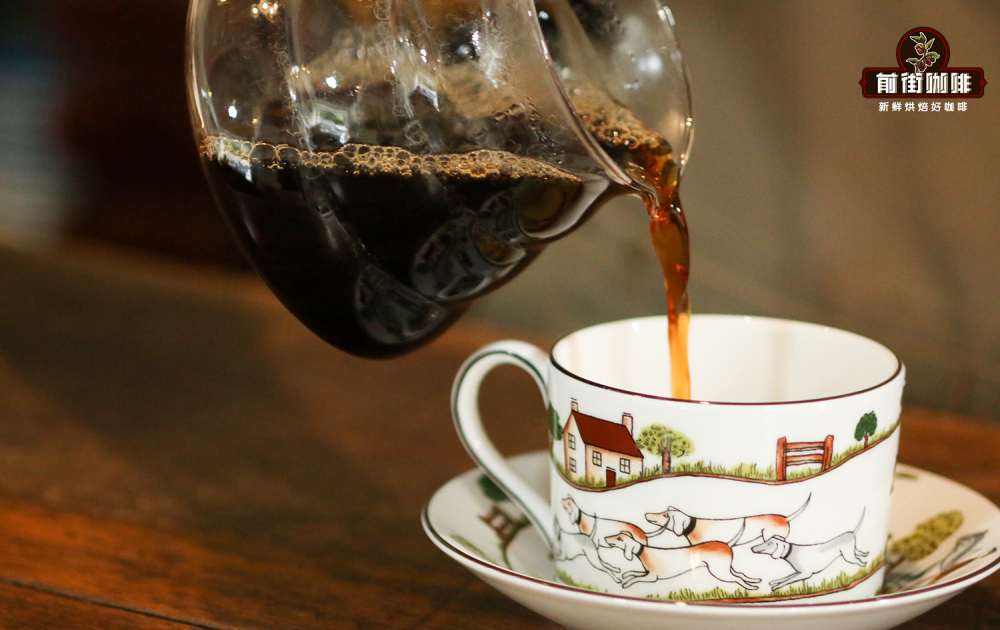
The brewing process is as follows For the first stage, pour 30 g of water for a 30-second bloom. For the second stage, pour 95 g (the electronic scale shows about 125 g), finishing in about 1 minute, with a ten-second interval. For the third stage, pour the remaining 100 g (the electronic scale shows about 225 g), finishing in about 1 minute 40 seconds. Dripping is completed in about 2 minutes; remove the dripper and extraction is complete.
How to Measure Concentration?
First calibrate the concentration tester, using pure water to zero the standard. Then stir the completed pour-over coffee, extract coffee liquid with a titration test tube, place it in the coffee concentration tester, press the measurement key, and try measuring multiple times until the value stabilizes.
How to Calculate Extraction Yield?
From the definition of concentration, we know that concentration equals the ratio of the weight of extracted substances to the coffee liquid, and extraction yield equals the ratio of the weight of extracted substances to the weight of coffee beans.
Then the conversion formula can be obtained: extraction yield equals the product of concentration and coffee liquid weight divided by coffee bean weight.
Here we generally assume the water absorption rate of coffee powder is 1:2, so we roughly obtain the coffee liquid amount as 225-(15×2)=195 g.
We measured the concentration as 1.45%.
Then the extraction yield is 1.45%×195÷15=18.85%.
We can conclude that this is a pour-over coffee with a concentration of 1.45% and an extraction yield of 18.85%.
It can be judged that this is a pour-over coffee with relatively high concentration and moderate extraction yield. We can use this data to adjust the coffee, relying on ratios and other factors to adjust our coffee.
Of course, the Golden Cup is only a reference system. Everyone's taste is different, and a pour-over coffee that meets Golden Cup data does not necessarily mean it tastes good. So trying more and drinking more is still the more recommended approach.
For more specialty coffee beans, please add the private WeChat of FrontStreet Coffee, WeChat ID: kaixinguoguo0925
The above content is compiled by CoffeeHunters, a coffee news website.


