







Where Does the 1:15 Pour-Over Coffee Ratio Come From?
The 1:15 ratio simply means 15 parts water to 1 part coffee grounds, and it persists because it sits inside the SCA Golden Cup range of 18% to 22% extraction yield and 1.15% to 1.45% concentration. It is a stable, conservative starting point rather than a fixed rule. Adjust it to taste.
One detail explains most confusion: grounds absorb about twice their own weight in water. At 1:15, the bed keeps roughly 2 parts water, so a 15-part pour yields about 13 parts of liquid coffee. Extraction yield and concentration on the Golden Cup chart both shift once that retention is accounted for.
The coffee-to-water ratio for pour-over is a core question every enthusiast will face. Where exactly does the 1:15 ratio come from? Does it truly conform to the SCA Golden Cup extraction standard? Starting from Front Street's daily brewing practice, this article first clarifies two foundational concepts—the coffee-to-water ratio and the water absorption rate of coffee grounds—then combines the Golden Cup extraction chart to analyze the difference between the ideal range and actual output, explaining why 1:15 has become a stable and conservative choice. At the same time, the article also discusses whether tail-end flow cutoff is necessary, and how ordinary enthusiasts should view this technique.
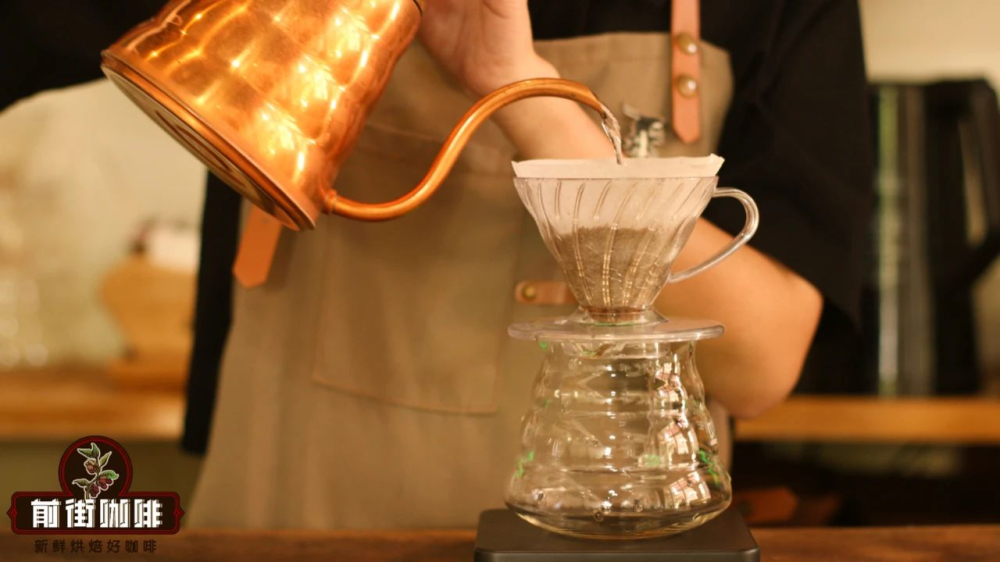
Friends who are new to pour-over have mostly agonized over one question: how much water should be used to brew a serving of coffee grounds? Why did Front Street specifically choose the 1:15 ratio?
When drinking coffee, after all, you always hope the flavor is full enough and pleasant on the palate. Too strong and the body resists it; too weak and you might as well just drink water. So setting a reasonable coffee-to-water ratio is essentially about controlling the concentration of the coffee.
Coffee-to-water ratio
Let's first clarify two foundational concepts.
The coffee-to-water ratio refers to the proportional relationship between coffee grounds and the water used, directly reflecting how much water is used to extract the coffee. For example, 1:15 means 15 parts water to 1 part coffee grounds.
Water absorption rate of coffee grounds: Generally, coffee grounds can absorb about twice their own weight in water (there will be fluctuation, but it roughly revolves around 2x). So the final brewed coffee liquid does not equal the amount of water poured in. Taking 1:15 as an example, the coffee grounds will retain 2 parts water, and the actual coffee liquid obtained is about 13 parts.
With these two points understood, let's now look at the SCA Golden Cup extraction chart. This chart synthesizes the taste preferences of European and American consumers, while also showing the corresponding relationship between coffee concentration and extraction yield. It is a very practical reference model.
SCA Golden Cup Theory SCA Golden Cup extraction range—extraction yield: 18%-22%, concentration: 1.15%-1.45%;
According to Golden Cup theory, coffee falling within this range is considered Golden Cup extraction (recognized as "tasty" by the Golden Cup system, but not necessarily matching everyone's personal preference).
From the Golden Cup extraction chart, the extreme values of the coffee-to-water ratio can be read: the maximum is 1:20.9 (concentration 1.15%, extraction yield 22%), and the minimum is 1:14.3 (concentration 1.45%, extraction yield 18%). Upon closer observation, you'll find that the 1:17 line passes through the widest range of the Golden Cup area, meaning it most easily falls into the Golden Cup range, followed by 1:16 and 1:18. By comparison, 1:15 is actually quite difficult to land in the Golden Cup range.
Why choose 1:15?
Judging purely from the Golden Cup extraction chart, the ideal brewing coffee-to-water ratio should be between 1:16 and 1:18, and 1:15 is not among the recommendations. But after actually experimenting, you'll find that widening the coffee-to-water ratio (say, 1:18), although the extraction yield and concentration can fall within the Golden Cup range, easily brings out unpleasant flavors (concentration is actually easy to ensure, but extraction yield is very hard to control stably). Therefore, in actual output, the ratio is tightened accordingly, and 1:15 was ultimately adopted.
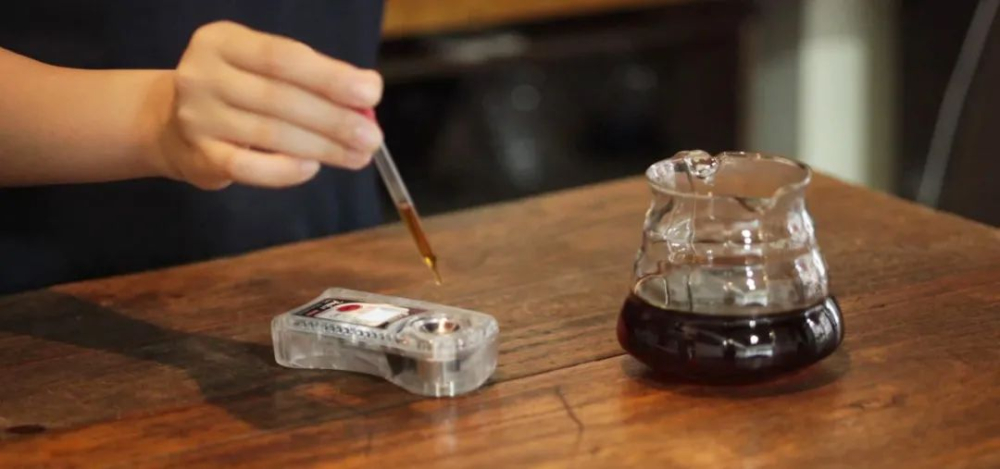
Front Street has conducted brewing tests multiple times with light-roasted coffee beans, finding that 1:15 corresponds to a concentration of about 1.35%-1.42%, with extraction yield falling between 17.79%-18.73%. On the Golden Cup chart it only just meets the standard, but through sensory evaluation, the flavor performance is quite suitable, with no sharp acidity or astringency from under-extraction, and it can adapt to the output needs of the vast majority of coffee beans. Compared with the risk of over-extraction or bitterness easily caused by a large coffee-to-water ratio, 1:15 is a stable choice with a high margin for error.
1.35%-1.42% is a relatively high concentration in Golden Cup extraction. But it should be understood that the concentration range given by the SCA refers to the taste preferences of European and American populations, and cannot represent the degree of concentration acceptable to everyone around the world.
So, is Golden Cup theory wrong?
Not at all. Because besides the coffee-to-water ratio, there are many other variables affecting extraction yield. For example, the coffee-to-water ratio used in cupping is 18.18% (11g coffee, 200g water), which is actually the ratio most easily hitting the SCAA (SCA's predecessor) Golden Cup range. But note, the premise here is immersion extraction.
Pour-over coffee belongs to drip extraction, relying on water flow to agitate the coffee grounds to improve extraction efficiency, so lowering the coffee-to-water ratio is also an adjustment in line with the extraction method.
Does the tail end necessarily mean bitterness?
A couple of days ago, a customer came to the shop to drink pour-over. When brewing entered the tail end, a friend suddenly urged removing the dripper quickly to cut off the flow, saying this could avoid the negative flavors of the tail end. Front Street had previously done comparative experiments: pouring water according to the normal 1:15 coffee-to-water ratio, and tasting the tail-end coffee liquid that was cut off, there was no bitterness or off-flavors. Blindly cutting off the flow instead loses some flavor compounds, causing the coffee to lose its finish.
Generally speaking, if brewing according to the original framework still doesn't taste right, the problem lies either with the coffee beans themselves or with a deviation in extraction parameters. Many high-quality coffee beans from well-known origins are among the top grades locally, and actually are not prone to producing negative flavors, so flow cutoff is unnecessary.
The reason those champion competitors can cut off the flow with ease is that they have accumulated countless brewing experiences with the same bean, enabling them to use flow cutoff effortlessly on the competition stage.
But for ordinary people, flow cutoff is more of a remedial measure. Removing the dripper before the coffee liquid has finished flowing actually increases uncertainty. If it tastes good this time, the same flavor may not be reproducible next time.
The above content is compiled by CoffeeHunters, a coffee news website.


