







Why is Blue Mountain still a benchmark classic coffee?
Authentic Jamaica Blue Mountain No. 1 comes from the Blue Mountain range and is graded by bean size, defects, and altitude. The Typica variety was brought from Martinique and planted in Jamaica from the 1720s, after King Louis XV ordered coffee planted there in 1717. In the cup it is balanced, mild, and low in bitterness, which is why it became a reference point.
Because yields are low and prices are high, the market carries many blends and flavor-labeled packages that may contain no Jamaican bean at all, so buyers should check the estate and grade on the label. The Clifton Mount Estate lot shows the clean, sweet profile associated with this classic coffee, and a medium roast with a steady pour-over ratio keeps that balance intact.
Blue Mountain coffee is a classic representative of top-tier coffee, and with its balanced flavor and high price, it has become an obsession for many coffee lovers. But the market is flooded with products bearing the "Blue Mountain" name that vary widely in quality. Where exactly does authentic Jamaica Blue Mountain No. 1 come from, how is it graded, and what are its flavor characteristics? This article starts with the Clifton Mount Estate Blue Mountain No. 1 selected by FrontStreet Coffee, reviews the cultivation history and origin conditions of the Blue Mountain range, explains in detail the grading standards for Blue Mountain coffee, and includes Front Street's brewing parameters and flavor performance to help readers gain a comprehensive understanding of this classic coffee.
Just catching the aroma of coffee makes many people think of that classic line from 1980s and 1990s Hong Kong dramas—"Give me a cup of Blue Mountain coffee." Blue Mountain coffee is one of the representatives of top-tier coffee. Besides its outstanding flavor, its price is also quite high. Although it is not as prohibitive as Geisha, it is still hard to enjoy a cup every day.
For those who pursue coffee quality, Blue Mountain coffee beans have their own appeal. But the problem is that most consumers do not have a deep understanding of coffee beans. Faced with the dazzling array of "Blue Mountain" products on the market, how can they tell whether what they bought is real or fake?
Precisely because Blue Mountain coffee is expensive and low in yield, some merchants play games with the name, launching so-called "Blue Mountain flavor coffee" or "Blue Mountain blend coffee." Upon closer inspection, you will find that such products may not contain even a single bean truly from Jamaica's Blue Mountains.
As one of the classic top-tier coffees, Blue Mountain coffee naturally occupies a place on FrontStreet Coffee's blackboard of nearly fifty kinds of coffee beans. Friends who have seen the small blackboard in FrontStreet Coffee stores should know that the origin of Blue Mountain coffee beans is Jamaica.
Jamaica's coffee cultivation history can be traced back to the 18th century. In 1717, King Louis XV of France ordered coffee to be planted in Jamaica; by the mid-1720s, Jamaica's governor Sir Nicholas Lawes introduced the Typica variety from Martinique and began promoting its cultivation in the St. Andrew area.
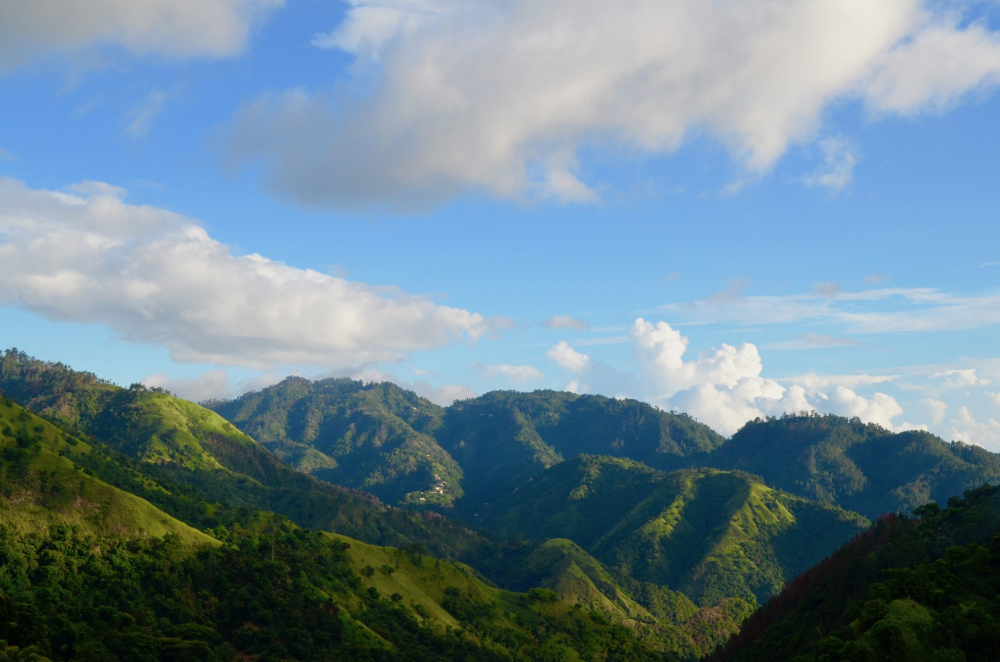
However, not all coffee beans produced in Jamaica can be called Blue Mountain coffee. The authentic Blue Mountain coffee production area, as its name suggests, is located in Jamaica's Blue Mountain range. The Blue Mountain range is in eastern Jamaica, surrounded by the Caribbean Sea. On clear days, sunlight shines directly onto the azure sea, and the peaks reflect a brilliant blue glow, which is why the range is named "Blue Mountain." The highest peak of the Blue Mountain range is 2,256 meters above sea level, the highest peak in the Caribbean region and also a famous tourist destination.
At the same time, the Blue Mountain range is located in the "coffee golden growing belt," with fertile volcanic soil, fresh and pollution-free air, a humid climate, rain and fog year-round, and mild temperatures, providing ideal growing conditions for coffee and creating the refined flavor of Blue Mountain coffee. Blue Mountain coffee possesses the qualities of good coffee: rich and mellow in taste, with acidity, sweetness, and bitterness perfectly balanced, none particularly prominent or noticeably lacking.
The coffee-growing areas of the Blue Mountain range span four administrative regions: St. Mary, St. Andrew, Portland, and St. Thomas. According to different growing altitudes, Jamaican coffee beans produced in the Blue Mountain range are further divided into three grades: Jamaica Blue Mountain coffee, Jamaica High Mountain coffee, and Jamaica Supreme coffee.
Although the Blue Mountain range is 2,000 meters high, Blue Mountain coffee is not grown at such an altitude. On the one hand, areas above 1,700 meters are designated as protected zones where coffee cultivation is not allowed; on the other hand, too high an altitude is prone to frost, which may freeze or even kill coffee trees.
Jamaica Blue Mountain coffee requires a growing altitude of between 1,000 and 1,700 meters; Jamaica High Mountain coffee requires an altitude of between 500 and 1,000 meters; and the lowest grade, Jamaica Supreme coffee, is grown below 500 meters.
Within the Jamaica Blue Mountain coffee grade, it is further divided into No. 1, No. 2, No. 3, and Peaberry. Among them, Blue Mountain No. 1 requires green coffee beans with a screen size of 17/18, with defective beans below 2%, making it the highest grade among Jamaican coffee beans. The Jamaican authorities' regulation of Blue Mountain coffee is so strict that at most only one quarter of Jamaican coffee can meet the requirements for Blue Mountain coffee beans. Jamaica Blue Mountain No. 1 coffee beans have superior quality and an exceptional flavor, so their price naturally rises accordingly.
The Jamaica Blue Mountain No. 1 coffee beans selected by FrontStreet Coffee come from Clifton Mount Estate on Catherine's Peak in the Blue Mountain range. Clifton Mount Estate is managed by The Sharp Family, which has cultivated this land for nearly two centuries. The estate holds Rainforest Alliance certification and performs excellently in terms of growing environment and biodiversity.
After comparing multiple Blue Mountain No. 1 coffee beans, FrontStreet Coffee believes that Clifton Mount Estate's Blue Mountain No. 1 performs outstandingly and can serve as one of the excellent representatives of Blue Mountain coffee.
FrontStreet Coffee Jamaica Blue Mountain No. 1 coffee beans
Region: Jamaica Blue Mountain
Estate: Clifton Mount Estate
Altitude: 1,310 meters
Variety: Typica
Processing method: Washed process
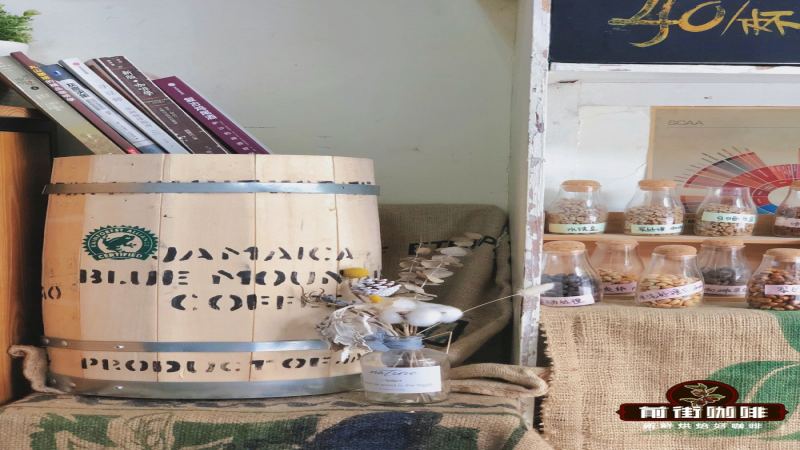
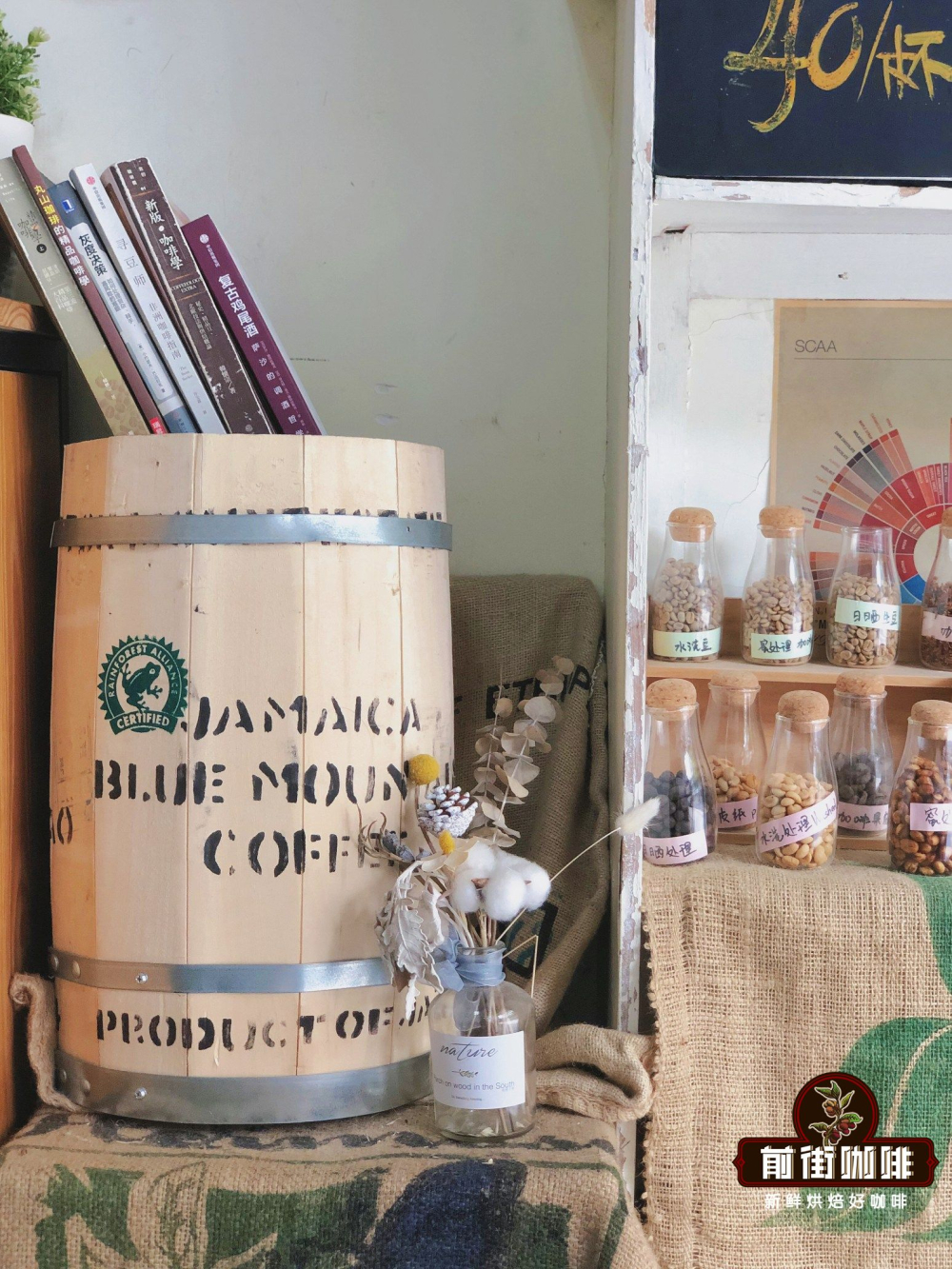
Unlike the burlap sacks commonly used for green coffee beans around the world, Jamaica is now the only producing region that uses wooden barrels to hold green coffee beans. FrontStreet Coffee stores display a certification certificate for Jamaican Blue Mountain coffee beans, and beside the bean shelf are wooden barrels holding green Blue Mountain coffee beans.
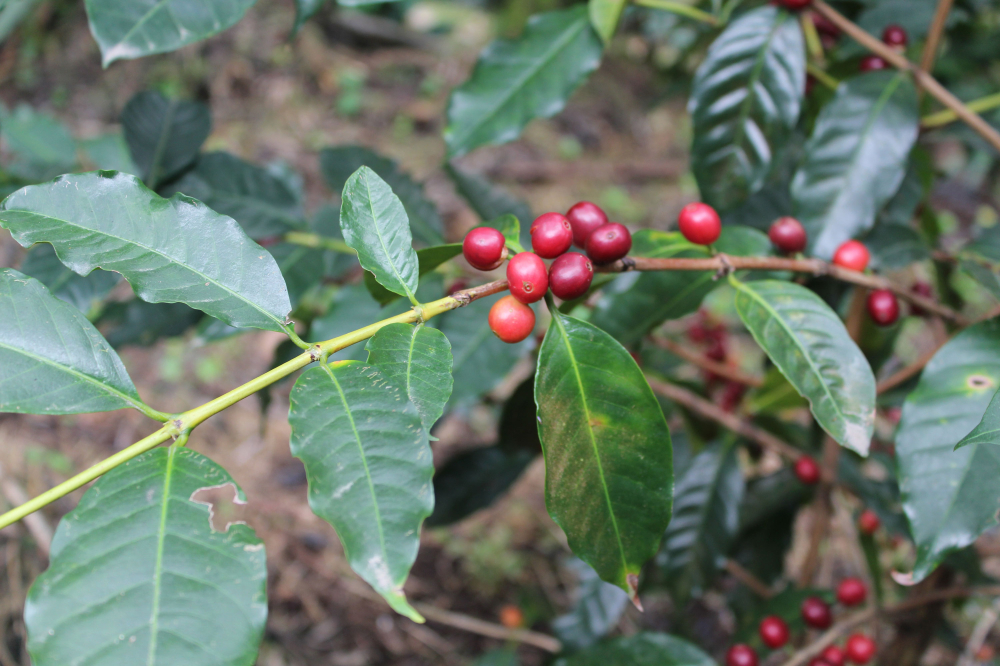
When Front Street's roaster received the green Clifton Blue Mountain No. 1 beans, they found that these green beans were on the greener side, large and uniform in size, and had an elegant aroma. During roasting, in order to highlight the mellow mouthfeel of Blue Mountain coffee, a dark roast was used.
Some friends start to worry when they see dark roast: how should it be brewed to bring out the flavor of Blue Mountain coffee to the fullest? Below, Front Street shares the brewing parameters.
Dripper: KONO dripper
Water temperature: 88 degrees Celsius
Dose: 15 grams
Coffee-to-water ratio: 1:15
Grind level: 75% passing through China standard No. 20 sieve
Unlike medium-light roasted coffee beans, dark roasted beans release flavor compounds more easily during brewing, which means that water that is too hot or grinding that is too fine will bring out burnt bitterness. At the same time, in order to achieve a mellow mouthfeel, Front Street recommends using a dripper with an immersion function, such as the KONO dripper.
Pour in 30 grams of hot water and bloom for 30 seconds, then pour in a thin stream from the center point while slowly circling to 125 grams. When the water level in the dripper drops to the point where the coffee bed is about to be exposed, continue circling and pouring to 225 grams. Total extraction time is about 2 minutes.
The Jamaica Blue Mountain No. 1 coffee brewed by Front Street using the above parameters has rich nut and dark chocolate flavors, extremely balanced acidity, sweetness, and bitterness, and a mellow mouthfeel.
The coffee beans shipped by Front Street are roasted within 5 days, and when they reach your hands they have just gone through a 4-to-7-day resting period. During brewing, you still need to bloom for 30 seconds, the purpose being to let carbon dioxide escape from the coffee beans and make the later stages of extraction more stable. Some friends do not have grinding equipment at home. Front Street offers a grinding service, but once coffee beans are ground into powder, carbon dioxide escapes faster and flavor compounds also dissipate more quickly. Therefore, Front Street recommends buying whole beans and grinding fresh before brewing for better flavor.
For more coffee bean information, please follow Coffee Workshop (WeChat public account cafe_style)
For professional coffee knowledge exchange, please add WeChat ID kaixinguoguo0925
The above content is compiled by CoffeeHunters, a coffee news website.


