








What Does the Coffee Standard Golden Cup Really Tell You?
The SCA Golden Cup theory sets an ideal extraction yield of 18% to 22% and a strength of 1.2% to 1.45%. Those figures describe a target zone, not a guarantee. A coffee-to-water ratio that lands inside the Golden Cup range only makes it easier to stay near that zone; it does not ensure the cup tastes good.
A simple calculation shows the ratios behind the chart: 1900 ml divided by 135 g gives about 14.07, so the first diagonal line is roughly 1:14.07. Results above the range mean over-extraction, results below mean under-extraction. The theory is a tool for adjusting brewing variables, not a fixed ratio to copy.
When brewing a good cup of coffee, the coffee-to-water ratio and extraction yield are core parameters that cannot be avoided. The SCA Golden Cup extraction theory gives an ideal range of 18%–22% extraction yield and 1.2%–1.45% strength, but many enthusiasts easily misunderstand it as "as long as you copy the Golden Cup coffee-to-water ratio, you will definitely brew a good cup of coffee." This article starts with a simple calculation of the coffee-to-water ratio, takes you through the meaning of the Golden Cup extraction range, clarifies the boundary between over-extraction and under-extraction, and explains the true value of learning the Golden Cup theory—not rigidly sticking to a certain ratio, but using it to adjust brewing variables and more flexibly approach the flavor you want. Front Street Coffee also shares related products and brewing ideas in the article for coffee enthusiasts to reference.



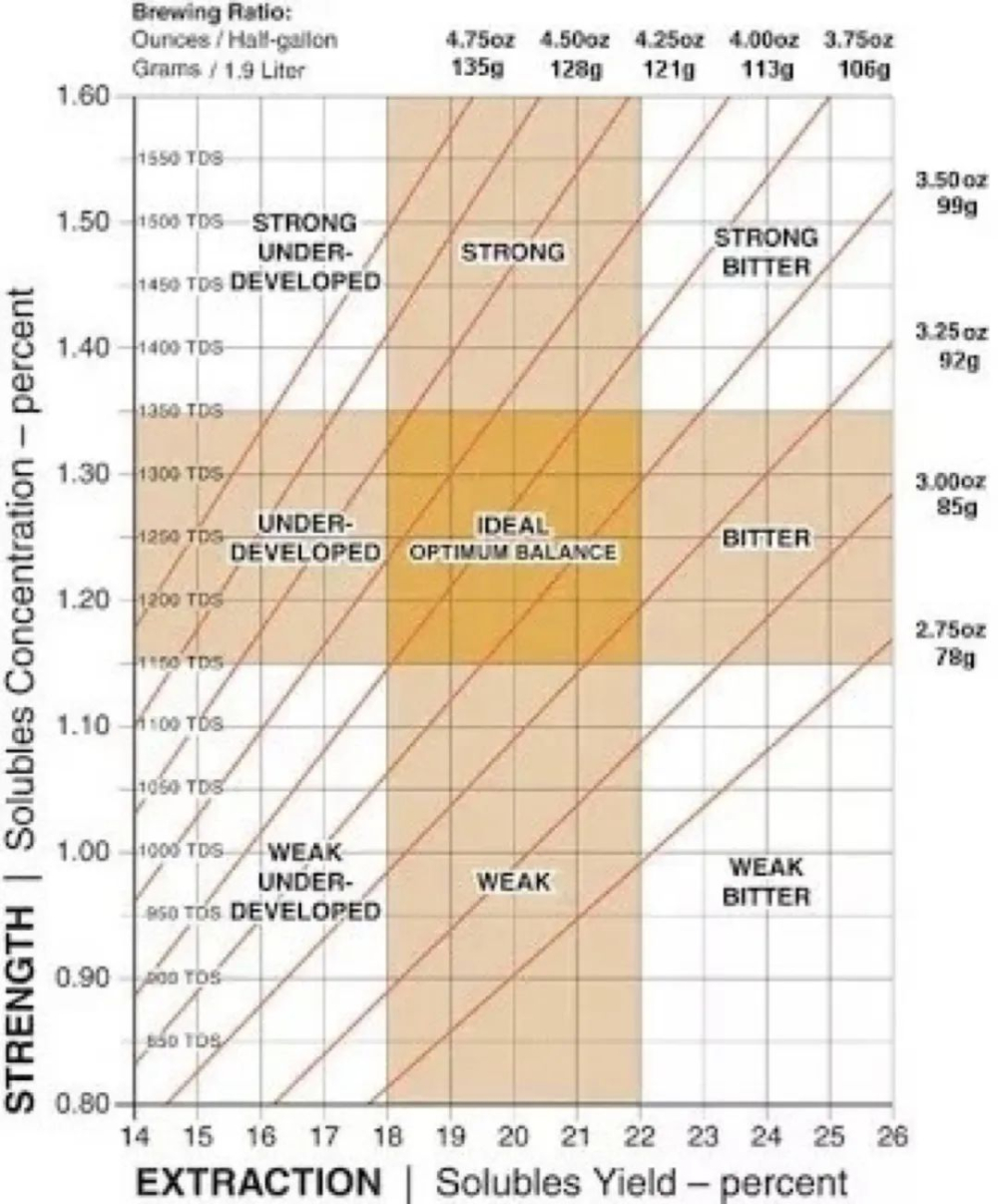
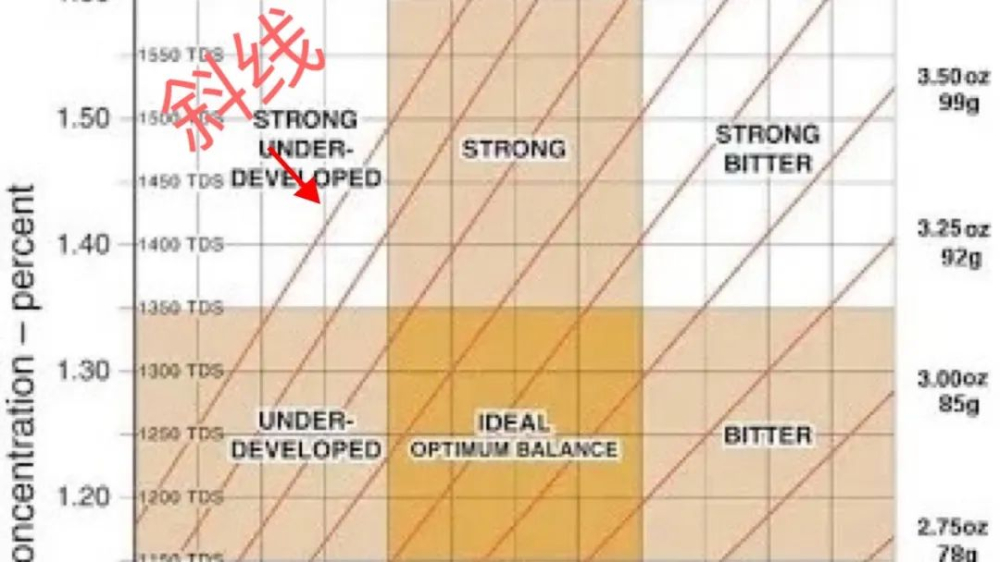
Let's do a simple calculation: 1900ml divided by 135g gives about 14.07, which means the coffee-to-water ratio corresponding to the first diagonal line is 1:14.07. Calculating in the same way, by the third diagonal line, the value falls exactly within the dark area in the chart.
This dark area represents the ideal extraction state a cup of coffee may achieve, commonly known as the Golden Cup extraction range: extraction yield between 18% and 22%, and strength within the range of 1.2% to 1.45%. If the coffee's actual performance exceeds this range, it is over-extraction; conversely, if it fails to enter this area, it is under-extraction.
However, this chart easily leads people to a misunderstanding: it seems that as long as you choose a diagonal coffee-to-water ratio that can enter the Golden Cup extraction range, you will necessarily brew a delicious "Golden Cup coffee."
That is not the case. In the chart, even if the coffee-to-water ratio falls within the Golden Cup extraction range, it does not mean the brewed coffee will definitely taste good. It is more of a reference at the data level, indicating that this coffee-to-water ratio makes it easier to keep the extraction result near the Golden Cup range.
The reason we study the Golden Cup extraction theory is that it helps us understand extraction itself more deeply, then adjust improper brewing factors, and ultimately brew the taste we expect. Therefore, do not misunderstand the concept of Golden Cup extraction and limit yourself to the so-called golden-ratio coffee-to-water ratio.
The above content is compiled by CoffeeHunters, a coffee news website.


