







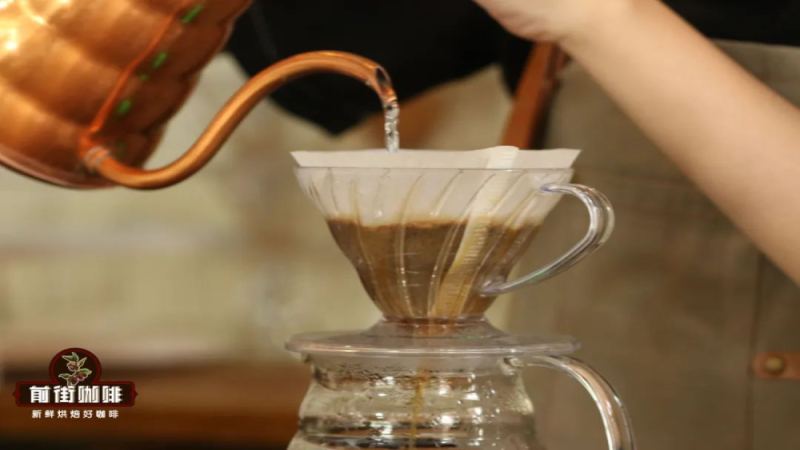
Does Coffee Water Temperature Affect Pour-Over Extraction Time?
Pour-over extraction time is not isolated: it rises and falls with extraction yield. When yield sits in the accepted 18 to 22 percent range, flavor usually performs better. With a light roast 15g dose, 1:15 ratio, 91 degrees Celsius, No. 20 sieve at 80 percent pass rate, and a three-pour method, the reference time is 1 minute 50 seconds to 2 minutes 10 seconds.
Even with identical settings, drip time can still run long, often because of grinder particle size distribution and pouring habits. A single-pour method usually finishes around 1 minute 30 seconds. The 4-6 brewing method uses time itself as a control lever, so coffee water temperature and process stay consistent while the brewer adjusts rhythm rather than chasing a single fixed number.
The extraction time of pour-over coffee is not an isolated number; it has a positive correlation with the extraction yield. When the extraction yield falls within the generally accepted ideal range of 18% to 22%, the coffee flavor usually performs better, and when this range is projected onto the timeline, it forms an optimal time range tied to a specific brewing recipe. Using Front Street's light roast 15g dose, 1:15 ratio, 91°C, No. 20 sieve 80% pass rate, and three-pour method as an example, the reference range is 1 minute 50 seconds to 2 minutes 10 seconds. However, many enthusiasts find that even with identical parameters, the actual drip time may still run long. This is often related to factors such as the grinder's particle size distribution and pouring habits. This article will break down these variables one by one and introduce the 4-6 brewing method, which uses time itself as a control lever, to help readers master the pour-over rhythm more confidently.
The effect of extraction duration on coffee flavor
When all other brewing conditions remain unchanged, extraction duration and extraction yield change in the same direction. A shorter time leads to a lower extraction yield; a longer time raises it. As we all know, there is a generally recognized range of extraction yield that is considered optimal for flavor, which we'll set at 18% to 22% for now. Coffee that falls outside or below this range often tastes unsatisfactory. Mapped onto the time dimension, this naturally corresponds to a range as well, but this range is not a fixed, single value—it must be defined according to the brewing parameters (recipe).
Taking the brewing parameters previously used by Front Street as an example—"light roast: 15g dose, 1:15, 91°C, No. 20 sieve 80% pass rate, three-pour method"—keeping the extraction time between 1 minute 50 seconds and 2 minutes 10 seconds is ideal.
Of course, once the brewing parameters are changed, this optimal time range shifts accordingly. For instance, when switching to a single-pour method, the extraction time is usually kept around 1 minute 30 seconds.
Why extraction time still varies even with identical parameters
Many friends are puzzled: if all the parameters match up, extraction time shouldn't differ that much. The problem lies precisely in deviations in judging grind size and in each person's different pouring habits.
The parameters usually shared include dose, ratio, water temperature, grind size, and pouring method (dripper). Among these, dose, ratio, and water temperature can be precisely controlled, but grind size and pouring method are the two spots most prone to variation.
The most common error in grind size comes from misjudgment caused by poor grind uniformity. Put simply, a high-quality grinder produces coffee grounds with a relatively concentrated particle size distribution and small overall variation in coarseness; a poor-quality grinder produces grounds with a more scattered particle size distribution and large variation in coarseness. Front Street recommends using a No. 20 sieve for calibration. Even at the same 80% pass rate, a poor-quality grinder produces more fines and more coarse particles. This not only causes uneven extraction but also prolongs the extraction time due to excessive fines.
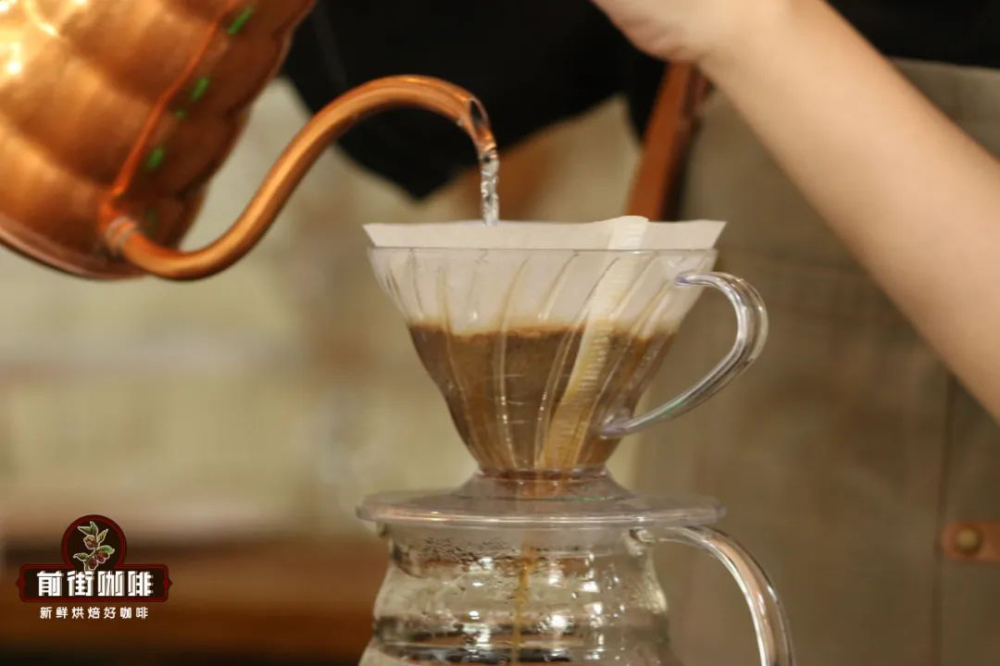
Front Street once had a friend reach out for help. According to his description, he followed Front Street's brewing parameters but could never get the extraction time under 2 minutes 10 seconds. After observing his brewing process, Front Street found that he was used to pouring with a very small stream. This dragged out the entire pouring process, and a small stream makes it hard to raise the water level and is not conducive to drawdown, so the drawdown naturally took longer.
Front Street recommends pouring at a rate of 5ml/s, raising the liquid level to the 1/2 position of the V60's short ribs during the second pour, and finishing the final pour exactly at this height.
Treating extraction time as a controllable parameter
Most brewing recipes treat extraction time as a passive parameter, used to check whether something unexpected occurred in the brewing parameters or operation. However, there are also brewing methods that treat time as a control variable, such as the 4-6 brewing method shared by Mr. Tetsu Kasuya.
The 4-6 method consists of 5 pours in total, with the interval between each pour fixed at 45 seconds (using a 20g dose as an example). The advantage of this is that the brewer doesn't need to judge when to pour next—just follow the steps, and pour when the time comes, so the final extraction time can be well controlled.
The above content is compiled by CoffeeHunters, a coffee news website.


