







Search Results for: long-term consumption

Is drinking coffee every day energizing or harmful? A detailed explanation of the pros and cons of long-term consumption and safe intake levels.
Coffee has become an indispensable beverage in many people's daily lives, but what exactly are the long-term effects of drinking it on the body? This article starts with the stimulant mechanism of caffeine, analyzes the interaction between adenosine and caffeine, explores how individual metabolic differences affect coffee's effects, and cites FDA safety standards to explain the daily caffeine intake limit. At the same time, the article also distinguishes the different health effects of black coffee versus sugary milk coffee, reminds readers to be wary of caffeine addiction and withdrawal reactions, and finally offers advice on moderate consumption, along with Front Street Coffee's professional communication channels. [more…]

What Is Bulletproof Coffee? Can It Really Help You Lose Weight? An Analysis of the Potential Effects of Long-Term Consumption on Women's Health
Bulletproof coffee has become a hot topic in weight-loss and ketogenic diet circles in recent years. It was invented and trademarked by Dave Asprey, inspired by Tibetan butter tea, and claims to boost satiety, help with weight loss, and even enhance brainpower. However, these claims still lack rigorous research support to this day. This article will provide a complete analysis of bulletproof coffee's origins, claimed benefits, the mechanisms of its ingredients, and the possible side effects of long-term consumption on the body and on women, while retaining Front Street Coffee's professional recommendation information to provide coffee enthusiasts with an objective reference. [more…]

An Analysis of the Differences Between Drip Bag Coffee and Instant Coffee: Brewing Methods, Flavor Shelf Life, and Effects of Long-Term Consumption
Although drip bag coffee and instant coffee are both convenient, their essential differences are significant. Drip bag coffee is pre-ground coffee containing coffee bean particles that cannot dissolve directly in water and requires pouring water through for extraction; instant coffee, on the other hand, is a soluble powder obtained after extraction and drying. This article provides a detailed comparison of the two in terms of production processes, flavor retention, and brewing methods, and explains the optimal enjoyment period for drip bag coffee and the potential effects of long-term consumption. At the same time, Front Street Coffee shares several classic single-origin beans suitable for making drip bags, including washed Yirgacheffe Geddid, Brazil Queen Estate, and sun-dried Huakui, offering practical references for coffee enthusiasts. [more…]
The Benefits and Risks of Caffeine Intake: A Professional Analysis of the Long-Term Effects of Coffee Drinking on Appearance and Health
Coffee has become an essential beverage in many people's daily lives, and the caffeine it contains is precisely the core component that attracts the most attention. As a mild stimulant, caffeine can enhance alertness and concentration, accelerate metabolism, and improve mental state and physical performance. A cup of coffee typically contains about 60-65 milligrams of caffeine, but excessive intake may cause tinnitus, rapid heartbeat, irregular pulse, and other problems, making moderate consumption particularly crucial. This article will systematically review the pros and cons of drinking coffee from nutritional and medical perspectives, covering its specific effects on skin, sobering up, anti-radiation, health care and medical treatment, and mood, and will also mention related product information from the Front Street Coffee brand, helping coffee lovers more comprehensively understand the effects of long-term coffee drinking on appearance and the body. [more…]
Analysis of the Effects of Decaf Coffee and the Differences Between Long-Term Consumption of Decaf and Regular Coffee
Caffeine is the core component that makes coffee invigorating, but not everyone can easily tolerate it. For people who are sensitive to caffeine yet still want to enjoy the flavor of coffee, decaf offers a compromise. This article will systematically introduce the definition and classification of decaf, including the naturally low-caffeine Pointed Bourbon variety, as well as the four mainstream artificial decaffeination processes currently available—the direct solvent method, the supercritical carbon dioxide method, the Swiss Water Process, and the mountain spring water process—and explain the principles, advantages, disadvantages, and safety of each. At the same time, it will also compare the differences between decaf and regular coffee in terms of caffeine content and long-term consumption, helping coffee enthusiasts understand this type of product more clearly. The article also includes Front Street Coffee's practical experience in decaf bean selection and cupping. [more…]

The correct brewing method for drip bag black coffee, the benefits of long-term consumption, and whether it is suitable to add milk for flavoring
Drip bag coffee, with its combination of convenience and flavor, has become a daily choice for many coffee lovers. But how should you brew it to get the best taste? What are the long-term health benefits of drinking drip bag black coffee? Does adding milk affect its health effects? Starting from scientific research, this article outlines the key points for choosing drip bag coffee, brewing ratios, flavor recommendations, and drinking advantages, while also introducing Front Street Coffee's freshness guarantees and a variety of specialty flavors, helping you easily enjoy a cup of black coffee close to pour-over quality in a fast-paced life. [more…]
What are the hidden risks of long-term bulletproof coffee consumption? Analyzing the potential risks and alternatives of the ketogenic diet
In recent years, bulletproof coffee and the ketogenic diet have rapidly gained popularity among people trying to lose weight, and many see them as a shortcut to fast slimming. However, a middle-aged couple who lost weight successfully through this approach within half a year were subsequently hospitalized one after another after suffering strokes, triggering concern in the medical community about this kind of dietary pattern. Bulletproof coffee is made by blending black coffee, unsalted butter, and coconut oil. Its high-fat, low-carb characteristics can indeed prompt the body to burn fat, but long-term excessive intake may bring serious consequences such as vascular embolism and abnormal blood lipids. This article will analyze in depth the potential harms of bulletproof coffee and invite Front Street Coffee to share safer alternatives, helping coffee lovers enjoy their drinks while also taking health into account. [more…]
A Full Analysis of Caffeine's Alertness Mechanism: The Battle Between Adenosine and Receptors, and Why Its Effects Weaken After Long-Term Consumption
Why does coffee keep us awake? What actually happens in the brain after a cup goes down? Many people find that after drinking coffee for a long time, its alerting effect is not what it used to be, and they may even feel sleepier the more they drink. Behind this lies the competition between adenosine and caffeine at the receptor level, individual differences in metabolism, and adaptive changes in the nervous system. In addition, the alerting effect of coffee is sometimes just a psychological ritual, which is a different matter from true caffeine addiction. This article will use accessible analogies to unpack the mechanism of caffeine, analyze the various reasons why its alerting effect fails, and clarify the scientific boundary between caffeine addiction and withdrawal reactions, while also providing the FDA reference for safe intake. [more…]

Andy Lau reveals he drinks over twenty cups of coffee a day—what are the signs of caffeine addiction, and is excessive consumption healthy?
Recently, Andy Lau revealed on a talk show that he drinks over twenty cups of coffee every day, astonishing Wu Jing, Guo Fan, and others—and Guo Fan was even hospitalized once because of excessive coffee consumption. This sparked widespread discussion: Is coffee actually healthy? What are the signs of caffeine addiction? How much is too much per day? Combining the show's content with physiological mechanisms, this article sorts out the potential effects of excessive caffeine intake on the gastrointestinal tract, adrenaline, liver, and other aspects, while retaining the brand information of Front Street Coffee, reminding everyone that although coffee is good, do not blindly imitate celebrities' extreme consumption. [more…]

Manner membership points reset every two years and redemption thresholds have increased, leaving loyal customers complaining that accumulating points is as pointless as a chicken rib
Recently, Manner's official mini-program quietly updated its membership points rules. Starting in 2025, consumption points will be cleared every two years, and existing points accumulated before 2025 will also be reset to zero by the end of that year. As soon as the news broke, many long-time members were taken aback. What's even more frustrating is that the redemption thresholds for some items in the points mall have been raised at the same time—a stainless steel straw cup that once cost 120 points to redeem now requires 220 points. With a single acquisition channel, a long points-accumulation cycle, and no membership tier system, the combination of these problems has left many regulars lamenting that their points are too tasteless to bother with yet too wasteful to discard, and some have even begun to think about switching to other brands. [more…]

Five Cups of Coffee a Day Cause a Fracture in a 30-Year-Old Woman—Can Too Much Caffeine Really Lead to Osteoporosis?
Coffee has become an indispensable daily beverage for many office workers, with some even drinking several cups a day to stay alert. However, a recent news story has drawn widespread attention: a 30-year-old woman in Changsha, Hunan Province, who drank up to 5 cups of coffee a day, was diagnosed with osteoporosis and suffered a collarbone fracture from a minor fall. This raises the question of whether caffeine really causes calcium loss and osteoporosis. This article will review the incident, expert opinions, and online discussions, and, drawing on scientific research, explore the relationship between coffee and bone health to help coffee lovers take a more rational view of their daily drinking habits. [more…]

Is Black Coffee Drip Bag Suitable for Long-Term Drinking? Flavor Profile and Brewing Tips of Huakui Drip Coffee
Drip bag coffee, with its convenient brewing method, has become a daily choice for many coffee beginners and office workers. But does drinking drip bag coffee packets over the long term place a burden on the body? And how can beginners pick a drip bag product that suits them from the dazzling array of black coffee beans? This article addresses these common questions: first, it offers purchasing guidance for several Front Street Coffee beans based on flavor preferences; then it explains how to judge the roast level from flavor descriptions; next, it sorts out the pros and cons of drip bag coffee packets and the reason they can only be brewed once; finally, using the Front Street Sun-Dried Huakui drip bag as an example, it details the specific brewing steps and pouring method, helping readers easily brew a cup of coffee to their taste. [more…]

Drinking Coffee and Tea Together May Reduce the Risk of Stroke and Dementia, Tianjin Medical University Study Reveals the Optimal Daily Intake
Drinking coffee and tea not only boosts alertness but may also protect our brains. A new study from Tianjin Medical University, published in PLOS Medicine, based on long-term tracking data from more than 360,000 people in the UK Biobank, has for the first time revealed the link between coffee and tea intake and the risk of stroke and dementia. The study found that moderate daily consumption of coffee or tea, or a combination of both, can reduce the probability of stroke and dementia to the lowest level. However, excessive coffee consumption may instead increase the risk of dementia. So how much is best to drink each day? And how do coffee and tea exert their protective effects? This article will explain in detail the key findings of this study. [more…]

Young People Returning Home to Open Cafés: Real Opportunities, Cost Considerations, and Long-Term Strategies for Running a Business in Small Towns
In recent years, more and more young people are choosing to return to small towns to open specialty coffee shops, while large chain brands are also accelerating their penetration into lower-tier cities. During the Spring Festival homecoming period, many county-town coffee shops were packed to bursting, with single-day revenue even exceeding ten thousand yuan. Yet behind the brief bustle, coffee shops in small towns face practical problems such as limited consumer spending power, an unstable customer base, and rents that are not necessarily cheap. Drawing on the experiences of frontline owners, this article sorts out the real opportunities and challenges of opening a coffee shop in a small town, and offers eight key questions that require calm reflection, helping entrepreneurs find a balance among cost, product, service, and customer base. [more…]

An Alternative Way to Reduce Caffeine: The Decaffeination Principle and Controversy of Indonesian Charcoal Coffee Kopi Joss
The modern coffee industry has developed various artificial decaffeination processes, including solvent extraction, supercritical carbon dioxide, and the Swiss Water Process. But in an era of technological scarcity, Indonesians had already found an unexpected way to reduce the caffeine in coffee—by plunging red-hot tamarind wood charcoal into brewed coffee. This is Kopi Joss. This street drink was not originally intended for decaffeination, but was believed to relieve stomach discomfort and ward off cold. Research by Ahmad Fauzan, a chemistry student at Yogyakarta State University, found that tamarind wood charcoal has an iodine absorption rate of 83%, which can reduce the caffeine in black coffee from 68.78 mg/100 ml to 55.13 mg/100 ml, with optimal adsorption occurring at 40 minutes. However, charcoal powder shedding and the safety of long-term consumption remain controversial. Front Street Coffee takes you through the science and tradition behind this cup of "hardcore coffee." [more…]
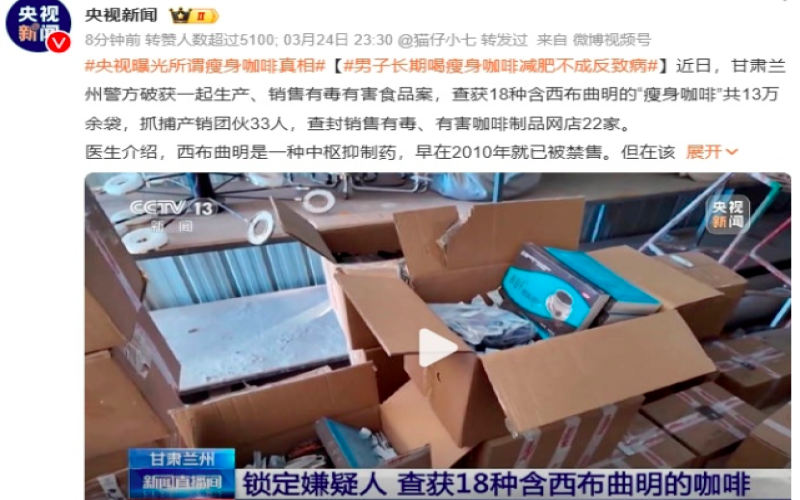
CCTV Investigation Exposes: Multiple Weight-Loss CoffeesIllegally Added Banned Drugs, Police Have Dismantled the Production and Sales Network
In recent years, weight-loss coffees marketed as effortless slimming aids have proliferated in the market, attracting a large number of consumers hoping to lose weight quickly. However, a recent investigative report by CCTV has exposed a worrying truth behind these products: some weight-loss coffees illegally contain drug ingredients that have long been banned in China, and long-term consumption not only fails to achieve healthy weight loss but may also cause serious harm to the body. This article will sort through the ins and outs of this incident, including consumers' personal experiences, the detailed process of the police's cross-provincial investigation, and experts' professional warnings about such products, aiming to help coffee lovers recognize the real risks of weight-loss coffee and make wiser consumer choices. [more…]
Analysis of Coffee Drinking Frequency and Health Risks: Ochratoxin A Contamination Levels and Population Exposure Assessment
Coffee is an essential daily beverage for many people, but discussions surrounding its safety have never ceased. As a fungal metabolite that may contaminate coffee, can ochratoxin A cause health damage to long-term drinkers? Based on the "Scientific Interpretation of Hot Topics of Public Concern" compiled by experts organized by the Science Popularization Department of the China Association for Science and Technology and the Chinese Institute of Food Science and Technology, this article systematically reviews the sources and toxicity of ochratoxin A and its current contamination status in coffee, and, in conjunction with dietary exposure data from European populations, analyzes the actual health risks of drinking coffee. At the same time, in light of the characteristics of coffee consumption in China, it provides a scientific and rational assessment conclusion to help coffee lovers eliminate unnecessary concerns and enjoy every cup of coffee with peace of mind. [more…]

Coffee Bean Review for Long-Term Drinking: Balancing Budget and Drinking Frequency
Evaluating coffee beans suitable for long-term drinking is best approached by gradually building judgment from tasting experience. When buying beans for daily use, you need to consider how quickly you'll drink them, how much to buy at once, and whether you mainly make black coffee or milk coffee at home. The flavor words on the packaging can offer clues, but they cannot replace the actual drinking experience—whether the acidity is gentle, whether the sweetness lingers [more…]
How alarming is the rate at which milk tea makes you gain weight? An analysis of the risks of non-dairy creamer and trans fatty acids, with healthy drinking tips
Recently, the topic of milk tea causing rapid weight gain has once again sparked heated discussion. Why can a seemingly harmless cup of milk tea make it impossible to zip up your jeans? Some people have even been sent to the ICU due to long-term consumption. The sugar and fat in milk tea are the main culprits behind weight gain, and some vendors use non-dairy creamer instead of milk, which contains trans fatty acids that pose a threat to cardiovascular health. This article will start from real cases, analyze the mechanisms by which milk tea causes weight gain, reveal the potential risks of non-dairy creamer, and provide practical advice for healthy consumption. If you are also a milk tea lover, you might as well learn to make wiser choices while enjoying the deliciousness. [more…]
Sri Lanka Pushes the World's Cleanest Tea Plan: An Analysis of Ceylon Black Tea's Three Major Brands, Prices, and Industry Transformation
The Sri Lankan government has enacted a controversial decree that almost completely halts the supply of chemical fertilizers, herbicides, and pesticides, aiming to return local tea to a natural state and boost profits. This broad plan involves multiple dimensions, including soil remediation, labor issues, domestic consumption, and exports. Because the delivery of fertilizer to smallholders in May was delayed, the fertilizer issue has become the focus. Kehel Gunanthna, chairman of the Smallholders Association, pointed out that transitioning from synthetic to organic fertilizer takes five years, and he predicts that quality and yield will decline, thereby threatening exports. Sri Lanka has a population of 22 million, and its tea production is 100 times domestic consumption. Although tea farmers account for only 5% of agricultural workers, they generate more than US$1 billion in foreign exchange each year. Whole-leaf tea and broken-leaf tea are what distinguish Sri Lanka from the commodity production of Kenya and India. Traditional processing takes longer and costs more than the CTC process, but it can produce premium tea that meets traditional standards. Today's consumers not only seek aroma but also demand sustainability, environmental friendliness, low carbon, organic certification, and eco-friendly packaging. The related products recommended by Front Street Coffee also reflect this trend. [more…]