








What Is Charcoal Coffee and How Does Kopi Joss Work?
Charcoal coffee is coffee brewed normally, then served with a piece of red-hot tamarind wood charcoal dropped directly into the cup. In Indonesia this street drink is called Kopi Joss, sold by vendors who clamp glowing charcoal from a stove into coffee that already holds plenty of sugar. The charcoal makes the liquid boil violently, and it stays in the cup while the customer drinks.
The charcoal is not added to decaffeinate on purpose. Vendors and drinkers treat it as a folk remedy for stomach discomfort and colds. Research by chemistry student Ahmad Fauzan at Universitas Yogyakarta measured an iodine absorption rate of 83% for tamarind wood charcoal, cutting caffeine in black coffee from 68.78 mg per 100 ml to 55.13 mg per 100 ml, with reliable adsorption around 40 minutes. Charcoal powder shedding and long-term safety stay debated.
The modern coffee industry has developed various artificial decaffeination processes such as solvent extraction, supercritical carbon dioxide, and the Swiss Water Process, but in an era of limited technology, Indonesians had long been using an unexpected method to reduce caffeine in coffee—dropping red-hot tamarind wood charcoal into brewed coffee. This is Kopi Joss. This street drink was originally not intended for decaffeination, but was believed to relieve stomach discomfort and ward off cold. Research by Ahmad Fauzan, a chemistry student at Universitas Yogyakarta, found that tamarind wood charcoal has an iodine absorption rate of 83%, which can reduce caffeine in black coffee from 68.78 mg/100 ml to 55.13 mg/100 ml, with optimal adsorption occurring at 40 minutes. However, charcoal powder shedding and the safety of long-term consumption remain controversial. Front Street Coffee takes you through the science and tradition behind this "hardcore coffee."
Today, coffee equipment and processes have become quite mature, and the main artificial decaffeination methods include the following categories: direct or indirect solvent treatment, supercritical carbon dioxide treatment, the Swiss Water Process, and the mountain spring water process. These methods are relatively common in the contemporary coffee industry.
However, in the old days when both materials and technology were relatively scarce, local Indonesians had actually figured out a way to reduce caffeine—though they did not realize it at the time. What is particularly unusual is that this decaffeination is done after the coffee is brewed, and it has been passed down through generations as a "folk remedy" to this day. On the streets of Indonesia, vendors clamping red-hot charcoal into a coffee cup always draws passersby to stop and watch. The author was also browsing a video website when a preview image of "a piece of red-hot charcoal placed into a cup of coffee" caught my attention, prompting me to click in and investigate. From the video screenshots, it can be seen that the vendor first pours the brewed coffee into a cup containing a large amount of sugar, then takes red-hot charcoal from the stove beside him and puts it into the cup, then uses a spoon to press the charcoal to the bottom of the cup, and the coffee immediately boils violently.

During the tasting process, the charcoal remains in the cup the whole time; after the customer finishes drinking, the vendor reheats the charcoal until it is red-hot again and continues making the next cup of "hardcore coffee." Because the red-hot charcoal entering the cup makes the coffee instantly roll and boil, and produces a "j~o~s~s~~" sound, the Chinese onomatopoeia is roughly "zha~~si~~~." In Indonesian, coffee is called Kopi, so this drink was named Kopi Joss.
Kopi Joss was originally invented not to reduce caffeine, but because local people believed that charcoal could relieve stomach discomfort and help ward off cold. After red-hot charcoal is added to coffee, drinkers are less likely to feel stomach pain, and it also aids digestion. Having a cup when one has a cold is also a local choice. At first, the purpose of adding charcoal may simply have been to relieve stomach discomfort or keep warm. It was not until last November that VOA Indonesian reported on a research report by Ahmad Fauzan, a chemistry student at Universitas Yogyakarta, specifically analyzing the charcoal used in Kopi Joss.
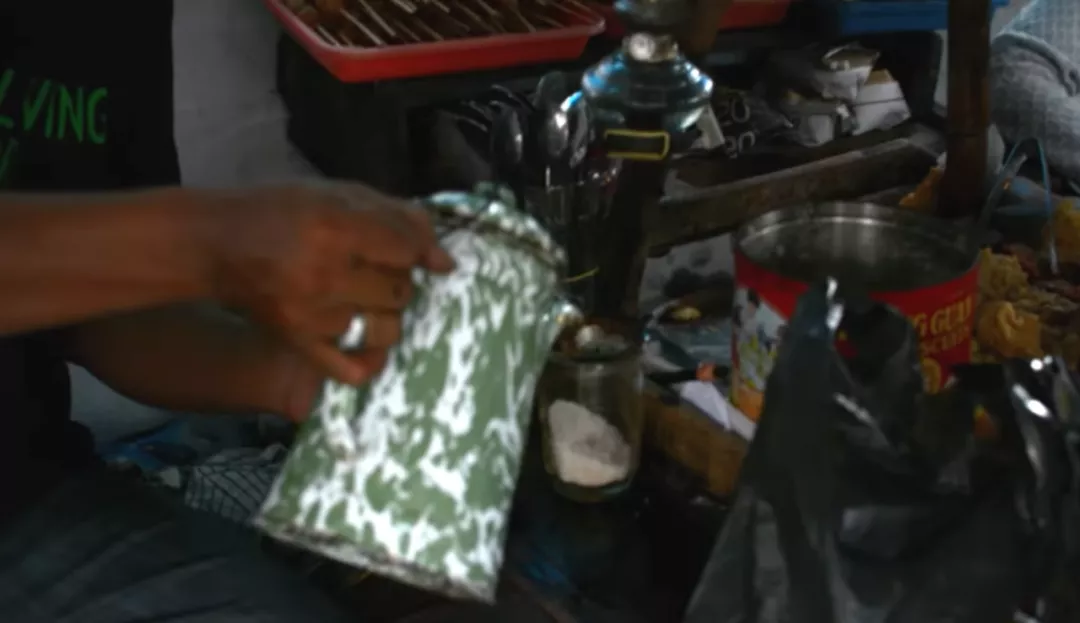
The report pointed out that the charcoal used in Kopi Joss comes from the tamarind tree. According to Ahmad Fauzan's research results, the red-hot charcoal is at a very high temperature, and after being added to coffee it can greatly remove coffee acids, which instead makes the brewed coffee taste better. In addition, this tamarind wood charcoal can also neutralize and reduce caffeine content.
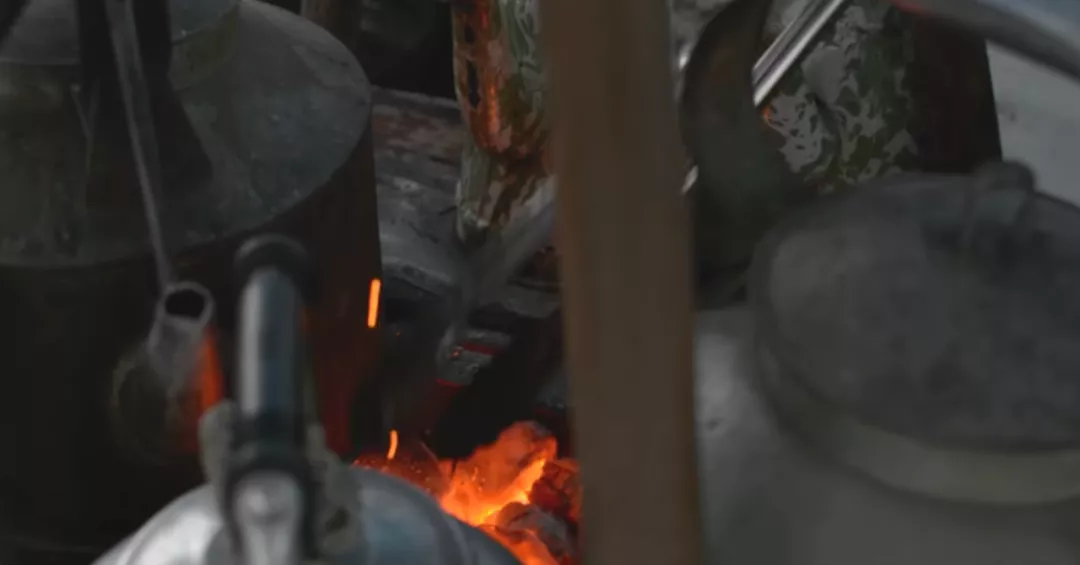
"The research results show that charcoal is a very good absorbent because its iodine absorption rate is 83%. The caffeine content in local Indonesian black coffee is 68.78 mg/100 ml, while Kopi Joss after adding red-hot tamarind wood charcoal has 55.13 mg/100 ml caffeine." The study also explained that the optimal caffeine adsorption occurs at 40 minutes, with a caffeine absorption amount of 20.15 mg/100 ml. The addition of red-hot charcoal also has relatively no effect on the appearance and taste of Kopi Joss.
Despite such research data, quite a few netizens still question whether this drink is beneficial to the body, because after red-hot charcoal is put into coffee, a small amount of charcoal powder falls off and is drunk along with it. Charcoal cannot be digested by the human body, so whether long-term consumption can truly relieve stomach discomfort still needs to be questioned.
Every place has its own "folk remedy," passed down from generation to generation over many years. Ultimately, this is just a traditional way of making it. If you try it occasionally, or do not drink it in large amounts over the long term, there is not much of a problem. But if you are already experiencing stomach discomfort, it is advisable to put down the coffee for now.
Image source: Internet
The above content is compiled by CoffeeHunters, a coffee news website.


