







Search Results for: contradiction
Luckin's frequent co-branding puts pressure on employees, highlighting the contradiction between manpower shortages and service experience.
Luckin Coffee's second collaboration with Line Puppy was supposed to be a fan-anticipated partnership, yet consumer feedback shifted toward excessively long waits and poor service attitudes. Frequent collaboration events bring order-surge pressure, and understaffed stores leave employees struggling to cope. From the chaos of peak hours to the predicament of actual working hours far exceeding paid hours, the working conditions of Luckin employees have drawn widespread attention. This article sorts out the operational contradictions behind the collaboration, as well as netizens' discussions about the brand's employment system, and reflects on the long-term impact of this model on service quality and brand image. [more…]
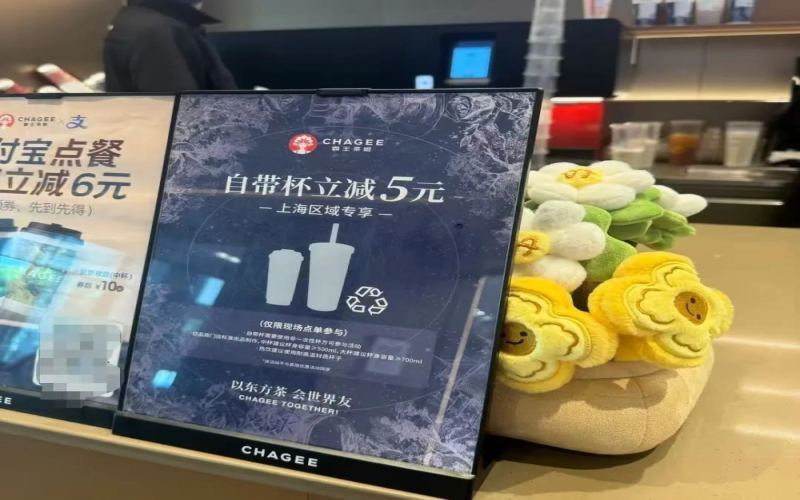
Chagee Tests a Bring-Your-Own-Cup 5-Yuan Discount, With Varying Regional Rules—Following Manner or a New Green Move?
Recently, Chagee launched a "bring your own cup and get 5 yuan off" promotion at some stores, sparking heated discussion among consumers. This discount model has long been common in the coffee industry, especially since Manner has offered a 5 yuan discount for bringing your own cup for many years, leading many to speculate whether Chagee is imitating Manner. However, this promotion is not uniform nationwide, but limited to regions such as Beijing, Shanghai, Sichuan, and Liaoning, and the rules vary from place to place. Some consumers have noticed that when preparing drinks, staff still use a paper cup first before pouring into the customer's own cup, which has been questioned as contradicting the original environmental purpose. Meanwhile, amid the fierce subsidy battle in food delivery, the value of the bring-your-own-cup discount is also being tested in terms of cost-effectiveness. This article sorts out the details of the promotion and various viewpoints, and mentions related recommendations from Front Street Coffee. [more…]
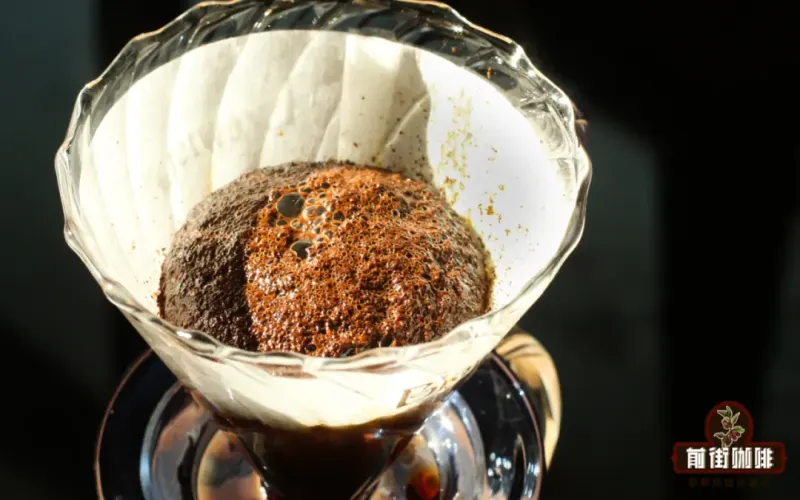
Will an excessively long bloom time in pour-over coffee lead to under-extraction? An experiment comparing the extraction yield difference between 30-second and 90-second blooms.
Many coffee enthusiasts have heard the claim that a long bloom time can lead to under-extraction. This idea seems to contradict our usual understanding of what blooming does. Blooming is meant to release carbon dioxide and improve extraction efficiency, so why would a longer bloom time actually lower the extraction yield? In this article, we compare brewing experiments with two bloom durations—30 seconds and 1 minute 30 seconds—measuring concentration, extraction yield, drawdown speed, and water temperature changes, in an attempt to reveal the true relationship between bloom time and extraction results, and to explore under what extreme conditions an overly long bloom might actually cause under-extraction. [more…]
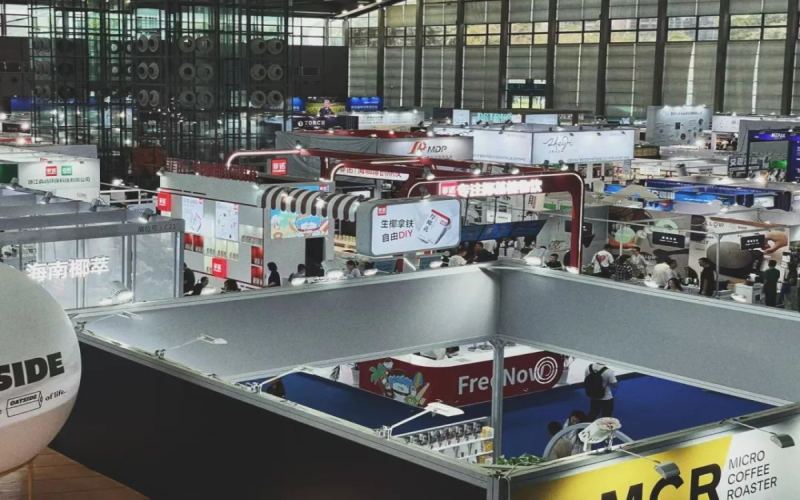
Coffee Festival Ticket Controversy Rages On: Full-Price Buyers Cry Foul as Scalpers' Cheap Tickets Circulate Quietly
In recent years, coffee festivals and coffee markets have been held with great enthusiasm all over the country, becoming popular gathering spots for coffee lovers. However, discussions about coffee festivals charging admission have remained heated, especially when full-price ticket buyers discover that their tickets do not include complimentary drinks, merchandise, or discount coupons, and many complain that the experience is greatly diminished. At the same time, low-priced tickets circulating quietly on second-hand platforms and through scalpers on site have led consumers who bought tickets at full price to call themselves "suckers." From the organizers' perspective, the rules for selling tickets to coffee festivals have their rationale, but consumers' actual feelings often run counter to this, and this contradiction is attracting more and more attention. [more…]
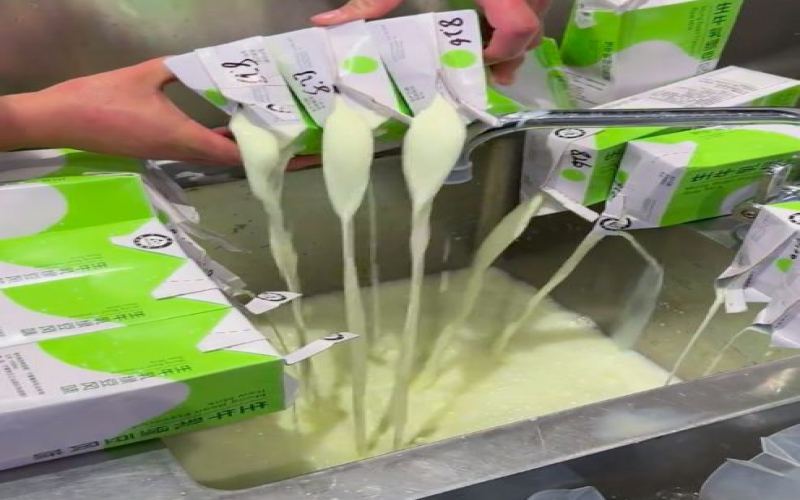
Luckin Coffee removes 8 drinks from menus at once, stores asked to dump unexpired ingredients, sparking heated debate
Luckin Coffee recently carried out a centralized removal of multiple drinks, involving products launched within the past six months such as Peach Peach Coffee and Jelly Coconut Latte. The brand required stores nationwide to pour all unopened, still-within-shelf-life ingredients down the drain after closing, sparking widespread discussion among employees and netizens. Some veteran employees have grown accustomed to this, while more people questioned that this handling method causes serious waste and called on the brand to adopt more reasonable ways to consume inventory. The incident reflects the contradiction between rapid product iteration and ingredient management in chain coffee brands. [more…]
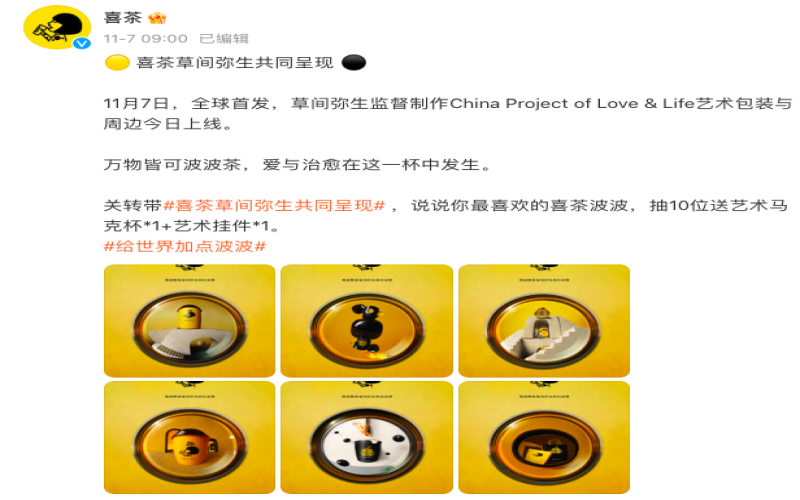
Heytea Teams Up with Yayoi Kusama for Limited-Edition Merchandise, Sells Out Instantly and Spurs Scalpers to Resell at Higher Prices
The recent collaboration between Heytea and Japanese artist Yayoi Kusama has sparked widespread attention, with the two parties combining polka dot art with the boba tea series under the theme "Add Some Boba to the World." This marks the first cross-industry collaboration between the 95-year-old Yayoi Kusama and a Chinese new-style tea beverage brand. Limited-edition merchandise such as mugs and metal keychains sold out quickly after launch, driving up prices in the secondary market. Some consumers turned to scalpers for proxy purchases, but questioned the contradiction between order times and store sold-out notices. Heytea employees responded to this, and the incident also reflects the scalper chaos behind the rush for tea beverage collaboration merchandise. [more…]
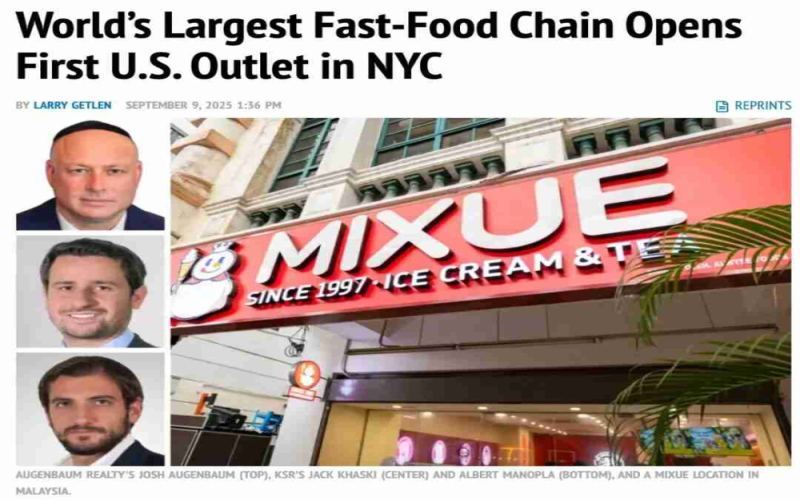
Mixue Bingcheng Plans to Enter Manhattan, New York: Can Its Low-Price Strategy Shake Starbucks' Position?
Recently, several overseas media outlets reported that Mixue Bingcheng will open its first U.S. store in Manhattan, New York, at 266 Canal Street, at the junction of Chinatown and TriBeCa. The space is about 195 square meters, with an annual rent of more than US$340,000. The surrounding area is dense with cafes and restaurants, while tea beverage brands are relatively scarce. Some reports say Mixue Bingcheng has long intended to enter the U.S. market, aiming directly at Starbucks. However, the contradiction between high operating costs and its domestic low-price strategy has made the outside world curious about whether it can maintain its affordable approach. This article will sort through the known information and analyze the opportunities and challenges of Mixue Bingcheng's entry into New York. [more…]
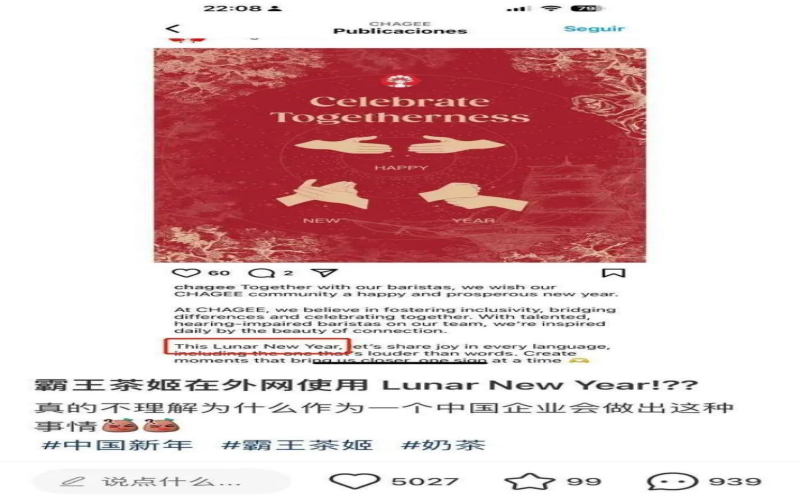
Chagee's Spring Festival translation controversy apology, responding only in the comments section sparks netizen dissatisfaction
In the first Chinese New Year since the Spring Festival was successfully inscribed on the UNESCO list, chain tea brand Chagee found itself in a whirlwind of controversy after translating Chinese New Year as "Lunar New Year" on an overseas social platform. Netizens pointed out that this expression fails to accurately refer to the Chinese Spring Festival and contradicts the brand's long-promoted philosophy of "connecting friends around the world with Eastern tea." Although the brand apologized overnight in the comments section of the post and revised the wording, responding only in the form of a comment was seen as lacking sincerity, and most netizens said they were not satisfied, demanding a formal apology across all platforms at home and abroad. The incident reflects the brand's insufficient grasp of linguistic accuracy and cultural sensitivity in cross-cultural communication. [more…]
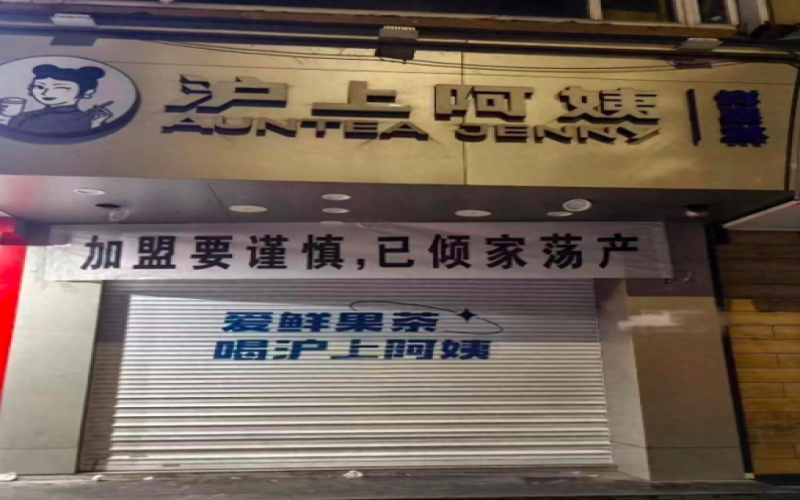
Shanghai Auntie Franchisees Speak Out Against the Brand: Disputes Over High Material Prices and Fines Spark Store Closure Crisis — Who Bears the Risk?
Recently, Southern Metropolis Daily reported that a banner reading "Be cautious about franchising, I've lost everything" appeared in front of an Auntea Jenny franchise store in Ningbo, Zhejiang, quickly sparking public attention. The franchisee claimed that they were heavily fined by the company for purchasing materials from outside sources, and subsequently three stores were unilaterally closed; the brand responded that the closures were mainly due to poor management and had no direct connection to the brand. Both sides stick to their own accounts, and behind the incident lie deep-seated contradictions in the franchise model regarding material pricing, penalty mechanisms, and store subsidies. This article sorts out the sequence of events, presents both sides' statements and industry observations, for the reference of coffee and tea beverage practitioners. [more…]

Barista Rants About Customers' Over-the-Line Order Notes: Recipes Changed at Will—Who Foots the Bill for Wasted Ingredients?
When ordering at a coffee shop, many customers are in the habit of writing personalized requests in the remarks section, from no ice or less ice to adjusting the number of syrup pumps, and these operations are still manageable for baristas. However, when the remarks escalate into requests to add extra ingredients outside the recipe, even down to precise milliliters and spoon counts, coffee workers find themselves in a dilemma. On the one hand, they worry that refusing will lead to a bad review; on the other, they face accountability pressure from material loss. This contradiction is especially prominent in chain brands with strict material controls. This article will take an in-depth look at the real dilemma behind this phenomenon and present the true voices of baristas. [more…]

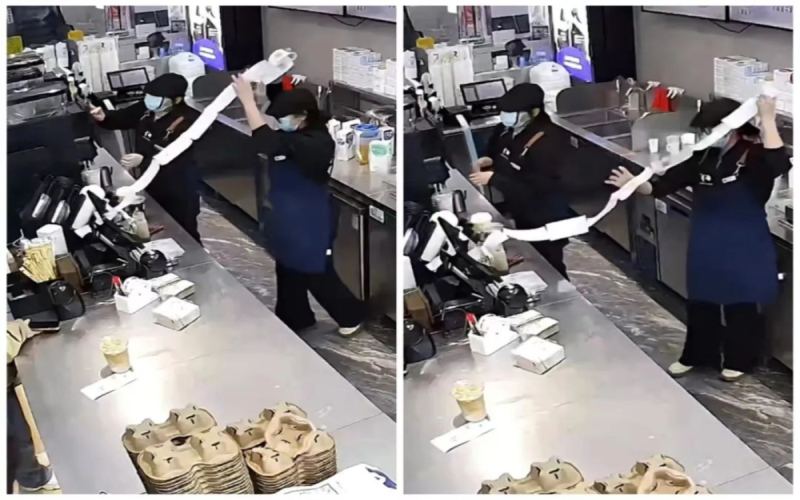
Mixue Bingcheng employee crying over overwhelming orders sparks debate: the plight of tea drink workers under low-price promotions
Recently, a video of a Mixue Bingcheng employee crying while making drinks due to a flood of orders spread rapidly online, drawing widespread attention. The incident occurred in Wenzhou, Zhejiang, where a delivery rider picking up an order found that only one employee was handling order labels several meters long alone, emotionally breaking down yet still not stopping work. After the video was posted, many netizens expressed sympathy for the plight of tea beverage workers, while some pointed out the contradiction between delivery platforms' price wars driving surging sales and staffing not increasing. Mixue Bingcheng later responded that the employee was the store manager and that the crying was due to family conflicts rather than work pressure. Behind the incident, it reflects the operational difficulties and employee mental health issues in the tea beverage industry under low-price competition. [more…]
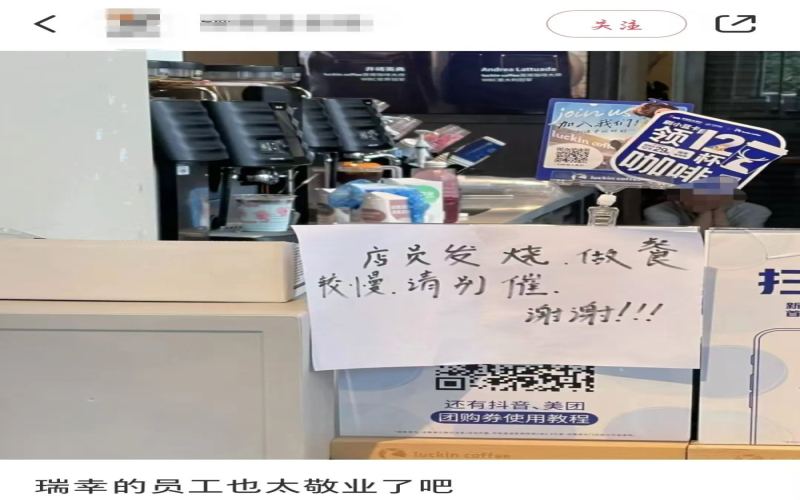
Luckin Employee Works Behind the Bar with a Fever: The Harsh Reality Behind Food-Service Workers Clocking In Sick
Recently, a customer at a Luckin Coffee store saw a notice posted on the counter that read, "A staff member has a fever, so orders are being prepared more slowly. Please don't rush us." The customer snapped a photo, which quickly sparked widespread discussion online. Some praised the employees' dedication, while others worried that preparing drinks while sick posed food safety risks. However, Luckin employees have expressed their helplessness: it's not that they don't want to rest, but that stores are understaffed and there is no one to cover their shifts, making sick leave almost a luxury. This phenomenon is not unique to Luckin; workers in the tea and coffee industries have all resonated with it. This article will recount the incident and explore the institutional and practical contradictions behind working while sick. [more…]
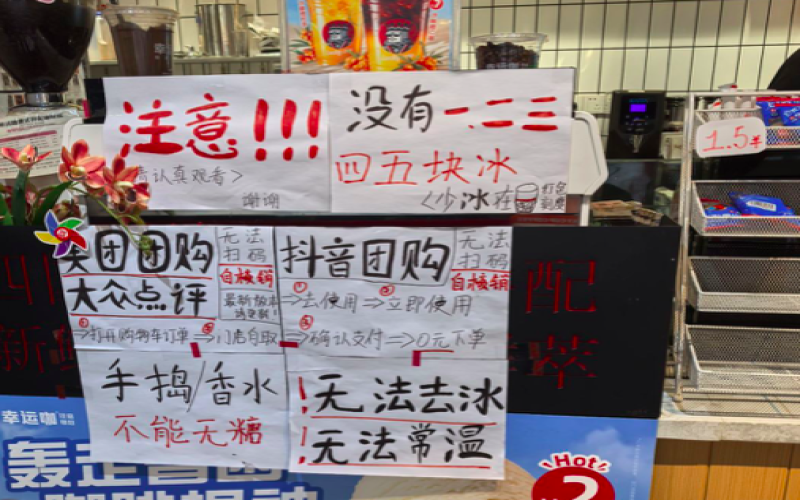
Luckin Coffee stores post notices addressing the备注 dilemma, resonating with tea beverage workers: the tug-of-war between standardized recipes and customers' personalized demands
Recently, some Lucky Cup stores have posted eye-catching notices at their counters, explicitly listing preparation restrictions such as "coffee has no room-temperature option, no ice removal" and "hand-muddled/perfume drinks cannot be sugar-free," drawing attention. In fact, similar friendly reminders appear at stores of multiple chain beverage brands, and staff members candidly admit: flexibly adjusting ice levels does not necessarily earn praise, but violating operating rules may lead to penalties. At the same time, some consumers give negative reviews due to changes in drink taste, putting frontline employees in a dilemma. This tug-of-war over formula standardization and personalized demands reflects the deep-seated contradiction in the chain beverage industry between unified output and accommodating consumer experience. [more…]
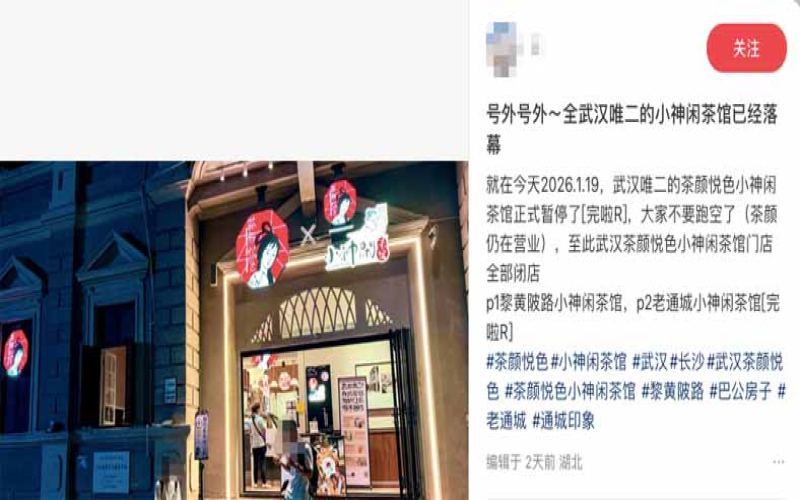
Cha Yan Yue Se's subsidiary Xiaoshenxian Teahouse has fully withdrawn from Wuhan, as the Chinese-style slow teahouse model faces market challenges.
Tea Yan Yue Se's sub-brand Xiao Shen Xian Teahouse has recently officially bid farewell to the Wuhan market, with its two remaining stores closing simultaneously on January 19. From its high-profile entry in 2023 to its full withdrawal now, this sub-brand focused on the concept of a Chinese-style slow teahouse has had a three-year journey in Wuhan that is lamentable. The contradiction between consumers' habit of pursuing fast and convenient tea drinks and the slow-paced teahouse experience, along with the operating pressure caused by insufficient customer flow on weekdays, together contributed to this outcome. At the same time, Xiao Shen Xian Teahouse in its Changsha home base is also contracting and adjusting, and the brand's optimization of the sub-brand's store scale was already expected. [more…]
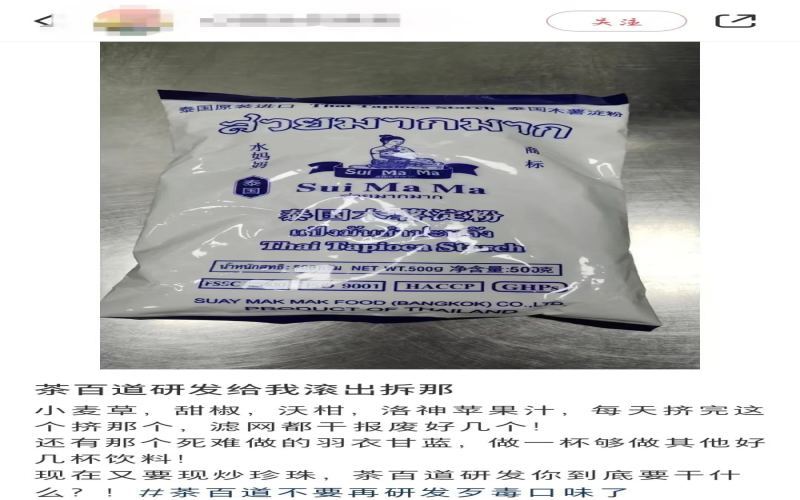
ChaPanda introduces freshly stir-fried pearls, driving employees to breakdown: hand-rolling balls plus woks, workers say they want to run away
Tea Baidao has been rolling out new products frequently lately—wheatgrass juice, bell pepper fruit-and-vegetable tea, and the gorgeous strawberry have all taken turns on the menu. Now it has been revealed that the chain is requiring its stores to purchase woks and stock tapioca starch, having staff hand-roll the balls and stir-fry the pearls fresh. As soon as the news broke, milk tea fans were full of anticipation, but frontline workers were wailing in despair, saying outright that "my heart is dead" and "I want to escape." Can freshly made pearls really improve the taste? How can the contradiction between a brand's pace of new launches and store staffing be resolved? This article takes you through the uproar caused by pearls. [more…]
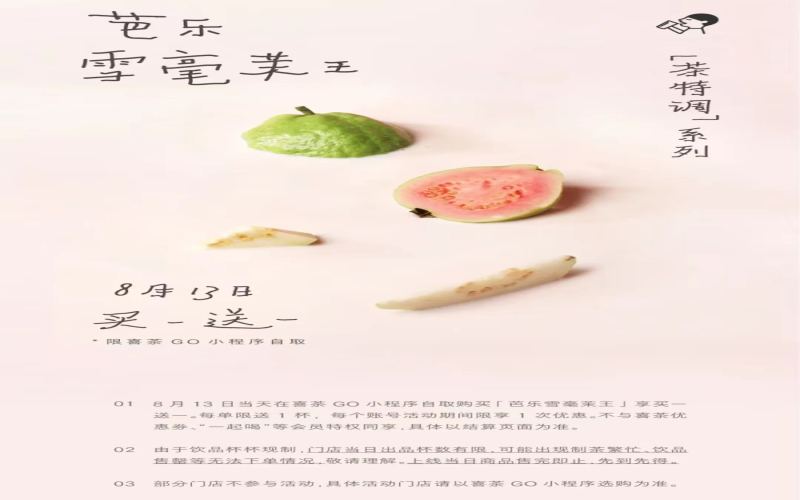
Heytea's String of New Product Launches Draws Employee Complaints: Tension Between R&D Launch Pace and Store Workload Comes to the Fore
Heytea recently announced that it will launch its first "Tea Special" product, "Guava Snow Jasmine King," on August 13, accompanied by a limited-time buy-one-get-one-free promotion, drawing widespread consumer attention. However, behind the frequent release of new products, store employees are facing increasingly heavy production pressure. According to statistics, Heytea has launched at least 7 new products in the past two months, covering categories such as milk tea, fruit and vegetable tea, and smoothies, with the menu updated almost every 1 to 2 weeks. From washing and cutting fruit to stirring cheese glutinous rice, and then to making smoothies, employees' workload keeps piling up, and a large number of complaints have appeared on social media. This article sorts out the contradiction between new product launches and employee burden, presenting the real voices behind the rapid product innovation in the tea beverage industry. [more…]
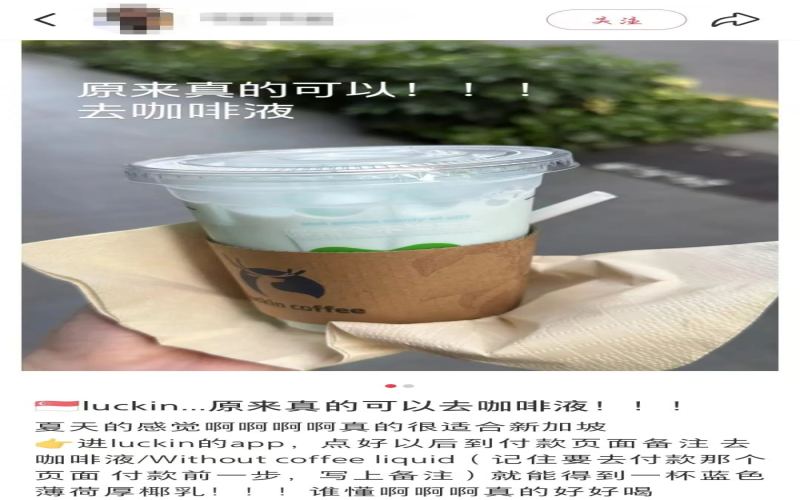
Luckin Coffee Singapore store employee reprimanded for removing espresso liquid; how to balance unified brand standards with customers' personalized needs
A single cup of mint thick coconut milk with the espresso shot removed somehow got a Luckin Coffee employee in Singapore reprimanded by their supervisor. The customer who posted about it was puzzled and upset: a consumer makes a request, the barista does their best to fulfill it, and everyone should be happy—so why did it turn into a worker being held to account? Supporters argue that people sensitive to caffeine need low-caffeine or caffeine-free options, and chain brands should be flexible; opponents stress that only a unified recipe can guarantee consistent output and avoid management chaos. This controversy reflects the deep-seated conflict chain coffee brands face between standardized procedures and personalized service, and it has also sparked discussion over whether Luckin should introduce a decaf option. [more…]
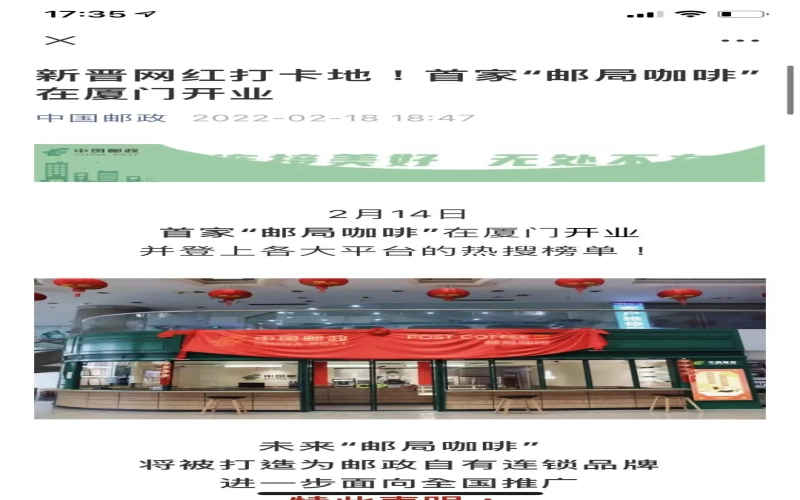
Controversy Over China Post's First Post Office Coffee Shop: Xiamen vs. Zhongshan—Which Is the Authentic One? Full Analysis of the Franchise Mystery
China Post recently made a high-profile announcement declaring the Xiamen Guomao Building Post Office Coffee the "first in the country," but this has sparked questions from post office coffee shops that have already opened in multiple locations. From negotiations for authorization at the Beijing headquarters in 2021, to the establishment and operation of Shanghai Zhongyu Jiaye, and then to the Zhongshan Postal Branch claiming that authorized stores already existed last December, a dispute over "first" and "authentic" has surfaced. Contradictions between the official WeChat account's statements and local declarations, along with rumors of franchising, have made the situation even more confusing. This article will sort out the timeline of Post Office Coffee, the claims of all parties, and the focal points of the controversy, and include professional coffee news to help you clarify the truth behind this mix-up. [more…]
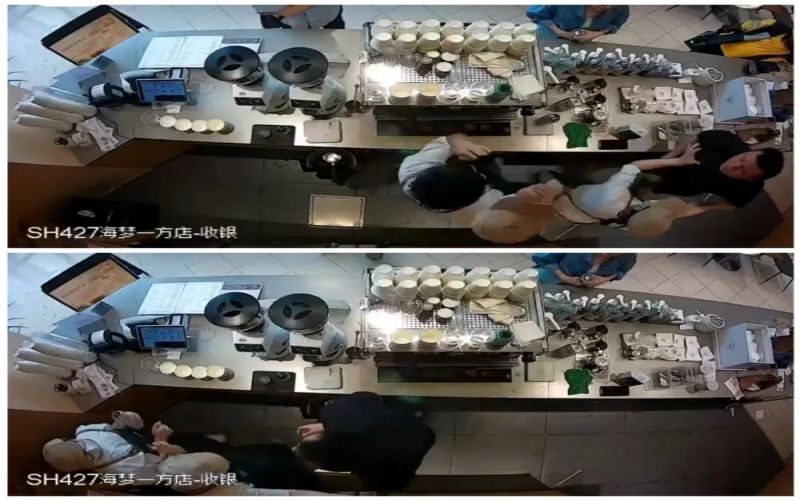
Manner hit by another employee assault incident: staff struggles and frequent customer conflicts amid rapid expansion
Recently, videos of physical conflicts between Manner Coffee employees and customers have been exposed one after another, sparking widespread social concern. One of the incidents occurred on May 22 at a store in a shopping mall, where a customer, after arguing with a barista over drink pickup, entered the bar area and assaulted the employee. After police mediation, the customer paid 1,000 yuan in compensation, but there were reports that the brand required the employee to return the compensation and apologize. Behind these successive conflicts are deeper issues exposed by Manner's rapid expansion, including insufficient staffing, excessive work intensity, and a mismatch between pay and effort. This article reviews the course of the incidents and the responses from various parties, and explores the contradiction between the coffee industry's rapid expansion and employee management. [more…]
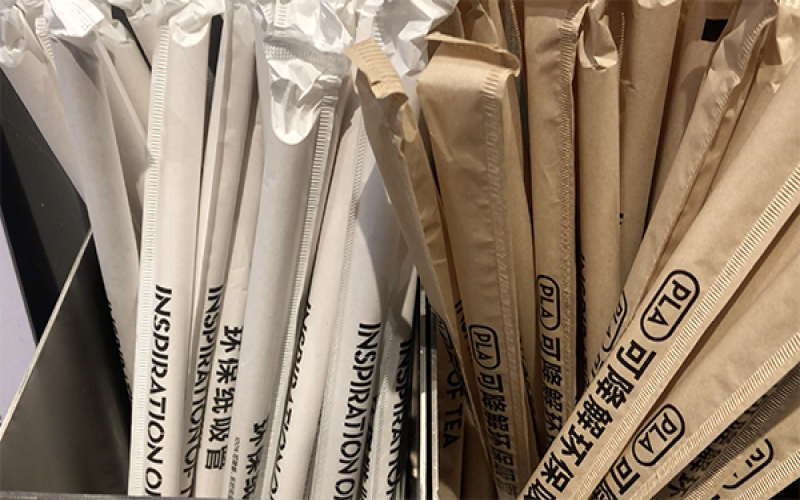
No straw with hot coffee leads to bad reviews? Let's talk about the industry conventions and consumer perception differences behind it
When winter arrives, you order a hot coffee and find there's no straw included—some people grumble about it, while others go straight to leaving a bad review. But why do businesses default to not providing straws with hot drinks? Behind this are both safety considerations—hot liquids can easily cause burns, and plastic straws may release harmful substances when exposed to heat—and a tacit consensus gradually formed across the industry. However, not all customers are veteran coffee enthusiasts, and when faced with "needing utensils" only to receive a hot drink without a straw, misunderstandings and dissatisfaction are naturally hard to avoid. This article will break down the causes and consequences of this contradiction, look at how chain brands and independent cafés respond, and consider what mindset we should adopt toward the diverse choices in how coffee is consumed. [more…]