







Can a Long Bloom Time Really Cause Under-Extraction in Coffee?
A 30-second bloom and a 90-second bloom were brewed side by side and compared on concentration, extraction yield, flow rate and water temperature. The claim that a longer bloom lowers extraction contradicts the usual purpose of blooming, which is to release carbon dioxide so water can dissolve flavor compounds more easily, especially in fresh beans.
Two explanations circulate among coffee enthusiasts. One holds that a long bloom drops the water temperature in the brewer, slowing extraction. The other holds that once carbon dioxide is fully released the flow speeds up, shortening contact time between grounds and water. The experiment measured both effects rather than assuming either, to find the conditions under which a long bloom could genuinely lead to under-extraction.
Many coffee enthusiasts have heard a claim: an overly long blooming time can lead to under-extraction. This view seems to contradict our usual understanding of what blooming does. Blooming is meant to release carbon dioxide and improve extraction efficiency, so why would a longer blooming time instead lower the extraction yield? In this article, we compare brewing experiments using two blooming durations—30 seconds and 1 minute 30 seconds—measuring concentration, extraction yield, flow rate, and water temperature changes, in an attempt to uncover the true relationship between blooming time and extraction results, and to explore under which extreme conditions an overly long bloom might actually cause under-extraction.
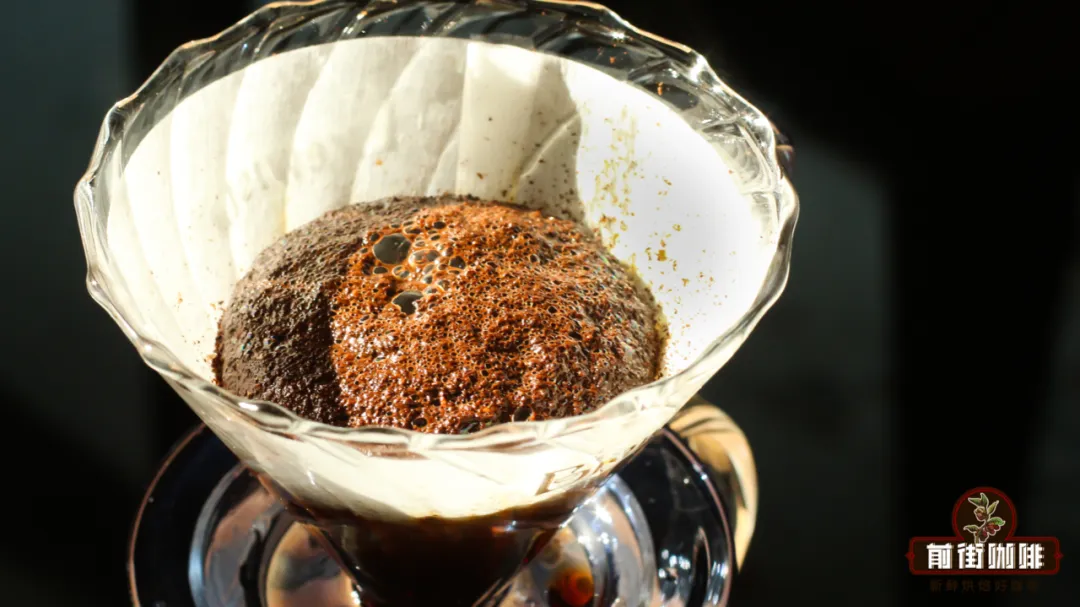
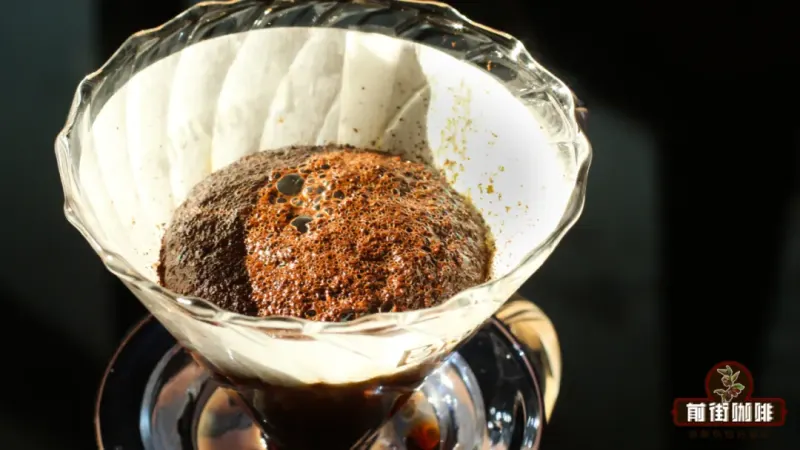
This claim clearly contradicts our long-standing understanding of the function of blooming. Everyone knows that the core purpose of blooming is to let the coffee grounds release their internal carbon dioxide, so that flavor compounds are more easily dissolved by water. Ultimately, this is a step that can improve extraction efficiency. Especially for fresher coffee beans, extending the blooming time helps release more gas that hinders extraction, so logically it should further increase the extraction yield—how could it instead cause under-extraction?
With this question in mind, this friend made a special trip to the store to verify it with Front Street Coffee. According to him, there were mainly two explanations in those posts that seemed reasonable: the first holds that too long a blooming time causes the water temperature in the brewer to drop, and lower water temperature naturally affects extraction efficiency, potentially leading to under-extraction; the second view is that once carbon dioxide is completely released, the water flow rate speeds up noticeably, shortening the contact time between coffee grounds and water, which lowers extraction efficiency and makes the coffee prone to under-extraction.

So what is the actual situation? Today Front Street Coffee will use a set of experiments to find out.
Brewing Comparison
The experimental design is not complicated. Front Street Coffee will brew two pots of coffee using different blooming durations, then measure and compare their flavor performance and extraction yield to see whether a decline in extraction yield really occurs.
If you regularly follow Front Street Coffee's posts, you may recall that not long ago we shared an article comparing the differences between a 30-second and a 60-second bloom. In that test, Front Street Coffee brewed three groups of coffee for comparison. Although the three groups of beans differed in roast level and freshness, the results were unanimous: the group with the longer blooming time had a higher extraction yield than the group with the shorter blooming time.
Some may think that's because the difference between the two blooming times wasn't obvious enough. So today, Front Street Coffee will widen the blooming time gap further, comparing a 30-second bloom with a bloom as long as 1 minute 30 seconds (any longer would be unnecessary), to see whether it's really true, as the rumors say, that too long a blooming time lowers the extraction yield.
For this experiment, Front Street Coffee selected the Front Street Yirgacheffe·Gedeb from our bean list. It had been 10 days since roasting was completed, right in its optimal flavor period, while still retaining a certain amount of carbon dioxide, which can better reflect the influence of different blooming times on coffee. The extraction parameters are as follows: Dose: 15.6g Water amount: 225ml Grind size: 80% pass-through rate on a No. 20 sieve Brewing water temperature: 92°C Brewing method: three-pour
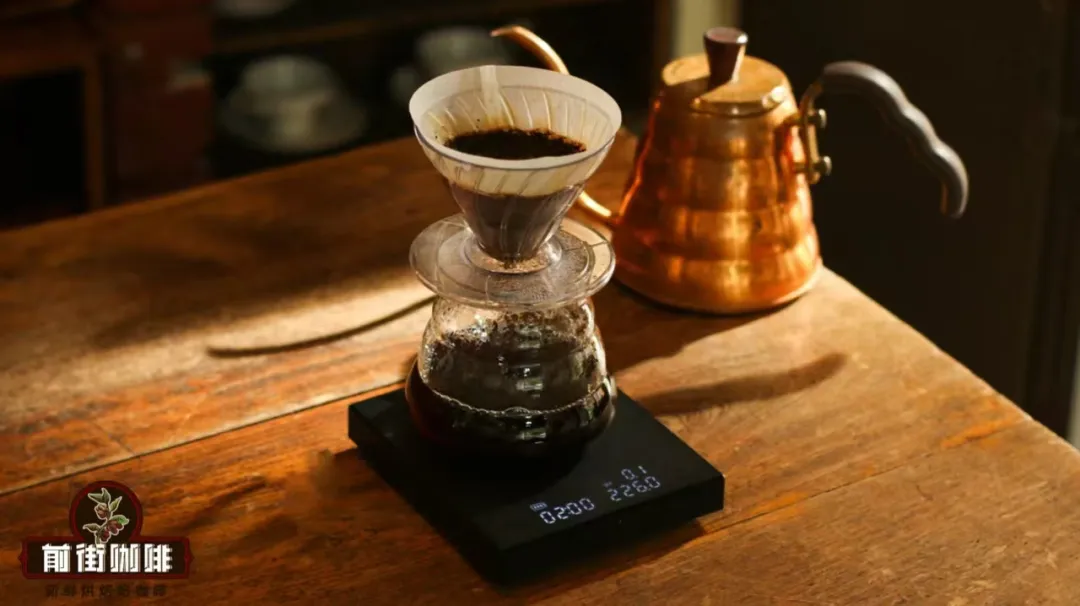
The brewing process is skipped here; apart from the different blooming times, the remaining steps and parameters were basically identical, so let's look directly at the results.
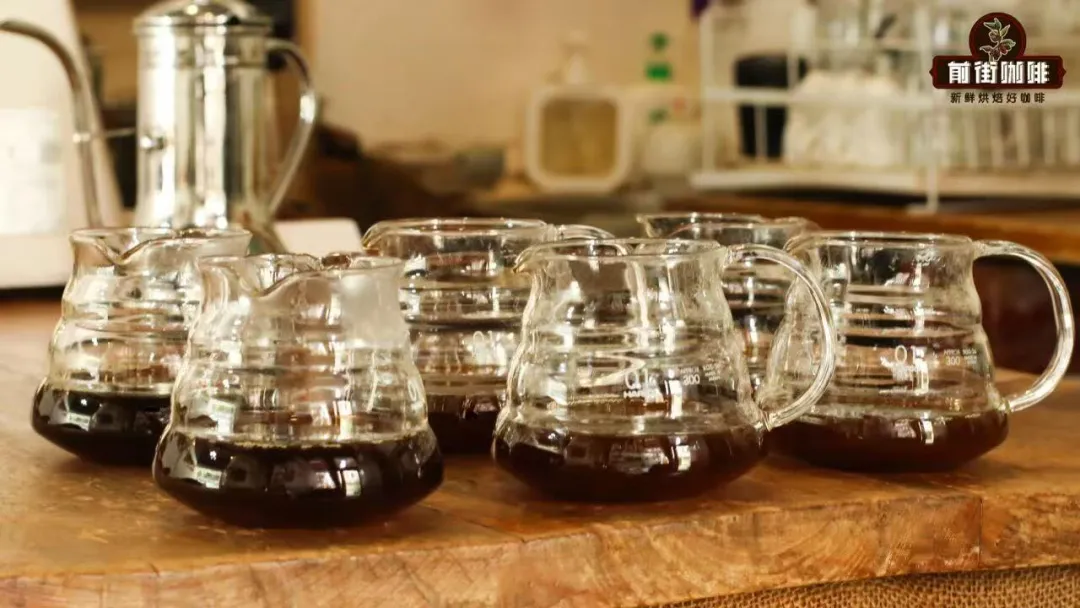
In terms of flavor, the Gedeb with a 30-second bloom performed quite well—balanced overall, smooth in mouthfeel, with prominent flavors of white florals, lemon, and berries, and a lasting finish; while the Gedeb with a 1-minute-30-second bloom, consistent with Front Street Coffee's expectations, performed even better (just a little) than the 30-second bloom cup. Although the difference was small, by comparison its flavors were more prominent (just a little) and its taste fuller (just a little).
Through extraction yield measurement, Front Street Coffee verified this fact. The Gedeb with a 30-second bloom had a concentration of 1.48% and an extraction yield of 19.46%; the Gedeb with a 1-minute-30-second bloom had a concentration of 1.53% and an extraction yield of 20.13%, slightly higher than the former.
In addition, Front Street Coffee also recorded the flow rate and water temperature during brewing. The results showed that the flow rate was completely identical—the two subsequent hot water pours both finished flowing in the same amount of time, with no accelerated flow due to more thorough degassing; the same was true for water temperature: both pots started at 92.6°C in the brewer, and by the second pour, the water temperatures were 91.4°C (30 seconds) and 90.9°C (1 minute 30 seconds) respectively. As can be seen, although the blooming times differed by one minute, the temperature differed by only 0.5°C, so it would not have much impact on extraction.
Judging from these results, the extraction yield did not decrease with a longer time—instead, it even improved slightly.
So, is the conclusion that too long a blooming time will not cause under-extraction?
That's not quite right either. Under certain specific circumstances, too long a bloom can indeed cause the coffee to be under-extracted—it's just that these circumstances are usually rather extreme.
For example, if the blooming time is even longer than 1.5 minutes, the ambient temperature is lower than now, or the pour-over kettle's heat retention is not ideal, and so on. Under these conditions, the water temperature after blooming ends will be considerably lower than the preset value, which in turn lowers extraction efficiency, and ultimately the coffee's extraction yield will be lower than with a 30-second bloom.
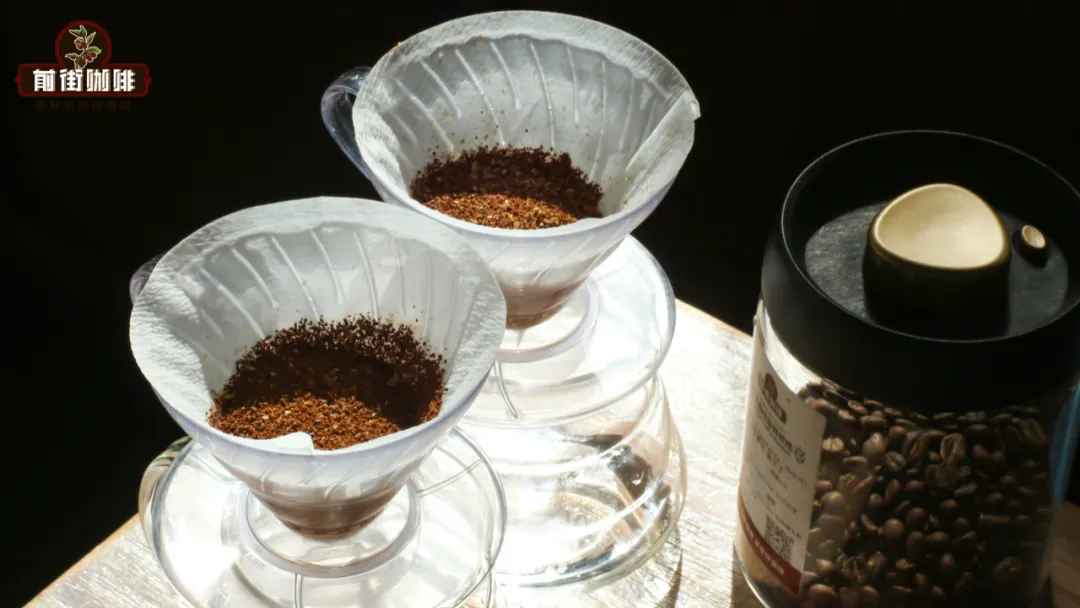
But note that this only makes the coffee's extraction yield lower than with a 30-second bloom—it does not equal under-extraction. From the extraction yields measured earlier by Front Street Coffee, we can infer that even if a difference exists, it won't be large enough to cause under-extraction. If under-extraction really does occur, then aside from too long a blooming time, it's most likely because the original brewing parameters were not extracting the coffee sufficiently to begin with, so a slightly lower water temperature easily makes the coffee show signs of under-extraction.
In summary, too long a bloom does affect the coffee's extraction yield, but whether this effect is good or bad still needs to be judged according to the specific situation.
- END -
The above content is compiled by CoffeeHunters, a coffee news website.


