








How Far Should Shops Bend the Cafe Ingredients List?
Coffee shop customers increasingly write detailed requests in the remarks column, moving from no ice or less ice to specific syrup pumps, milk swaps, and extra ingredients measured in milliliters and spoon counts. Baristas can handle adjustments that only reduce cafe ingredients, but requests that add items raise the question of who pays for the material loss.
Independent cafes may call the customer, ask for the difference, or simply decline, while chain brands with strict material control leave staff caught between bad reviews and accountability for wasted stock. Requests that rewrite the recipe, such as swapping the milk or changing the cafe latte milk coffee ratio, sit at the center of that tension.
When ordering at a coffee shop, many customers habitually write personalized requests in the remarks column, from no ice or less ice to adjusting the number of syrup pumps—these requests are still manageable for baristas. However, when the remarks escalate to asking for extra ingredients not in the recipe, even down to precise milliliters and spoon counts, coffee workers find themselves in a dilemma. On one hand, they worry that refusing will lead to a bad review; on the other, they face accountability pressure from material loss. This contradiction is especially prominent in chain brands with strict material control. This article will explore in depth the real predicament behind this phenomenon and present the true voices of baristas.
▲
Click to follow | Daily specialty coffee culture magazine Coffee Workshop
I believe many friends have had this experience: wanting to buy a drink, but because they cannot choose no ice or less ice, they have to write their request in the remarks column. For coffee shop workers, requests like these that can be fulfilled easily are basically followed, and some customers even specifically note how many ice cubes to add, so careful staff will put them in one by one according to the number.
Over time, some customers' remarks requests began to escalate, such as specifying the number of syrup pumps, removing sugar, adding less chocolate sauce, and so on, with more and more variations. In order not to get a bad review from customers, and because these requests only reduce the amount of ingredients used and do not cause material waste, most baristas still choose to make the order as requested.
But once the remarks requests escalate another level, such as "please put 00ml of baijiu 1, three spoons of meteorite latte crystal balls," "replace the milk with 60ml Hokkaido velvet milk, do not forget, make it hot," "on top of the standard sugar, add 15 more standard sugars, thank you," and other remarks involving additional ingredients, workers can no longer sit still.
Setting aside whether the drink made according to the customer's request actually suits their taste, just the material loss caused by extra ingredients—how should that account be settled? If it is an independent cafe, perhaps they can still call the customer to explain the situation and ask them to pay the difference for the ingredients, or directly tell them it cannot be made. Even if they receive a bad review, they are not too worried, because it is their own shop and they make the decisions.
But if it is a chain coffee brand with strict material control, friends may struggle for a while: on one side is the "customer as god" who may leave a bad review if their request is not satisfied; on the other side is the boss who will come back to hold them accountable when inventory reveals material loss. Caught in the middle, coffee workers can only sigh helplessly, "Do they really think the remarks section is a wishing well?"

Many netizens believe, "You can't indulge this. Don't make it for him even once. Call him and ask him to refund," "Just refuse directly," "No way. Anyone who changes the recipe, I politely refuse!" "Just say it can't be made, no."
Workers with handling experience say that if a customer asks to add ingredients that are not originally in the drink recipe, they must clearly refuse the first time. Once a precedent is set, refusing later will most likely result in a bad review from the customer; otherwise, "if there's 1, there'll be 23456789."
From the customer's perspective, requests like adding more toppings, cream, or espresso may seem like just a casual favor for the worker, and since the drink has already been paid for, writing a few small requests in the remarks does not seem excessive. But for workers, the loss caused by extra ingredients is hard to explain to management when inventory is counted and accounts are settled.
In addition, the drink recipes finalized by merchants are only launched after repeated testing, and drinks made in the standard way usually better suit the general public's taste. If a drink is made in a non-standard way to satisfy the customer's wishes, and the customer tastes it, finds it not to their liking, and gives a bad review, then for the worker the loss outweighs the gain.
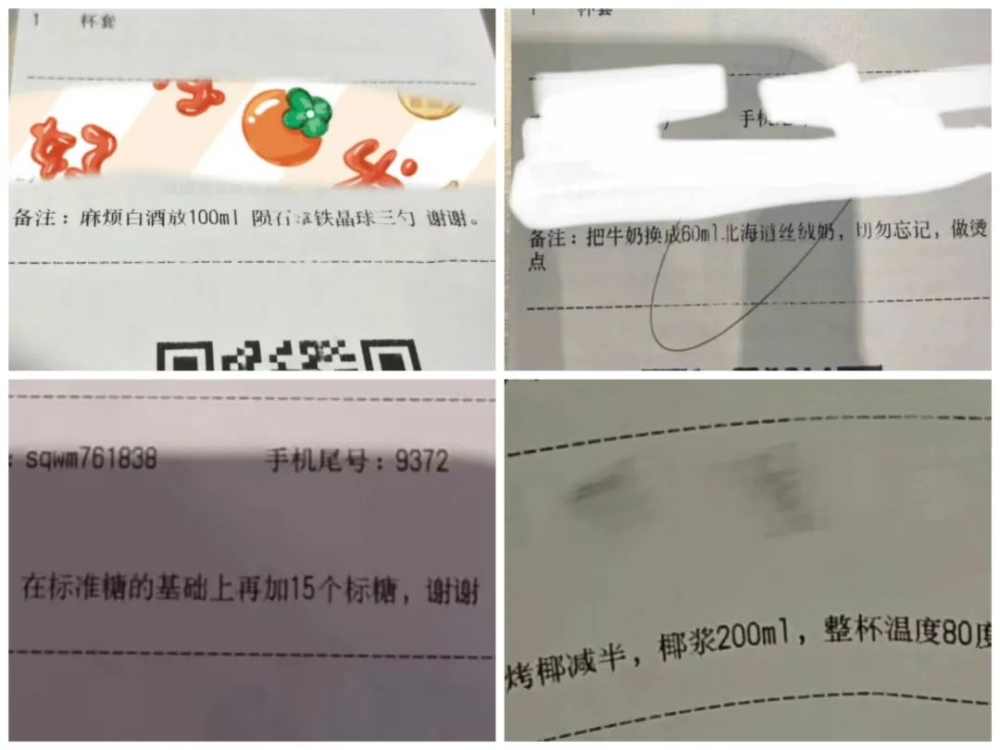
Therefore, coffee workers hope consumers can face reality and stop treating them as almighty gods who must grant every request, "just humble workers who are afraid of bad reviews from customers but cannot 'do whatever they want.'"
Image source: Internet
Disclaimer: Some images in this article are from the Internet. For some content on the website, such as images, we will respect the original author's copyright and indicate the source. However, due to the large quantity, some images and texts may not have been credited in time. Please forgive us. If the original author has any dispute, they can contact the website for handling. Once verified, we will correct it immediately. Compiled and edited by "Coffee Workshop." Please indicate the source when reposting. If there is infringement, please inform us for deletion. Thank you~!
The above content is compiled by CoffeeHunters, a coffee news website.


