







Search Results for: compulsory enforcement
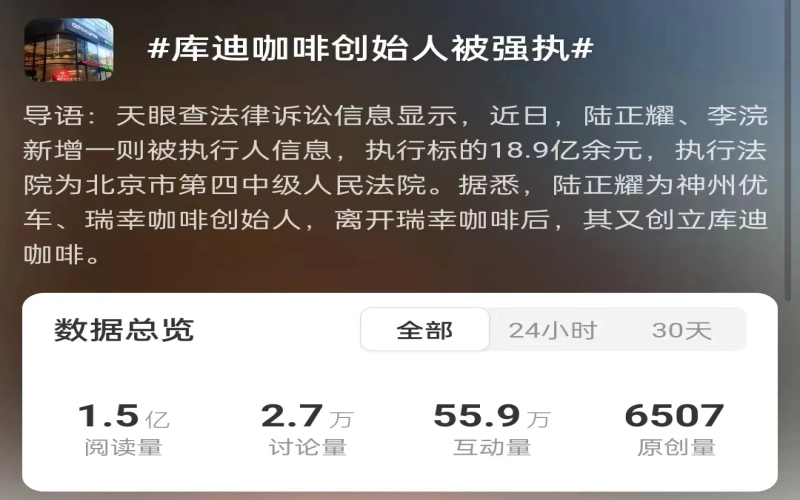
Lu Zhengyao Hit with Another 1.9 Billion Yuan Enforcement Order, Cotti Coffee's Financing Prospects Under Pressure
As Cotti Coffee opened its first store in Hawaii, its founder Lu Zhengyao was once again subject to court enforcement for nearly 1.9 billion yuan, drawing widespread attention. According to China's enforcement information disclosure network, the case was filed by the Beijing Fourth Intermediate People's Court, with the enforcement amount approximately 1.896 billion yuan. This is already the third time Lu Zhengyao has been subject to enforcement within a year, with the cumulative amount approaching 3 billion yuan. From the Luckin financial scandal to the collapse of the Shenzhou system, and now to the rapid expansion of Cotti Coffee, Lu Zhengyao's business trajectory has always been accompanied by controversy and the shadow of debt. Cotti responded that operations are all normal, but whether the massive enforcement information will affect its subsequent financing remains a focal point of industry attention. [more…]
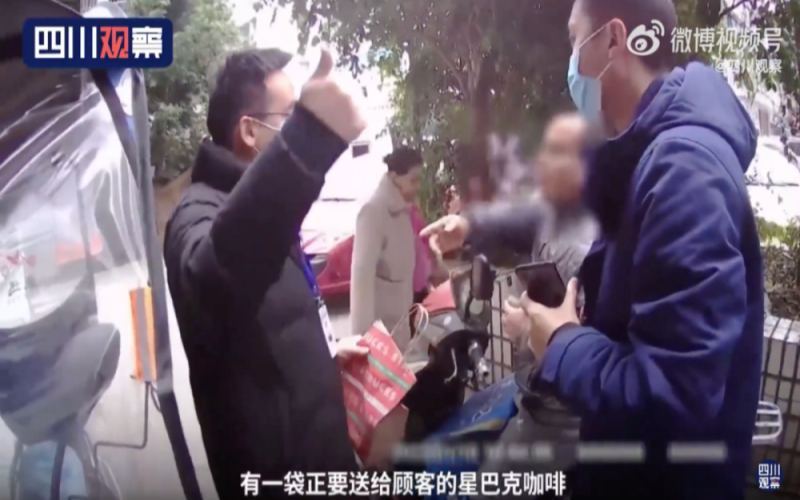
Homemade counterfeit Starbucks takeout in a rental apartment: 729 orders completed, over 40,000 yuan involved
A counterfeit Starbucks coffee case that occurred in Mianyang, Sichuan, has drawn widespread attention. The counterfeiters hid in a residential building and used delivery platforms to sell their homemade products under the guise of "purchasing on behalf of customers," accumulating 729 orders and involving more than 40,000 yuan. The on-site environment was alarming, yet the ingredients and packaging materials bore the Starbucks logo. Starbucks China has responded and is cooperating with the investigation, urging consumers to make purchases through official stores or Starbuck Delivers. The incident has also exposed loopholes in delivery platform vetting. This article reviews the course of the case, the official response, and consumer reminders, and includes Front Street Coffee's professional information channels. [more…]
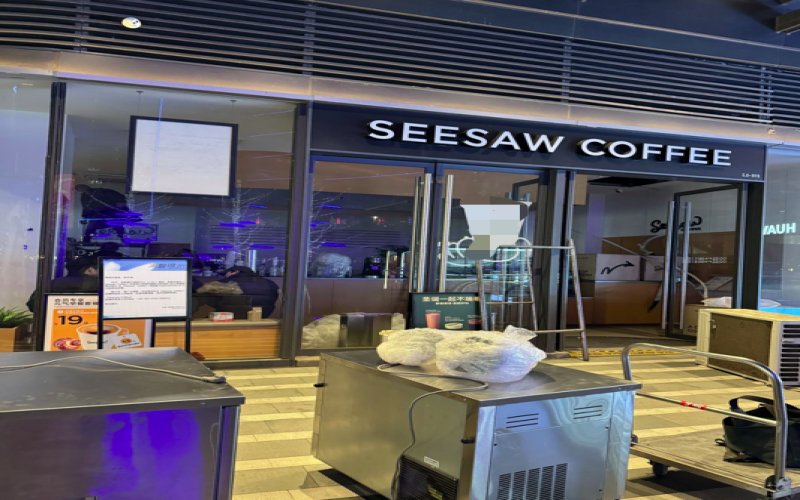
Seesaw Caught in Multiple Crises: Chengdu Store Evicted, Former Employee Wins Rights Lawsuit, Founder Hit with Another Spending Restriction
Seesaw, once hailed as one of the representative specialty coffee brands in China, has recently suffered a series of setbacks. Its last store in Chengdu was evicted after the shopping mall terminated the lease early; employees exposed illegal dismissals and successfully defended their rights through legal channels; and the founder was once again subject to high-consumption restrictions due to contract disputes, while the company's equity was frozen and debts were enforced through the courts. A stream of negative news has plunged this coffee brand, once favored by capital, into its darkest hour. This article will sort through the sequence of events and present the operational and legal difficulties Seesaw currently faces. [more…]
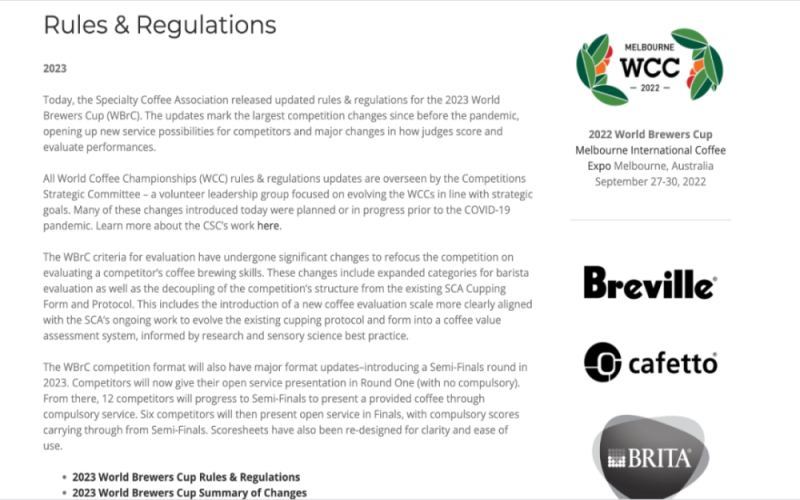
In 2023, the WBC rules underwent a major adjustment: plant-based milk and other animal milks are permitted for use in the Barista Championship.
The Specialty Coffee Association announced on December 22 the new rules for the 2023 World Barista Championship (WBC), World Brewers Cup (WBrC), World Cup Tasters Championship, and Cezve/Ibrik Championship. Among them, the most notable change in the WBC is allowing competitors to use plant-based milk or other animal milks to make milk coffee, breaking the long-standing restriction of using only cow's milk. The WBrC adjusted its evaluation criteria, refocusing on competitors' brewing skills and introducing a new coffee evaluation scale and a semifinal format. This series of changes has sparked widespread discussion in the industry, with some supporting the increased inclusivity and others worried about scoring fairness. This article will outline the specific contents of each rule update and the reactions from all parties. [more…]
A Full Analysis of the WBrC Top Six Pour-Over Techniques: From Champion Recipes to Specialty Coffee Brewing Details
Although the 2015 WBrC World Brewers Cup has already concluded, the brewing approaches of the top six competitors are still worth savoring for coffee enthusiasts today. This competition requires contestants to present both skill and service in front of the judges. The preliminary rounds include a compulsory brewing round and an open brewing round, and ultimately only six people advanced to the final in Gothenburg, Sweden. From the Russian competitor's natural Geisha to the Norwegian champion's Honey Kiss beans and Bluetooth scale temperature-control setup, each competitor showed unique insights in bean selection, dripper pairing, water temperature control, and extraction rhythm. This article provides a complete overview of the brewing methods from sixth place to first place, including coffee-to-water ratio, blooming time, and flavor descriptions, for pour-over enthusiasts to reference and learn from. [more…]
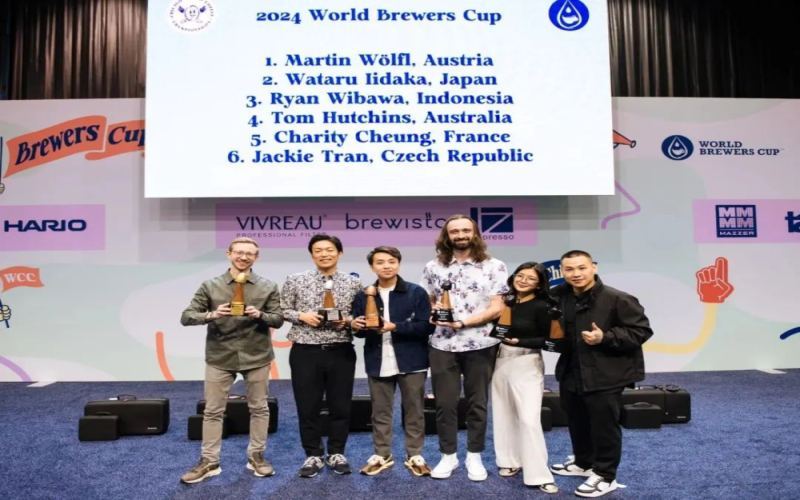
The Rise of Blended Beans: New Trends at the 2024 World Brewers Cup and an Analysis of the Champion's Brewing Approach
The 2024 World Brewers Cup (WBrC) and World Cup Tasters Championship concluded in Chicago, USA, with Austrian competitor Martin Wolf taking the crown. One of the biggest highlights of this year's event was that four of the six finalists independently chose blended coffee beans, ranging from two-bean blends to three-bean blends, and from cross-origin mixes to combinations of different processing methods, showing an unprecedented diversity in blending strategies. This article reviews the competition results, analyzes the competitors' blending approaches, and explores why blended beans have become a new trend in specialty coffee competitions. [more…]

Milk tea shop community group buying involved in fraud with nearly 200 million in transaction flow; after the brand terminated cooperation, the store changed its sign and continued operating.
A bubble tea franchise store in Wuxi appears to run community group buys and membership top-ups on the surface, but behind the scenes it is suspected of large-scale fraud. Over a thousand local people have fallen victim, with transaction flows of nearly 200 million yuan, and even people in Shanghai, Zhejiang, Anhui and other places have been caught up in it. Even more surprisingly, the operator had compulsory measures changed because of pregnancy, and afterward continued to operate and keep selling low-priced products. The brand owner eventually announced the termination of cooperation and removed the signage, but the store changed its name and still opened as usual, and was still constantly hiring. What exactly is going on? What should ordinary consumers and job seekers pay attention to? [more…]
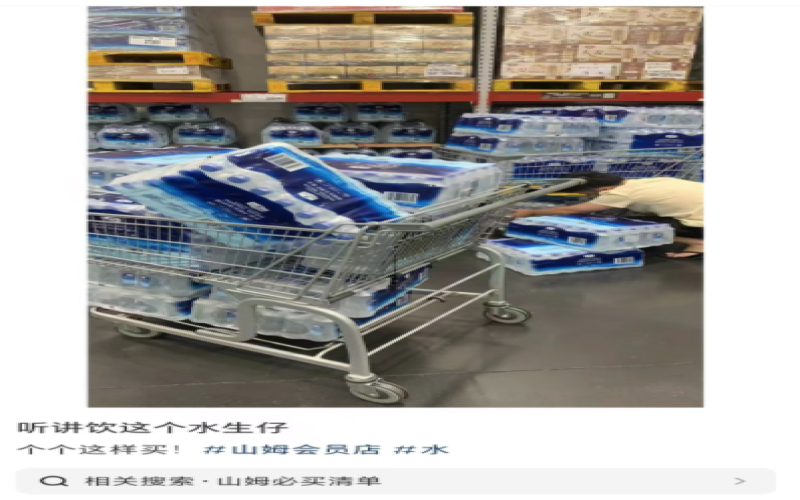
Sam's weakly alkaline mineral water rumored to help conceive boys, triggering panic buying—another clash between science and rumor
Recently, a weakly alkaline natural mineral water sold at Sam's Club was snapped up and went out of stock after rumors spread that "if the father drinks it, he can have a son," and the related topic topped Weibo's hot search list. This product, which meets the GB8537 standard and costs about one yuan on average, comes from Bama Longevity Mountain in Guangxi. It was originally just ordinary mineral water, but because of its "weakly alkaline" label, it was credited with effects such as neutralizing stomach acid, lowering uric acid, and even helping couples conceive a boy. Although the Shenzhen Health Commission long ago debunked the "acidic/alkaline constitution" as a pseudoscientific concept, and Sam's Club customer service also responded that there is no scientific basis for it, many netizens on social platforms still shared experiences of "it worked for me" and even summarized a "best drinking guide." This article will retrace the whole incident, explore the social psychology behind the rumor, and remind readers: whether a baby is a boy or a girl is random, and the baby's health is what matters most. [more…]

What Is the WBC? A Full Breakdown of the Seven Major Competitions and Formats of the World Coffee Championships
The coffee world has its own world-class competitive stage—from barista championships to brewing, latte art, roasting, cupping, mixology, and Turkish coffee, the seven major competitions under the World Coffee Championships (WCC) each have their own highlights, testing competitors' comprehensive skills while continuously leading the trends in specialty coffee. Today, Front Street Coffee takes you through these international competitions one by one to understand their content and rules, and to see what exactly the world's top coffee professionals compete in and how they compete. [more…]
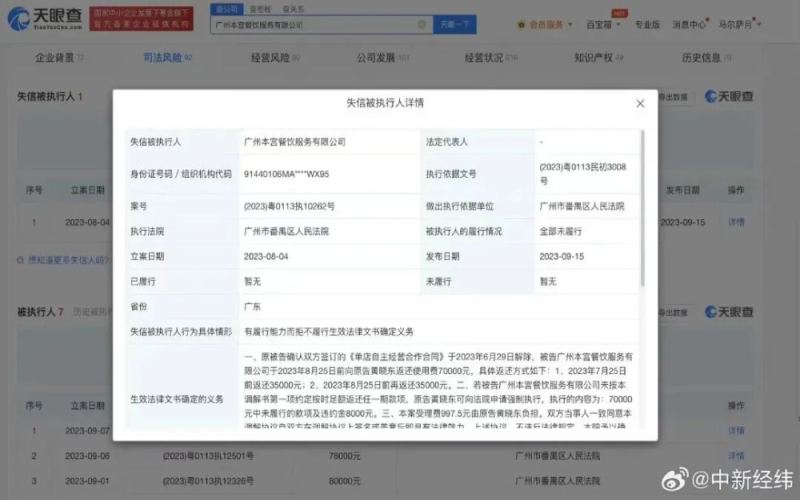
Celebrity tea brands hit by court enforcement one after another, Hu Haiquan and Guan Xiaotong drawn into a whirlwind of public opinion.
Recently, a string of trending topics on Weibo has reported that celebrity-linked tea beverage brands have been subject to court enforcement. The tea brand Ben Gong's Tea, co-founded by Hu Haiquan, was listed as a dishonest judgment debtor for refusing to fulfill its legal obligations, and Natural Stupid Milk Tea, where Guan Xiaotong once served as store manager, also added new information as a person subject to enforcement. The two incidents sparked widespread discussion among netizens about the relationship between celebrity endorsement and brand management. Hu Haiquan had already withdrawn his shares in advance, while Guan Xiaotong's studio stated that the case had nothing to do with her. Whether a celebrity halo can support the long-term development of a tea beverage brand—quality is what really matters. [more…]
Trademark Enforcement Backfires: What a Counterfeit Brand's Court Victory Means for the Coffee Industry
Competition in the coffee market is intensifying by the day, and brand trademark protection has become a focus of industry attention. In a recent trademark enforcement case, the genuine brand sued a copycat brand but lost, sparking widespread discussion. The case not only reveals the real-world difficulties currently facing trademark enforcement, but also sounds a warning bell for coffee industry practitioners—establishing a comprehensive intellectual property protection system is an urgent task. This article will review the course of the case, analyze the legal logic behind the ruling, and explore how coffee brands can effectively guard against copycat erosion, including sharing the experiences of brands such as Front Street Coffee. [more…]
Court auctions a bottle of Sprite starting at 4.2 yuan, sparking heated debate: judicial practice and reflections on asset liquidation in bankruptcy cases
Recently, an auction announcement by the Dafeng District People's Court in Yancheng, Jiangsu Province, drew widespread attention—the auction item was surprisingly a bottle of Sprite soda with a starting bid of just 4.2 yuan. This bottle of beverage, with a market price of 6 yuan, was limited to self-pickup and not mailed, yet it attracted over 7,500 onlookers and 215 registered bidders. Behind the incident lies a last-ditch effort by the court to recover losses for creditors after a company with a total registered capital exceeding ten million yuan went bankrupt. From 4.08 yuan glass water to 5 yuan bathroom scales, the court has successfully auctioned small items multiple times. Is this seemingly "making a mountain out of a molehill" judicial practice a waste of judicial resources, or is it the proper fulfillment of legal enforcement? This article will take you through the ins and outs of the incident and explore the legal logic and practical dilemmas in judicial auctions. [more…]
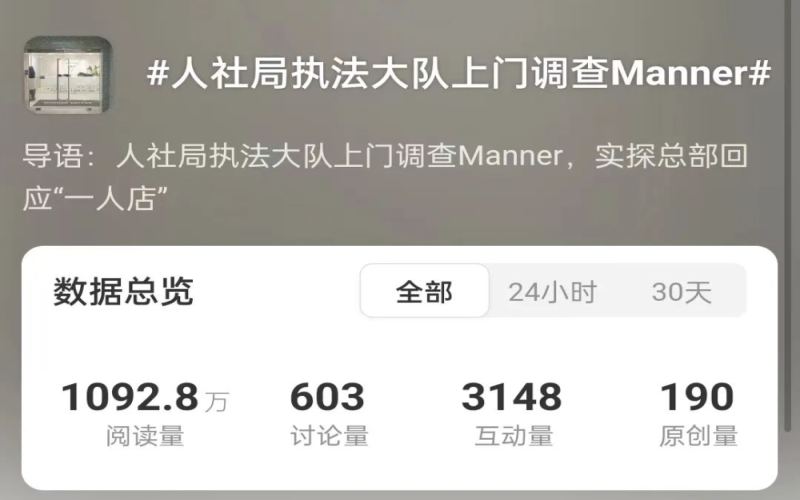
Manner faces scrutiny over the number of employees enrolled in social insurance, and the enforcement team from the Human Resources and Social Security Bureau conducts an on-site inspection.
Recently, Manner Coffee has once again become the focus of public opinion due to a mismatch between the number of employees enrolled in social insurance and the scale of its stores. Shanghai Yinhe Industrial Co., Ltd. had only 1,225 people enrolled in social insurance in 2023, while Manner has more than 1,295 stores, raising public suspicion about whether it has paid social insurance in full for all employees. The enforcement brigade of the Human Resources and Social Security Bureau has visited to investigate. Manner responded that it implements a comprehensive working hours system and that there is no situation of not signing contracts, not paying social insurance, or withholding overtime pay. In addition, the brand responded to topics such as leaked videos, store staffing, and employee treatment, admitting that the issue of one-person stores is complex, but promising to improve baristas' comfort at work. The incident continues to escalate, bringing common problems in the industry to the surface. [more…]
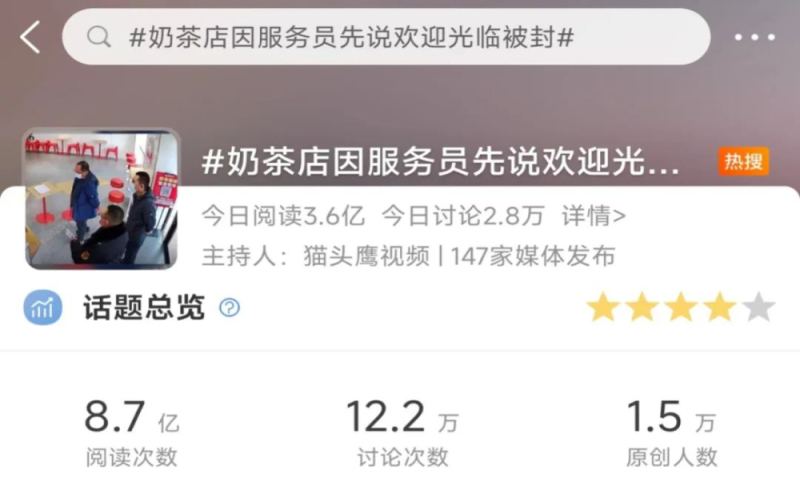
A simple "Welcome" led to the shutdown of a milk tea shop; official notice confirms abuse of power and holds those responsible accountable.
A milk tea shop was sealed and ordered to close on the spot by market supervision officials in under a minute—all because the staff said "Welcome" before asking customers to scan the QR code. The incident sparked widespread attention after it was exposed. An official statement later concluded that the law enforcement officers had abused their power and deliberately made things difficult; those involved have apologized and been disciplined. In this issue of coffee news, while we follow this incident, we also remind coffee professionals to be mindful of the boundaries of law enforcement in epidemic prevention and control, and we continue to bring coffee enthusiasts professional coffee knowledge and Front Street Coffee product recommendations. [more…]

Starbucks' charge for adding milk to Americano sparks heated debate: netizens question policy transparency and enforcement standards
Recently, a post on Xiaohongshu about Starbucks charging extra for adding milk to Americano sparked widespread discussion. Some consumers reported that when ordering an Americano with milk during a fat-loss period, they were told by staff that it would cost extra. Customer service responded that since February 2022, adding more than 4 ounces of milk requires a fee. However, some netizens pointed out that this policy only applies to the black coffee series, while tea drinks and app orders can still get free milk. Some netizens claiming to be Starbucks partners said that generally, adding milk within 30ml is free, but inconsistent communication of store policies has led to chaotic enforcement. The incident reflects the brand's shortcomings in customized service and consumer communication, prompting thoughts on the reasonableness and transparency of the charges. [more…]

Applying for a summer job at a coffee shop requires a deposit first? 14 students in Meizhou were charged before even starting work, and law enforcement stepped in.
Summer jobs are supposed to be a way for students to earn pocket money and gain social experience, yet 14 students in Meicheng, Meizhou, encountered an absurd situation when applying for summer work at a coffee shop: before even starting the job, they were charged deposits ranging from several hundred to over a thousand yuan by the shop owner. What's even more frustrating is that most of them never worked a single day, yet getting their deposits back proved extremely difficult. This incident not only exposes the risks of recruitment information on social platforms, but also serves as another reminder to job seekers: it is illegal for employers to charge work deposits. [more…]

Zhengzhou BRT stations introduce Mixue Bingcheng outlets, sparking concerns over planning permit disputes and occupation of tactile paving
Zhengzhou Bus Group has teamed up with Mixue Bingcheng to open a store inside a bus rapid transit station, with the first pilot located on the west side of the intersection of Huayuan Road and Nongye Road. This attempt is seen as an extension of bus services, allowing passengers to buy drinks while waiting for their bus and even enjoy discounts with their ride records. However, the store's construction is alleged to have proceeded without a construction land planning permit. The Jinshui District Urban Comprehensive Law Enforcement Bureau posted a notice to deliver enforcement documents, but no one signed for them, leaving the procedure at an impasse. Meanwhile, netizens have questioned whether the store occupies the sidewalk and tactile paving, potentially affecting passage. Zhengzhou Bus responded that the station passage is wide enough and promised to make dynamic adjustments. The incident has sparked discussion about the boundaries of commercial development in public spaces and provides a new case of cross-industry collaboration for the coffee and tea beverage industry. [more…]
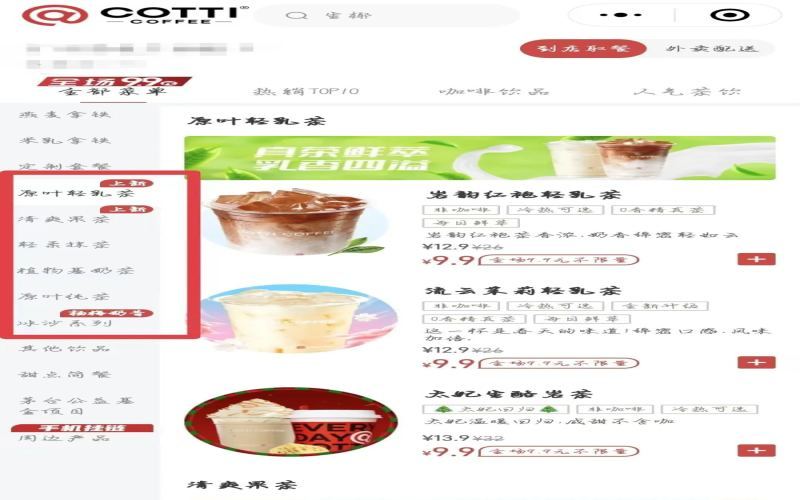
Cotti Coffee Closes 250 Stores in 90 Days: Franchisee Data Deceived, Subsidies Fail to Retain People, Founder's Forced Enforcement Deal the Final Blow
In the coffee sector, nearly 90,000 new stores have opened in the past year, with a net increase of over 48,000, and amid fierce competition, brands are rolling out various strategies. Cotti, which ranks third in store scale, however, chose to cross over into tea beverages in April, launching new milk tea and fruit tea products unrelated to coffee, which is puzzling—after all, it already owns the tea brand Chamao, which focuses on human-machine collaboration. Behind this strategy is the reality that franchisees are increasingly seeing no hope of profitability and are exiting to cut losses. A franchisee in Hubei reported that the foot traffic data provided during recruitment was severely inflated, and the data used by third-party assessment software was actually outdated from several years ago. The brand relied on these impressive figures to set a record of opening 7,000 stores in 14 months. Now, according to Jihai brand monitoring, Cotti has closed 250 stores in the past 90 days, equivalent to three per day, while Luckin, with more than twice the total number of stores, closed only 89 in the same period. Negative news such as salary cuts, layoffs, and the founder being forced to execute 3 billion yuan in debts has followed one after another, and franchisees are no longer willing to be mere also-rans. [more…]
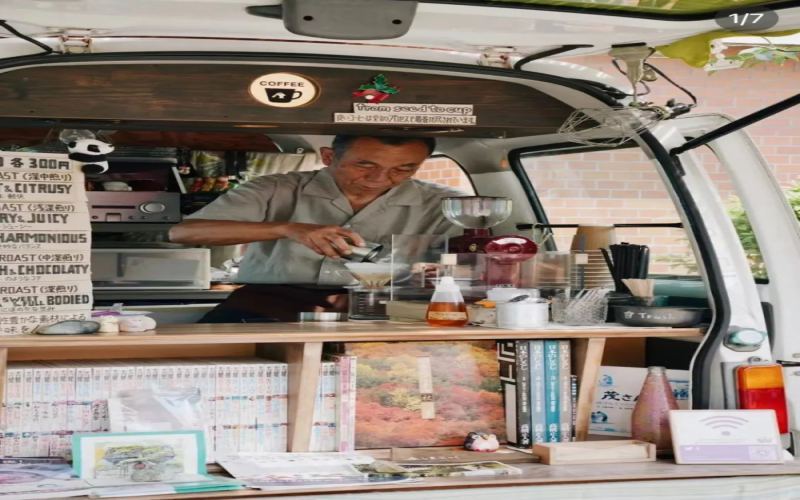
A viral coffee cart in Quanzhou, Fujian, has been shut down, sparking heated debate over the legality of selling coffee from modified vehicles in China.
Recently, a popular coffee truck in Quanzhou, Fujian, was urgently shut down by law enforcement, drawing attention to the legality of operating mobile coffee trucks. As notes related to "mobile coffee trucks" on platforms such as Xiaohongshu exceed ten thousand, this low-cost entrepreneurial approach has attracted many enthusiasts, but issues behind it—such as electrical safety, food hygiene, and illegal occupation of roads—have gradually surfaced. This article centers on this incident to explore whether operating a modified coffee truck is illegal in China, sort out the enforcement basis and industry limitations, and remind entrepreneurs to understand the relevant regulations before diving in, so as to avoid blindly following the trend. [more…]
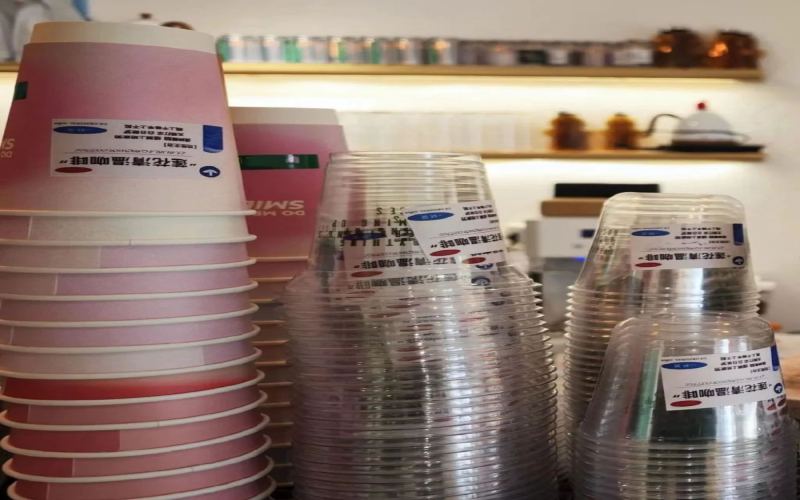
Coffee shop investigated for piggybacking on Lianhua Qingwen hype, Qingpu Market Supervision Bureau files case over unfair competition practices
Recently, a coffee shop in Qingpu District, Shanghai, was investigated by market regulators for attaching "Lianhua Qingwen Coffee" labels to its drink cups. The shop began selling such labeled drinks on December 19, 2022, and authorities seized 290 labeled paper and plastic cups on site, along with 1,058 unused labels. The shop claimed that customers suggested it "play on the meme" for marketing, but enforcement officials pointed out that this kind of behavior could easily lead consumers to mistakenly believe the product had a specific connection with Lianhua Qingwen, and it was suspected of unfair competition. It is worth noting that coffee itself may have a certain auxiliary effect on relieving cold symptoms, but it is by no means a substitute for medication. Front Street Coffee reminds all enthusiasts to view coffee's effects rationally and not to blindly follow trends. [more…]