







Why did blended coffee beans dominate the 2024 World Brewers Cup?
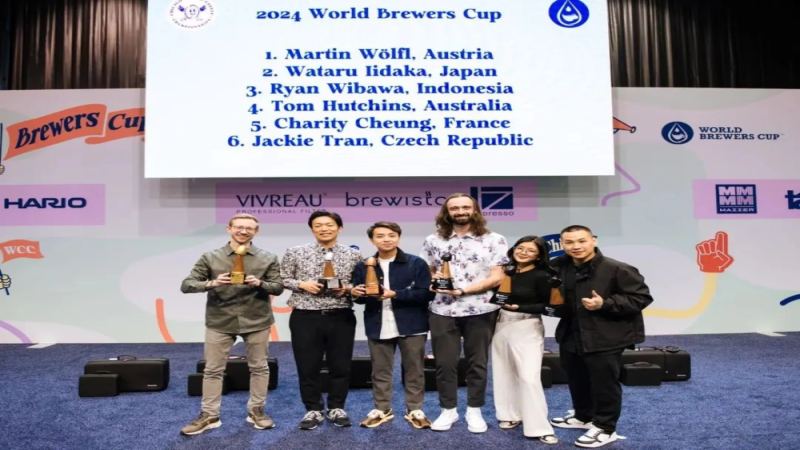
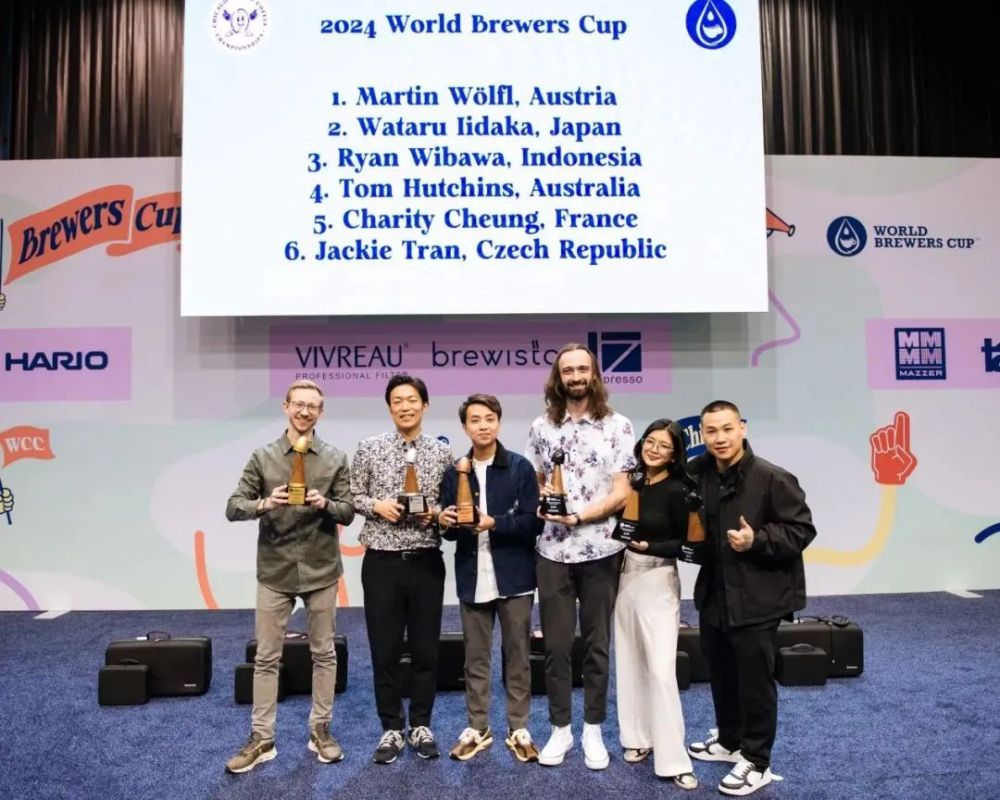
Four of the six finalists at the 2024 World Brewers Cup in Chicago brewed blended coffee beans, combining two or three lots across origins or processing methods. Martin Wolf of Austria won the title, with Wataru Iidaka of Japan second and Ryan Wibawa of Indonesia third. The open brewing round, where competitors choose their own beans, drove this variety.
The event has two stages. In the compulsory round, organizers supply one uniform coffee and competitors get thirty minutes to analyze it and plan a brew. The open round lets baristas bring their own beans and recipe. Many now work with estates in advance and pick lots that show layered flavor, which is why blending strategies drew so much attention from coffee enthusiast viewers.
The 2024 World Brewers Cup (WBrC) and World Cup Tasters Championship concluded in Chicago, USA, with Austrian competitor Martin Wolf taking the crown. One of the biggest highlights of this year's event was that four of the six finalists independently chose blended coffee beans, ranging from two-bean blends to three-bean blends, from cross-origin mixes to combinations of different processing methods, displaying unprecedented diversity in blending strategies. This article reviews the competition results, analyzes the competitors' blending approaches, and explores why blended beans have become a new trend in specialty coffee competitions.
▲
Click to follow | Daily specialty coffee culture magazine Coffee Workshop
Recently, the 2024 World Brewers Cup WBrC (World Brewers Cup) and World Cup Tasters Championship (WCTC) were grandly held in Chicago, USA. Despite the 13-hour time difference with China, many coffee enthusiasts still set their alarms and waited in front of their screens on time for the competitors to appear, carefully noting the equipment, bean varieties, and brewing parameters they used for future reference.
After intense competition, at around 4 a.m. Beijing time on the 15th, the results of this year's WBrC were officially announced. Martin Wolf from Austria won the championship, while Japanese competitor Wataru Iidaka and Indonesian competitor Ryan Wibawa took second and third place respectively, with inspiring results.
Those familiar with the rules of world coffee competitions know that the WBrC consists of two stages: the compulsory brewing round and the open brewing round. In the compulsory brewing round, the organizers provide a uniform coffee bean, and without knowing the specific parameters, competitors must complete their analysis and formulate a brewing plan for presentation within half an hour, placing extremely high demands on professional ability and on-the-spot adaptability.
The open round allows baristas to select their own brewing beans and tailor a exclusive brewing plan, so the open round of the finals attracts particular attention every year. To fully demonstrate their strength in flavor, competitors often communicate with estates in advance, selecting their preferred choices from numerous high-quality coffee beans, and sometimes also using innovative and refined post-processing methods to win over the judges in every aspect.
It is worth noting that among the six finalists this year, apart from champion Martin and sixth-place Czech competitor Jackie Tran, the four competitors ranked second through fifth all chose blended coffee. A series of two-bean and three-bean blends was dizzying to behold, and the blending concepts were each ingenious: some used American beans blended with Asian beans, some layered different processing methods to build complex flavor profiles, some competitors blended varieties using "Geisha" and "Maragogipe," and others favored Panama Geisha...
Competitor Wataru Iidaka from Japan carefully selected Geisha coffee beans from three well-known Panamanian estates and poured them layer by layer into the dripper: 6 grams of Nugu Estate natural Geisha provided acidity, 5 grams of Janson Estate natural Geisha highlighted candy-like sweetness, and finally 4 grams of Hacienda La Esmeralda honey-processed Geisha brought together floral notes. The three-in-one of Panamanian Geisha was awe-inspiring.
Another barista from France, Charity Cheung, drew on the blending methods of France's Champagne region, combining beans from three different origins and processing methods for extraction, including 30% Panama Abu Estate Geisha, 10% Colombia San Jacinto Estate Eugenio, and 60% Colombia Mikawa Estate Geisha, giving the coffee richer layers in mouthfeel.
It is reported that in addition to the several baristas in the finals, more than half of the over forty competitors in this World Brewers Cup adopted blending. Everyone believes that compared with single-origin coffee, blended beans possess more diverse aromatic compounds and can provide more complex flavor types for brewing. Properly leveraging their strengths can also produce a 1+1>2 effect and make it easier to pursue balanced extraction performance.
It can be seen from this that the current development direction of the specialty coffee trend is no longer satisfied with flavor expression from a single origin, or simply emphasizing the rarity of origin and variety, but has begun to move toward another mode of presentation—by combining good beans together to seek more possibilities in the flavor spectrum of specialty coffee.
Front Street Coffee believes that the rise of blended beans in competitions reflects the coffee industry's ongoing pursuit of flavor innovation and balanced expression, and also provides new ideas for everyday brewing.
Disclaimer: Some images in this article are from the internet. For some content on the website, such as images, we will respect the original author's copyright and indicate the source. However, due to the large quantity, there may be individual images or texts that have not yet been credited. Please forgive us. If the original author has any dispute, they may contact the website for handling. Once verified, we will immediately correct it. This article was compiled and edited by "Coffee Workshop." Please indicate the source when reposting. If there is any infringement, please inform us for deletion. Thank you~!
The above content is compiled by CoffeeHunters, a coffee news website.


