







What Does the Coffee Industry Store Shakeout Show?
Cotti Coffee closed 250 stores in the past ninety days, roughly three a day, according to Jihai brand monitoring, while Luckin, with more than double the total store count, closed 89 over the same period. Franchisees say foot traffic data used in recruitment was inflated and drawn from outdated third-party evaluations, even as the brand opened 7,000 stores in fourteen months.
The coffee industry added 89,346 new stores in the past year with a net gain of 48,508, according to Zhaimen Canyan data as of April 8, and competition has grown intense. Cotti's April move into milk tea and fruit tea, despite already owning the Tea Cat brand, looks like a search for new growth. Pay cuts, layoffs and the founder facing enforcement for 3 billion yuan have further discouraged franchisees.
In the coffee sector, nearly 90,000 new stores opened in the past year, with a net increase of over 48,000, and as competition reaches a fever pitch, brands are rolling out moves one after another. Cotti, which ranks third by store count, however chose to cross over into tea drinks in April, launching new milk tea and fruit tea products unrelated to coffee—puzzling, given that it already owns Tea Cat, a tea drink brand built around human-machine collaboration. Behind this strategy lies the reality that franchisees increasingly see no hope of profit and are pulling out to cut losses. A franchisee in Hubei reported that the foot traffic data provided during recruitment was severely inflated, and the data used by the third-party evaluation software was actually several years old. Yet the brand relied on these pretty numbers to set a record of opening 7,000 stores in fourteen months. Now Jihai brand monitoring shows Cotti closed 250 stores in the past ninety days, equivalent to three closures a day, while Luckin, whose total store count is more than double, closed only 89 in the same period. Negative news keeps piling up—pay cuts, layoffs, and the founder being subject to enforcement for 3 billion yuan—and franchisees no longer want to be also-rans.
▲
Click to follow | Daily specialty coffee culture magazine Coffee Workshop
Data from Zhaimen Canyan as of April 8 shows that the coffee industry opened 89,346 new stores in the past year, with a net increase of 48,508. As the sector grows ever more crowded, brands must come up with new tactics to break through. Cotti, temporarily third in store count, chose an unexpected path: in April this year it launched a "tea drink season," rolling out a batch of new milk tea and fruit tea products completely unrelated to coffee.
This "neglecting its proper business" move is quite surprising. Cotti already owns Tea Cat, a tea drink brand that touts human-machine collaboration as its selling point, and now that it has entered the tea drink business itself, it inevitably makes people wonder whether it will "fight even itself when it gets ruthless." The reality is that Tea Cat is struggling in the new tea drink market; not only has it failed to become a second growth curve for the brand, it may even become a drag.
Franchisees therefore see even less dawn of profitability, while those who already pulled out feel lucky to have cut their losses in time.
A franchisee in Hubei recalled sensing something was off as early as the store preparation stage. The foot traffic data provided by Cotti's recruitment staff differed greatly from reality: the other party claimed the store's surrounding permanent population exceeded 8,000, and that about 1,500 office workers in nearby office buildings could all be regarded as potential coffee consumers. But after visiting in person, he found that only two or three hundred people actually worked in the office buildings, and given their salary levels, it would be hard for them to consume coffee regularly.
Saying recruitment staff used fake data to fool people may not be entirely correct. A staff member who once handled store reviews admitted that the reason the data deviated so greatly was that Cotti's third-party traffic evaluation software pulled old data from several years ago, not the latest situation.
Cotti did not care whether this data was accurate; instead, it used these pretty numbers as the basis for its store-opening strategy, thereby setting a new industry record of "opening 7,000 stores in 14 months." But behind the record is franchisees' full dissatisfaction with the poor store-opening strategy.
The data problem goes far beyond this one point. According to Cotti recruitment materials obtained by Phoenix Net's "Storm Eye," the brand painted a picture of "getting rich quick" for franchisees: stores with daily sales of more than 400 cups and an average ticket price above 16 yuan could achieve operating profit of 50,000 yuan; if the average ticket price reached 22 yuan, operating profit could reach 100,000 yuan.
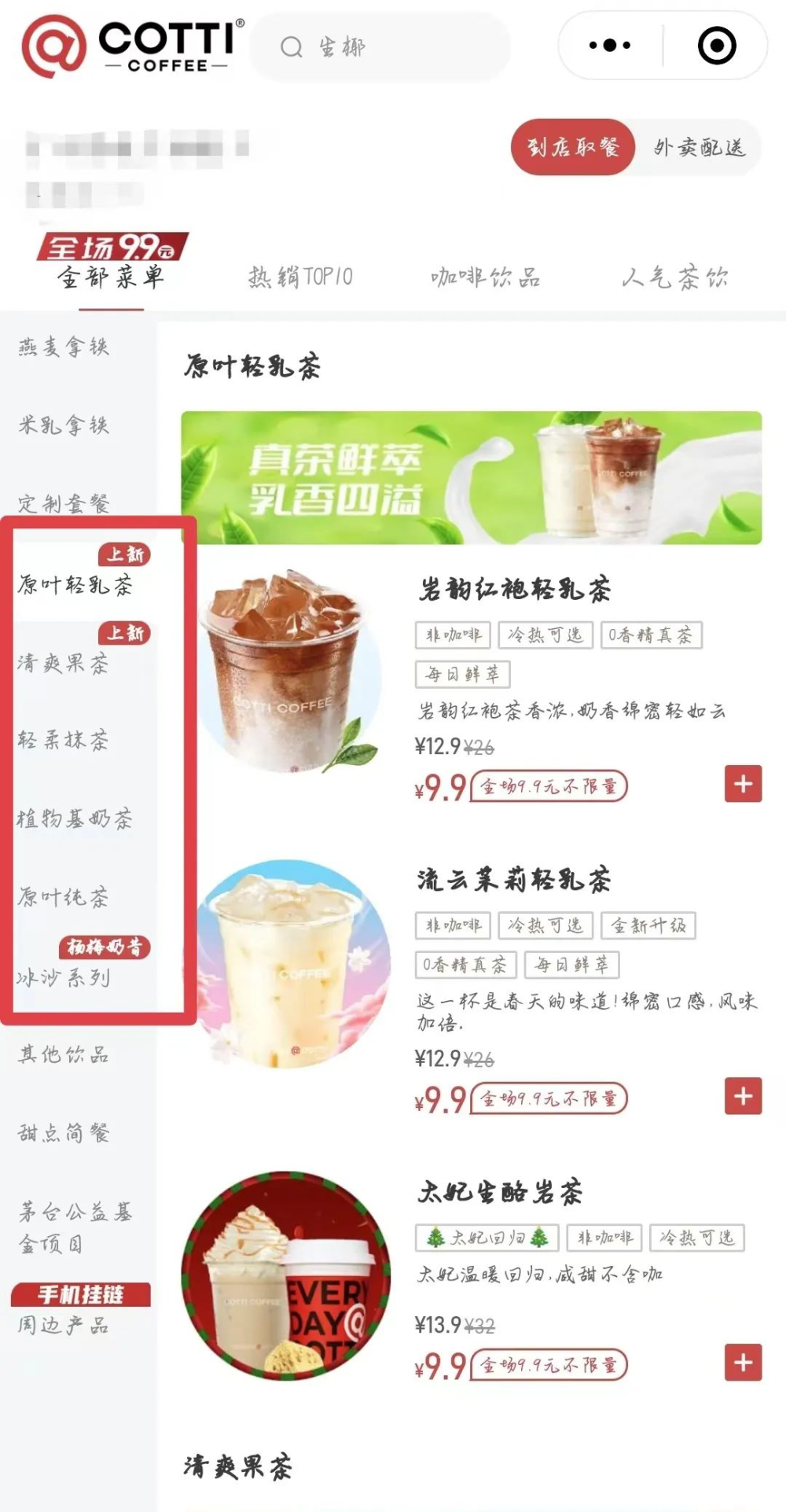
Many people signed franchise agreements precisely because of this blueprint. But in reality, the ideal break-even model is severely disconnected from market conditions; daily sales and average ticket prices simply cannot reach the baseline in operations, the franchisees' dream of getting rich is shattered by reality, and recouping their investment is nowhere in sight.
To stabilize franchisees, Cotti rolled out a package of subsidy policies and repeatedly extended the implementation deadline. Yet this still could not persuade them to hold on to a store that could not make ends meet, and closing stores and transferring them became the choice of many, with related posts visible everywhere on social platforms.
Jihai brand monitoring data for April 28 shows that Cotti closed 250 stores in the past ninety days, equivalent to closing 3 stores a day. By comparison, Luckin, whose total store count is more than double Cotti's, closed only 89 in the same period.
After the wave of closures, the uproar over pay cuts and layoffs also became intense. More and more employees exposed internal company problems, involving unpaid wages and shifting conflicts between the company and franchisees onto others; combined with earlier consumer complaints about out-of-stock stores and items long shown as sold out, the brand image has come under attack from both inside and outside, and franchisees' mindset is growing more and more unstable.
The last straw that crushed franchisees was that in April this year, "Cotti founder subject to enforcement" became a trending topic. The news that Lu Zhengyao was subject to enforcement for 3 billion yuan within a year, once spread by the media, dealt an self-evident blow to the brand image. Cotti, already unpopular with consumers, saw sales decline further, and the hope of profitability became ever more remote. Those franchisees who once accompanied Cotti all the way to the top now increasingly want to pull out and no longer wish to be the brand's "also-rans."
Image source: Internet
Disclaimer: Some images in this article are from the Internet. For some content on the website, such as images, we will respect the original author's copyright and indicate the source, but due to the large quantity, a few images and texts may not have been credited in time; please forgive us. If the original author has any dispute, they may contact the website for handling, and once verified we will correct it immediately. Compiled and edited by "Coffee Workshop"; please indicate the source when reposting. If there is infringement, please inform us for deletion. Thank you~!
The above content is compiled by CoffeeHunters, a coffee news website.


