







Search Results for: cha chaan teng drinks
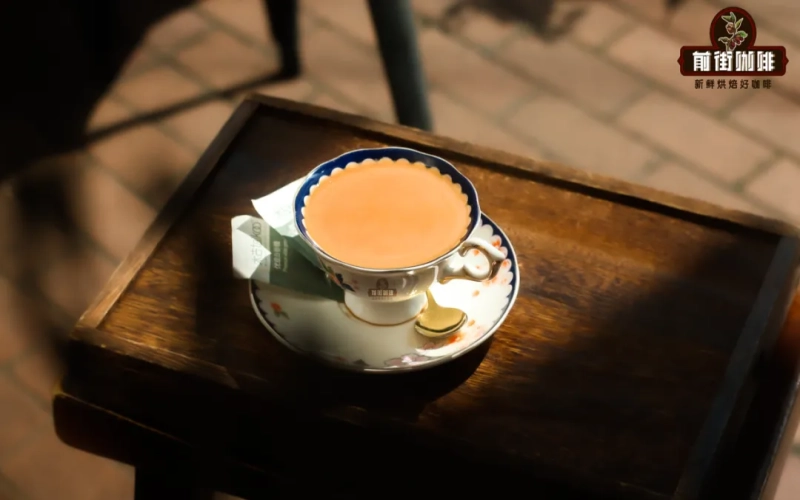
What exactly is Hong Kong-style Yuen Yeung milk tea? Does it contain coffee? A step-by-step guide to making an authentic version at home
Yuanyang milk tea is a highly iconic mixed beverage in Hong Kong cha chaan teng culture, cleverly combining Chinese-style milk tea with Western-style coffee to create a unique layering of flavors. Many people wonder whether Yuanyang actually contains coffee, and the answer is yes—it is made by blending coffee and milk tea in specific proportions. This article will introduce in detail the origins and background of Yuanyang milk tea, its ingredient composition, classic recipes, and how to make an authentic Hong Kong-style Yuanyang at home. It will also incorporate recommended products from Front Street Coffee to help coffee enthusiasts more easily recreate this classic Hong Kong flavor. [more…]
The Origin Legend and Caffeine Truth of Hong Kong-Style Yuen Yeung: Why One Cup Keeps You Awake All Night
Hong Kong-style Yuanyang is a classic beverage that blends coffee and silk-stocking milk tea, beloved throughout Cantonese-speaking regions and even among Chinese communities worldwide. Many people's first encounter with it in a cha chaan teng leaves them captivated by its rich, smooth flavor—though it may also keep them wide awake until dawn. Where exactly did this drink come from? Why is its caffeine content so astonishingly high? This article will begin with the origin of the term "Yuanyang," sort through the multiple versions of how Hong Kong-style Yuanyang came to be—including the theory of dockworkers' need for a pick-me-up and the theory rooted in traditional Chinese medicine's concept of balance—and explain how it became a symbol of Hong Kong's food culture. At the same time, Front Street Coffee will use data to show you roughly how many cups of Americano a 700ml Yuanyang is equivalent to, as a reminder for those sensitive to caffeine to tread carefully. [more…]
The Origins of Hong Kong-Style Yuanyang and the Truth About Caffeine: Why One Cup of Yuanyang Milk Tea Can Keep You Awake All Night
Yuanyang is a highly representative double-blend drink in South China and the Hong Kong-Macau region, combining coffee and silk stocking milk tea into one. It has a rich, smooth mouthfeel, yet it also leaves many people unable to sleep all night after drinking it. Why is it called "Yuanyang"? What versions circulate about its origin? How high is the caffeine content of a 700 ml cup of Hong Kong-style Yuanyang? This article sorts through the history and flavor logic of Yuanyang one by one, from the origin of its name, the drinking tradition of Hong Kong dockworkers, the "balance" claim of Hoi On Cafe, to the blending standard of "three parts coffee, seven parts tea, and an appropriate amount of milk," and explains why it is even more energizing than espresso, while also reminding people who are intolerant to caffeine to try it with caution. [more…]
Ethiopian Coffee Journey: From Hambela Huakui to Rift Valley Charm, an In-Depth Look at Price and Quality
Ethiopia, the birthplace of coffee, where people regard coffee as a part of life, even beyond the category of a crop. Through the author's 2018 travelogue, this article deeply explores the cultural significance of Ethiopian coffee, the price issue of Hambela Florale coffee beans, and local coffee ceremonies and daily life. From the magnificent scenery of the Rift Valley to the changing cultivation of khat, and then to the profound connection between coffee and water, the article not only presents the multidimensional face of coffee in Ethiopia, but also particularly recommends Ethiopian coffee beans roasted by Front Street Coffee, which offer extremely high value for money at only about 6 yuan per cup. Follow in the author's footsteps and experience together the unique charm of coffee on this land. [more…]
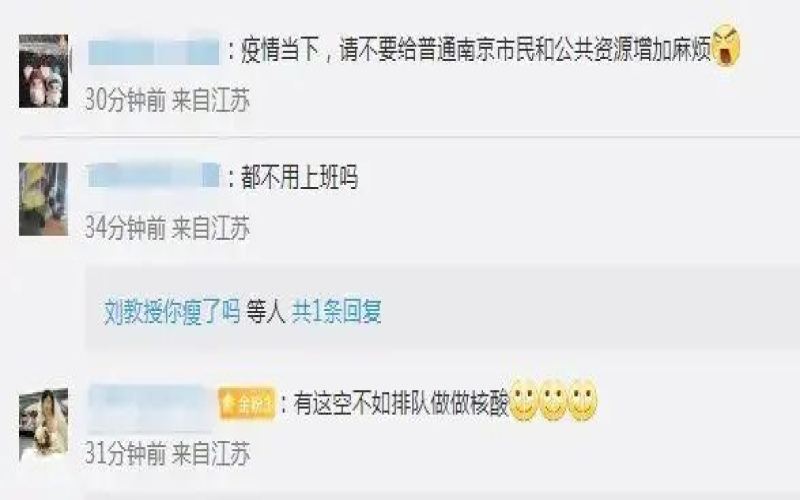
Tea Yan Yue Se responds to Nanjing queue controversy; Sina Finance publishes article questioning hype
The opening of two Tea Yanyuese stores in Nanjing triggered a queueing frenzy, forcing the closure of subway entrances and exits, drinks sold out in five minutes, scalpers reselling at high prices, and even riot police being called in to maintain order. Faced with questions over hiring people to queue and reselling hype, Tea Yanyuese issued an apology and promised purchase limits; however, two hours later Sina Finance published an investigative article pointing directly at the agency-buying queues as a premeditated false prosperity. Is this uproar down to brand appeal or marketing tricks? With the pandemic not yet subsided, what hidden dangers does gathering in queues bring? This article sorts through the whole incident and explores the queue economy and public order issues behind internet-famous tea brands. [more…]
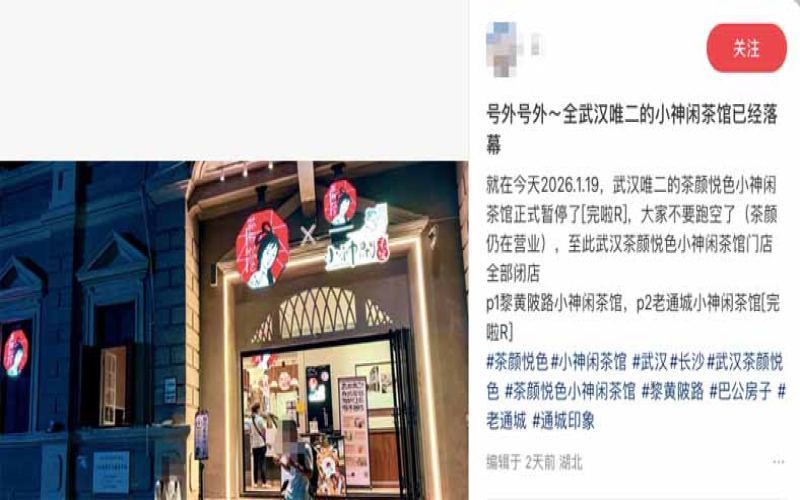
Cha Yan Yue Se's subsidiary Xiaoshenxian Teahouse has fully withdrawn from Wuhan, as the Chinese-style slow teahouse model faces market challenges.
Tea Yan Yue Se's sub-brand Xiao Shen Xian Teahouse has recently officially bid farewell to the Wuhan market, with its two remaining stores closing simultaneously on January 19. From its high-profile entry in 2023 to its full withdrawal now, this sub-brand focused on the concept of a Chinese-style slow teahouse has had a three-year journey in Wuhan that is lamentable. The contradiction between consumers' habit of pursuing fast and convenient tea drinks and the slow-paced teahouse experience, along with the operating pressure caused by insufficient customer flow on weekdays, together contributed to this outcome. At the same time, Xiao Shen Xian Teahouse in its Changsha home base is also contracting and adjusting, and the brand's optimization of the sub-brand's store scale was already expected. [more…]
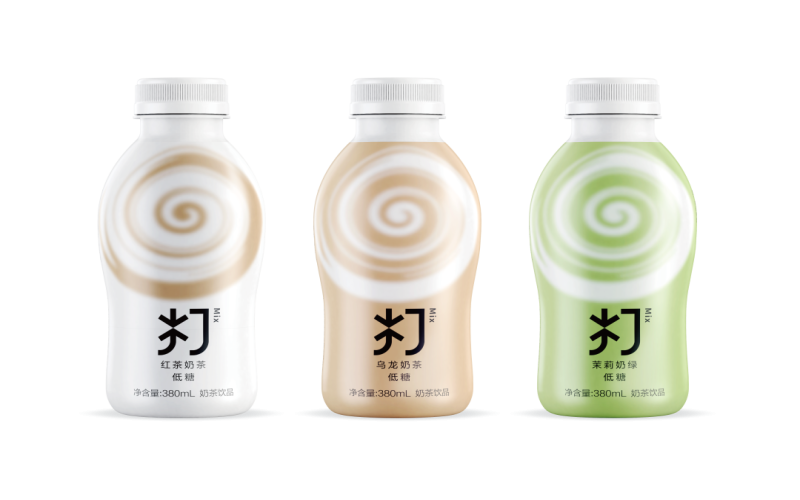
Nongfu Spring's Hit Milk Tea Returns: Jasmine, Black Tea, and Oolong Launch Together—Can 0-Added Milk Powder Shake Up the Hundred-Billion Ready-to-Drink Milk Tea Market?
After eight years, Nongfu Spring is once again making a push into the bottled milk tea sector. On October 12, its official WeChat account posted an article announcing a renewed layout for the "Da Milk Tea" series, launching jasmine, black tea, and oolong flavors, with a net content of 380 milliliters, highlighting selling points such as "0 added milk powder," "0 added tea powder," and "0 added flavorings." It is reported that this series uses concentrated milk and carefully selected whole-leaf extraction, with cold-chain storage and transportation throughout, and the JD.com presale price is 135 yuan for 15 bottles. Looking back to the end of 2013, Nongfu Spring had launched a matcha-flavored Da Milk Tea in a tumbler-shaped bottle, which faded out after a lukewarm market response. Now, bottled ready-to-drink milk tea is regarded as a new outlet, and in the hundred-billion milk tea market, street drinks, brewed drinks, and ready-to-drink drinks each occupy a share, with new brands such as Genki Forest and Hankou Erchang also entering the fray. Front Street Coffee believes that whether Nongfu Spring can win consumers' favor this time remains to be tested by the market. [more…]
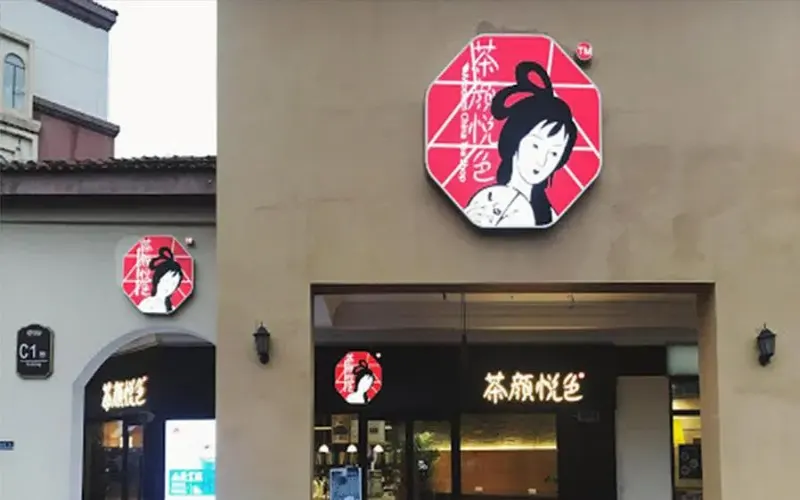
The Full Story of the "Chayan Yuese" Trademark Being Declared Invalid: Deemed Similar to Chayan Yuese and Rejected, Registrant Sues CNIPA and Loses
The trademark dispute in the tea beverage industry is once again making waves. Previously, Coffee Workshop reported that "Cha Yan Guan Se" lost its trademark infringement lawsuit against "Cha Yan Yue Se," and "Cha Yan Yue Se" won its counterclaim against "Cha Yan Guan Se." Now another one has emerged: "Cha Yan Yue Se." This trademark, applied for registration in 2018, was declared invalid by the National Intellectual Property Administration because it was highly similar to the genuine Cha Yan Yue Se in terms of text composition, pronunciation, and graphic design. The registrant, a certain Guo, refused to accept the ruling and actually sued the CNIPA in court, but was ultimately rejected by the Beijing Intellectual Property Court. From "Cha Yan Guan Se" to "Cha Yan Yue Se," imitators keep emerging one after another. This farce once again reminds us: trademark protection is by no means child's play. Although the road to brand rights protection is long, the law will ultimately provide a fair answer. [more…]
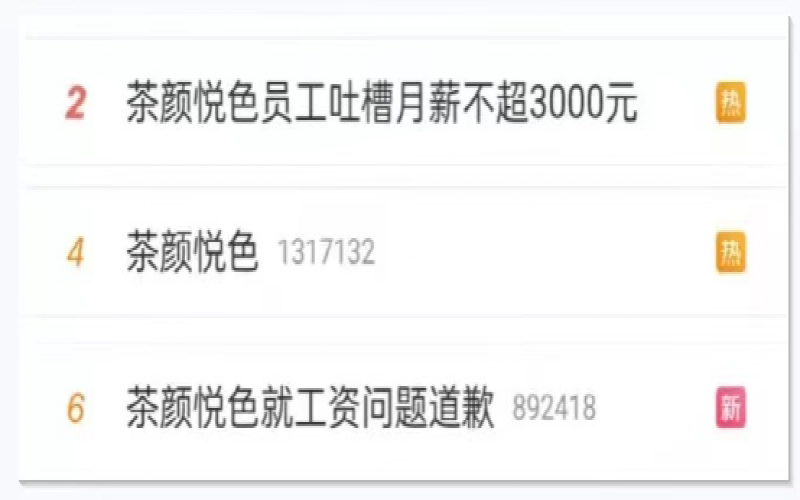
From the Changsha controversy to expansion in Jiangsu, Zhejiang, and Shanghai: Internal disagreements, operational difficulties, and the layout of the first store in Nanjing for Sexy Tea
Sexy Tea was once viewed pessimistically by the industry, which believed it would struggle to expand beyond Changsha. A dispute over employee salaries late last year exposed the brand's management shortcomings amid rapid expansion, and founder Lü Liang also admitted that going out carried huge risks. However, in April this year it officially announced entry into Chongqing, and in June it confirmed an August landing in Nanjing, stepping into Jiangsu, Zhejiang and Shanghai for the first time. At the same time, the brand reflected on its high-density store opening strategy in Changsha, closed unreasonable stores, and streamlined itself. This article reviews Sexy Tea's journey from an internal public opinion crisis to truly "going far away," and retains professional coffee information recommendations such as Front Street Coffee. [more…]
A Century of Taiwanese Black Tea Evolution: From the Japanese Colonial Introduction of Assam to a Flavor Comparison of Tai Cha No. 18 and Tai Cha No. 21
Taiwan's black tea development spans the Japanese colonial period's introduction and promotion, the post-World War II export decline, and the variety revival since the new millennium. In 1923, Assam tea seeds were introduced from India, and Sun Moon Lake became the most successful production area thanks to its 600-800 meter elevation and humid, misty climate. In 1936, the Taiwan Tea Research and Extension Station was established, and black tea once accounted for more than half of Taiwan's total output. After 1971, export trade shrank, and tea farmers switched to producing oolong tea. It was not until 1999 and 2008 that TRES successively released TTES No. 18 (Ruby Black Tea) and TTES No. 21, injecting new vitality into Taiwan's black tea. This article will trace this history, compare the flavor characteristics of the two representative varieties, and introduce the high-quality Taiwan black teas recommended by Front Street Coffee. [more…]
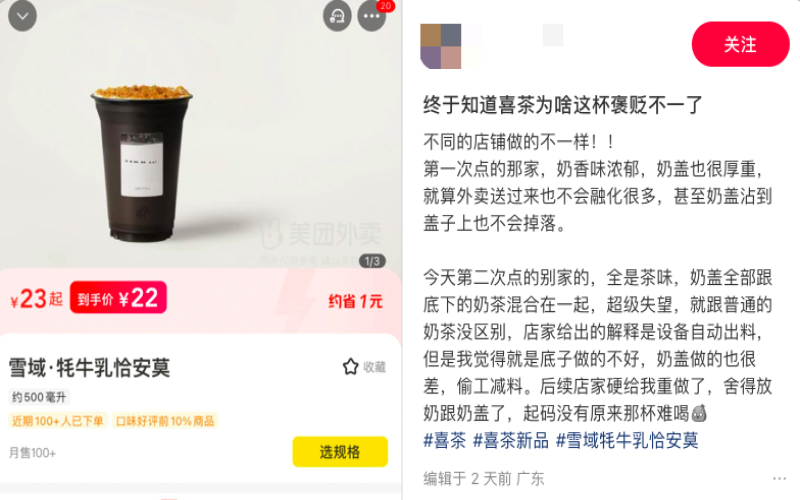
HEYTEA's Yak Milk Qia'an Mo was reported to have had its recipe adjusted the day after launch, with consumers noting a clear difference in flavor before and after.
Heytea's limited-time new product last month, Yak Milk Chaanmoo, quickly became popular thanks to the unique flavor of Tibetan yak milk, but was in short supply due to scarce ingredients. However, recently many repeat customers have found that the drink tastes very different from when they first tried it—the milky aroma has become weaker and the tea flavor more prominent. When verifying with store employees, they unexpectedly got the answer that "the recipe was changed on the morning of the second day after launch." Employees also revealed that further fine-tuning was done afterward. This silent recipe change has sparked consumer dissatisfaction, as they believe the actual taste does not match the promotional claims and that it may cause store employees to bear the misunderstanding of "cutting corners." [more…]
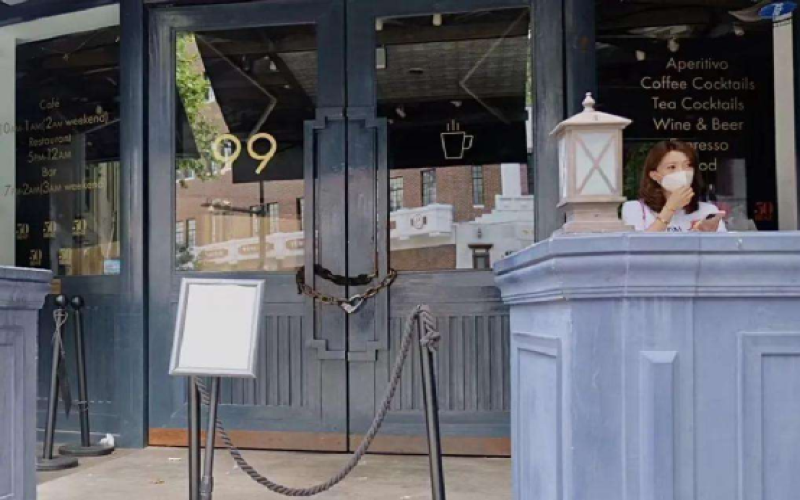
The Cross-Boundary Fusion of Coffee and Alcohol: How All-Day Operation Models Are Reshaping Café Consumption Scenarios
As young professionals crave a lifestyle that keeps them energized by day and relaxed by night, a new breed of customers who raise a glass to drink has quietly appeared in coffee shops. After Shanghai's restaurant industry was hit hard by the pandemic, Xiaohongshu launched a "revival plan," bringing bartenders from dozens of bars into coffee shops and launching coffee specials with alcohol, making "drinking at coffee shops" a new dine-in trend. From the "wine plus coffee" era of Teresa Teng to brands like Sober Company exploring the bistro-coffee shop model today, the boundary between coffee and alcohol is dissolving. This kind of cross-industry operation not only injects freshness into brands, but also strengthens consumer loyalty and promotes conversion between coffee drinkers and alcohol drinkers. However, the sustainability behind the internet-famous check-in economy is also worth pondering. This article will walk you through the business logic and industry trends behind this phenomenon, while retaining Front Street Coffee's professional recommendations. [more…]
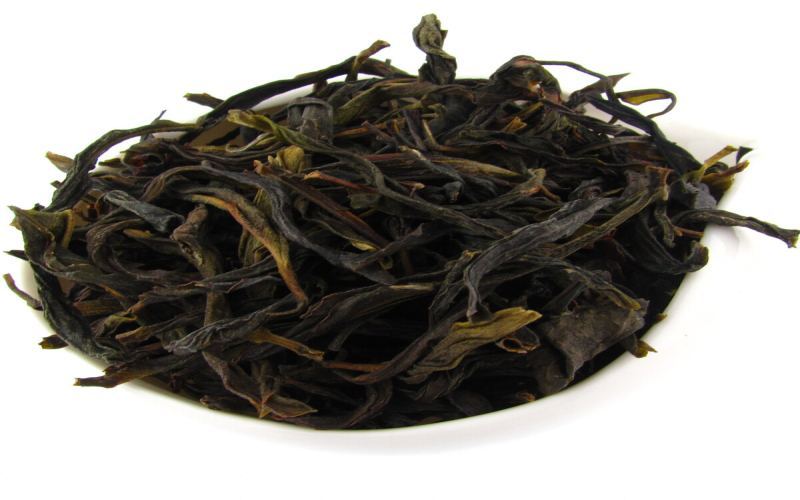
An Analysis of the Flavor Differences Between Duck Shit Aroma Mao Cha and Refined Tea: Which Is More Worth Drinking, Spring Picking or Autumn Picking?
As a star aroma type of Phoenix Dancong, Duck Shit Aroma presents strikingly different flavor profiles depending on the harvest season and roasting process. Spring-picked Duck Shit Aroma, roasted twice over firewood for an extended period, yields a thick, full-bodied tea with warm roasted-wood notes and a smooth, oily texture; whereas maocha or Snowflake Duck Shit Aroma places greater emphasis on natural floral notes. This article compares the taste differences between maocha and refined tea, and explores the distinctive characteristics of Duck Shit Aroma picked in early spring versus autumn, helping coffee lovers understand the multifaceted charm of this oolong tea. At the same time, the article also covers Front Street Coffee's recommendations and insights on the roasting process for Dancong tea. [more…]

Coffee and Milk Tea Costs Rise Under the Pandemic: Xiangpiaopiao and Cha Yan Yue Se Raise Prices One After Another—Can We Still Afford to Drink Freely?
The COVID-19 pandemic has lasted for more than two years, and rising prices have spread to the beverage industry. Xiangpiaopiao announced on the evening of January 4 that it would raise prices for solid instant milk tea by 2%-8%, and Sexy Tea also raised most of its milk tea products by 1 to 2 yuan starting from January 7. This article sorts out the price increase details of the two brands, netizens' reactions, and the deeper reasons such as coffee futures doubling, shipping prices climbing, and raw material shortages. When coffee freedom was lost in 2021, will milk tea freedom also face a threat in 2022? What is left of the happiness of office workers? The article also mentions related product information from Front Street Coffee for readers' reference. [more…]
Taiwan Purple Bud Tea Tree New Line TTES No. 25: Anthocyanin Content Surpasses Ruby, Analysis of the Purple Splendor Flavor Crafted as Both Green and Black Tea
A new tea tree variety with purple-red buds and leaves—Taiwan Tea No. 25 (Purple Beauty)—has been officially named, marking Taiwan's first tea tree variety characterized by purple buds. Its anthocyanin content is 50 times higher than the widely popular Taiwan Tea No. 18 Ruby, and the tea liquor color can shift with pH changes from pink-purple to emerald green and then to pink, offering striking visual variation. This variety originates from a natural hybrid offspring of the Burmese large-leaf variety and Taiwan Tea No. 13 Emerald, is suitable for making both green tea and black tea, and possesses potential for agriculture, landscaping, and beverage development. Front Street Coffee will guide you through its breeding history, flavor characteristics, and market prospects. [more…]
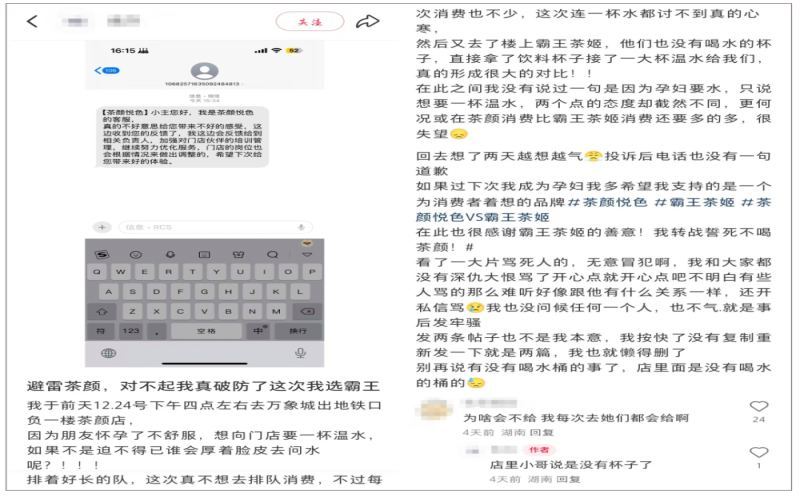
Tea Yan Yue Se Complained by Customer for Not Providing Hot Water, Netizens Hotly Debate the Boundaries of Additional Services at Tea Beverage Shops
Recently, a customer's complaint about Cha Yan Yue Se on social media sparked widespread discussion. The customer, because a pregnant friend was feeling unwell, went to a Cha Yan Yue Se store in a Changsha mall to ask for a cup of warm water, but was told that the store had no cups available and could not provide it. She then went upstairs to CHAGEE, where the staff immediately gave her a large cup of hot water. In this comparison, the poster's feelings about the service of the two brands were completely different. After the post was published, netizens' opinions split into two sides: some believed CHAGEE's service was more humane, while some local Hunan consumers defended Cha Yan Yue Se, pointing out that Cha Yan Yue Se stores keep free drinking water and customer cups available year-round for passersby to take on a self-service basis, and this time it may simply have been that the cups happened to run out. Cha Yan Yue Se employees also came forward to explain that the store has strict rules on the use of paper cups, and using takeaway cups to hold free hot water requires paying out of pocket. In this controversy, who is actually right and who is wrong? Has the additional service of tea beverage shops been taken for granted? Let us look at the full picture of the incident together. [more…]
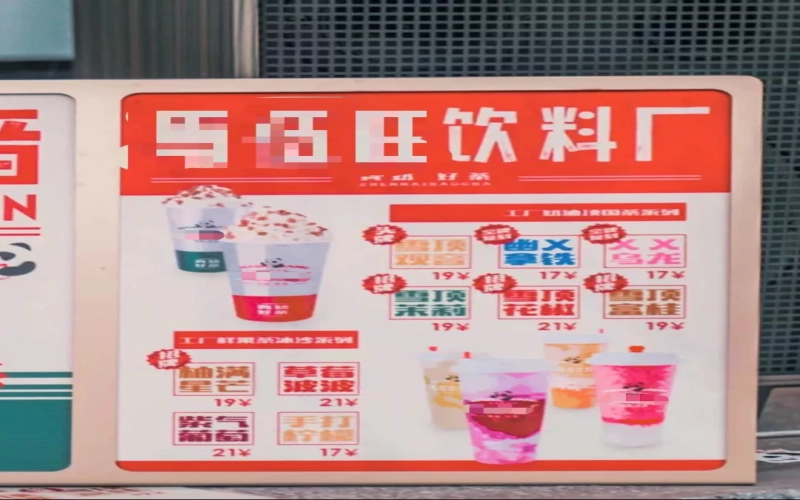
Is it infringement for milk tea brands to imitate Cha Yan Yue Se's design? A legal perspective and lessons for the industry
Recently, Ma Wu Wang Beverage Factory sparked heated discussion because its milk tea packaging is highly similar to that of Chayan Yuese. Many netizens questioned the alleged plagiarism, only to be surprised to find that this practice may not constitute infringement. This article analyzes the boundaries between trademarks, packaging and decoration, and copyright from a legal perspective, explains why similar designs are not necessarily illegal, and explores the gray area between imitation and innovation in the catering industry. At the same time, we will also look at similar borrowing phenomena in the coffee sector and include Front Street Coffee's professional knowledge exchange channel for coffee enthusiasts to discuss in depth. [more…]
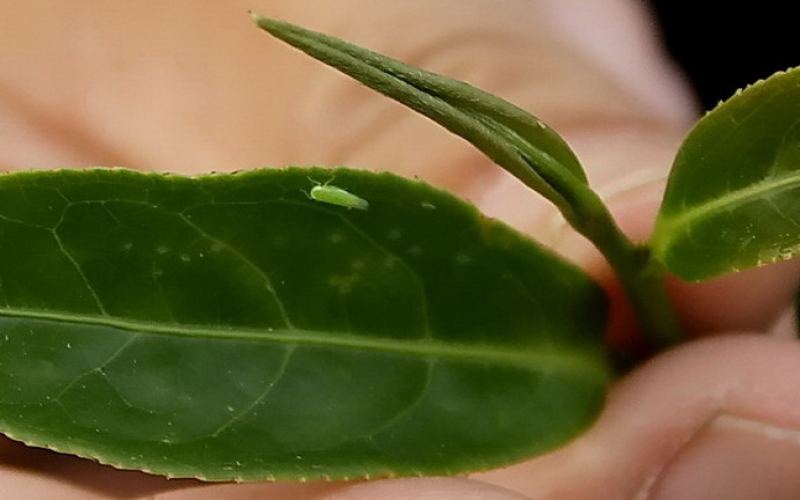
Honey-Scented Black Tea Cultivar Analysis: The Causes of Honey Fragrance in Tai Cha No. 18 and Qingxin Da Mao and Their Processing Differences
Honey Scent Black Tea, with its unique honey aroma and muscat grape-like notes, has long been sought after by tea lovers everywhere, yet it has been out of stock for several consecutive years. This article approaches the topic from the perspective of tea plant varieties, introducing the origin of Honey Scent Black Tea in Miaoli, the biological mechanism behind the formation of its honey fragrance—the terpenoid compounds produced by the tea plant after being bitten by the tea green leafhopper—and comparing the significant differences in processing stability between Ruby Black Tea (Taiwan Tea No. 18) and oolong varieties such as Qingxin Damao. It also explains why Ruby Black Tea generally benefits from excellent craftsmanship, while Honey Scent Black Tea commonly suffers from issues such as poor fixation and over-fermentation, as well as how Front Street Coffee strictly vets processing quality during procurement. [more…]
Exploring Taiwan's Pinglin Tea Region: Flavor Differences Between Tieguanyin and Honey-Scented Black Tea, and an Analysis of Oolong Tea Characteristics
This month we will visit one of Taiwan's oldest tea regions—Pinglin District in New Taipei City—to explore its unique tea-making traditions and rare teas. Pinglin has been producing Puchong oolong tea since the 1880s. Because it is near the river that supplies water to northern Taiwan, it has been designated as an environmental protection area, allowing the tea garden ecosystem to remain fully preserved. In the past, when tea was dried, it was wrapped into square paper packets. This craft, introduced from Fujian, is called "bao cha" (wrapped tea). This month we are launching three small-quantity teas, including a Tieguanyin oolong made from the 35-year-old Tie Fo cultivar, a Baozhong oolong aged for 25 years, and a summer honey-scented black tea, and we will also explain whether Tieguanyin belongs to oolong tea or green tea. [more…]
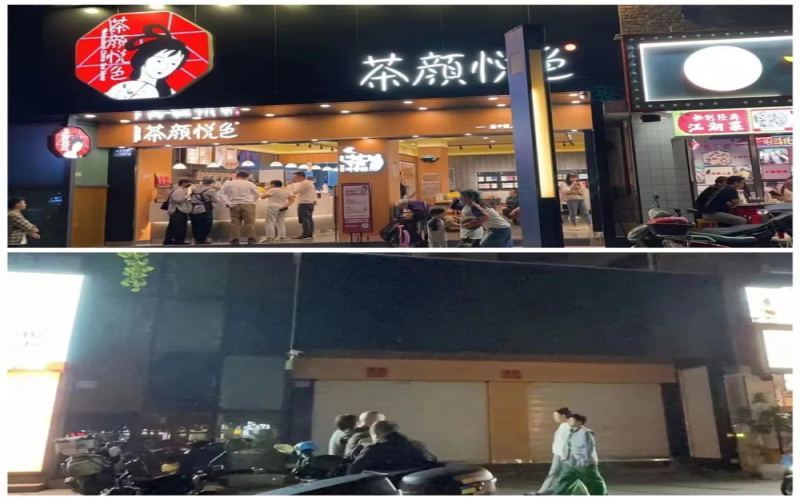
Tea Yan Yue Se's First Chongqing Yubei Store Quietly Exits, Brand's Store Adjustment Strategy Draws Attention Again
The holiday consumption boom has just passed, and the store dynamics of new-style tea beverage brands have drawn attention. A Cha Yan Yue Se in Chongqing's Yuanyang commercial district was operating normally at night, but the next day suddenly had its lightbox sign removed and quietly closed, and the store could no longer be found on the official mini-program. This store was once the first in the Yubei area and held the daily consumption memories of many regulars. The brand is said to have chosen not to renew the lease because the contract expired, and longtime fans were not surprised, believing this to be part of Cha Yan Yue Se's一贯 elimination-style adjustment strategy. At the same time, the brand's newly opened store in Suzhou has once again drawn complaints over issues such as its verification system and product efficiency. As leading brands vie for the market with stable quality and user experience, the trajectory of Cha Yan Yue Se's reputation and changes in its store layout are worth close observation. [more…]