







What Makes Yuen Yeung Coffee So High in Caffeine?
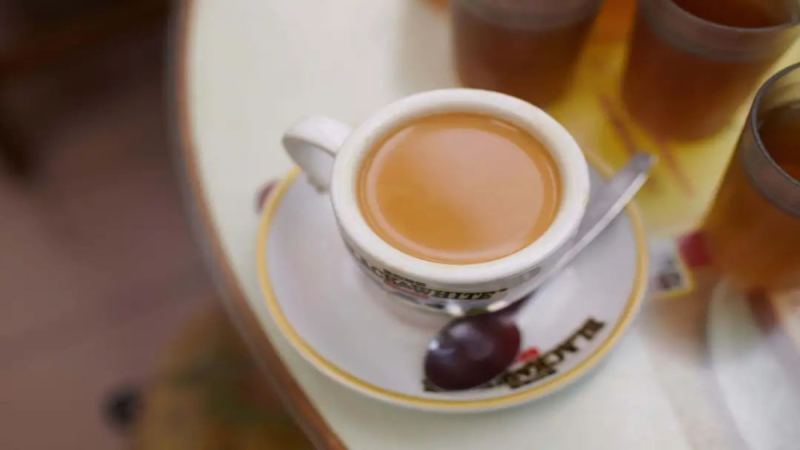
Yuen Yeung is a Hong Kong-style drink that mixes coffee with silk-stocking milk tea, and it is named after a pair of waterfowl that symbolize togetherness in Chinese, which is why the term also describes any food made from two combined flavors. The drink spread through Cantonese-speaking regions and Chinese communities, but its caffeine load is high enough to keep some people awake all night.
A 700ml cup of Yuen Yeung combines brewed coffee with strongly brewed milk tea, so the total caffeine roughly equals several cups of Americano, more than a single espresso. Accounts of its origin vary, from dockworkers wanting a quick pick-me-up to the traditional Chinese idea of balancing opposing qualities, and it became a familiar item in cha chaan teng menus.
Hong Kong-style Yuen Yeung is a classic beverage that blends coffee and silk-stocking milk tea, sweeping the Cantonese-speaking regions and Chinese communities worldwide. Many people's first encounter with it in a cha chaan teng leaves them captivated by its rich smoothness, but it may also keep them awake until dawn. Where did this drink come from? Why is its caffeine content so astonishingly high? This article will start with the origin of the term "Yuen Yeung," sort through the multiple versions of how Hong Kong-style Yuen Yeung was born—including the theories about dockworkers' need for a pick-me-up and the traditional Chinese medicine concept of balance—and explain how it became a representative of Hong Kong's food culture. At the same time, Front Street Coffee will use data to tell you roughly how many cups of Americano a 700ml Yuen Yeung equals, reminding those sensitive to caffeine to try it with caution.
I wonder if any of you have had this experience at Front Street Coffee:
Back in my student days, the first time I went to a Hong Kong-style cha chaan teng, I saw "Yuen Yeung" on the menu, something I'd never seen before. Curious, I ordered a cup. It was smooth, fragrant, and rich going down—but that night I stayed awake until dawn, and after that I never dared order it lightly again.
It wasn't until I grew up that I realized this stuff actually packs more caffeine than espresso—no wonder everyone complains they can't sleep after drinking it, and can even stay wired all night.
What is "Yuen Yeung"?
As the saying goes, one envies only the mandarin ducks, not the immortals. In Chinese, Yuen Yeung first refers to a type of waterfowl that lives in East Asia and often appears in pairs—"Yuen" refers to the male bird, "Yeung" to the female—so the term is often seen as a symbol of love and companionship.
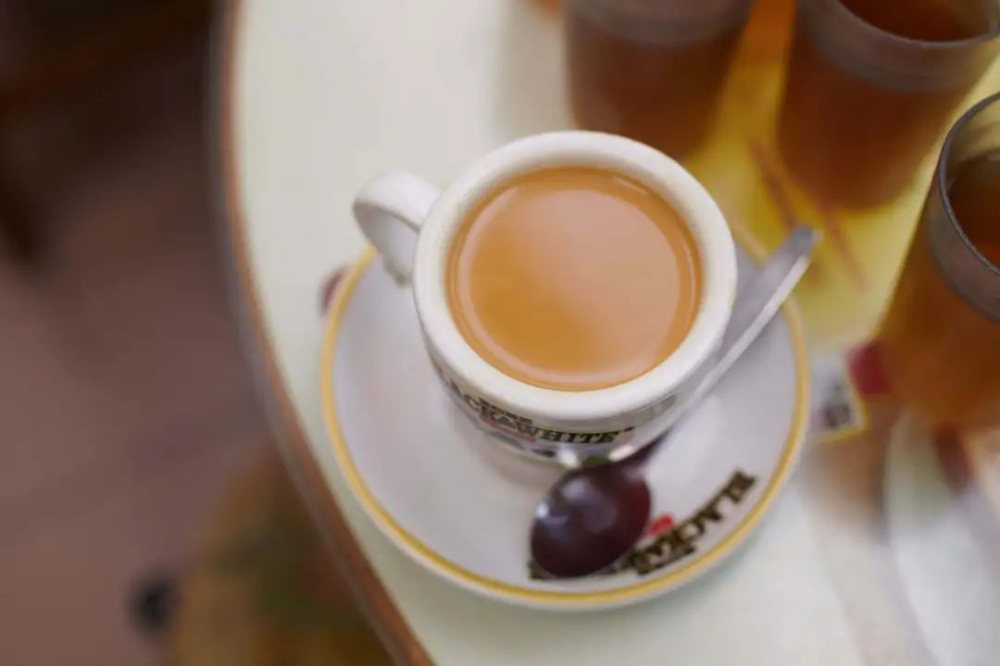
In today's everyday conversation, especially among people from the "Southern F3" (Guangdong, Guangxi, Hainan) and Hong Kong and Macau, because "Yuen Yeung" carries the meaning of "a pair, a duo," it is also often used to describe food made by combining two different flavors. A dual-combo drink of Hong Kong-style coffee plus silk-stocking milk tea is what we now commonly call "Hong Kong-style Yuen Yeung." Since there's milk tea and there's coffee , then in theory we could call this drink that has swept the entire Cantonese-speaking region " Yuen Yeung milk tea," or we could call it "Yuen Yeung coffee"—after all, it belongs to both categories.
The "mysterious origins" of Hong Kong-style Yuen Yeung
It is already widely known that Yuen Yeung first appeared in Hong Kong, but regarding its creation and the origin of its name, there are many different stories. Among them, the most widely circulated version is that it is related to the workers who made a living at the docks every day.
The Hong Kong people's habit of drinking tea and coffee was introduced by the British during the colonial period. Early British-style milk tea was brewed from Ceylon black tea, fresh milk, and sugar; both the tea leaves and milk were relatively expensive and were a symbol of the upper class—the local working class simply couldn't afford them.
In the 1950s, Hong Kong people mostly engaged in manual labor such as hauling, construction, and seafaring, and they needed refreshment and physical replenishment. The owners of dai pai dongs improved British-style milk tea: they used a tea base blended from local broken tea leaves and other teas, then used the repeated-pouring method to make the tea flavor stronger, mixed in evaporated milk, and increased the proportion of sugar and milk, creating a Hong Kong-style milk tea that was strong in flavor, high in calories, and affordably priced.
Legend has it that dockworkers at the time needed a drink every day that could both replenish their energy and quickly refresh them, so someone came up with the idea of mixing bitter but stimulating coffee into silk-stocking milk tea. After drinking it, they were not only refreshed and their thirst quenched, but they could also instantly spring back to full strength, and this way of drinking quickly spread. A cup of Yuen Yeung can be said to have witnessed the trend of coffee and milk tea developing in tandem in Hong Kong.
When Front Street Coffee looked into relevant records, it found that besides the dock story, there is another saying that "Hong Kong-style Yuen Yeung is related to traditional Chinese medicine." Wong Ka-wo, chairman of the Kam Pui Ka Group—known as the "father of milk tea"—and president of the Hong Kong Federation of Restaurants and Related Trades, mentioned in an interview the birth of Hong Kong-style Yuen Yeung: "Yuen Yeung appeared around 1955. At the time, some diners complained that milk tea was harsh on the stomach, while coffee was too heaty, so the master at Hoi On Cafe took the balance of the two and created Yuen Yeung."
As for why the drink was named "Yuen Yeung," there are also different explanations. Some say mandarin ducks are inseparable and extraordinarily harmonious. The pairing of coffee and milk tea draws on this characteristic—it retains the smoothness of milk tea while also having the unique aroma of coffee, the two bringing out the best in each other, hence the name "Yuen Yeung."

Others say that coffee and milk tea are clearly two different drinks, with one dark and one light in color, yet they blend together so well—just like the male and female mandarin ducks, which despite their vastly different appearances always appear in pairs. From this, "Yuen Yeung" got its name.
Why can't you sleep all night after drinking Yuen Yeung?
With the spread of cha chaan teng culture, the "Three Musketeers of the tea room," including Yuen Yeung, have now spread all over the world, becoming not only a representative of Hong Kong's street food culture but also an old taste in the memories of countless overseas Chinese.
It is said that a good cup of Yuen Yeung requires "three parts coffee, seven parts tea, and an appropriate amount of milk"—that is, three parts coffee and seven parts tea liquid, blended with an appropriate amount of evaporated milk. "It's not milk tea, and it's not coffee—it doesn't have either flavor—that is a good cup of Yuen Yeung," Wong Ka-wo believes. He thinks making Yuen Yeung is harder than making milk tea.
Precisely because Yuen Yeung mixes two basic categories at once, both the coffee and the tea in this classic Hong Kong drink contain a large amount of caffeine, making it a rather powerful pick-me-up for most people. So if it's for lit tle ones to drink, some cha chaan tengs will use sweet Ovaltine and Horlicks to make a caffeine-free version " kids' Yuen Yeung," letting children also enjoy a bit of grown-up happiness .
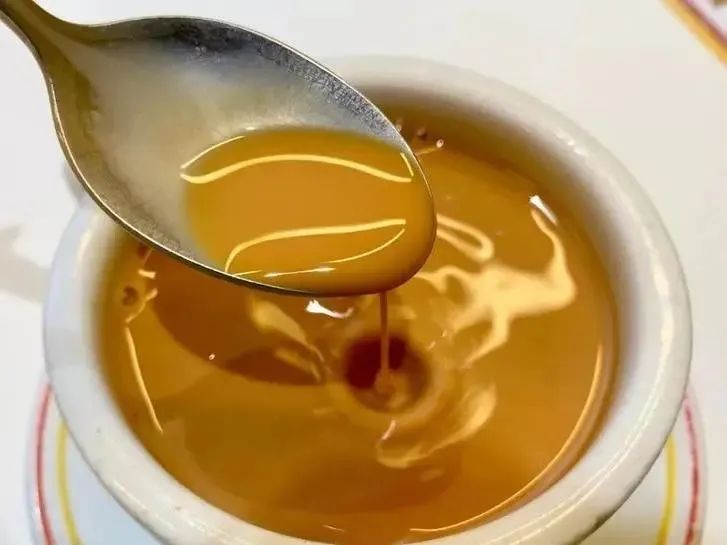
Front Street Coffee will also add one more nagging note: someone once converted data from public reports and found that drinking a 700ml cup of Hong Kong-style Yuen Yeung means ingesting roughly 510mg of caffeine, about equal to 3 cups of Americano. If you are inherently caffeine-intolerant and don't want to stay awake until dawn, remember not to casually try this kind of Hong Kong-style Yuen Yeung or Hong Kong-style milk tea—otherwise...
- END -
The above content is compiled by CoffeeHunters, a coffee news website.


