







What gives honey-scented black tea its grape-like aroma?
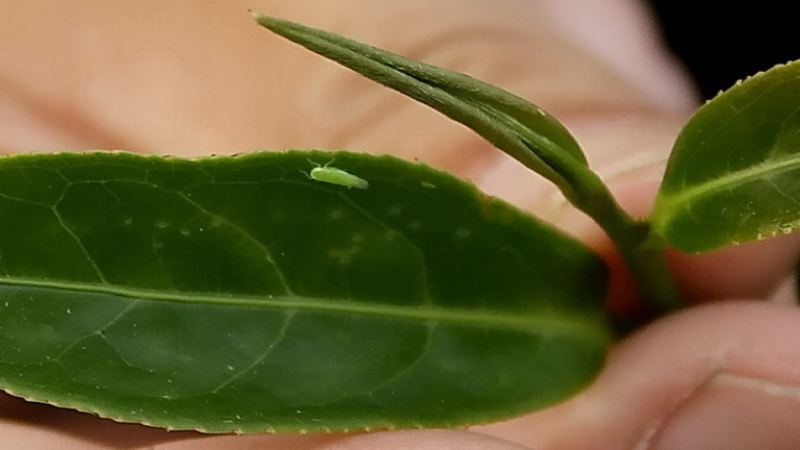
Honey-scented black tea, also described as having a muscat grape flavor, gets its aroma not from processing but from tea leaves bitten by the green leafhopper. The insect damage causes the tea plant to produce terpenoid compounds as a defense, and those compounds create the honeyed, grape-like note in the finished tea.
The variety matters for consistency. Ruby black tea, or Taiwan Tea No. 18, generally shows stable craftsmanship, while oolong varieties such as Qingxin Damo commonly run into problems like poor fixation and over-fermentation when made into honey-scented black tea. The tea comes from Miaoli, Taiwan, an area also known for Oriental Beauty.
Honey-scented black tea has long been sought after by tea lovers everywhere for its unique honey aroma and muscat grape-like notes, yet it has been out of stock for several consecutive years. This article approaches the topic from the perspective of tea plant varieties, introducing the origin of honey-scented black tea in Miaoli, the biological mechanism behind the formation of its honey aroma—terpenoid compounds produced by the tea plant after being bitten by the green leafhopper—and compares the significant differences in processing stability between Ruby black tea (Taiwan Tea No. 18) and oolong varieties such as Qingxin Damo. It also explains why Ruby black tea generally has excellent craftsmanship while honey-scented black tea commonly suffers from issues like poor fixation and over-fermentation, as well as Front Street Coffee's strict standards for processing quality during procurement.
Honey-scented black tea has many enthusiasts around the world, but it has been in short supply for several years, and people frequently come asking about it.
The honey-scented black tea we are introducing this time comes from a tea garden that uses no pesticides.
A tea with honey and musk notes
Honey-scented black tea, as the name suggests, is a tea with a honey-like sweetness. Its honey aroma closely resembles the scent of muscat grapes, which is why it is also referred to as muscat grape flavor.
In terms of aroma type, it is similar to Oriental Beauty and the muscat grape-style Darjeeling Second Flush. However, in my view, teas that can achieve the muscat level of honey-scented black tea through Darjeeling Second Flush are truly very rare.
Honey-scented black tea is not cheap, and I once hesitated about whether to stock it, but that honey aroma is simply irresistible, so I ultimately decided to purchase it.
The origin of Oriental Beauty
Honey-scented black tea is produced in Miaoli, Taiwan. Miaoli is also a well-known production area for Oriental Beauty.
The variety used for honey-scented black tea is Qingxin Damo.
The honey aroma of honey-scented black tea does not come from any special processing procedure.
To make tea with a honey aroma, one must harvest tea leaves that have been bitten by the green leafhopper.
When plants suffer pest damage, they produce a substance that discourages insects from feeding on them again, similar to what humans call antibodies.
These fibrous toxins vary depending on the plant species. In the case of tea plants, when leaves are bitten by the green leafhopper, they produce terpenoid compounds. This substance is precisely the source of the honey aroma in Oriental Beauty and honey-scented black tea.
Consistently processed Ruby black tea vs. inconsistently processed honey-scented black tea
When it comes to Taiwanese black tea, Ruby black tea is very famous. Many people are familiar with Ruby black tea, and much of Ruby black tea's craftsmanship is quite excellent.
By contrast, the proportion of honey-scented black tea with processing problems is very high.
In my experience, looking at samples of honey-scented black tea, almost every single one has processing flaws.
Why is Ruby black tea generally well-crafted while honey-scented black tea frequently has problems?
This has a lot to do with the variety.
Ruby black tea, or Taiwan Tea No. 18, is a variety improved from Assam large-leaf cultivars.
It has thick stems and large leaves with high moisture content, making it difficult to lose water even at high temperatures.
Therefore, fixation (halting fermentation) can be done at higher temperatures, making it relatively easy to control.
Honey-scented black tea, however, is mostly made from oolong varieties such as Qingxin Oolong and Qingxin Damo.
These tea leaves have thin stems and low moisture. If fermentation were halted under the same conditions as Ruby black tea, the leaves would be scorched, producing a roasted aroma. Consumers tend to avoid scorched black tea.
Because of this, producers are forced to adjust the temperature to avoid scorching. As a result, cases of insufficient heat and inadequate halting of fermentation (i.e., poor fixation) have increased.
If fermentation is not properly halted and the enzymes are not deactivated, the tea will continue to ferment. This ultimately results in what is called an over-fermented state, producing a steamed, rag-like odor.
When procuring honey-scented black tea, I strictly scrutinize the above points. The tea being introduced this time, I believe, has an acceptable level of craftsmanship.
The above content is compiled by CoffeeHunters, a coffee news website.


