







Search Results for: US stores
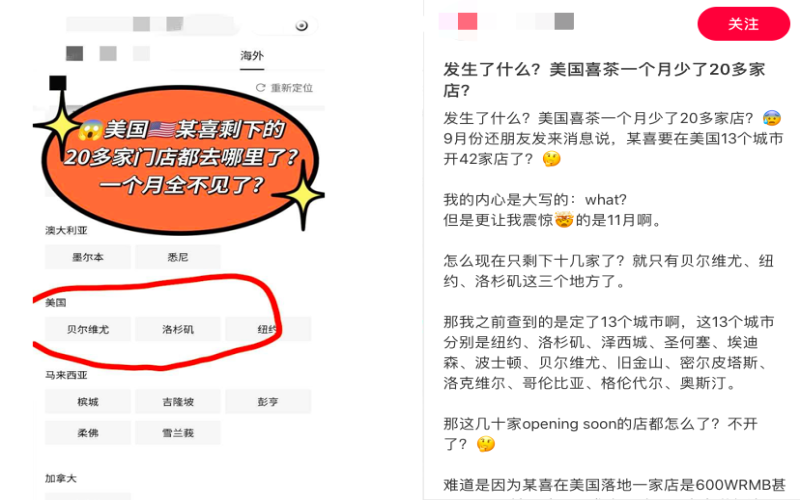
HEYTEA's US store mini-program count drops sharply by nearly 20 — Official hiding or a franchise shake-up?
Recently, some netizens noticed that the number of US stores displayed on Heytea's official mini-program had decreased noticeably compared to a month ago, with nearly 20 stores disappearing from the list. At the end of September, there were reports that Heytea would open 42 branches across 13 US cities, but now only 15 stores in three cities—Los Angeles, New York, and Bellevue—can be found on the mini-program. In response, some believe the company hid upcoming stores that were not yet fully renovated to avoid confusing consumers, while others speculate that there may have been changes in the partnership between the brand and its franchisees. What is the truth? This article walks you through the ins and outs of the incident. [more…]

Luckin Coffee announces push to return to main board listing on US stock market, store count surpasses 20,000 after five years of rectification
Lu Jin, co-founder and CEO of Luckin Coffee, revealed at the 2025 Xiamen Entrepreneurs Day conference that the company is actively working to return to the main board of the US stock market under the guidance of the Xiamen Municipal Party Committee and Municipal Government. This chain coffee brand, which listed on Nasdaq in 2019 and was forced to delist in 2020 due to financial fraud, has undergone five years of comprehensive restructuring. Today, its store count has surpassed 20,000, overtaking Starbucks China, with a market value of approximately US$10.9 billion. In July this year, Luckin opened two stores in New York, sparking market speculation about its return to the United States. Meanwhile, Bloomberg reported that its largest shareholder, Centurium Capital, is considering bidding for the British brand COSTA, a move seen as helping to bolster Luckin's globalization narrative. [more…]
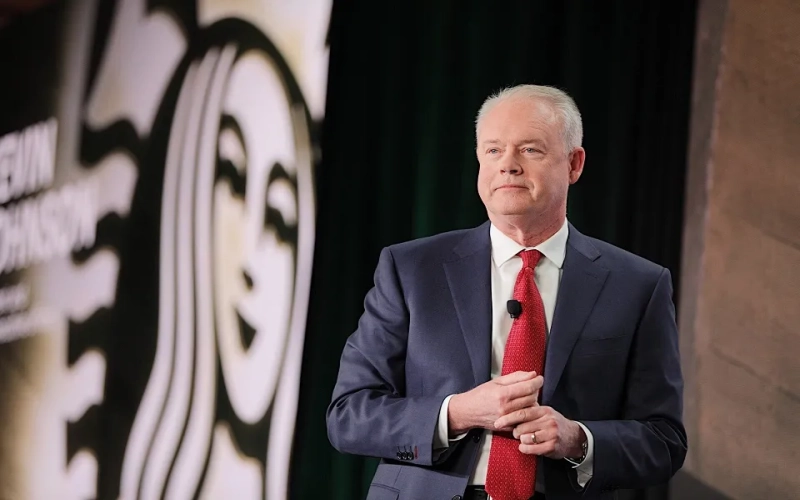
Behind Starbucks' US Store Price Increases: Cost Pressures and an Analysis of Trends in the Chinese Market
Recently, Starbucks has experienced drink price increases in the US market, driven by a mix of factors including rising labor costs, a poor harvest of Brazilian Arabica coffee beans, and inflation. Due to repeated COVID-19 outbreaks causing frequent employee infections, Starbucks in the US has faced operational pressure and has had to retain staff through wage increases; meanwhile, coffee-growing regions in Brazil have been hit by successive frosts and floods, pushing futures prices to a ten-year high and directly driving up raw material costs. Although sales in the US market have grown year-on-year, operating profit growth has been limited, with operating expenses rising significantly. So will this wave of price increases affect the Chinese market? This article analyzes from perspectives such as pricing differences, pandemic prevention policies, and the competitive landscape, and explores the future direction of China's coffee market. [more…]
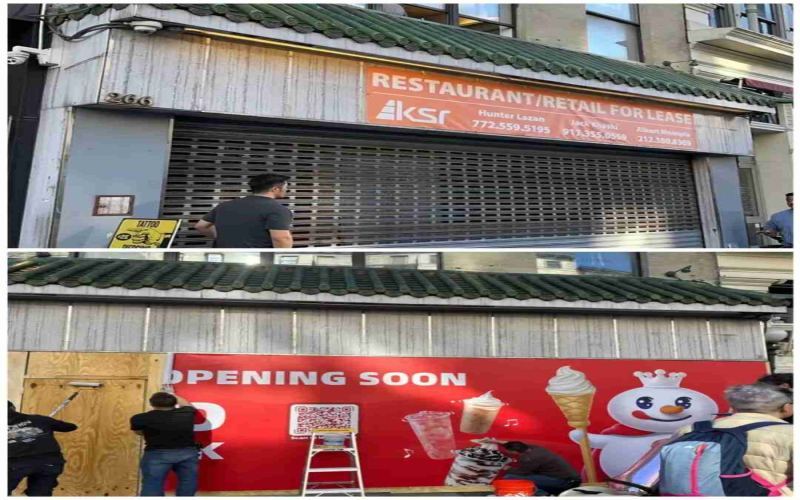
Mixue Bingcheng Signs Three Stores in the US: Hoardings Up in New York's Chinatown, Broadway, and Los Angeles' Hollywood
Mixue Bingcheng has been making frequent moves in the U.S. market. After multiple overseas media outlets reported last month that it would enter New York, the brand has successively put up construction hoardings for two stores in Manhattan's Chinatown and on Broadway, while a third storefront hoarding has also appeared beside Hollywood Walk of Fame in Los Angeles. The three locations are in prime, expensive, and densely trafficked areas, and one of the New York stores is only a few streets away from Luckin Coffee, sparking heated discussion among netizens. All three stores are currently in the renovation stage and are expected to open by the end of the year or early next year. Whether Mixue Bingcheng can continue its domestic low-price strategy and whether it will adjust pricing overseas has become a focal point of attention. [more…]
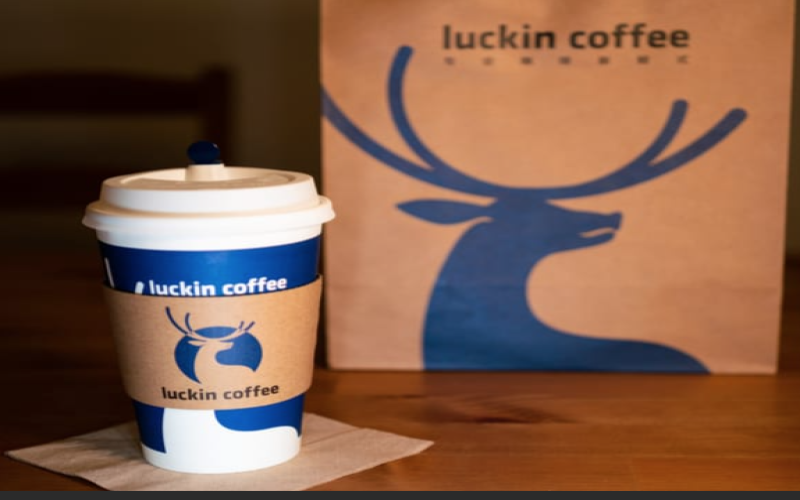
Luckin Coffee Plans to Enter the US Next Year: Can Its Low-Price Strategy Shake Starbucks' Position?
Recent reports suggest that Luckin Coffee plans to enter the US market as early as next year, aiming to challenge local giants like Starbucks with affordable beverages priced at $2 to $3. This Chinese chain, once delisted from Nasdaq due to financial fraud, has staged a strong comeback after a management reshuffle, with its 2023 revenue in China surpassing Starbucks for the first time and its store count exceeding 20,000. Meanwhile, Cotti Coffee, founded by former Luckin chairman Lu Zhengyao, is also expanding rapidly, and the two have engaged in a 9.9 yuan price war domestically. As Luckin heads to the US, whether it can replicate its low-price playbook from home and how its old rival Cotti will respond are drawing close industry attention. [more…]

Starbucks launches high-caffeine iced drink, with a single cup containing as much as two cans of Red Bull, adding a new player to the energy drink race.
Starbucks has recently launched the Iced Energy line of iced energy drinks at its stores nationwide in the United States, with three new products in total, one of which is available in limited supply only on the App, while stores offer two flavors, Tropical Citrus and Melon Burst. This drink is brightly colored, low-calorie and sugar-free, yet contains as much as 205 milligrams of caffeine, far exceeding a Starbucks grande latte, equivalent to 6 cans of cola or 2 cans of Red Bull. In recent years, the U.S. energy drink market has grown rapidly, but Panera Bread's high-caffeine drink previously led to a death and litigation, and Starbucks' entry into the market this time has sparked online discussion about its safety. The American Academy of Pediatrics recommends that adolescents and children avoid energy drinks, and Starbucks responded that its store menus already disclose ingredient and nutrition information. [more…]
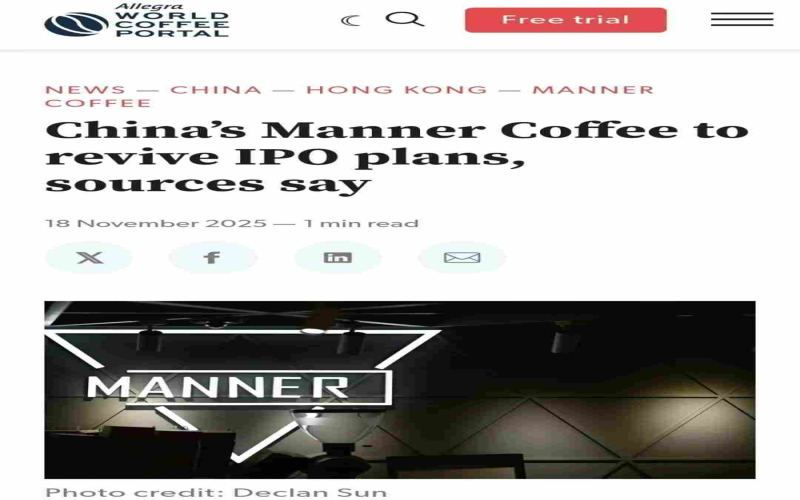
Manner Coffee rumored to file for Hong Kong IPO as early as next year: valuation may reach $3 billion, official response says no comment
Recently, multiple media outlets including Bloomberg reported that the coffee chain brand Manner Coffee is preparing for a Hong Kong listing, potentially debuting on the Hong Kong Stock Exchange as early as next year with a valuation expected to reach US$3 billion. Manner responded to this by saying it had "no comment," a shift from its previous stance of outright denial. Looking back at Manner's development, it started in 2015 as a 2-square-meter small shop in Shanghai, rising rapidly through a strategy of making specialty coffee affordable and a community store model, and successively attracted backing from Capital Today, Meituan Dragonball, ByteDance, Temasek, and other capital investors. As of November, Manner had 2,234 stores nationwide, ranking sixth in scale, and among the top six brands it, like Starbucks China, operates under a direct-operated model. Amid successive moves by competitors, Manner's listing rumors have drawn widespread attention. (Recommended by Front Street Coffee) [more…]
Dai Wei's U.S. Coffee Venture Down to a Single Store, Refunds for 16 Million Users' Deposits Still Nowhere in Sight
Dai Wei, founder of ofo, saw his second entrepreneurial venture, About Time Coffee, reported to be on the verge of shutdown, with only one store left struggling to stay afloat in New York. This coffee chain brand, which once entered the US market with high cost-effectiveness and innovative products, expanded from five stores to four permanently closed in less than two years. Dai Wei tried to replicate Luckin Coffee's "burn money" playbook overseas but encountered difficulties adapting to local conditions. Meanwhile, more than 16 million users in China are still queuing to get their ofo deposits refunded, involving an amount as high as 1.5 billion yuan. The failure of this cross-industry entrepreneur once again brings public attention back to that unsettled debt and raises the question: is coffee entrepreneurship a trend or a trap? Front Street Coffee takes you through an in-depth analysis of the rise and fall of this cross-border venture. [more…]
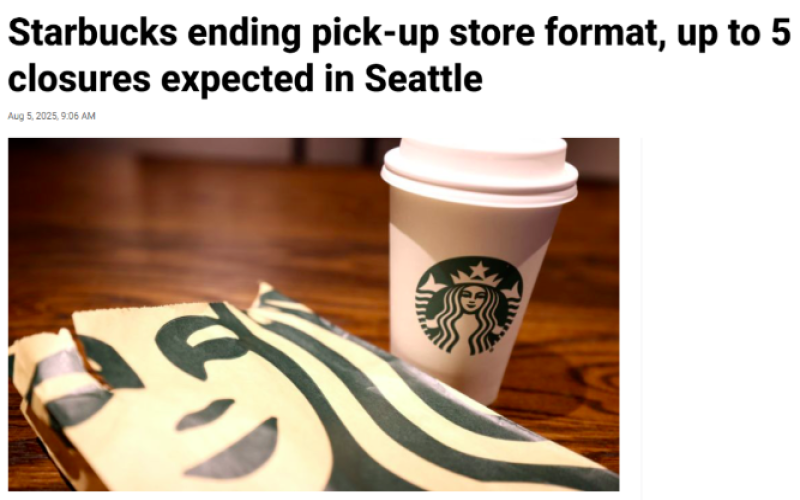
Starbucks Announces End of Pickup-Only Store Model, 90 U.S. Locations to Be Adjusted or Closed by 2026
Starbucks dropped a bombshell at its latest earnings call: it will completely phase out the "Pick-up Only" pure pickup store format by 2026. This decision affects nearly 90 stores across more than 20 states in the U.S. Once upon a time, these small stores focused on "order online, pick up in store" were seen as the future of coffee consumption, especially beloved during the pandemic. Yet six years later, Starbucks executives have found that consumers crave face-to-face interaction and the warm atmosphere of a coffee shop, not a cold pickup window. The CEO bluntly called such stores "too cold and lacking human touch," running counter to Starbucks' core brand philosophy. This article will review the rise and fall of the pickup store model, Starbucks' strategic pivot, and the brand's future plans on its digital path. [more…]
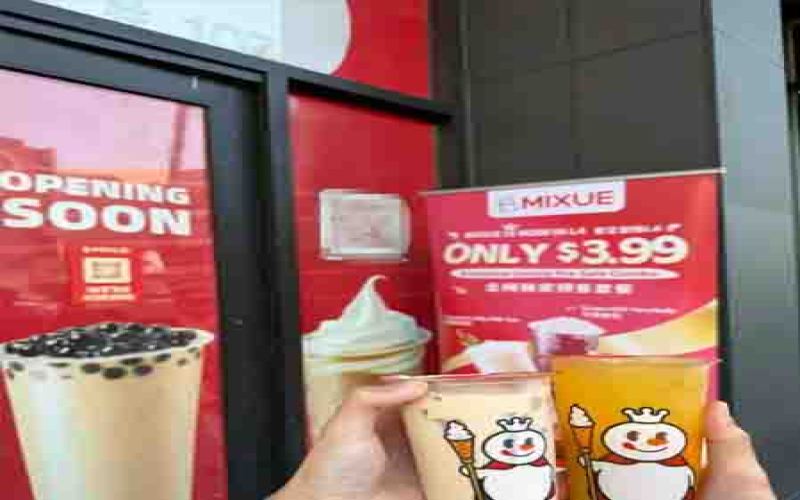
Mixue Ice Cream & Tea Lands in Hollywood: U.S. Stores Offer Up to 200% Sugar Level Option, Sparking Heated Discussion
Mixue Ice Cream & Tea is accelerating its pace into the North American market. Its store on the Hollywood Walk of Fame in Los Angeles is about to officially open, and pre-sale packages have already appeared on delivery platforms, priced at $3.99 for two drinks and one ice cream. However, what truly sparked discussion was not the price, but the sweetness options on the ordering page—besides the usual sugar levels, options for 120%, 150%, and even 200% sugar appeared. Chinese netizens were dumbfounded, while Chinese people in the US believed this was simply a localized strategy adapted by the brand to local conditions. This article sorts through the course of events and reactions from all sides to help you understand the market logic behind this cup of "double sweetness." [more…]
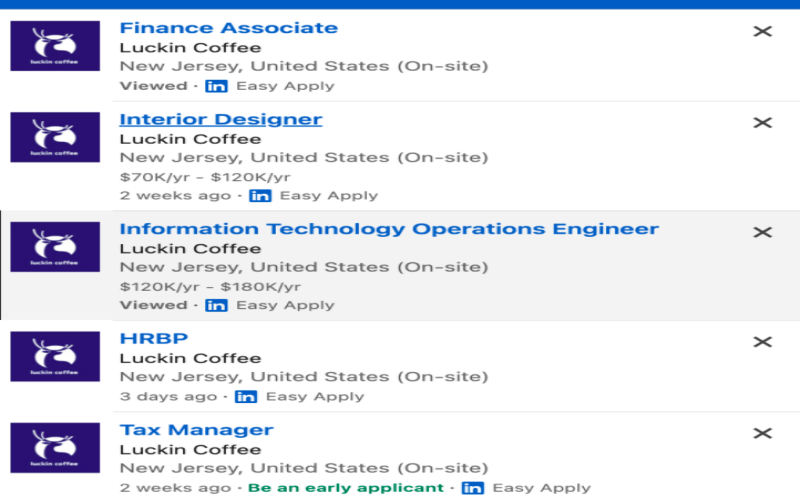
Luckin Accelerates North American Expansion? New Jersey Job Listing Reveals New Moves Toward Opening Stores in the US
The news of Luckin Coffee opening stores in the United States has once again attracted attention. Recently, a WeChat public account post claimed that Luckin is advancing the site selection for U.S. stores, has begun contacting relevant service agencies, and is actively recruiting staff. LinkedIn information shows that within the past month, Luckin posted 5 job openings located in New Jersey, covering areas such as IT operations, finance, interior design, human resources, and tax, among which the tax manager position requires directly reporting to the CFO. Combined with previous reports by the Financial Times and statements by CFO Guo Jinyi, Luckin may explore the U.S. market with a prudent and flexible strategy, preferring East Coast cities such as New York. Whether this series of moves means that Luckin's overseas strategy will shift from Southeast Asia to North America is worth continued attention. [more…]
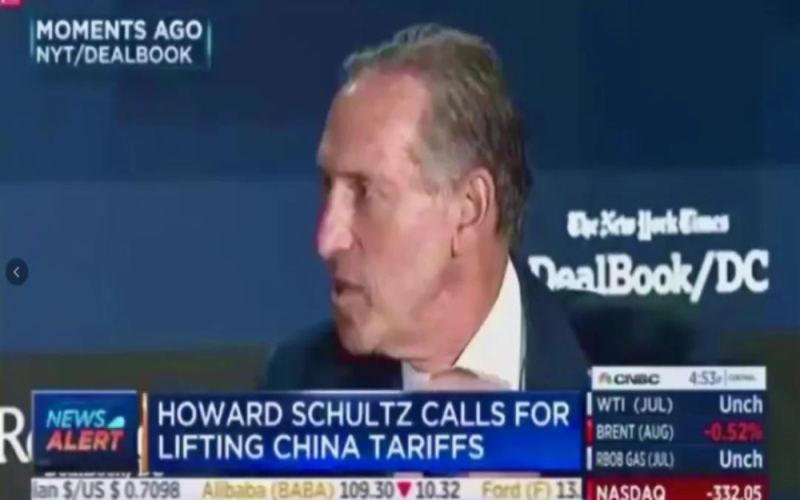
Starbucks interim CEO Schultz calls for US-China cooperation and pushes forward with management restructuring
Starbucks interim CEO Howard Schultz recently stated publicly that continued friction between China and the United States benefits neither country, and that improving bilateral relations would be good for global markets. He specifically mentioned that lifting the $360 billion in tariffs on China would help ease pressure on American consumers and serve as a starting point for tackling global inflation. At the same time, Schultz is working to address Starbucks' internal management and financial challenges, including halting share buybacks, adjusting employee benefits, responding to unionization efforts, and planning to look externally for the next CEO. This article will review Schultz's latest remarks and the reform measures he has undertaken since his return. [more…]
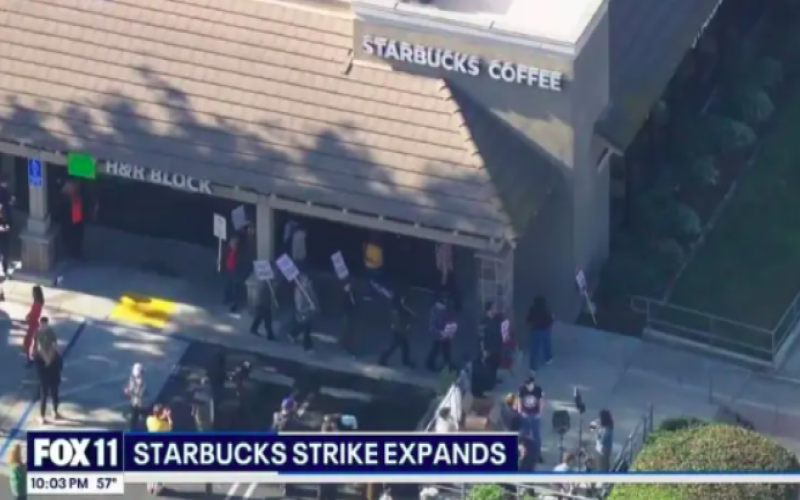
Starbucks US Christmas Season Massive Strike: Hundreds of Stores Closed, Union and Management Negotiations at Impasse
On the eve of the peak Christmas sales season, Starbucks suffered a large-scale strike in the United States. Since December 20, the Starbucks union launched actions in three cities—Seattle, Chicago, and Los Angeles—and within five days they spread to Denver, Pittsburgh, New York, Philadelphia, and many other places. The union said more than 290 stores were completely closed, while Starbucks officially said only about 170 stores were shut down and 98% of stores were operating normally. The two sides remain sharply divided on core issues such as wage increases and the contract framework. The strike could affect performance during the Christmas shopping season, and the company's stock price fell more than 5% over five days. How this labor-management confrontation will end is worth continuing to watch. [more…]
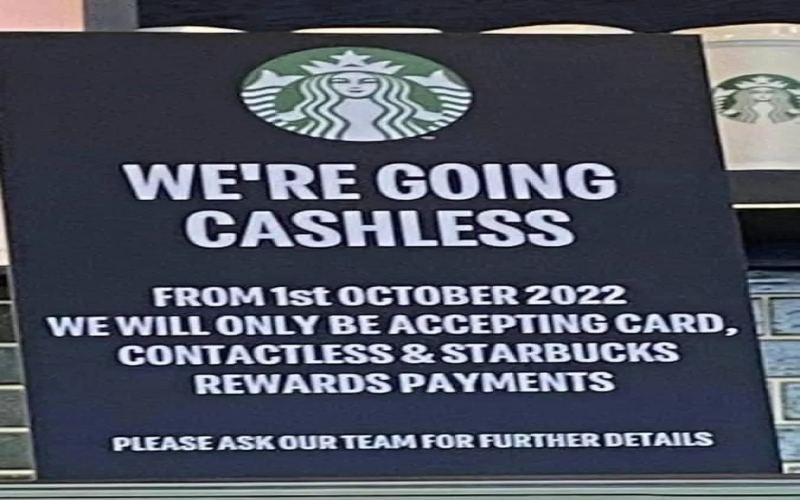
Starbucks Responds to Cashless Store Controversy: It's Just an Autonomous Decision by a Few Franchised Stores
Recently, two Starbucks stores in the UK posted notices stating they would stop accepting cash, sparking heated discussion online. Many people worried that this move deprived consumers of their right to choose, and public opinion quickly escalated. Starbucks UK officially clarified afterwards that these stores are independently operated by licensed partners, and going cashless is not a unified company policy. In fact, Starbucks once tested a cashless model in the US but did not roll it out, and although it encouraged electronic payments during the pandemic, it still emphasized that cash always remains an option. This article will recount the course of the incident and sort out Starbucks' historical stance on payment methods and its future direction. [more…]
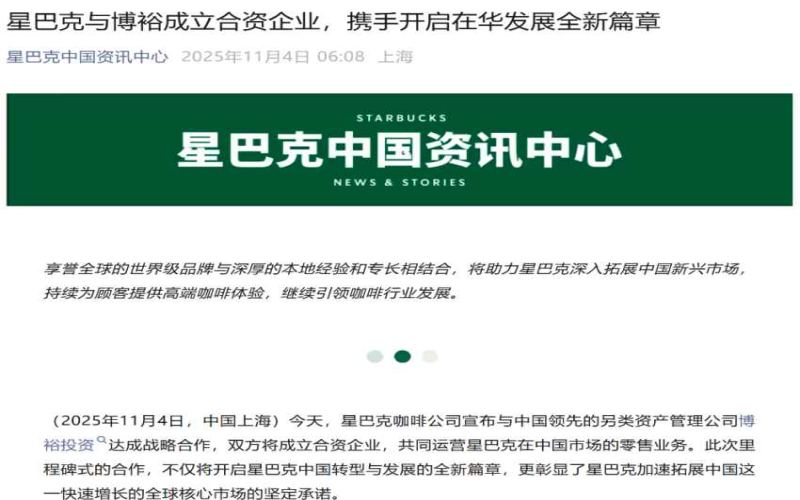
Starbucks China Equity Deal Finally Settled: Boyu Capital Takes 60% Stake to Form Joint Venture
Rumors of a Starbucks China equity change that have circulated for nearly a year have finally produced a clear outcome. Starbucks and Boyu Capital have reached an agreement to establish a joint venture in China to jointly operate the retail business, with Boyu holding up to 60%, while Starbucks retains 40% and continues as the brand and intellectual property licensor. The deal is based on an enterprise value of approximately US$4 billion, and Starbucks expects the total value of its China retail business to exceed US$13 billion. Looking back at Starbucks' entry into China, from franchising to full direct operation, and now returning to a joint venture model, this shift has sparked widespread attention regarding its future direction. The new joint venture will continue to be headquartered in Shanghai, operate the existing more than 8,000 stores, and plans to gradually expand to 20,000. [more…]
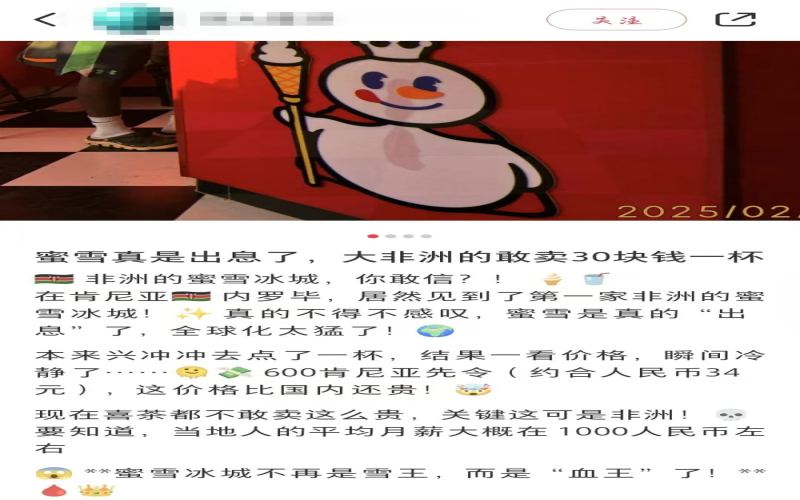
Mixue Kenya store prices bubble tea at 580 shillings, sparking heated debate among African netizens over whether the price is high or low.
A cup of bubble tea costs only a few yuan to a dozen yuan in China, but at a Mixue Bingcheng store in Nairobi, Kenya, the menu price is as high as 580 Kenyan shillings, equivalent to about 32 yuan. A Chinese netizen in Africa photographed the price list and posted about it with astonishment, sparking discussions among Chinese people in various places. Some believe that local prices are already high, so this pricing is not outrageous; others, comparing it with places like Congo and Zimbabwe where a cup of milk tea often costs ten US dollars, exclaimed that Mixue Bingcheng is "really conscientious." This article will trace the origins and development of this price discussion and explore the cost logic behind Chinese tea beverage brands going overseas to Africa. [more…]
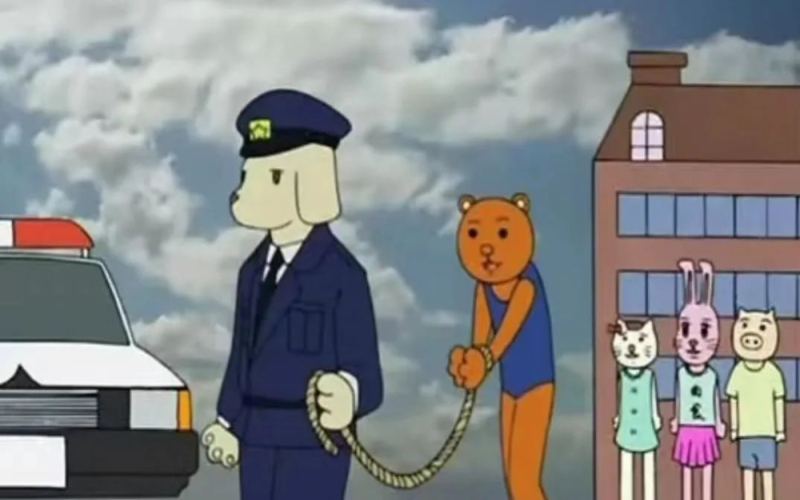
A Comprehensive Review of Knockoff Coffee and Milk Tea Brands: Those Hilarious Copycat Store Parodies
In today's booming beverage industry, brand imitation is an endless phenomenon. From milk tea to coffee, from store decor to brand naming, some merchants use highly similar visual designs to make it hard to tell real from fake. This article reviews cases of knockoff beverage stores that have sparked heated discussion online, covering imitation versions of well-known brands such as Heytea, Naixue, Yihotang, Starbucks, and Luckin, showcasing the "creative brainpower" of copycat merchants while also reminding consumers to pay more attention in their daily consumption. As coffee lovers, understanding these phenomena is not only interesting but also helps us more rationally distinguish authentic brands from fakes and support the development of original brands. [more…]
Online tea sales in the US surge 75%: Why Starbucks and Coca-Cola are racing to stake a claim in the tea beverage track
The U.S. tea market is ushering in a new wave of growth, with online sales surging by 75%, in stark contrast to the slump in the foodservice channel. Currently, nearly 80% of American households have a tea-drinking habit, covering a population of 159 million. Faced with this market of enormous potential, the two beverage giants Coca-Cola and Starbucks have long since made their early moves: Coca-Cola acquired "Honest Tea," while Starbucks entered the tea beverage arena with its "Teavana" brand, even opening dedicated stores in Japan. However, Starbucks' tea bar business has not been all smooth sailing, having once closed 379 stores across the United States. This article will review the course of these giants' entry into the tea market and explore the future development space of the tea beverage sector. [more…]
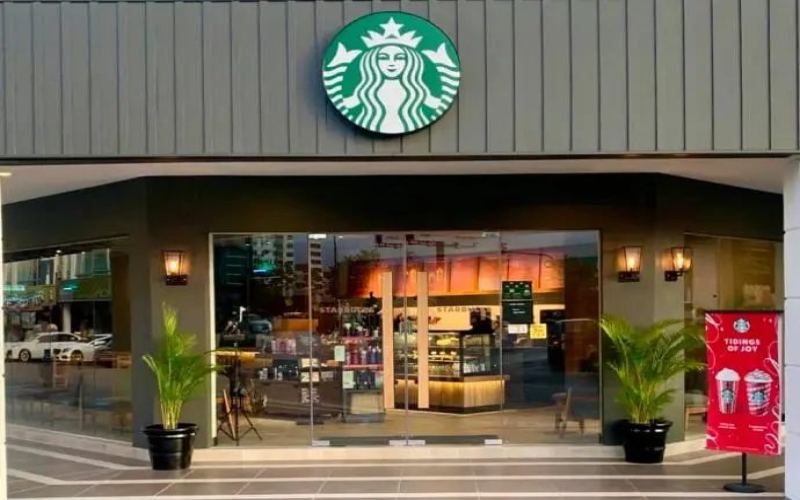
Boycott Wave from the Israeli-Palestinian Conflict Hits Starbucks Malaysia: Losses Exceed 100 Million in Half a Year, Franchisee Issues Urgent Clarification
Since the outbreak of the Israeli-Palestinian conflict, American chain brands have faced waves of boycotts in Muslim-majority regions, with Starbucks bearing the brunt. In Malaysia, a Muslim-majority country, local consumers' boycott of Starbucks has led to a sharp drop in foot traffic. The latest financial report from franchise operator Berjaya Food shows that in the first half of this year, its Starbucks business suffered a massive loss of 87.34 million ringgit (approximately 143 million RMB). To reverse the decline, Berjaya Food has repeatedly stated that Starbucks Malaysia is wholly owned by a local listed company, with employees almost entirely local and mostly Muslim, in an attempt to distance itself from the US headquarters. However, the boycott continues, even affecting employees' livelihoods and stock performance. How this situation will unfold and whether Starbucks can regain local consumers' trust is worth watching. [more…]
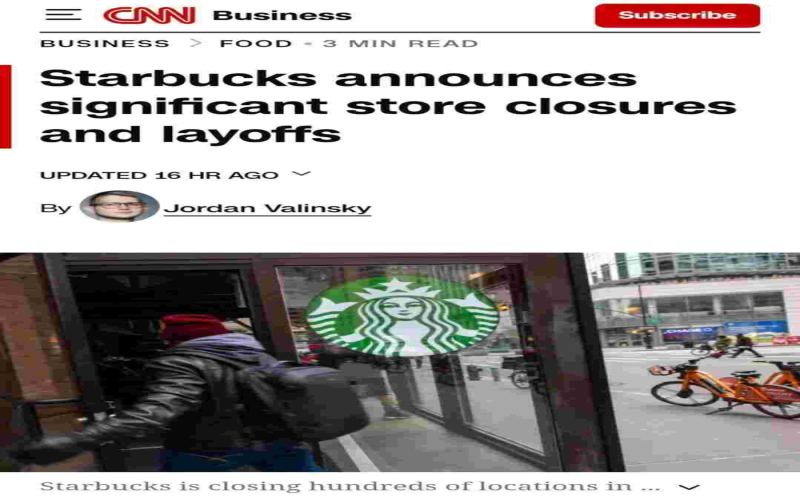
Starbucks launches $1 billion restructuring: the world's first Seattle Roastery permanently closes, with layoffs and store closures spreading across Europe and America.
Starbucks recently announced the launch of a restructuring plan totaling US$1 billion, involving the closure of underperforming company-operated stores and a new round of layoffs. According to a filing submitted to the U.S. Securities and Exchange Commission, most of the store closures will be completed before the end of fiscal 2025, with US$150 million for employee severance and US$85 million covering lease termination and asset disposal costs. CEO Niccol said in an open letter to employees that some stores failed to meet financial targets or create the environment customers expect, so the decision was made to immediately close some stores in North America. Foreign media reports say the restructuring will affect hundreds of coffee shops in the United States and Canada, including the world's first Roastery in Seattle's Capitol Hill and the SODO Reserve store in the company's headquarters building. This Roastery, which opened in 2014, is not only a pilgrimage site for Starbucks fans but also one of the first unionized stores in the brand's history, and its permanent closure without warning has sparked employee speculation about union suppression. At the same time, about 900 non-retail employees will receive layoff notices, marking the second round of layoffs since Niccol took office. Although the Europe, Middle East and Africa business is proceeding as planned, some stores in the UK, Switzerland and Austria will also close due to a portfolio review. [more…]