







What the Starbucks Strike Means for Specialty Coffee Shops
Starbucks Workers United launched a five-day strike starting December 20, 2024, in Seattle, Chicago, and Los Angeles before spreading to Denver, Pittsburgh, New York, Philadelphia, and St. Louis. The union said more than 290 stores closed completely, while Starbucks reported roughly 170 closures and said 98% of US locations stayed open. Wage increases and a collective bargaining framework remain the sticking points.
The walkout hit during the Christmas shopping peak, and Starbucks shares fell more than 5% over five days. The union represents baristas at 525 stores and argues the company missed its promise to finalize a contract framework within the year. For anyone watching the specialty coffee industry, the dispute signals how far labor organizing has moved inside large coffee chains.
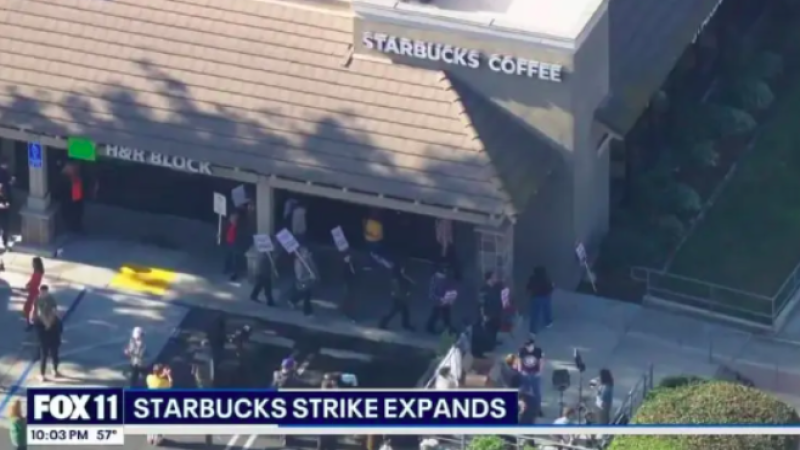
On the eve of the Christmas sales peak, Starbucks faced a large-scale strike in the United States. Since December 20, the Starbucks union launched actions in Seattle, Chicago, and Los Angeles, spreading to Denver, Pittsburgh, New York, Philadelphia and other places within five days. The union said more than 290 stores were completely closed, while Starbucks officially said only about 170 stores were shut down and 98% of stores were operating normally. The two sides have huge differences on core issues such as wage increases and the contract framework. The strike may affect Christmas shopping season performance, and the company's stock price fell more than 5% in five days. How this labor-management battle will end is worth continuing to watch.
▲
Click to follow | Daily specialty coffee culture magazine Coffee Workshop
Recently, multiple international media outlets including Reuters reported that, due to dissatisfaction with delayed contract negotiations and unanswered demands for labor rights, Starbucks employees launched strike actions in many places across the United States during the Christmas holiday.
The strike was planned and initiated by the Starbucks union. It was first launched on December 20 in three cities, Seattle, Chicago, and Los Angeles, and the next day spread to Denver, Pittsburgh, and other areas. By December 22, employees in New Jersey, New York, Philadelphia, and St. Louis had also joined the strike.
It is understood that Starbucks has more than 10,000 company-operated stores in the United States. Although employees in multiple cities participated in this five-day strike, Starbucks still said that 98% of its stores across the United States remained open, and that as of Tuesday about 170 stores had closed.
However, the figures given by the union that organized the strike are different. The union claimed that more than 290 stores had been "completely closed," and that more than 300 stores in 45 states across the United States had participated in the strike as planned. The union estimated that the scale of the strike on Christmas Eve, Tuesday, could set the highest record in Starbucks' corporate history.
The union representing employees at 525 Starbucks stores across the United States pointed out that Starbucks had not fulfilled its promise to establish a collective bargaining framework within the year, nor had it properly handled allegations of unfair labor practices.
The union also criticized Starbucks' recent economic proposal as lacking substantive wage growth, noting that it promised only a 1.5% wage increase over the next three years, a level far from enough to offset the impact of inflation. Therefore, the union proposed an overall wage increase of 77% over the term of a three-year contract and demanded an immediate 64% raise for hourly employees.
In response to the union's demands, Starbucks said they were "not sustainable" and stressed that over the past three years the company had invested more than $3 billion in the partner experience, while reiterating that it offers an average hourly wage of more than $18 and generous benefits, making it competitive in the industry.
Facing the escalating strike situation, Starbucks declined to comment on an estimate of the impact on overall operations, saying only that it expected the strike's impact to be "very limited." However, industry insiders worry that the strike may significantly hit sales during the Christmas shopping season. After all, during the Christmas holiday, consumers not only buy coffee drinks such as lattes to treat themselves, but also purchase gift cards and limited-edition merchandise, making this a crucial sales period of the year for Starbucks.
In addition, affected by strike news, Starbucks' stock price fell by more than 5% cumulatively over the past five trading days and continued to trend lower.
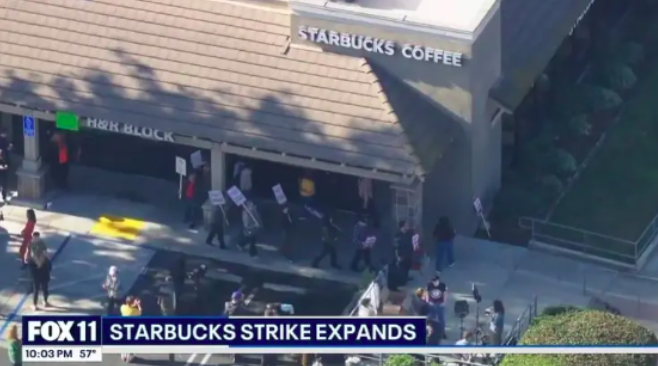
At the same time, the strike actions also affected some Starbucks stores that had not yet joined the union. Employees at these stores recently filed applications with the National Labor Relations Board, hoping to join the ranks of unionized stores. This shows that local employees' dissatisfaction with pay and working conditions continues to heat up.
As the scope of the strike continues to expand and its impact on Starbucks store operations gradually becomes apparent, the outside world is paying close attention to the next moves of both labor and management. At present, the union said it is evaluating follow-up actions and stated that baristas will return to work on Wednesday or Thursday, while preparing to resume negotiations.
Image source: Internet
Disclaimer: Some images in this article are from the Internet. For some content on the website, such as images, we will respect the original author's copyright and indicate the source. However, due to the large quantity, individual images and texts may not have been credited in time. Please understand. If the original author has any dispute, they may contact the website for handling. Once verified, we will correct it immediately. Compiled and edited by "Coffee Workshop." Please indicate the source when reposting. If there is infringement, please inform us for deletion. Thank you~!
The above content is compiled by CoffeeHunters, a coffee news website.


