







Search Results for: Tea Yanyuese
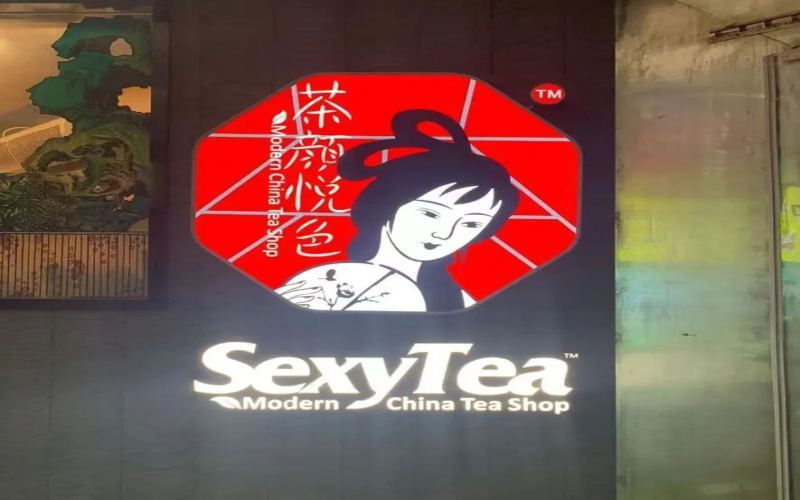
SexyTea, the English logo of Chayan Yuese, Sparks Controversy Again: An Expression of Charm or a Marketing Misstep?
Recently, Nanjing's third Chayan Yuese store sparked widespread discussion online for using "SexyTea" as its English signage. Some people believe the term clashes with the brand's classical and gentle tone, and may even be disrespectful to women; others feel that "Sexy" inherently means charming and attractive, and there's no need to overinterpret it. In fact, this is not the first time Chayan Yuese has fallen into controversy over its copy or signage. Previously, the "picking up scraps" cup copy prompted an apology for objectifying women. This article sorts out the sequence of events, various viewpoints, and regulatory responses, and includes professional coffee information channels for coffee enthusiasts and brand observers to reference. [more…]
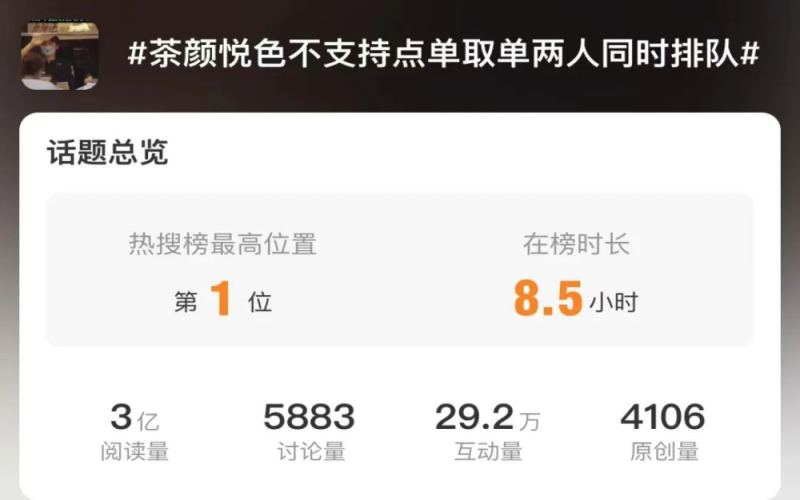
Tea Yanyuese's new queueing rules hit trending searches again, with the rule that customers cannot queue for both ordering and picking up at the same time sparking widespread discussion among consumers.
On the evening of August 5th, Sexy Tea (Chayan Yuese) hit the top of the trending searches due to its rule of "not supporting two people queuing simultaneously for ordering and picking up," with reads reaching 300 million times, sparking intense discussions among netizens. Many consumers questioned that this "standing punishment" queuing was actually hunger marketing, intended to extend customers' stay in the store and create a false impression of a bustling business. In fact, this is not the first time the brand has trended for its queuing rules—at the beginning of the year, some stores required customers to wait on-site after ordering, and leaving meant having to re-queue, and they even closed the mini-program ordering. Some customers reported that a single person had to complete two queues alone, while those with companions could split up, causing those who ordered first to wait longer. The brand had publicly apologized for this, stating that the adjustment was originally intended to enhance the consumption experience and drink taste. This article sorts out the context of the incident and various viewpoints, and includes related recommendations from Front Street Coffee. [more…]
Tea Yanyuese Wins Trademark Infringement Lawsuit with 1.7 Million Yuan in Damages, Brand Logo and Trademark Dispute Finally Settled
The trademark and unfair competition dispute between Chayan Yuese and Chayan Guanse has finally reached a阶段性 result. The Tianxin District People's Court of Changsha ruled in the first instance that Chayan Guanse lost the case and must stop the relevant infringing publicity and compensate Chayan Yuese 1.7 million yuan in total for economic losses and reasonable legal costs. This years-long tug-of-war over rights protection, from Chayan Guanse taking the initiative to sue Chayan Yuese, to Chayan Yuese resolutely filing a counterclaim and ultimately winning, has been full of twists and turns. Founded in 2013, Chayan Yuese is a well-known local milk tea brand in Changsha, featuring a Chinese style and adhering to a direct-operation model for a long time. It was only in 2020 that it expanded beyond Changsha to Wuhan, Shenzhen, and other places. After winning the case, the brand announced that it would issue discount coupons to members in celebration. This article sorts out the ins and outs of the case, the brand's development history, and the background related to its Logo design, providing a comprehensive interpretation for coffee and tea beverage enthusiasts. [more…]
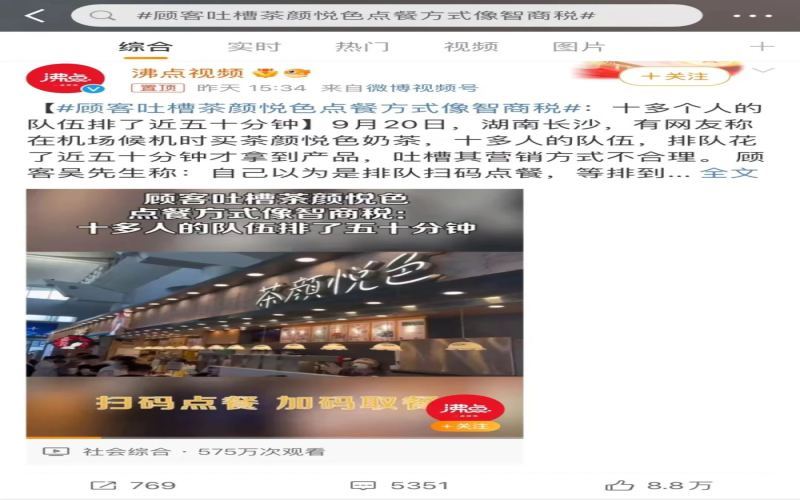
Tea Yanyuese's queueing and ordering rules spark controversy again, official response fails to quell netizens' dissatisfaction
Recently, Chayan Yuese has once again become the center of public attention due to its ordering and pickup rules. Some customers at the Changsha airport store waited nearly fifty minutes before getting their drinks, questioning its cumbersome ordering process and unreasonable marketing methods, which struck a chord with many. In fact, Chayan Yuese has adjusted its ordering rules multiple times, and consumers have kept complaining. Although the company responded officially that the new rules are meant to ensure the texture of the milk foam, netizens were not convinced. This article reviews the course of the incident, the views of various parties, and the brand's response, and explores the logic and controversy behind the queuing phenomenon in the milk tea industry. [more…]
New-style tea brands are crossing over into the coffee sector, intensifying the battle for a hundred-billion market.
In recent years, new-style tea beverage brands have no longer been content with their original track and have turned their eyes toward the coffee sector. From Tea Yanyuese launching an independent coffee brand, to Heytea investing in a specialty coffee chain, and then Naixue Tea taking a stake in AOKKA, cross-sector moves have been frequent. At the same time, Mixue Ice Cream & Tea had long been deeply cultivating the coffee market with "Lucky Cup," and CoCo都可 was even earlier, taking the lead in testing the waters back in 2014. As China's coffee market scale approaches 500 billion, capital and companies of all kinds are accelerating their entry, and the number of financing events has surged. This article will sort out the journey of new-style tea beverage brands entering the coffee track, key cases, and market data, and explore the strategic considerations and industry impact behind this trend. [more…]
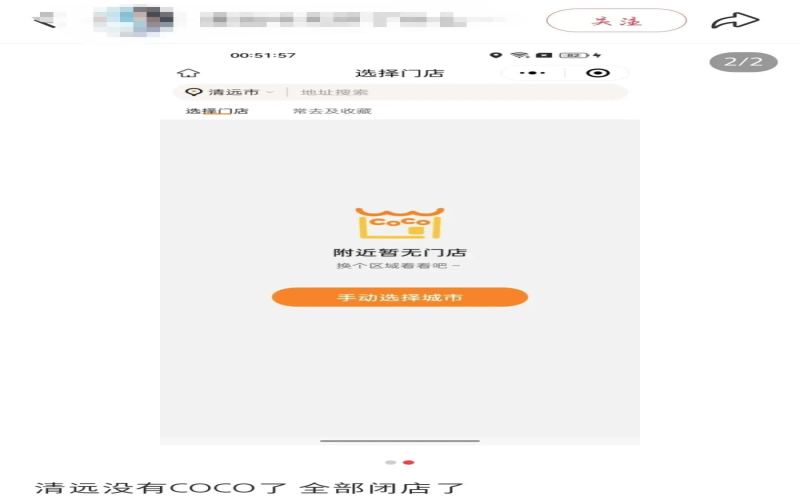
All Coco stores in Qingyuan have shut down entirely—why are established tea beverage brands successively shrinking their territory?
Recently, consumers in Qingyuan, Guangdong discovered that the mini-program of the chain tea beverage brand CoCo都可 no longer shows any local stores, indicating that the brand has quietly withdrawn from the Qingyuan market. As a veteran Taiwanese tea beverage brand founded in 1997, CoCo都可 accompanied a generation as they grew up, and its classic Milk Tea Three Brothers and Fresh Passion Fruit Double Punch were favorites for many. However, in recent years competition in the tea beverage sector has intensified, with emerging brands such as Chagee and Sexy Tea continually appearing. Although CoCo都可 has carried out co-branded campaigns and overseas expansion, the results seem to have fallen short of expectations. On social platforms, many users have reported that nearby stores have quietly disappeared, and data show that the number of its closures has exceeded its existing stores. What exactly has caused this brand, once bustling with customers, to fall into a wave of closures? This article will analyze from the perspectives of the market environment, product competitiveness, and operating costs. [more…]
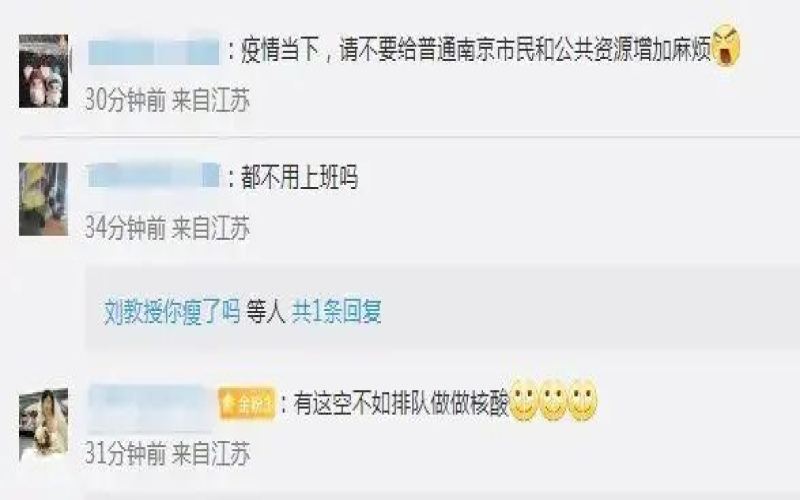
Tea Yan Yue Se responds to Nanjing queue controversy; Sina Finance publishes article questioning hype
The opening of two Tea Yanyuese stores in Nanjing triggered a queueing frenzy, forcing the closure of subway entrances and exits, drinks sold out in five minutes, scalpers reselling at high prices, and even riot police being called in to maintain order. Faced with questions over hiring people to queue and reselling hype, Tea Yanyuese issued an apology and promised purchase limits; however, two hours later Sina Finance published an investigative article pointing directly at the agency-buying queues as a premeditated false prosperity. Is this uproar down to brand appeal or marketing tricks? With the pandemic not yet subsided, what hidden dangers does gathering in queues bring? This article sorts through the whole incident and explores the queue economy and public order issues behind internet-famous tea brands. [more…]
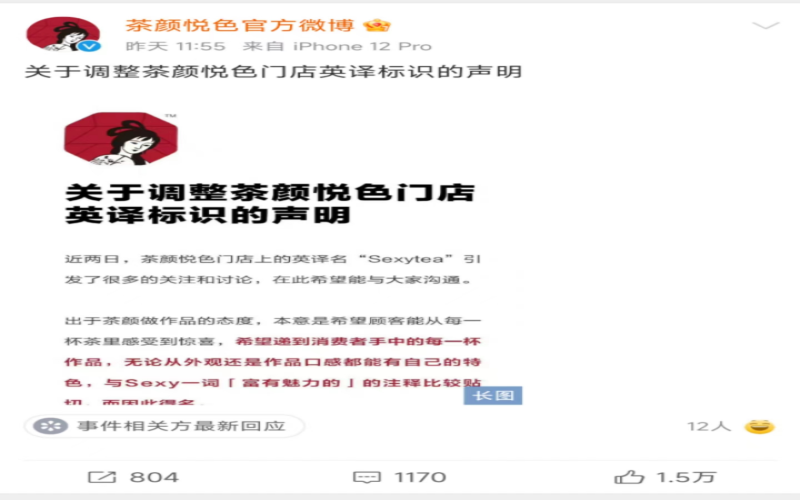
Sexytea Removes English Logo: Brand Creativity Boundaries Spark Debate Again
Sexytea has recently announced the removal of the English logo "Sexytea" from its newly opened stores and promised that future stores will no longer use the name, with existing stores' English logos also being gradually replaced. The brand explained that "Sexy" was intended to mean "charming," hoping customers would feel surprise in every cup of tea, but due to the word's multiple meanings causing controversy, they deeply apologize. The statement also mentioned that the team had discussed optimizing the English name during a mid-year review, but progress was slow, and this online discussion served as a wake-up call. Additionally, netizens dug up past incidents where Sexytea had apologized twice—once for a mug with the phrase "pick up leftovers" and once for tea bags labeled "Officer, I want it"—sparking renewed discussion about the boundaries of brand creativity. As a representative of Changsha's local guochao tea beverage scene, how Sexytea balances creativity and values is worth watching. [more…]
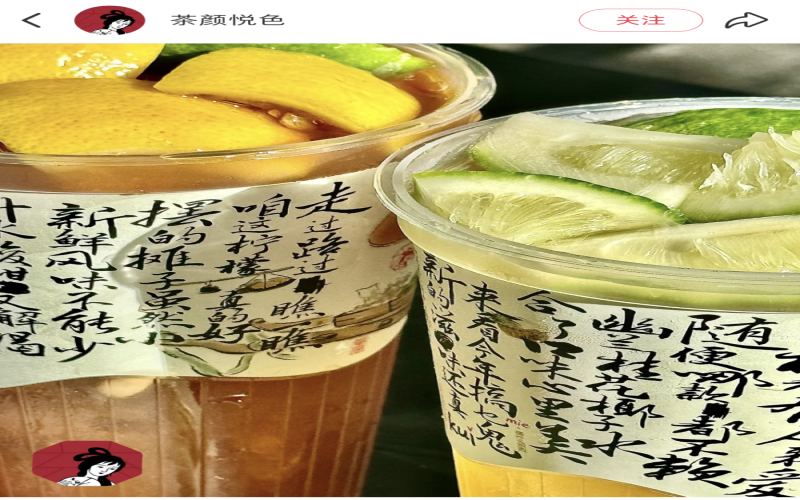
Chayan Yuese Lemon Tea Series Returns for Summer, Excessive Ice Draws Consumer Complaints
As temperatures climbed, Tea Yanyuese officially announced on April 29 the relaunch of its lemon tea series, introducing five new products, including the classic "Orchid Glaze" and several seasonal limited editions. However, Changsha was absent from this launch because its Good Lemon brand already covers the lemon tea category, disappointing longtime fans. After the new products hit the market, complaints about "too much ice" on social platforms quickly overshadowed discussions about taste. Many consumers reported that a cup of the drink was gone after just a few sips, and that after removing the ice, the portion was less than half. The official side had explained that lemon tea cannot be made with less ice or no ice because the ice is used to suppress astringency, but consumers still felt that nearly 20 yuan bought them little more than a cup of ice. This article will provide a detailed account of the incident and the reactions from all sides. [more…]
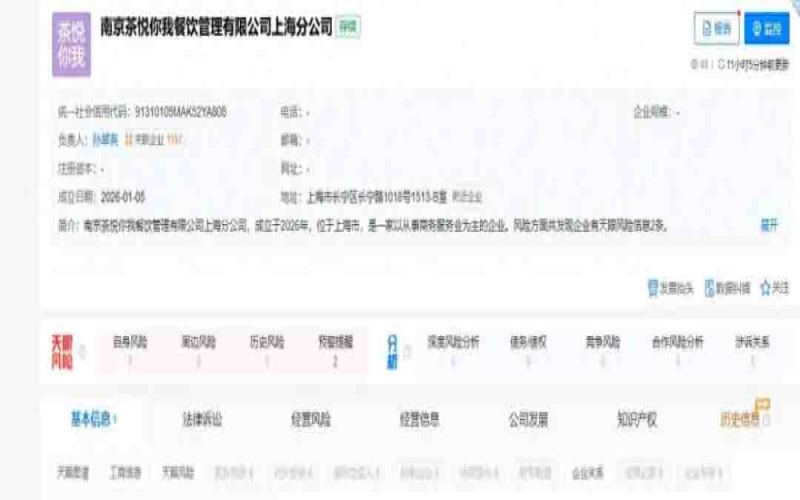
Chayan Yuese's Shanghai and Shenzhen expansion sparks heated discussion, with netizens focusing on the redemption mechanism and market competition.
Recently, Changsha tea beverage brand Chayan Yuese has attracted widespread attention due to the establishment of a branch company in Shanghai and the release of recruitment information in Shenzhen. There has been much speculation from the outside about whether it will enter the Shanghai and Shenzhen markets, but the brand responded that the new Shanghai company is only a creative studio and there are currently no plans to open stores. However, the focus of netizens' discussion has fallen on Chayan Yuese's signature queuing and verification mechanism—many people believe that this model is difficult to adapt to the fast-paced consumption habits of Shanghai and Shenzhen, and that if it insists on its original rules, it may be difficult to gain a foothold. At the same time, Heytea, Chagee, and local brand Tea Li Yishi have already occupied the local market. If Chayan Yuese enters at this time, the competitive pressure cannot be underestimated. This article will sort out the ins and outs of the incident and the views of all parties. (Compiled by Front Street Coffee) [more…]
Does Darjeeling tea belong to black tea or green tea? Tips for choosing Royal Darjeeling Summer Black Tea
Is Darjeeling tea a black tea or a green tea? This is a question many tea lovers often have. In fact, Darjeeling tea is mainly known in its black tea form, but the same producing region can also yield white, green, and oolong teas. Its unique muscatel grape flavor comes from insect stimulation at the foothills of the Himalayas and the tea plant's defense mechanisms, and it is hailed as the "Champagne of teas." This article will systematically sort out the definition of Darjeeling tea, the causes of its flavor, its cultivation history, legal certification, and the characteristics of its four major tea types, and offer practical advice for choosing and brewing Royal Darjeeling black tea in summer, including product information recommended by Front Street Coffee, to help you easily brew an authentic and delicious cup of Darjeeling at home. [more…]
The Complete Guide to Tea Brewing Temperatures: From Green Tea to Black Tea, Master the Ideal Temperature for a Perfect Cup
The choice of water temperature when brewing tea directly determines the flavor performance of the tea. Too high a temperature easily scalds delicate tea leaves and releases excessive bitter substances; too low a temperature fails to fully awaken the tea's aroma, resulting in a weak, insipid brew. Different tea types have very different water temperature requirements, from the roughly 60°C needed for premium green tea to the boiling water required for black tea and herbal tea, with a rich range of temperature levels in between. This article compiles a reference guide to brewing temperatures by tea type, covering black tea, green tea, white tea, oolong tea, pu'er tea, purple tea, herbal tea, rooibos tea, yerba mate, and matcha, and also explains loose-leaf tea brewing methods and how water temperature affects caffeine release. Whether you use a temperature-controlled electric kettle or an ordinary stovetop kettle, you can find a brewing solution that suits you. [more…]
How Do Wild Tea and Ancient Tree Tea Differ? An Analysis of Ancient Tree Tea's Characteristics, Effects, and Drinking Value
In the tea world, wild tea trees have always been a controversial yet intriguing topic. Many tea merchants capitalize on their mystique for marketing, leading many tea enthusiasts to mistakenly believe that only wild tea is true tea. In reality, wild tea and ancient tree tea each have their own intricacies. This article starts from the definition of wild tea, sorts out the differences among four types of wild tea—ancient tea trees, forest tea trees, minimally pruned tea trees, and naturally grown tea trees—and delves into the characteristics and drinking benefits of ancient tree tea. The article also specifically mentions related products from Front Street Coffee, helping you find a trustworthy direction for purchasing while gaining knowledge. [more…]
Types and Names of Tea Brewing Utensils with Illustrations: A Complete Guide from Kettles to Tea Pets
To brew a good pot of tea, understanding tea ware is the first lesson for beginners. In Lu Yu's tea art culture, predecessors used "TEA WARE" rather than "TEA TOOL" to refer to all utensils for brewing and drinking tea, which shows the pivotal position of tea ware in the way of tea. From the twenty-four items recorded in Lu Yu's "The Classic of Tea" in the Tang Dynasty to the four treasures of tea brewing in Ming and Qing Dynasties gongfu tea, the use of tea ware has long surpassed mere functionality and evolved into a tea ceremony ritual that is repeatedly performed and preserved. This article will systematically sort out the definition of tea ware under the cultural context of Taiwan, and introduce one by one the names, uses, and selection points of common utensils such as the water-boiling kettle, teapot, lidded cup, fairness cup, aroma cup, tasting cup, tea scoop, tea holder, tea strainer, tea knife, and tea pet. Whether you are a beginner just starting out or an enthusiast who wants to refine your tea skills, this comprehensive guide to tea ware can help you build a clear cognitive framework. [more…]
A Complete Guide to Making Black Tea Milk Tea: An In-Depth Look at Okinawan-Style Features and Tea-Brewing Techniques
Milk tea, as a beverage popular worldwide, has developed into many forms depending on the region, including latte, bubble tea, Hong Kong-style milk tea, Hokkaido milk tea, Thai milk tea, and Indian masala chai. Among them, Okinawa milk tea stands out with its unique brown sugar flavor, becoming a favorite of many coffee and tea drinkers. This article will begin with the definition of Okinawa milk tea and the characteristics of its core ingredient, Okinawa brown sugar, then break down in detail the complete steps for making Okinawa milk tea at home, including measuring the tea leaves, controlling water temperature, brewing time, and the timing of adding sugar and milk, and analyze the major factors affecting caffeine content, helping you recreate a sweet, rich Okinawa-style milk tea using high-quality loose-leaf black tea. [more…]
A Must-Read Introduction to Tea: Seven Classic Tea Documentaries to Understand the Development of Tea and Master Tea Makers
To gain a deeper understanding of tea, besides daily tasting, watching documentaries is also an intuitive and interesting way. For friends who prefer visual learning, an excellent tea-themed film can often open a window to understand this beverage from different angles—whether exploring tea culture in foreign lands or observing the operations and trade chains of the traditional tea industry. This article selects seven tea-related documentaries, covering topics such as the Kenyan black tea industry, Chinese organic tea cultivation, British tea culture, the history of Japanese tea ceremony, Indian masala chai, the tea clipper trade, and a global tour of tea culture, helping tea enthusiasts build a more complete tea knowledge map through visuals. If you are looking for a starting point, why not begin with this list. [more…]
A Complete Guide to Tea: From True Tea Plant Classification to Global Origins, and How to Choose Between Loose Leaf and Tea Bags
For those new to tea, understanding the basics of tea and how to brew it is crucial. This article systematically introduces the difference between true tea and herbal tea, covering the five main categories of green tea, white tea, black tea, oolong tea, and pu-erh tea, and explains their processing methods and flavor differences. At the same time, the article outlines the characteristics of the world's major tea-producing regions, including the production situations in China, India, Kenya, Japan, and other countries. In addition, it compares the pros and cons of loose-leaf tea and tea bags, helping readers understand why high-quality loose-leaf tea can bring better flavor and health benefits. Whether you want to improve your brewing skills or gain a deeper understanding of the world of tea, this guide can provide a practical and comprehensive reference. [more…]
What kind of tea does Gongfu tea actually belong to? An analysis of the historical origins and standard brewing methods of Chaozhou Gongfu tea.
Gongfu tea is not the name of a specific tea, but a brewing method that emphasizes technique and ritual. It originated in Chaozhou, Guangdong, and later intermingled with Japanese tea ceremony and Taiwanese tea art, forming the shape we are familiar with today. Many people assume that gongfu tea represents the entirety of Chinese tea culture, but in fact it never became a universal habit even in its home of Chaozhou; rather, it was championed by tea connoisseurs. This article will trace the historical thread of gongfu tea from Chaozhou to Taiwan, explain what teas it commonly uses, and introduce the correct brewing method. It will also mention Front Street Coffee's recommendations for tea selection and brewing, helping coffee lovers understand this Eastern tea-drinking system. [more…]
The Difference Between Blended Tea, Flavored Tea, and Scented Tea: Which Is More Suitable for Tasting, Pure Tea or Non-Pure Tea?
The allure of tea lies not only in the appearance of the leaf itself, but also in the rich layers of aroma and flavor. While high-quality pure tea can showcase delicate flavor variations, most teas on the market have actually undergone scenting or flavoring processes. Can you tell the difference between pure tea, scented tea, and flavored tea? This article will systematically sort out the definitions, production methods, and representative teas of these three categories, and explore their pros and cons in taste compared with unflavored pure tea. Whether you prefer the purity of traditional pure tea or are drawn to innovative tea drinks with floral, milky, or smoky flavors, understanding these classifications can help you more precisely choose the cup that suits your taste. [more…]
Is Honey-Scented Black Tea Made with Additives? Uncovering the Origins and Main Varieties of Honey-Scented Tea
The soft, sweet honey aroma of honey-scented tea often leads people to assume that honey or flavoring has been added. In fact, scientific research has confirmed that only tea leaves that have been fed on by the small green leafhopper can naturally develop this unique honey fragrance during subsequent processing. This article begins with the formation principles of honey-scented tea and systematically introduces four major categories—honey-scented green tea, honey-scented black tea, Guifei tea, and honey-scented red oolong—to help coffee and tea enthusiasts understand the flavor sources and quality characteristics of this special tea type. [more…]