








How does AeroPress coffee brewing actually work?
The AeroPress combines immersion and pressure in one manual brewer. Alan Adler, founder of the toy brand Aerobie, refined the design over twelve years and launched it in 2005. It runs in either standard or inverted orientation, with grind, dose, temperature and time freely adjustable, which is why no single recipe is treated as the standard answer.
That openness led Tim Wendelboe to start a small friendly competition in 2008, which grew into a recognized annual event and pushed the device from extraction tool toward coffee toy. A universal inverted recipe, tested with Kenya Asalia beans, works as a starting point; the inverted setup keeps the full water and grounds in contact before the flip.
Beyond pour-over, there is another device that is highly sought after by enthusiasts for its exceptional degree of freedom: the AeroPress. It was refined over twelve years by Alan Adler, founder of the Aerobie brand, and officially launched in 2005. AeroPress extraction combines two mechanisms—immersion and pressure—and can be operated via either the standard or inverted method, with virtually every parameter freely adjustable. It is precisely this openness that gave rise to a small friendly competition initiated by Tim Wendelboe in 2008, which gradually grew into a world-class event. This article will walk you through the origins of the AeroPress and share a universal inverted brewing recipe from Front Street Coffee, tested with Kenya Asalia beans.

After living the same routine for a long time, you want to find something new—and drinking coffee is no different. If every day is just the same pour-over routine of circling water over the grounds, it inevitably becomes dull over time. At times like this, it is worth trying a different approach and giving the highly playable "AeroPress" a go.
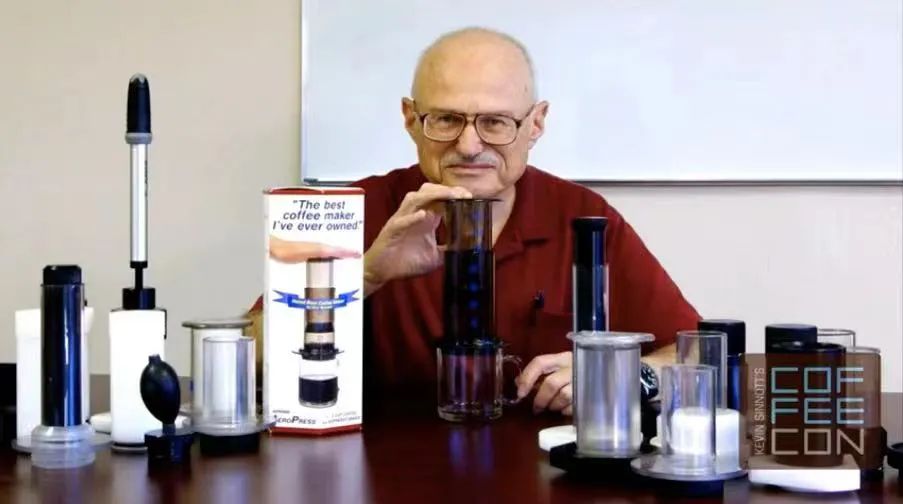
The original motivation behind designing the AeroPress was quite simple: to let people brew a cup of coffee quickly and effortlessly. But who could have predicted that after a competition born of curiosity, its identity would quietly change—from an extraction tool into a "coffee toy." The conversation shifted from "How do you brew with this thing?" to "How else can you brew with it?" And its inventor was himself a grandfather with an unextinguished childlike spirit. So, before discussing specific usage, let's first talk about how the AeroPress came to be. The Birth of the AeroPress The AeroPress made its debut in 2005, created by a man who was already nearly seventy at the time—Alan Adler.
This gentleman led quite a remarkable life before retirement: he worked as an electronics engineer, stood on the podium at Stanford University, and founded the toy brand Aerobie, with countless inventions and patents to his name. Such a legendary figure, after retiring, couldn't stand the coffee brewing methods of the time and simply took matters into his own hands, creating the AeroPress.
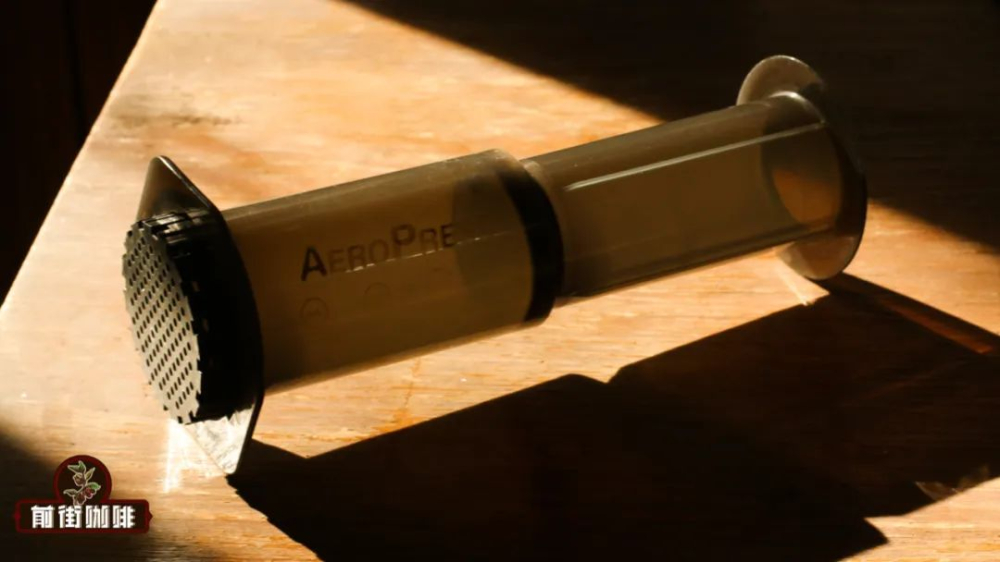
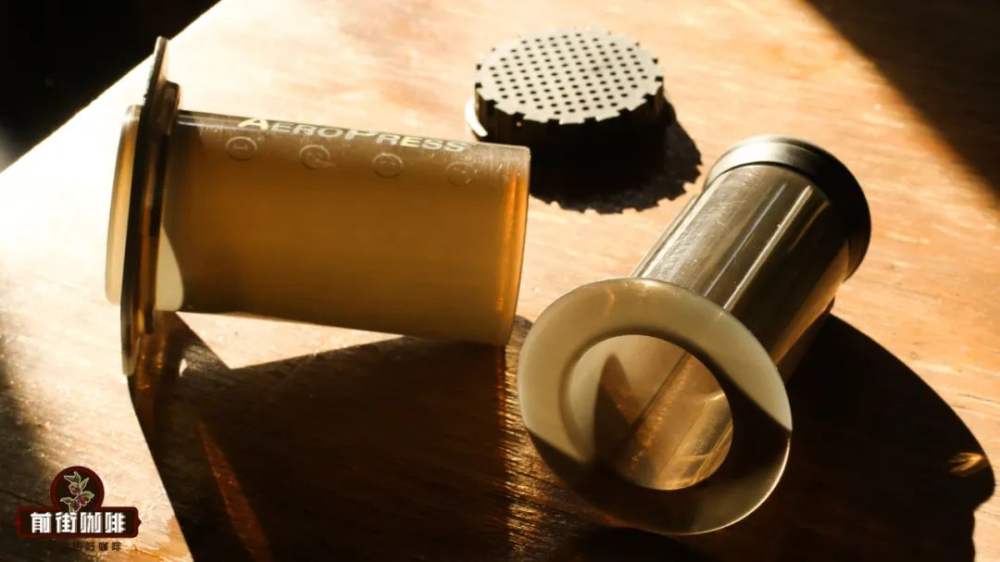
Like many office workers, he developed a coffee habit during his working years, and after retirement he didn't drop it—even at home he had to tinker with coffee himself. He tried quite a few extraction devices: capsule machines, automatic drip machines, the Chemex, and so on, but these devices were either too cumbersome in steps or too time-consuming, which left Alan Adler rather dissatisfied. So, being highly hands-on, he had an idea: to build a device that could extract coffee quickly and effortlessly. From 1993 to 2005, a full twelve years, he tested over forty versions before his cherished device finally took shape—the "AeroPress." The entire device can be disassembled into three parts: the plunger, the chamber, and the filter cap. When assembled, its shape is often described as a "syringe."

The AeroPress extraction principle encompasses both immersion and pressure. There are two main ways to use it: standard and inverted. The standard method is the official recommended operation: place the chamber with the filter cap attached on top of a container, add coffee grounds and an equal amount of hot water, stir evenly, then insert the plunger and press down to extract the coffee. The inverted method is the reverse: first, without attaching the filter cap, insert the plunger, add the coffee grounds and an equal amount of hot water, stir, then attach the filter cap, secure it to the container, flip the whole device over, and press down to extract.
The AeroPress is virtually free from any rigid rules. Water temperature, time, dose, grind size, brew ratio, number and style of stirs—all are variables you can change at will, and every change directly affects the final flavor in the cup. Just imagine: each variation of these parameters could yield a new extraction recipe. If you adjust them one by one, how many different brewing methods could you possibly create? It is precisely for this reason that the AeroPress quickly won the favor of Tim Wendelboe (a leading figure in Nordic ultra-light roasting). He was eager to know who could push the AeroPress to its limits. So in 2008, he and a few AeroPress enthusiasts squeezed into a small local room and held the first AeroPress competition. Only three competitors took part, and the judge was Tim Wendelboe himself. Who could have imagined that years later, this three-person "friendly match" would grow into a world-class event.
Behind this lies both the AeroPress's remarkable inclusiveness and the playful spirit of its community. Now, let Front Street Coffee share a universal AeroPress brewing method. Brewing Experiment The bean chosen this time is "Kenya Asalia." Its pour-over profile shows bright acidity reminiscent of smoked plum and cherry tomato, along with a sweetness like snow pear. Dose: 18g Grind setting: 90% pass-through rate on a #20 sieve (finer than regular pour-over grind) Brew ratio: 1:11 (about 200ml) Water temperature: 90°C Extraction method: inverted
You can place two circular filter papers on the filter cap in advance and wet them with water so they adhere. (If you don't have circular filters on hand, cutting regular filter paper to shape works too.) 1. Assemble the plunger and chamber, press the plunger down to near mark ④, then turn it upside down. 2. Add the ground coffee, then pour in an equal amount of hot water and start the timer. 3. Use a stirrer to gently stir in circles inside the chamber for ten seconds. 4. Attach the filter cap with the filter paper to the chamber. 5. Secure it onto the pre-prepared container. 6. At one minute, flip it over, then press down to "push" the coffee out.
Extraction is now complete, taking about 1 minute and 20 seconds in total. Compared to the standard method, the inverted method offers better stability and significantly lowers the difficulty for beginners. The Kenya brewed this way tastes pleasantly balanced between acidity and sweetness, with a quite full-bodied juicy quality—a very good performance.
- END - Front Street Coffee
No. 10, Baoqian Street, Yandun Road, Dongshankou, Yuexiu District, Guangzhou, Guangdong Province
The above content is compiled by CoffeeHunters, a coffee news website.


